
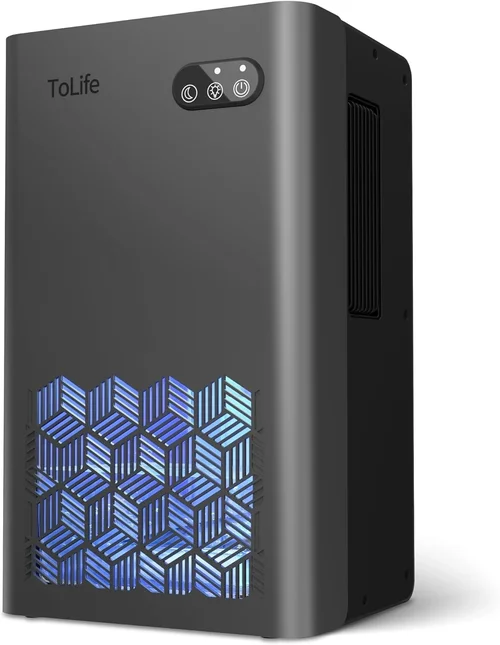
Dealing with excess moisture in your home isn’t just about comfort—it’s about protecting your health, your belongings, and the structural integrity of your living space. Whether you’re battling musty odors in a damp basement, preventing mold growth in a humid climate, or simply trying to breathe easier during allergy season, a dehumidifier can be a game-changer. But with so many models on the market—each boasting different capacities, features, and price points—choosing the right one can feel overwhelming. That’s where this comprehensive buying guide comes in.
In this article, we’ll walk you through everything you need to know to make an informed decision when purchasing a dehumidifier in 2026. We’ll break down the key factors that matter most, compare different types and technologies, highlight common pitfalls to avoid, and offer expert-backed recommendations based on real-world performance and user feedback. Whether you’re a first-time buyer or looking to upgrade from an older unit, this guide is designed to help you find the perfect dehumidifier for your specific needs—without overspending or settling for underperformance.
The dehumidifier market has evolved significantly over the past decade. Advances in compressor technology, smart connectivity, energy efficiency standards, and filtration systems have made today’s units more effective, quieter, and easier to use than ever before. From compact 20-pint units ideal for small bathrooms to heavy-duty 70-pint beasts capable of handling large basements or crawl spaces, there’s a solution for nearly every scenario. However, not all dehumidifiers are created equal. Some prioritize quiet operation, while others focus on maximum moisture removal or smart home integration. By understanding what truly matters—and what’s just marketing fluff—you’ll be equipped to cut through the noise and choose a model that delivers real value.
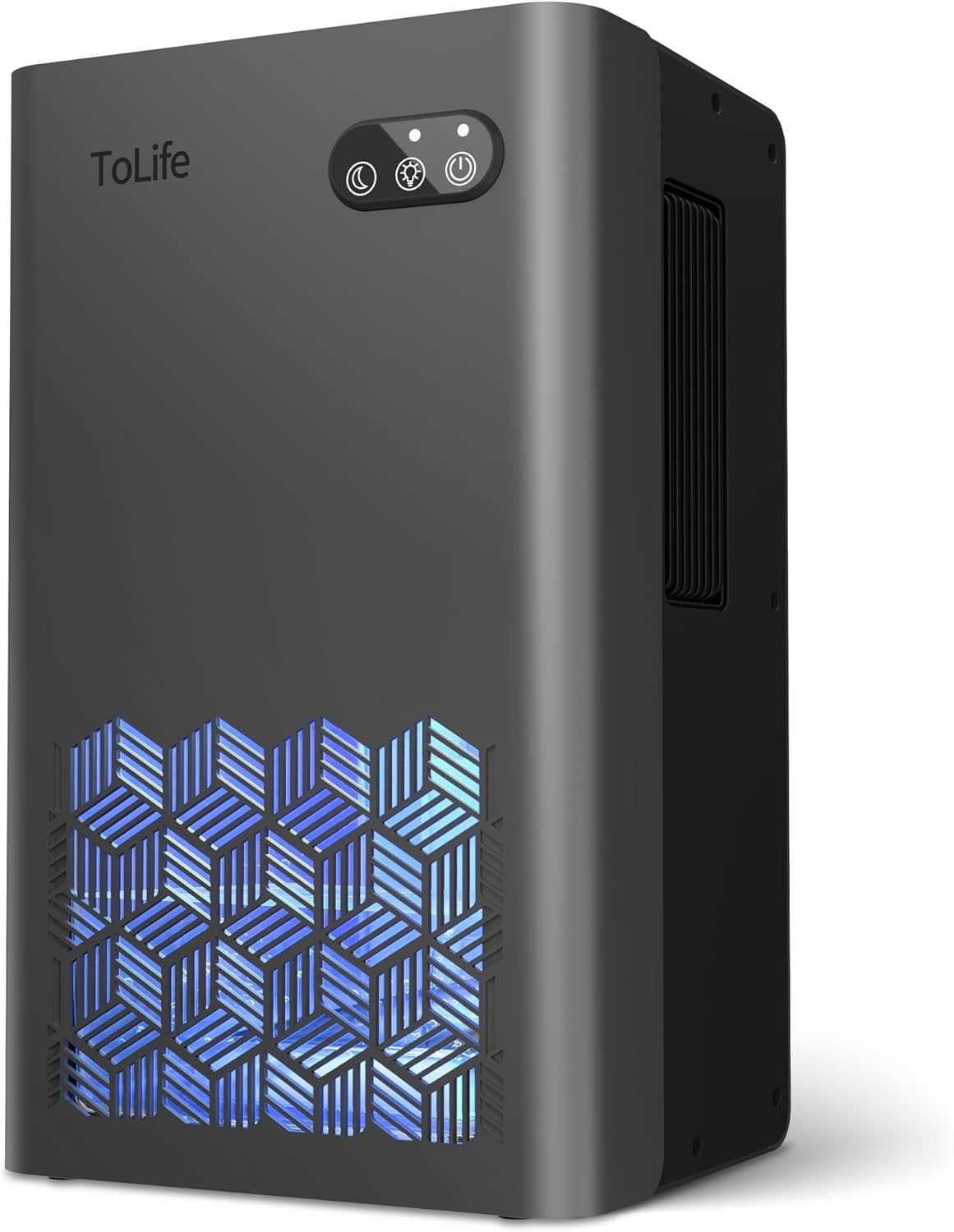
What to Look for When Buying Buying Guide
1. Capacity & Moisture Removal Rate
The single most important specification when choosing a dehumidifier is its capacity, typically measured in pints per day (PPD). This number tells you how much water the unit can extract from the air in a 24-hour period under standard testing conditions (usually 60% relative humidity at 80°F). But don’t take this number at face value—real-world performance often differs due to temperature, humidity levels, and room size.
For example, a 30-pint dehumidifier might be sufficient for a small bedroom or bathroom (up to 500 sq. ft.), while a 50-pint model is better suited for a medium-sized basement (1,000–1,500 sq. ft.). If you live in a particularly humid region or have a large, open space like a finished basement or garage, you may need a 70-pint unit or higher. Always match the capacity to your room size and moisture level. Undersized units will run constantly without achieving desired humidity levels, while oversized ones may cycle too frequently, reducing efficiency and lifespan.
2. Energy Efficiency & Operating Costs
Dehumidifiers are among the most energy-intensive appliances in your home, especially if they run continuously. Look for models with the ENERGY STAR® certification, which indicates they meet strict efficiency guidelines set by the U.S. Environmental Protection Agency. ENERGY STAR-certified dehumidifiers use 15–30% less energy than standard models, which translates to lower utility bills and reduced environmental impact.
Check the unit’s energy factor (EF), expressed in liters of water removed per kilowatt-hour (L/kWh). Higher EF values mean greater efficiency. For instance, a model with an EF of 1.8 is more efficient than one with 1.2. Also consider the wattage rating—lower wattage generally means lower operating costs, though it may correlate with reduced capacity.
Keep in mind that running a dehumidifier 24/7 in a humid climate could add $30–$60 per month to your electricity bill, depending on local rates and unit efficiency. Investing in a high-efficiency model upfront can pay for itself within a few years through energy savings.
3. Tank Size & Drainage Options
Most portable dehumidifiers come with a built-in water collection tank, usually ranging from 5 to 15 pints. While convenient, these tanks require manual emptying—a chore you’ll want to minimize. A larger tank means fewer refills, but it also adds bulk and weight.
More importantly, consider drainage options. Many mid- to high-end models offer continuous drainage via a hose connection, allowing you to route water directly to a floor drain, sump pump, or outdoor area. This eliminates the need to empty the tank entirely and is ideal for basements, crawl spaces, or unattended areas. Some units even include built-in condensate pumps for upward drainage.
If you plan to use your dehumidifier in a location without easy access to a drain (like a bedroom or closet), prioritize models with auto-shutoff when the tank is full and audible alerts to prevent overflow.
4. Noise Level & Quiet Operation
Nobody wants a noisy appliance disrupting their sleep or concentration. Dehumidifier noise is measured in decibels (dB), with most residential units ranging from 45 dB to 60 dB. For context, 45 dB is similar to a quiet library, while 60 dB resembles normal conversation.
If you’re placing the unit in a bedroom, home office, or nursery, look for models specifically marketed as “quiet” or “low-noise.” These often feature insulated compressor compartments, variable-speed fans, and optimized airflow designs. Some premium models even include night modes that reduce fan speed and disable indicator lights for undisturbed rest.
Avoid units that list only “fan speed” settings without specifying noise levels—manufacturers rarely disclose dB ratings unless it’s a selling point.
5. Smart Features & Automation
Modern dehumidifiers increasingly incorporate smart technology for greater convenience and control. Look for Wi-Fi connectivity, which allows you to monitor and adjust settings via smartphone apps (often compatible with Amazon Alexa or Google Assistant). Features like remote scheduling, humidity alerts, and energy usage tracking can significantly enhance usability.
Other automation features include programmable timers, auto-restart after power outages, and built-in hygrostats that maintain your desired humidity level (typically adjustable between 30% and 80%). Some advanced models even integrate with whole-home HVAC systems or smart thermostats for seamless climate control.
While smart features add cost, they’re especially valuable for vacation homes, rental properties, or users who want hands-off operation. Just ensure the app is reliable and doesn’t require constant firmware updates.
6. Filtration & Air Quality Benefits
Many dehumidifiers double as air purifiers by including washable or replaceable filters that capture dust, pollen, pet dander, and mold spores. Look for units with multi-stage filtration systems—such as pre-filters, activated carbon filters, or even HEPA-grade filters—for improved indoor air quality.
Some models also feature UV-C lights or ionizers to kill bacteria and neutralize odors. While these technologies can be beneficial, be cautious of overhyped claims. UV-C lights are only effective if air passes slowly enough for exposure, and ionizers may produce trace amounts of ozone, which can irritate sensitive individuals.
If you have allergies or respiratory conditions, prioritize models with certified air filtration (e.g., AHAM Verified) and avoid those with unverified “air purifying” claims.
7. Build Quality & Durability
A dehumidifier is a long-term investment, so durability matters. Check the materials used in the housing—high-grade plastic should feel sturdy, not flimsy. Internal components like compressors, coils, and fans should be well-sealed to prevent corrosion, especially in damp environments.
Look for units with protective coatings on evaporator coils (often called “anti-corrosion” or “epoxy-coated”) to extend lifespan in high-moisture areas. Also consider the warranty: reputable brands typically offer 1–2 years on parts and labor, with some extending coverage to 5 years on compressors.
Avoid ultra-cheap models from unknown brands—they often use inferior components that fail within months. Reading long-term user reviews can reveal common failure points like leaking tanks, frozen coils, or compressor burnout.
8. Portability & Placement Flexibility
Even “portable” dehumidifiers can weigh 30–50 pounds, so ease of movement is crucial. Look for models with recessed handles, smooth-rolling casters, and balanced weight distribution. Some units include lift grips or foldable handles for tighter spaces.
Consider where you’ll place the unit: basements often have uneven floors, while closets may have limited clearance. Ensure the dehumidifier has front or top air discharge (not rear-only) to avoid blocking airflow against walls. Also check cord length—ideally 6 feet or more—to reach outlets without extension cords.
If you need to move the unit between rooms seasonally, choose a model under 40 pounds with robust wheels. For permanent installation (e.g., in a crawl space), consider hardwired or ductable models designed for fixed mounting.
Different Types of Buying Guide

Common Buying Mistakes to Avoid
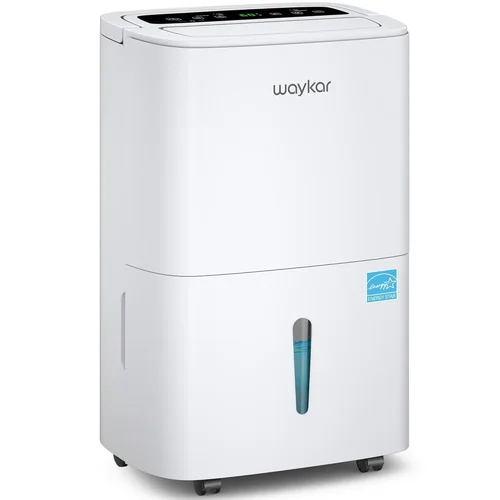
❌ Mistake: Buying Based Solely on Pint Rating
Why it’s bad: A higher pint rating doesn’t always mean better performance. Manufacturers test under ideal lab conditions (80°F, 60% RH), but your basement might be colder or damper. An oversized unit may short-cycle, failing to dehumidify effectively and wearing out faster.
What to do instead: Match capacity to your actual room size and moisture level. Use online calculators or consult HVAC professionals. When in doubt, choose a model with adjustable humidity settings and auto-defrost (for cold spaces).
❌ Mistake: Ignoring Energy Efficiency
Why it’s bad: A cheap, inefficient dehumidifier can cost more in electricity over its lifetime than a pricier ENERGY STAR model. Running a 500-watt unit 12 hours daily adds up quickly.
What to do instead: Prioritize ENERGY STAR certification and check the energy factor (EF). Calculate annual operating costs using your local kWh rate. Often, the extra $50–$100 for an efficient model pays off within 1–2 years.
❌ Mistake: Overlooking Drainage Needs
Why it’s bad: Manually emptying a full tank every 8–12 hours is tedious and easy to forget. Overflow can damage floors or cause mold.
What to do instead: If possible, choose a model with continuous drainage. Even if you don’t use it immediately, having the option future-proofs your purchase. For basements, a hose connection is almost essential.
❌ Mistake: Choosing the Cheapest Option
Why it’s bad: Budget dehumidifiers from unknown brands often use thin plastic, weak compressors, and poor seals. They may last only 6–12 months before failing.
What to do instead: Set a realistic budget ($150 minimum for decent performance) and stick to reputable brands like Frigidaire, hOmeLabs, GE, or AprilAire. Read long-term reviews on Amazon, Consumer Reports, or Reddit.
❌ Mistake: Placing the Unit Incorrectly
Why it’s bad: Blocking airflow (e.g., placing against a wall or in a corner) reduces efficiency and can cause the unit to overheat or freeze up.
What to do instead: Leave at least 6–12 inches of clearance around all sides. Place in the center of the room or near the source of moisture (e.g., near a washing machine or sump pump).
❌ Mistake: Not Considering Noise in Living Spaces
Why it’s bad: A 60 dB dehumidifier running in your bedroom all night can disrupt sleep, especially if it cycles on/off frequently.
What to do instead: Opt for models under 50 dB for bedrooms or nurseries. Look for “quiet mode” or “sleep mode” features. Test in-store if possible.
❌ Mistake: Skipping the Warranty Check
Why it’s bad: Compressors are expensive to repair. Without warranty coverage, a single failure could mean buying a new unit.
What to do instead: Choose brands offering at least a 1-year full warranty and 2–5 years on the compressor. Register your product promptly and keep receipts.
Budget Guidelines: How Much Should You Spend?
Entry-Level ($80–$150): These are typically mini or compact units with 10–20 pint capacity. Best for small closets, RVs, or very mild dampness. Expect basic controls, small tanks, and limited durability. Ideal for occasional use but not recommended for basements or high-humidity areas.
Mid-Range ($150–$350): This is the sweet spot for most homeowners. You’ll find reliable 30–50 pint compressor models with auto-humidistats, continuous drainage, washable filters, and decent warranties. Brands like hOmeLabs, Tosot, and Frigidaire dominate this tier with strong performance and value.
Premium ($350–$600): Designed for demanding environments, these units offer 50–70+ pint capacity, smart features (Wi-Fi, apps), advanced filtration, quiet operation, and robust build quality. Great for large basements, crawl spaces, or humid climates. Look for models with condensate pumps and anti-corrosion coatings.
Luxury ($600+): Whole-house dehumidifiers or high-end portable models with commercial-grade components. These integrate with HVAC systems, offer ultra-precise humidity control, and come with extended warranties. Best for new builds, allergy sufferers, or those seeking hands-off, whole-home solutions.
Expert Tips for Getting the Best Deal
– Buy in Spring or Early Summer: Demand peaks in humid months, so retailers often discount older models in March–May to clear inventory. You’ll find the best deals before the rainy season hits.
– Shop Online for Better Selection: Websites like Amazon, Home Depot, and Lowe’s offer detailed specs, customer reviews, and frequent promotions. In-store selections are often limited to mid-tier models.
– Check for Rebates: Some utility companies offer rebates for ENERGY STAR dehumidifiers—especially in humid states like Florida or Louisiana. Visit dsireusa.org to search local incentives.
– Read Long-Term Reviews: Focus on reviews older than 6 months to assess durability. Look for patterns in complaints (e.g., “stopped working after 8 months”).
– Test Return Policies: Ensure the retailer allows returns within 30 days. Some brands (like Midea) have restrictive policies, so buy from flexible sellers.
– Bundle with Other Purchases: Home improvement stores often offer discounts when buying multiple appliances. Pair your dehumidifier with an air purifier or humidifier for savings.
– Consider Refurbished Units: Certified refurbished models from reputable sellers (e.g., Amazon Renewed) can save 20–30% and include warranties.
– Don’t Forget Installation Costs: Whole-house units require professional installation ($200–$800). Factor this into your total budget.

Frequently Asked Questions
Q: How do I know if I need a dehumidifier?
A: Signs include persistent musty odors, condensation on windows, peeling paint, warped wood, or visible mold. Use a hygrometer to measure indoor humidity—if it’s consistently above 60%, a dehumidifier is likely needed.
Q: Can a dehumidifier help with allergies?
A: Yes. By reducing moisture, it inhibits mold, dust mites, and mildew—common allergens. Pair it with a HEPA air purifier for maximum relief.
Q: Should I run my dehumidifier all the time?
A: Not necessarily. Most units have auto modes that maintain your set humidity level (ideally 45–50%). Running continuously wastes energy unless you have severe moisture issues.
Q: Will a dehumidifier cool my room?
A: No. Unlike air conditioners, dehumidifiers don’t lower temperature. They may feel slightly warmer due to heat from the compressor, but they won’t replace AC.
Q: How often should I clean the filter?
A: Every 2–4 weeks during heavy use. A clogged filter reduces airflow and efficiency. Most filters are washable—rinse with water and let dry.
Q: Can I use a dehumidifier in winter?
A: Only if the space stays above 60°F. Compressor units struggle in cold air and may freeze. Use a desiccant model for garages or unheated areas.
Q: Is it safe to leave a dehumidifier on overnight?
A: Yes, if it has auto-shutoff, tip-over protection, and is placed safely. Modern units are designed for continuous operation.
Q: Do dehumidifiers use a lot of electricity?
A: They can. A 500-watt unit running 10 hours/day uses about 150 kWh/month—roughly $15–$25 depending on your rate. ENERGY STAR models cut this significantly.
Q: Can I move my dehumidifier between rooms?
A: Yes, but allow it to sit upright for 1–2 hours after moving to let refrigerant settle. Avoid tilting more than 45 degrees.
Q: What’s the ideal humidity level for my home?
A: Between 30% and 50%. Below 30% can cause dry skin and static; above 50% promotes mold and dust mites.
Our Final Recommendations
Best for Budget-Conscious Buyers: hOmeLabs 30 Pint Dehumidifier – At under $200, it offers reliable performance, a large tank, continuous drainage, and a 2-year warranty. Perfect for small to medium rooms.
Best Overall Value: Frigidaire FFAD7033R1 70 Pint – ENERGY STAR certified, quiet (51 dB), with a washable filter and easy-roll wheels. Handles large basements effortlessly and costs under $350.
Best Premium Option: AprilAire E080 Pro 80 Pint – Built for whole-house integration, this ductable unit removes up to 80 pints/day with minimal noise and top-tier durability. Ideal for serious moisture control.
Best for Beginners: Tosot 50 Pint Smart Dehumidifier – Features intuitive app control, auto-humidistat, and a sleek design. Great for tech-savvy users new to dehumidification.
Best for Advanced Users: AlorAir Sentinel HDi90 – A commercial-grade desiccant dehumidifier for crawl spaces and flood restoration. Works in temps as low as 33°F and includes a built-in pump.
Conclusion: Making the Right Choice
Choosing the right dehumidifier isn’t just about picking the biggest or cheapest model—it’s about matching the right technology, capacity, and features to your unique environment and needs. By focusing on energy efficiency, proper sizing, drainage options, and long-term reliability, you’ll avoid common pitfalls and invest in a unit that truly improves your home’s comfort and health.
Remember, a dehumidifier is most effective when used consistently and maintained properly. Clean the filter regularly, monitor humidity levels, and don’t hesitate to upgrade if your needs change. With the insights from this guide, you’re now equipped to navigate the market with confidence.
Take the time to assess your space, set a realistic budget, and prioritize the features that matter most to you. Whether you’re tackling a damp basement, protecting cherished belongings, or simply breathing easier, the right dehumidifier can make all the difference. Don’t wait until mold appears or your energy bills spike—act now and enjoy a drier, healthier home year-round.