

When it comes to maintaining a healthy, comfortable home environment, few appliances are as quietly essential—and often overlooked—as the dehumidifier. Whether you live in a humid coastal region, a damp basement apartment, or simply notice that your house feels “sticky” during summer months, excess moisture in the air can lead to a cascade of problems: mold growth, musty odors, warped wood, dust mite proliferation, and even worsened allergy or asthma symptoms. That’s where a quality dehumidifier comes in—not just as a convenience, but as a critical tool for indoor air quality and home preservation.
But with dozens of models flooding the market—from compact 30-pint units to industrial-grade 70-pint beasts—it’s easy to feel overwhelmed. Reddit communities like r/HomeImprovement, r/Appliances, and r/Dehumidifiers have become goldmines of real-world user experiences, honest reviews, and hard-earned lessons from people who’ve tested these machines in basements, crawl spaces, garages, and entire homes. This guide distills that collective wisdom into a comprehensive, expert-level buying resource. You’ll learn how to match your specific needs to the right machine, avoid costly mistakes, understand performance specs beyond marketing fluff, and ultimately choose a dehumidifier that delivers lasting value—not just short-term relief.
The dehumidifier market has evolved significantly in recent years. Energy-efficient compressors, smart humidity sensors, auto-defrost capabilities, and Wi-Fi connectivity are now common even in mid-tier models. Meanwhile, brands like Frigidaire, hOmeLabs, GE, Midea, and AprilAire continue to dominate Reddit discussions—but not always for the same reasons. Some earn praise for reliability; others for quiet operation or exceptional moisture removal in challenging conditions. This guide cuts through the noise, combining technical insight with community-driven feedback to help you make a confident, informed decision—whether you’re battling a swampy crawl space or just trying to keep your living room breathable during muggy summers.

What to Look for When Buying a Dehumidifier
1. Capacity (Pints per Day)
The single most important specification when choosing a dehumidifier is its capacity, measured in pints of moisture removed per day (PPD). This number tells you how much water the unit can extract from the air in a 24-hour period under standard testing conditions (typically 60% relative humidity at 80°F). But here’s the catch: real-world performance often differs from lab results, especially in cooler or less humid environments.
For most residential applications, capacity needs fall into clear tiers:
– 30–40 PPD: Ideal for small spaces (under 500 sq ft), bathrooms, closets, or mild dampness.
– 50 PPD: The sweet spot for average-sized basements (500–1,000 sq ft) or moderately humid living areas.
– 60–70 PPD: Best for large basements, whole-house use (with ducting), or high-humidity climates.
Reddit users consistently emphasize matching capacity to your space. One r/HomeImprovement poster noted, “I bought a 30-pint for my 800 sq ft basement and it ran nonstop—still felt clammy. Upgraded to a 50-pint and problem solved.” Oversizing isn’t always better—it can lead to short cycling (frequent on/off), reduced efficiency, and higher upfront cost—but undersizing guarantees inadequate performance.
2. Energy Efficiency & Operating Costs
Dehumidifiers are energy hogs—especially older or poorly designed models. Running one continuously in a damp basement can add $20–$50+ to your monthly electric bill. That’s why energy efficiency matters just as much as raw performance.
Look for the Energy Factor (EF), measured in liters of water removed per kilowatt-hour (L/kWh). Higher EF = more efficient. Modern ENERGY STAR-certified models typically achieve 1.75–2.5 L/kWh, while older units may dip below 1.5. For example, the Frigidaire FFAD7033R1 (70 PPD) boasts an EF of 2.1, making it one of the most efficient large-capacity units on the market.
Reddit users often share long-term cost insights. One r/Dehumidifiers member calculated that switching from a non-certified 50-pint to an ENERGY STAR model saved them ~$180 over three years. Additionally, features like auto-humidistats (which shut off the unit when target humidity is reached) and defrost modes (for cold-weather operation) further reduce wasted energy.
Don’t forget to consider your local electricity rates. In high-cost areas like California or the Northeast, even small efficiency gains translate to meaningful savings. Use online calculators (like those from ENERGY STAR) to estimate annual operating costs based on your usage patterns.
3. Humidity Control & Smart Features
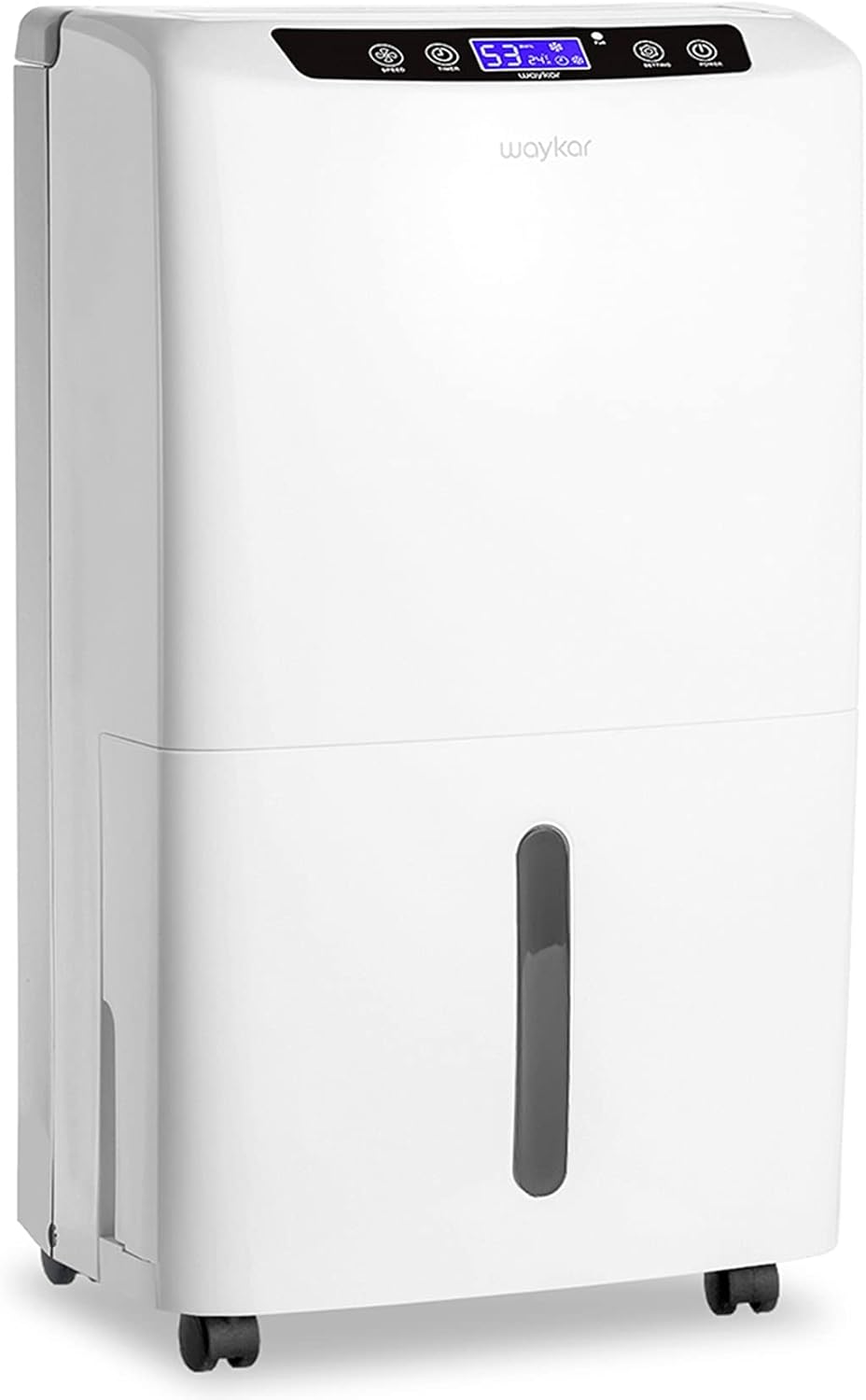
Manual on/off switches are a thing of the past. Today’s best dehumidifiers offer precise humidity control via built-in humidistats, allowing you to set your ideal relative humidity level (typically 45–50% for comfort and mold prevention).
Advanced models go further with:
– Digital displays showing real-time humidity levels.
– Programmable timers for scheduled operation (e.g., run only during off-peak hours).
– Auto-restart after power outages—critical if you rely on continuous dehumidification.
– Wi-Fi connectivity (e.g., GE Profile, Midea U-Shaped Inverter) for remote monitoring via smartphone apps.
Reddit discussions highlight the value of these features. One user praised their GE dehumidifier’s app for alerting them when the bucket was full during a weekend away—preventing a potential flood. Others appreciate the “continuous drain” option, which eliminates the need to empty buckets manually (more on that below).
However, smart features come at a premium. If you’re on a tight budget, prioritize core functionality: a reliable humidistat and auto-shutoff when the bucket is full. These alone prevent over-drying and overflow risks.
4. Drainage Options & Maintenance
Emptying a heavy water bucket every day is tedious—and risky if you forget. That’s why drainage flexibility is a top concern for Reddit users.
Most dehumidifiers offer three drainage methods:
– Manual bucket: Standard on all models; requires periodic emptying (every 8–24 hours depending on humidity).
– Pump-assisted drain: Found on premium models (e.g., AprilAire, Santa Fe), these can pump water vertically (up to 15 feet) and horizontally (100+ feet), ideal for basements without floor drains.
– Gravity drain hose: A simple hose attachment that lets water flow out by gravity—requires a nearby floor drain or sump pit.
User feedback strongly favors continuous drainage for set-it-and-forget-it convenience. One r/HomeImprovement thread noted, “After years of lugging buckets, I installed a gravity drain. Game changer—no more midnight spills.”
Maintenance also matters. Look for:
– Washable air filters (easy to clean monthly).
– Corrosion-resistant coils (especially in coastal areas).
– Accessible components for DIY cleaning.
Neglecting filter cleaning is a common Reddit-reported issue—it reduces airflow, strains the compressor, and increases energy use.
5. Noise Level & Placement Flexibility
Dehumidifiers aren’t silent. Compressor-based models typically produce 45–60 decibels (dB)—comparable to a quiet conversation or refrigerator hum. But in bedrooms or open-plan living areas, even 50 dB can be disruptive.
Reddit users consistently rank noise as a top-three consideration. One reviewer wrote, “My old unit sounded like a jet engine—moved it to the basement and bought a quieter model for the main floor.”
Check manufacturer specs for sound ratings (measured in sones or dB). Inverter-driven compressors (like Midea’s U-shaped design) are notably quieter than traditional piston compressors. Also consider:
– Placement: Can it sit on carpet without vibration? Does it have rubber feet?
– Fan settings: Low-speed modes reduce noise but may sacrifice performance.
– Room acoustics: Hard surfaces amplify sound; rugs and curtains help dampen it.
For living spaces, aim for <55 dB. Basements and garages tolerate louder operation.
6. Build Quality & Durability
A dehumidifier is a long-term investment. Cheap plastic housings, flimsy handles, and undersized compressors fail prematurely—especially in harsh environments like uninsulated garages or crawl spaces.
Reddit veterans advise scrutinizing:
– Cabinet material: Thick, impact-resistant plastic resists dents and warping.
– Compressor type: Rotary compressors (quieter, more durable) vs. reciprocating (louder, cheaper).
– Coil protection: Epoxy-coated or aluminum coils resist corrosion in salty or humid air.
– Weight: Heavier units often indicate better internal components.
Brands like AprilAire and Santa Fe are praised for commercial-grade durability, while budget options (e.g., some Amazon Basics models) draw complaints about premature failures. One r/Appliances user warned, “Saved $50 upfront, spent $200 on repairs in two years.”
7. Brand Reputation & Community Trust
Not all brands are created equal. On Reddit, certain names consistently surface in positive contexts:
– Frigidaire: Reliable mid-range performer; widely available at retailers.
– hOmeLabs: Popular for value—good specs at competitive prices.
– Midea: Parent company of many store brands; innovative inverter tech.
– GE: Strong smart features and app integration.
– AprilAire: Premium whole-house systems; trusted by HVAC pros.
Conversely, generic “no-name” brands often lack parts availability and customer support. One Redditor lamented, “My $120 dehumidifier died in 14 months—no warranty service in my state.”
Check brand forums, BBB ratings, and Reddit sentiment before buying. A strong community presence often correlates with better post-purchase support.
8. Warranty & Customer Support
A dehumidifier should last 5–10 years with proper care. Warranty terms reflect manufacturer confidence:
– 1-year full warranty: Standard for budget models.
– 2–3 years: Common for mid-tier units (e.g., Frigidaire, hOmeLabs).
– 5+ years: Found on premium brands (AprilAire, Santa Fe).
Pay attention to what’s covered: compressor warranties are often longer than整机 coverage. Also verify if labor is included—some brands only cover parts.
Reddit users stress the importance of responsive customer service. One shared, “Called Frigidaire about a faulty sensor—replaced unit shipped in 48 hours.” Others reported weeks-long waits with lesser-known brands.
Always register your product and keep receipts. Extended warranties are rarely worth it—better to invest in a reliable brand upfront.
Different Types of Dehumidifiers
Common Buying Mistakes to Avoid

❌ Mistake: Ignoring Room Size and Humidity Source
Why it’s bad: Buying a dehumidifier based solely on price or brand without considering your space leads to underperformance or wasted money. A 30-pint unit won’t cut it in a flooded basement; a 70-pint monster will short-cycle in a closet.
What to do instead: Measure your square footage, note if the space is below grade, and identify moisture sources (e.g., laundry, shower, foundation leaks). Use online sizing calculators or consult HVAC pros for complex cases.
❌ Mistake: Overlooking Drainage Needs
Why it’s bad: Manual bucket emptying becomes a chore—and if forgotten, can cause overflow, water damage, or mold. Reddit threads are full of “bucket horror stories.”
What to do instead: If you can’t empty the bucket daily, invest in a model with continuous drain capability. Even a simple gravity hose (with a nearby floor drain) saves immense hassle.
❌ Mistake: Prioritizing Low Price Over Efficiency
Why it’s bad: Cheap dehumidifiers often use outdated compressors, lack ENERGY STAR certification, and cost more in electricity over time. One Redditor calculated that a $180 non-certified unit cost $120 more in energy over 5 years than a $250 efficient model.
What to do instead: Calculate total cost of ownership—not just upfront price. Look for ENERGY STAR labels and high EF ratings. Mid-range efficient models often offer the best long-term value.
❌ Mistake: Assuming All “50-Pint” Units Perform Equally
Why it’s bad: PPD ratings are tested under ideal lab conditions (80°F, 60% RH). In cooler basements (50–60°F), performance drops significantly—sometimes by 30–50%. A “50-pint” unit may only remove 25 pints in real winter conditions.
What to do instead: Check the manufacturer’s performance chart for lower temperatures. Desiccant or cold-climate models (like the Ivation IVADM35) maintain efficiency in chilly spaces.
❌ Mistake: Neglecting Air Filter Maintenance
Why it’s bad: A clogged filter restricts airflow, forcing the compressor to work harder, increasing energy use, and shortening lifespan. Many users don’t realize filters need monthly cleaning.
What to do instead: Choose models with easy-access, washable filters. Set calendar reminders to clean them—especially during high-usage seasons.
❌ Mistake: Buying Without Checking Return Policies
Why it’s bad: Dehumidifiers are bulky and expensive to return. Some retailers charge restocking fees or won’t accept opened units.
What to do instead: Buy from retailers with generous return windows (e.g., Amazon, Home Depot, Lowe’s). Test the unit immediately—check for leaks, noise, and proper humidity control.
❌ Mistake: Ignoring Noise in Living Spaces
Why it’s bad: Placing a loud dehumidifier in a bedroom or home office disrupts sleep and concentration. Sound travels—especially in open layouts.
What to do instead: Prioritize decibel ratings for main-floor use. Consider placing the unit in a utility room or basement with a remote humidistat if needed.
Budget Guidelines: How Much Should You Spend?
– Entry-Level ($100–$200): These are basic 30–40 PPD compressor models (e.g., hOmeLabs HME020034N, Tosot 30 Pint). They work for small spaces or mild dampness but lack advanced features, have smaller buckets, and may be noisier. Ideal for renters or seasonal use.
– Mid-Range ($200–$350): The sweet spot for most homeowners. Models like the Frigidaire FFAD5033R1 (50 PPD) or GE APER50LZ offer ENERGY STAR efficiency, digital controls, larger buckets (16+ cups), and better build quality. Many include gravity drain hoses and auto-defrost.
– Premium ($350–$600): For demanding environments or tech-savvy users. Think Midea U-Shaped Inverter (ultra-quiet, app-controlled), AprilAire E080 (whole-home ready), or Ivation IVADM70 (70 PPD with pump). These feature inverter compressors, Wi-Fi, pump-assisted drainage, and superior durability.
– Luxury ($600+): Whole-house ducted systems (AprilAire 1820, Santa Fe Compact) or commercial-grade units. Designed for integration with HVAC, they offer zoning, advanced filtration, and 10+ year lifespans. Best for new builds or severe moisture issues.

Expert Tips for Getting the Best Deal
– Buy off-season: Prices drop in late fall and winter (October–February) when demand is lowest. Retailers clear inventory for new models. Reddit users report 20–30% savings during these months.
– Shop major retailers: Home Depot, Lowe’s, Best Buy, and Amazon often price-match and offer free shipping. Check for open-box or refurbished deals—many come with full warranties.
– Use cashback and rebates: Rakuten, Honey, or manufacturer rebates can save 5–15%. Some utility companies offer ENERGY STAR appliance rebates—check your provider’s website.
– Read Reddit before buying: Search r/Dehumidifiers, r/HomeImprovement, and r/Appliances for model-specific threads. Real users reveal hidden flaws, quirks, and longevity insights no ad will mention.
– Test immediately: Run the unit for 24–48 hours upon delivery. Verify humidity drop, check for leaks, and ensure the bucket fills as expected. Return if anything seems off.
– Consider refurbished: Certified refurbished models from Frigidaire or GE (sold via official sites) often come with new warranties and cost 25–40% less.
– Bundle with other purchases: Some HVAC contractors offer discounts if you install a dehumidifier during furnace or AC service.
– Don’t forget installation costs: Whole-house units require professional ducting—budget $500–$1,500 extra.

Frequently Asked Questions
Q: How do I know if I need a dehumidifier?
A: Signs include persistent musty smells, condensation on windows, peeling paint, warped floors, or visible mold. Use a hygrometer ($10–$20) to measure indoor humidity—if it’s consistently above 55%, a dehumidifier is warranted.
Q: Can a dehumidifier cool my room?
A: No. Dehumidifiers remove moisture, not heat. They may feel slightly cooler due to reduced humidity (sweat evaporates more easily), but they don’t lower air temperature like an AC.
Q: Should I run my dehumidifier continuously?
A: Not necessarily. Use the built-in humidistat to maintain 45–50% RH. In stable environments, it will cycle on/off automatically. Continuous operation is only needed in very damp or flood-prone areas.
Q: Is it safe to leave a dehumidifier on overnight?
A: Yes, modern units have safety features like auto-shutoff, tip-over protection, and thermal cutoffs. Ensure it’s on a stable surface and the bucket isn’t overfilled.
Q: Do dehumidifiers use a lot of electricity?
A: It depends. A 50-pint ENERGY STAR model uses ~500–700 watts. Running 12 hours/day at $0.15/kWh costs ~$25–$35/month. Efficient models and proper sizing minimize this.
Q: Can I use a dehumidifier in winter?
A: Only if the space stays above 65°F. Below that, compressor units ice up. Use a desiccant model (like Ivation IVADM35) for cold garages or crawl spaces.
Q: How often should I clean the filter?
A: Monthly during heavy use, every 2–3 months otherwise. A dirty filter reduces efficiency by up to 30%.
Q: What’s the difference between pints per day and actual performance?
A: PPD is tested at 80°F/60% RH. In cooler or drier conditions, output drops. Always check performance charts for your expected environment.
Q: Can I duct a portable dehumidifier?
A: Some models (e.g., AprilAire) support ducting kits for whole-house use. Most portables are not designed for this—check specifications first.
Q: How long do dehumidifiers last?
A: With proper maintenance, 7–10 years is typical. Compressor failure is the most common end-of-life issue.
Our Final Recommendations
– Best for Budget-Conscious Buyers: hOmeLabs 50 Pint Dehumidifier – Excellent value at ~$230, ENERGY STAR certified, 16.5-cup bucket, and reliable performance for basements up to 1,000 sq ft. Reddit users praise its quiet operation and ease of use.
– Best Overall Value: Frigidaire FFAD5033R1 – A consistent top performer on Reddit, this 50-pint model offers precise humidity control, low noise (51 dB), and a washable filter. Priced around $280, it’s a workhorse for most homes.
– Best Premium Option: Midea U-Shaped Inverter Dehumidifier (MAD50C1ZWS) – Revolutionary design with ultra-quiet operation (42 dB), Wi-Fi app control, and inverter efficiency. At ~$350, it’s ideal for living spaces where noise matters.
– Best for Beginners: GE 50 Pint Dehumidifier (APER50LZ) – Simple interface, reliable performance, and strong customer support. Great for first-time buyers who want hassle-free operation.
– Best for Advanced Users: AprilAire E080 Pro – A whole-house capable 70-pint unit with ducting options, commercial-grade build, and 5-year warranty. Perfect for those tackling severe moisture or integrating with HVAC.
Conclusion: Making the Right Choice
Choosing the right dehumidifier isn’t just about picking the biggest number or the lowest price—it’s about aligning technology with your home’s unique needs. From capacity and efficiency to noise and drainage, every factor plays a role in long-term satisfaction. The wisdom shared across Reddit communities underscores a simple truth: the best dehumidifier is the one that works reliably, quietly, and efficiently in your specific environment—without breaking the bank or your back.
As you weigh your options, remember to prioritize your must-haves: Is continuous drainage non-negotiable? Do you need whisper-quiet operation for a bedroom? Is your basement prone to winter cold? Answering these questions will steer you toward a model that doesn’t just meet specs—but exceeds expectations.
Don’t rush the decision. Read real reviews, compare energy costs, and consider total ownership. And when you find the right fit, you’ll enjoy not just drier air, but peace of mind—knowing your home is protected from the silent threats of excess moisture. Your walls, your health, and your wallet will thank you.