
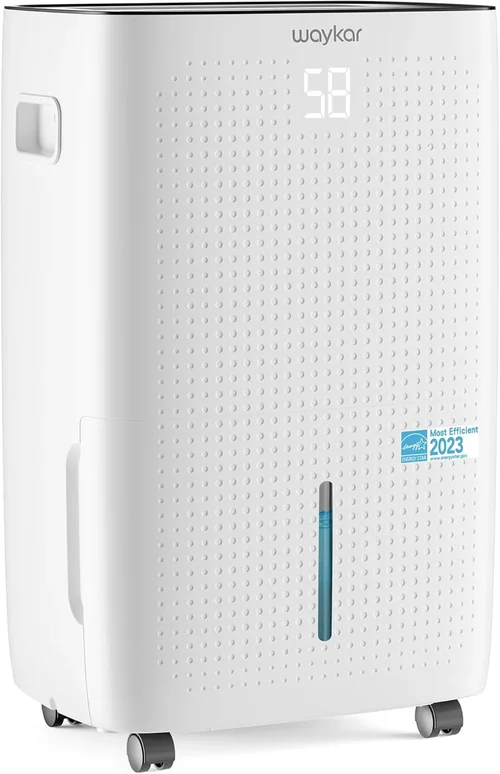
If you’ve ever walked into a basement that smells like old socks, noticed mold creeping along the corners of your garage walls, or felt that sticky, heavy air in a large open-plan home during humid summer months, you already know why a dehumidifier matters. For large areas—think 3,000 square feet or more—managing indoor humidity isn’t just about comfort; it’s about protecting your health, preserving your property, and maintaining energy efficiency. High humidity levels can trigger allergies, encourage dust mite growth, warp wood furniture, damage electronics, and even compromise the structural integrity of your home over time. That’s where a high-capacity dehumidifier comes in—not as a luxury, but as a necessity.
This comprehensive buying guide is designed to cut through the noise and help you make an informed decision when choosing the best dehumidifier for large areas in 2026. Whether you’re dealing with a sprawling basement, a commercial workshop, a warehouse, or a multi-story home with poor ventilation, we’ll walk you through every critical factor—from performance specs and energy efficiency to build quality and smart features. You’ll learn how to avoid common pitfalls, understand what your budget really gets you, and discover which models deliver the most reliable results under real-world conditions. By the end, you won’t just know which dehumidifiers are on the market—you’ll know exactly which one fits your space, lifestyle, and long-term needs.
The market for large-area dehumidifiers has evolved significantly in recent years. Gone are the days when only industrial-grade units could handle expansive spaces. Today, residential models boast commercial-level performance, while smart connectivity, auto-defrost technology, and eco-friendly refrigerants have become standard even in mid-tier units. Brands like AprilAire, Santa Fe, Frigidaire, and hOmeLabs now offer powerful options that balance capacity, efficiency, and usability. However, with so many choices—ranging from $300 to over $2,000—it’s easy to overspend on features you don’t need or underspend and end up with a unit that struggles to keep up. This guide demystifies the selection process so you can invest wisely and breathe easier.

What to Look for When Buying Buying Guide
1. Capacity (Pints per Day)
Capacity is arguably the most important specification when shopping for a dehumidifier for large areas. Measured in pints per day (PPD), this number tells you how much moisture the unit can remove from the air in a 24-hour period under standard testing conditions (typically 80°F and 60% relative humidity). For large spaces—especially those prone to dampness like basements, crawl spaces, or garages—you’ll generally want a unit rated between 50 and 100+ PPD.
But don’t just go by square footage alone. A 3,000-square-foot basement with a concrete slab and poor drainage will need far more dehumidifying power than a similarly sized attic with good ventilation. Consider your climate too: homes in the Southeast U.S., Pacific Northwest, or coastal regions often require higher-capacity units due to consistently high ambient humidity. Look for Energy Star-certified models with adjustable humidity settings (ideally with a built-in hygrometer) so you can maintain optimal indoor levels—between 30% and 50%—without over-drying the space.
2. Coverage Area & Airflow Design
While capacity tells you how much water a dehumidifier can extract, coverage area indicates how effectively it can circulate air across a large space. Most manufacturers list a maximum coverage area (e.g., “up to 4,000 sq ft”), but these numbers are often optimistic. A better indicator is the unit’s fan speed settings and airflow design. Dual-fan systems, oscillating louvers, or centrifugal blowers help distribute dry air more evenly, preventing stagnant zones where moisture can accumulate.
For open-concept homes or commercial spaces, consider models with external ducting options. These allow you to direct dry air into specific zones or pull humid air from hard-to-reach areas like crawl spaces. Also, pay attention to the intake and exhaust placement—side or top vents offer more flexible installation than front-only designs, especially if you’re placing the unit against a wall or in a corner.
3. Energy Efficiency & Operating Costs
High-capacity dehumidifiers consume significant electricity, so energy efficiency directly impacts your long-term costs. Look for the Energy Factor (EF), measured in liters of water removed per kilowatt-hour (L/kWh). The higher the EF, the more efficient the unit. As of 2026, top-tier models achieve EF ratings above 2.0, while older or budget units may fall below 1.5.
Energy Star certification is a reliable benchmark—it ensures the unit meets strict efficiency guidelines set by the U.S. Environmental Protection Agency. Over a year, an Energy Star-certified 70-PPD dehumidifier can save you $50–$100 compared to a non-certified model, depending on local electricity rates. Also, consider units with auto-shutoff, timers, or humidity-based cycling (like “continuous” vs. “manual” modes) to avoid unnecessary runtime when humidity levels are already under control.
4. Build Quality & Durability
Large-area dehumidifiers are often subjected to harsh environments—damp basements, dusty garages, or uninsulated crawl spaces. Cheap plastic housings, thin coils, or flimsy wheels won’t hold up over time. Invest in units with metal cabinets, corrosion-resistant coatings, and sealed compressor compartments. Look for reinforced casters (preferably with locking mechanisms) for easy mobility across concrete or uneven floors.
Internal components matter too. Scroll compressors are quieter and more durable than reciprocating ones. Copper-aluminum coils resist rust better than all-aluminum designs, especially in high-moisture settings. And if you live in a cold climate, ensure the unit has auto-defrost functionality—otherwise, the evaporator coils can freeze below 65°F, rendering the dehumidifier useless during winter months.
5. Features & Functionality
Modern dehumidifiers offer a range of features that enhance convenience and performance. A built-in humidistat lets you set your desired humidity level (e.g., 45%), and the unit will cycle on/off automatically to maintain it. Digital displays with real-time humidity readings are more accurate than analog dials. Some models include Wi-Fi connectivity, allowing remote control via smartphone apps—useful for monitoring conditions while you’re away.
Other valuable features include:
- Continuous drainage: A hose hookup eliminates the need to empty a bucket manually—critical for unattended operation in basements or vacation homes.
- Filter indicators: Remind you when to clean or replace the air filter, maintaining airflow and efficiency.
- Quiet operation: Look for units under 50 dB for living areas; commercial models may run louder but are acceptable in garages or workshops.
- Portability: Integrated handles, wheels, and cord wraps make moving the unit between rooms easier.
6. Brand Reputation & Reliability
Not all dehumidifier brands are created equal. Established names like AprilAire, Santa Fe, and Dri-Eaz have decades of experience in moisture control and are known for robust engineering and customer support. Consumer-focused brands like Frigidaire, hOmeLabs, and Tosot offer strong performance at lower price points but may use more plastic components or shorter warranties.
Research brand history: Do they specialize in dehumidifiers, or is it just one product among many? Check third-party reviews on sites like Consumer Reports, Wirecutter, or HVAC forums. Pay attention to failure rates—especially compressor issues, which are costly to repair. A reputable brand often stands behind its products with responsive customer service and accessible replacement parts.
7. Warranty & Support
A dehumidifier is a long-term investment, so warranty coverage matters. Most mid-to-high-end units come with a 1- to 2-year limited warranty, but premium models (especially whole-house or commercial-grade) may offer 3–5 years. Some brands, like AprilAire, provide extended warranties if the unit is professionally installed.
Read the fine print: Does the warranty cover labor, parts, or both? Is the compressor covered separately? Avoid brands with “limited” warranties that exclude common failure points. Also, verify that service centers are available in your area—or at least that you can ship the unit for repairs without excessive hassle.
8. User Reviews & Real-World Performance
Spec sheets tell part of the story, but user reviews reveal how a dehumidifier performs in actual homes. Look for patterns in feedback: Does the unit struggle in cold basements? Does it leak? Is the bucket hard to remove? Amazon, Home Depot, and Lowe’s reviews often include photos and detailed experiences that spec sheets omit.
Be wary of overly positive or generic reviews—they may be incentivized. Instead, focus on verified purchases with specific comments about noise, drainage, or humidity control. If multiple users report the same issue (e.g., “stopped working after 6 months”), it’s a red flag. Conversely, consistent praise for reliability in humid climates is a strong endorsement.
Different Types of Buying Guide

Common Buying Mistakes to Avoid
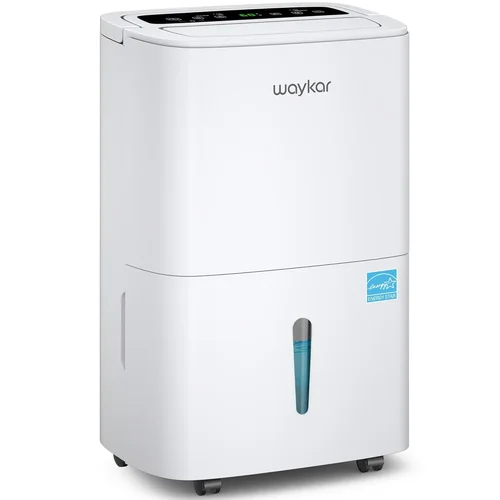
❌ Mistake: Choosing Based Solely on Square Footage
Why it’s bad: Manufacturers often advertise coverage based on ideal conditions, but real-world factors like insulation, ventilation, and water intrusion drastically affect performance. A 50-PPD unit might suffice for a dry 3,000-sq-ft home but fail completely in a damp basement with a sump pump.
What to do instead: Assess your space’s moisture level first. Use a hygrometer to measure current humidity. If it’s consistently above 60%, opt for a higher-capacity unit (70+ PPD) even if the square footage seems manageable.
❌ Mistake: Ignoring Drainage Options
Why it’s bad: Emptying a 16–20 pint bucket every day is tedious and impractical for large areas. If the unit shuts off when full, your humidity problem returns immediately.
What to do instead: Always choose a model with a continuous drainage option. A simple garden hose connected to the back can route water to a floor drain, sump pit, or outside—eliminating manual maintenance.
❌ Mistake: Overlooking Noise Levels
Why it’s bad: Dehumidifiers with loud compressors or fans can disrupt sleep or conversations, especially if placed near bedrooms or living areas. Some budget models exceed 60 dB—equivalent to a loud conversation.
What to do instead: Check decibel ratings before buying. For living spaces, aim for under 50 dB. Place the unit away from quiet zones or use sound-dampening pads.
❌ Mistake: Buying the Cheapest Option
Why it’s bad: Ultra-low-cost dehumidifiers often use inferior components, lack proper insulation, and have short lifespans. You may end up replacing them within 1–2 years, costing more long-term.
What to do instead: Invest in a mid-range or premium model with proven reliability. Look for metal construction, Energy Star certification, and at least a 2-year warranty.
❌ Mistake: Not Considering Climate
Why it’s bad: Refrigerant dehumidifiers lose efficiency in cold environments. If your basement drops below 60°F in winter, a standard model may ice up and stop working.
What to do instead: In colder climates, choose a desiccant dehumidifier or a refrigerant model with auto-defrost. Desiccants work well down to 40°F and are ideal for unheated spaces.
❌ Mistake: Skipping Professional Installation for Whole-House Units
Why it’s bad: Whole-house dehumidifiers require integration with your HVAC system. Improper ductwork or sizing can reduce efficiency, damage your furnace, or void warranties.
What to do instead: Hire a licensed HVAC technician for installation. They’ll ensure proper airflow, sealing, and compatibility with your existing system.
❌ Mistake: Neglecting Maintenance
Why it’s bad: Dirty filters, clogged coils, or stagnant water in the bucket can breed mold, reduce efficiency, and shorten the unit’s lifespan.
What to do instead: Clean the filter monthly, inspect coils quarterly, and wipe down the bucket regularly. Follow the manufacturer’s maintenance schedule to keep the unit running optimally.
Budget Guidelines: How Much Should You Spend?
Your budget should align with your needs, space size, and long-term goals. Here’s a realistic breakdown for 2026:
Entry-Level ($300–$500): These are basic portable refrigerant dehumidifiers with 50–70 PPD capacity. They’re suitable for moderately damp basements or large single rooms but may struggle in high-humidity or cold environments. Expect plastic builds, limited features, and shorter lifespans (3–5 years). Good for occasional use or temporary solutions.
Mid-Range ($500–$900): This is the sweet spot for most homeowners. Units in this range offer 70–90 PPD, Energy Star ratings, auto-defrost, continuous drainage, and digital controls. Brands like Frigidaire, hOmeLabs, and Tosot dominate here with reliable performance and solid warranties. Ideal for year-round use in large homes or damp basements.
Premium ($900–$1,500): Designed for serious moisture problems, these models feature metal cabinets, high-efficiency compressors, Wi-Fi connectivity, and advanced humidity sensors. Whole-house-ready designs and ducting options make them perfect for new builds or whole-home integration. Expect 5–7 year lifespans with proper maintenance.
Luxury ($1,500+): Reserved for commercial applications or extreme conditions, these include industrial-grade units (100+ PPD), ductable systems, and smart HVAC integration. Brands like AprilAire and Santa Fe offer modular designs, remote monitoring, and professional support. Justified for warehouses, gyms, or homes with chronic flooding issues.

Expert Tips for Getting the Best Deal
- Buy in Spring: Retailers often discount dehumidifiers in March–May before peak humidity season. You’ll find better deals than in summer when demand spikes.
- Check HVAC Supply Stores: Local distributors sometimes sell overstock or demo units at 20–30% off retail. They may also offer free delivery or installation advice.
- Look for Bundles: Some brands offer free hoses, filters, or extended warranties with purchase. AprilAire, for example, includes a 5-year warranty with professional installation.
- Use Price Tracking Tools: Set alerts on Amazon, Home Depot, or Google Shopping to catch flash sales or price drops.
- Consider Refurbished Units: Certified refurbished models from reputable sellers (like the brand’s official store) often come with full warranties and significant savings.
- Read Return Policies: Ensure you can return the unit within 30–60 days if it doesn’t perform as expected. Some retailers charge restocking fees, so confirm beforehand.
- Test Before Committing: If possible, run the dehumidifier for a week and monitor humidity levels. If it can’t maintain 45–50% RH in your space, it’s undersized.
- Ask About Rebates: Some utility companies offer rebates for Energy Star dehumidifiers—especially whole-house models. Check your provider’s website for current programs.
Frequently Asked Questions
Q: Can one dehumidifier cover my entire 4,000-square-foot home?
A: It depends on your home’s layout and humidity sources. A single high-capacity portable unit (90+ PPD) can manage an open-plan main floor, but multi-story homes often benefit from multiple units or a whole-house system integrated with HVAC. Basements and attics typically need dedicated dehumidification due to poor airflow.
Q: How often should I run my dehumidifier?
A: Run it continuously during humid months or set it to maintain 40–50% RH using the built-in humidistat. In drier seasons, use it only when needed (e.g., after laundry or showers). Avoid over-drying, as very low humidity can cause static electricity and dry skin.
Q: Do dehumidifiers heat up the room?
A: Yes, slightly. Dehumidifiers release heat as a byproduct of condensation. However, the effect is minimal—usually 2–5°F—and often offset by the cooling sensation of drier air. In summer, this is rarely an issue; in winter, it can be a minor benefit.
Q: Can I use a dehumidifier in an unheated basement?
A: Only if it has auto-defrost or is a desiccant model. Standard refrigerant units may freeze below 60°F. Desiccant dehumidifiers work efficiently in cold, unheated spaces and are ideal for winter use.
Q: How do I know if my dehumidifier is working properly?
A: Use a separate hygrometer to verify humidity levels. If the unit runs but humidity stays above 60%, it may be undersized, low on refrigerant, or have a dirty filter. Check for ice on coils (sign of freezing) or unusual noises (indicating compressor stress).
Q: Are smart dehumidifiers worth the extra cost?
A: If you travel frequently or want remote monitoring, yes. Wi-Fi-enabled models let you adjust settings, receive alerts, and track energy use from your phone. For most users, basic digital controls are sufficient, but smart features add convenience and peace of mind.
Q: Can a dehumidifier replace air conditioning?
A: No. While dehumidifiers make air feel cooler by reducing moisture, they don’t lower temperature. Use them alongside AC for maximum comfort and efficiency—lower humidity allows you to set the thermostat higher without sacrificing comfort.
Q: How long do large dehumidifiers last?
A: With proper maintenance, mid-to-high-end units last 7–10 years. Cheap models may fail in 3–5 years. Regular filter cleaning, coil inspection, and avoiding overuse extend lifespan significantly.
Q: Is it safe to leave a dehumidifier on all the time?
A: Yes, as long as it has safety features like auto-shutoff, tip-over protection, and overheat sensors. Ensure the area is well-ventilated and the drainage system is secure to prevent leaks.
Q: What’s the difference between a dehumidifier and an air purifier?
A: A dehumidifier removes moisture; an air purifier removes particles like dust, pollen, and smoke. Some units combine both functions, but they address different problems. Use a dehumidifier for mold prevention and an air purifier for allergy relief.
Our Final Recommendations
Best for Budget-Conscious Buyers: hOmeLabs 90 Pint Dehumidifier – At under $600, it delivers strong performance for large basements, includes continuous drainage, and has a washable filter. Ideal for those who need reliable moisture control without premium frills.
Best Overall Value: Frigidaire FFAD7033R1 70 Pint – Energy Star certified, quiet (48 dB), and equipped with a digital humidistat and auto-defrost. Consistently praised for durability and efficiency in real-world reviews.
Best Premium Option: AprilAire E090V Pro – A whole-house ready, 90-PPD powerhouse with a 5-year warranty, metal cabinet, and optional Wi-Fi module. Perfect for new homes or severe moisture issues.
Best for Beginners: Tosot 70 Pint Smart Dehumidifier – Easy-to-use interface, app control, and reliable performance. Great for first-time buyers who want smart features without complexity.
Best for Advanced Users: Santa Fe Compact 70 – Ductable, ultra-efficient (EF of 2.3), and designed for crawl spaces or tight installations. Favored by contractors for its rugged build and precise humidity control.
Conclusion: Making the Right Choice
Choosing the best dehumidifier for large areas isn’t just about picking the biggest number on the box—it’s about matching the right technology, capacity, and features to your specific environment and needs. Whether you’re fighting basement mold, protecting a home theater, or ensuring comfort in a sprawling open-concept space, the right unit will pay dividends in health, energy savings, and peace of mind.
Remember to prioritize capacity based on actual humidity levels, not just square footage. Invest in quality construction and energy efficiency to avoid frequent replacements and high operating costs. And don’t overlook drainage, noise, and maintenance—these practical details determine long-term satisfaction.
Take the time to assess your space, read real user reviews, and consider professional installation for whole-house systems. With the insights from this guide, you’re equipped to make a confident, informed decision. Breathe easier, live healthier, and protect your home—starting with the right dehumidifier for your large area in 2026.