
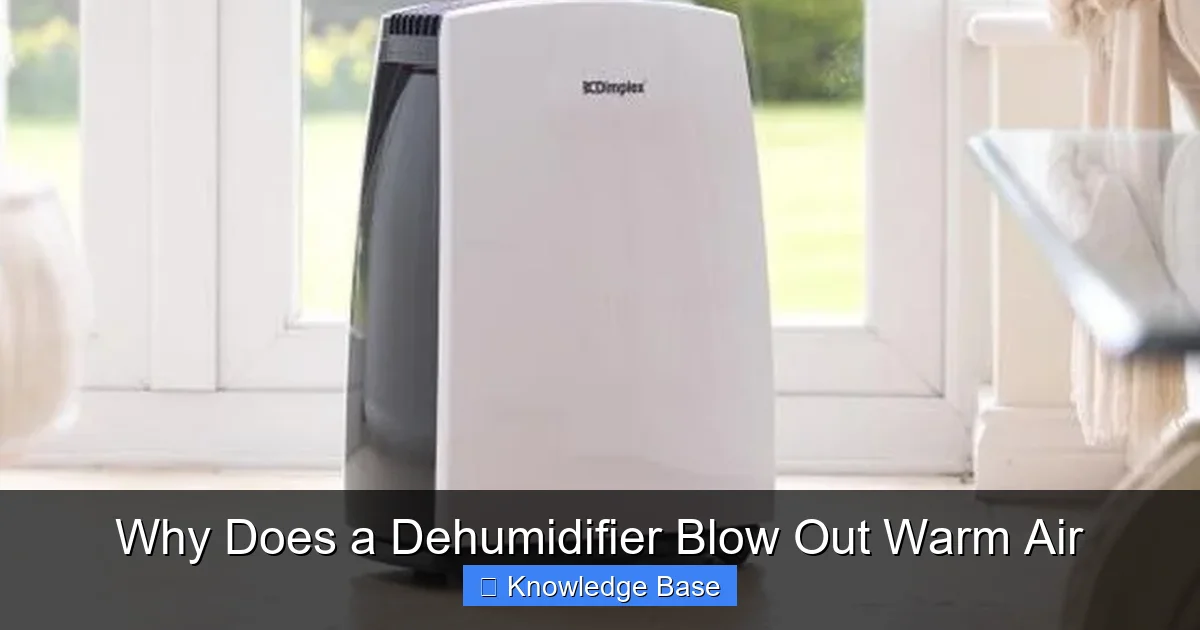
Dehumidifiers blow out warm air because they generate heat during the moisture removal process. This is a normal part of their operation and actually helps maintain a balanced indoor climate.
Key Takeaways
- Warm air output is normal: Dehumidifiers produce warm air as a byproduct of their refrigeration cycle, which is essential for removing moisture from the air.
- Heat comes from the compressor: The compressor and refrigerant system generate heat when compressing and condensing moisture, warming the expelled air.
- It improves efficiency: Warm air helps prevent re-evaporation of collected moisture and supports consistent dehumidification performance.
- Room temperature may rise slightly: In small, poorly ventilated spaces, the warm exhaust can cause a minor increase in ambient temperature.
- Different models vary in heat output: Refrigerant-based units typically blow warmer air than desiccant models, which are cooler but less effective in cold climates.
- Proper placement matters: Positioning your dehumidifier away from walls and in well-ventilated areas helps manage heat dispersion and improves airflow.
- It’s not a malfunction: Unless the unit overheats or shuts down, warm air is a sign your dehumidifier is working correctly.
📑 Table of Contents
- Why Does a Dehumidifier Blow Out Warm Air?
- How a Dehumidifier Works: The Science Behind Moisture Removal
- The Role of the Compressor and Refrigerant
- Different Types of Dehumidifiers and Their Heat Output
- Is the Warm Air a Problem? Managing Heat in Your Space
- Energy Efficiency and Environmental Impact
- Common Misconceptions About Dehumidifier Heat Output
- Conclusion: Embracing the Warmth as a Sign of Function
Why Does a Dehumidifier Blow Out Warm Air?
If you’ve ever stood near a running dehumidifier, you might have noticed that the air it blows out feels warm—sometimes noticeably so. At first glance, this might seem counterintuitive. After all, you’re using the appliance to make your home feel more comfortable by reducing humidity, not to heat the room. So why does a dehumidifier blow out warm air?
The short answer is: it’s supposed to. This warm airflow is a natural and necessary part of how most dehumidifiers operate. Understanding why this happens requires a look at the science behind moisture removal and the mechanics of the dehumidification process. Far from being a flaw or malfunction, the warm air is actually a sign that your unit is doing its job correctly.
In this article, we’ll explore the inner workings of dehumidifiers, explain why they emit warm air, and clarify common misconceptions. We’ll also cover how different types of dehumidifiers compare in terms of heat output, how to manage the warmth in your space, and when—if ever—warm air might indicate a problem. By the end, you’ll have a clear understanding of this often misunderstood aspect of dehumidifier function.
How a Dehumidifier Works: The Science Behind Moisture Removal
Visual guide about Why Does a Dehumidifier Blow Out Warm Air
Image source: i.pinimg.com
To understand why a dehumidifier blows out warm air, it helps to first grasp how it removes moisture from the air. Most residential dehumidifiers use a refrigeration-based system, which operates similarly to an air conditioner or refrigerator. Here’s a step-by-step breakdown of the process:
The Refrigeration Cycle Explained
The heart of a refrigerant dehumidifier is its compressor, which circulates a special coolant (refrigerant) through a closed loop of coils. This cycle has four main stages: evaporation, compression, condensation, and expansion.
First, warm, humid air from the room is drawn into the dehumidifier by a fan. This air passes over cold evaporator coils, where the temperature drops below the dew point—the point at which moisture condenses into water. As the air cools, water droplets form on the coils and drip into a collection tank or drain hose.
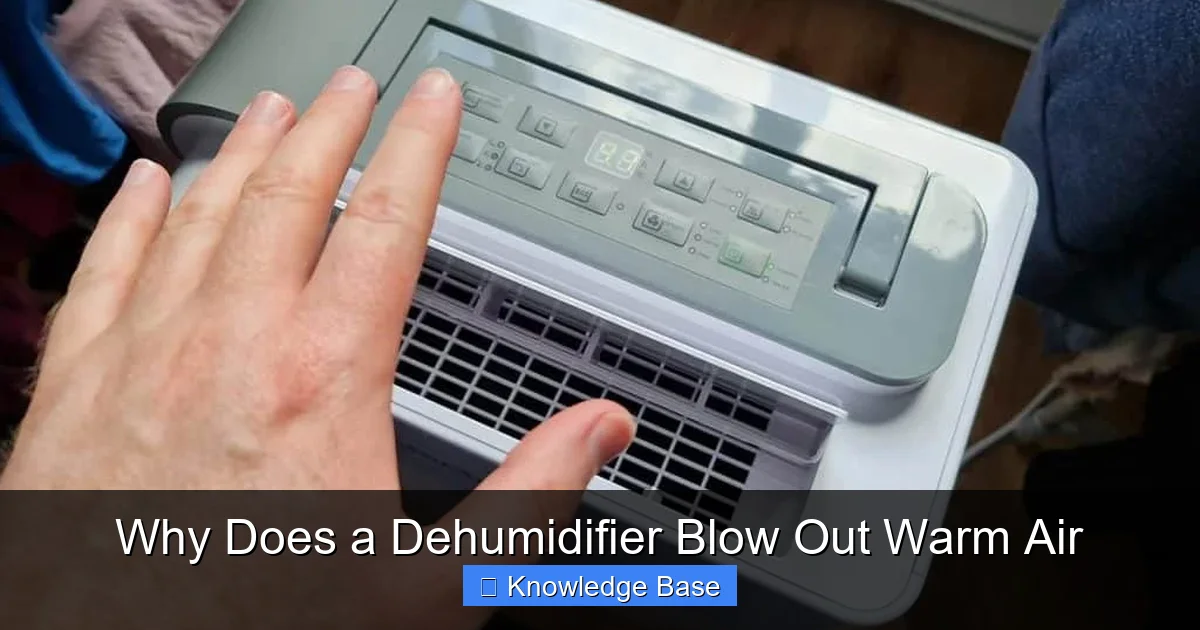
Next, the now-cooled, drier air moves over the hot condenser coils. This is where the warm air you feel comes from. The refrigerant, after being compressed, releases heat as it condenses back into a liquid. This heat is transferred to the air passing over the condenser, warming it significantly before it’s blown back into the room.
Finally, the dried, now-warm air is expelled, completing the cycle. The collected water is either stored in a bucket or drained away, depending on the model.
Why Heat Is a Byproduct
The key reason your dehumidifier blows out warm air is that the refrigeration process generates heat. When the refrigerant is compressed, its temperature and pressure rise dramatically. This high-pressure, high-temperature gas then flows through the condenser coils, where it releases heat to the surrounding air. This heat must go somewhere—and it does: into the air that’s being blown back into your room.
Think of it like a mini air conditioner. In fact, dehumidifiers and AC units share many similarities. Both cool air to remove moisture and then reheat it before releasing it. The main difference is that an air conditioner dumps the heat outside, while a dehumidifier releases it back into the same room.
This heat isn’t wasted energy—it plays a functional role. By warming the dried air, the dehumidifier helps prevent the moisture from re-evaporating into the space. Cool, dry air can actually hold less moisture than warm air, so reheating it improves overall efficiency and comfort.
The Role of the Compressor and Refrigerant
Visual guide about Why Does a Dehumidifier Blow Out Warm Air
Image source: thehumidistat.com
At the core of every refrigerant dehumidifier is the compressor—a small but powerful pump that drives the entire moisture-removal process. Understanding how the compressor works helps explain why your dehumidifier emits warm air.
How the Compressor Generates Heat
The compressor’s job is to pressurize the refrigerant gas, increasing its temperature in the process. This is based on a basic principle of physics: when you compress a gas, its temperature rises. Imagine squeezing a balloon filled with air—the air inside gets warmer. The same principle applies here, but on a much more intense scale.
Once the refrigerant is compressed into a hot, high-pressure gas, it travels to the condenser coils. As it cools and condenses into a liquid, it releases that stored heat into the surrounding air. This is the primary source of the warm air you feel coming from the dehumidifier’s exhaust.
The amount of heat generated depends on the size and efficiency of the compressor, as well as the ambient temperature and humidity levels. In high-humidity environments, the compressor works harder, which can result in even warmer exhaust air.
Refrigerant Types and Their Impact
Different dehumidifiers use different types of refrigerants, which can affect both performance and heat output. Older models may use refrigerants like R-22 (Freon), which are being phased out due to environmental concerns. Newer, more eco-friendly models typically use R-410A or R-32, which are more efficient and have lower global warming potential.
While the type of refrigerant doesn’t drastically change the fact that warm air is produced, it can influence how efficiently heat is transferred and how much energy the unit consumes. More efficient refrigerants allow the compressor to work less hard, potentially reducing the amount of heat generated—though the exhaust will still be warm.
It’s also worth noting that the refrigerant cycle is continuous. As long as the dehumidifier is running, the compressor will keep cycling the refrigerant, generating heat and blowing out warm air. This is why you’ll notice the warmth most when the unit is actively removing moisture.
Different Types of Dehumidifiers and Their Heat Output
Not all dehumidifiers work the same way, and the type of unit you have will influence how much warm air it produces. The two main types of residential dehumidifiers are refrigerant (compressor-based) and desiccant models. Each has its own method of removing moisture—and its own heat signature.
Refrigerant (Compressor) Dehumidifiers
These are the most common type found in homes. As we’ve discussed, they use a refrigeration cycle to cool air, condense moisture, and then reheat the air before releasing it. Because of this process, they naturally blow out warm air—often 10 to 20 degrees Fahrenheit warmer than the incoming air.
Refrigerant dehumidifiers are highly effective in warm, humid environments (typically above 60°F or 15°C). They work best in basements, laundry rooms, and other areas prone to moisture buildup. However, in cooler spaces like unheated garages or crawl spaces, their efficiency drops significantly, and they may struggle to remove moisture at all.
The warm exhaust from these units can be a benefit in cooler months, as it adds a small amount of heat to the room. But in summer or in already warm climates, this extra heat might make the space feel stuffier—especially in small, enclosed areas.
Desiccant Dehumidifiers
Desiccant dehumidifiers work differently. Instead of cooling the air, they use a moisture-absorbing material (usually silica gel) to pull water vapor from the air. Once the desiccant becomes saturated, it’s regenerated using a small heater, which releases the trapped moisture into a separate airflow that’s vented outside or into a drain.
Because desiccant units don’t rely on a refrigeration cycle, they don’t generate as much heat. In fact, the air they blow out is often only slightly warmer than the incoming air—sometimes even cooler. This makes them a better choice for cold environments, where refrigerant models struggle.
However, desiccant dehumidifiers are generally less efficient at removing large amounts of moisture and consume more energy per pint of water removed. They’re also typically smaller and less powerful, making them better suited for closets, RVs, or small bathrooms rather than whole basements.
Hybrid and Smart Dehumidifiers
Some newer models combine elements of both technologies or include smart features that adjust operation based on humidity levels. These units may modulate compressor speed or switch between modes to optimize performance and energy use.
While hybrid models still produce warm air when the compressor is active, they may run more efficiently and generate less excess heat overall. Smart sensors can also help prevent the unit from running unnecessarily, reducing both heat output and energy consumption.
Is the Warm Air a Problem? Managing Heat in Your Space
Now that we know why dehumidifiers blow out warm air, the next question is: should you be concerned about it? In most cases, the answer is no. The warmth is a normal part of operation and doesn’t indicate a malfunction. However, there are situations where the heat output can become noticeable or even problematic.
When Warm Air Becomes Noticeable
In small, enclosed spaces like a cramped basement, laundry closet, or bathroom, the warm exhaust from a dehumidifier can cause the room temperature to rise slightly. This is especially true if the unit runs continuously for long periods.
For example, imagine running a 70-pint dehumidifier in a 200-square-foot basement with poor ventilation. Over several hours, the cumulative heat from the exhaust could make the space feel noticeably warmer—perhaps 5 to 10 degrees Fahrenheit higher than usual. While this isn’t dangerous, it might make the area less comfortable, especially during summer.
In larger or well-ventilated rooms, this effect is usually negligible. The warm air disperses quickly, and the overall impact on room temperature is minimal. But in tight spaces, it’s something to be aware of.
Tips to Manage Heat Output
If you’re concerned about the warmth from your dehumidifier, here are a few practical tips to help manage it:
- Improve ventilation: Open a window slightly or use an exhaust fan to help dissipate the warm air. Even a small airflow can make a big difference.
- Position the unit wisely: Place the dehumidifier away from walls and furniture to allow proper airflow. Keep at least 6–12 inches of clearance around the vents.
- Use a timer or humidistat: Many dehumidifiers come with built-in humidistats that turn the unit on and off based on humidity levels. This prevents it from running continuously and reduces heat buildup.
- Choose the right size: An oversized dehumidifier may cycle on and off frequently, causing temperature fluctuations. An undersized one may run nonstop, generating more heat. Match the unit’s capacity (in pints per day) to your space and humidity level.
- Consider a desiccant model: If heat is a major concern and you’re in a cooler environment, a desiccant dehumidifier may be a better fit—just be aware of its lower moisture removal capacity.
When Warm Air Might Indicate a Problem
While warm exhaust is normal, excessively hot air or unusual heat patterns could signal an issue. For example:
- If the air feels scalding hot (too hot to touch), the unit may be overworking due to a dirty filter, blocked coils, or a refrigerant leak.
- If the dehumidifier shuts off unexpectedly or trips a circuit breaker, it could be overheating.
- If you notice a burning smell or hear unusual noises, turn the unit off immediately and have it inspected.
Regular maintenance—like cleaning the air filter every few weeks and checking the coils for dust buildup—can help prevent these problems and keep your dehumidifier running efficiently.
Energy Efficiency and Environmental Impact
Another aspect to consider is how the heat output relates to energy use and environmental impact. Since dehumidifiers consume electricity to run the compressor and fan, they contribute to your home’s energy consumption—and the heat they produce is essentially wasted energy in terms of cooling.
Energy Use and Heat Generation
All electrical devices convert some of their energy into heat. In the case of a dehumidifier, a significant portion of the energy used goes into powering the compressor, which generates heat as a byproduct. This means that every watt of electricity the unit consumes contributes to both moisture removal and heat output.
Modern dehumidifiers are designed to be as energy-efficient as possible. Look for models with an Energy Star rating, which indicates they meet strict efficiency guidelines set by the U.S. Environmental Protection Agency. These units remove more moisture per kilowatt-hour of electricity used, reducing both energy costs and heat generation.
Environmental Considerations
The environmental impact of dehumidifiers depends on several factors, including the type of refrigerant used, the unit’s energy efficiency, and how it’s powered. Refrigerants like R-410A have a lower ozone depletion potential than older chemicals, but they still contribute to global warming if released into the atmosphere.
Proper disposal and recycling of old units are important to prevent refrigerant leaks. Many retailers and municipalities offer take-back programs for old appliances.
Additionally, using a dehumidifier wisely—only when needed and at the right settings—can reduce overall energy use. For example, setting the humidistat to 50% relative humidity is usually sufficient for comfort and mold prevention, and it reduces the workload on the unit.
Common Misconceptions About Dehumidifier Heat Output
Despite the science being clear, there are several myths and misunderstandings about why dehumidifiers blow out warm air. Let’s clear up a few of the most common ones.
“The Warm Air Means It’s Not Working”
This is perhaps the biggest misconception. Many people assume that because the air coming out is warm, the dehumidifier isn’t cooling or drying the air properly. But in reality, the unit has already removed the moisture before reheating it. The warm exhaust is simply the final step in the process.
Think of it like this: you don’t expect a hair dryer to blow cold air—it heats air to dry your hair. Similarly, a dehumidifier heats air to improve efficiency and comfort after removing moisture.
“It’s Like a Space Heater”
While dehumidifiers do produce heat, they’re not designed to heat a room. The amount of heat they generate is a byproduct, not a feature. Compared to a space heater, which converts nearly all its energy into heat, a dehumidifier uses most of its energy for moisture removal.
That said, in a cold basement during winter, the extra warmth can be a pleasant side effect. But don’t rely on it as a primary heat source—it’s not efficient for that purpose.
“All Dehumidifiers Blow Out the Same Amount of Heat”
As we’ve seen, different types of dehumidifiers vary in heat output. Refrigerant models are the warmest, while desiccant units are much cooler. Even among refrigerant models, size, efficiency, and age can affect how much heat is produced.
A small 30-pint unit will generate less heat than a large 70-pint model. Similarly, an older, less efficient unit may run hotter than a newer Energy Star-certified one.
“The Warm Air Will Cause Mold”
This is unlikely. In fact, dehumidifiers are one of the best tools for preventing mold, which thrives in damp, stagnant air. By reducing humidity, they create an environment where mold can’t grow—even if the air is slightly warmer.
The key is maintaining proper humidity levels (ideally between 30% and 50%). As long as the dehumidifier is working correctly, the warm air won’t promote mold growth.
Conclusion: Embracing the Warmth as a Sign of Function
So, why does a dehumidifier blow out warm air? The answer lies in the fundamental physics of moisture removal. The refrigeration process requires heat generation, and that heat is released into the air as a natural byproduct. Far from being a flaw, this warmth is a sign that your dehumidifier is operating as intended.
Understanding this process helps you use your dehumidifier more effectively. You can position it for optimal airflow, choose the right model for your needs, and maintain it properly to ensure long-term performance. And if you ever wonder whether the warm air is normal, remember: it almost always is.
In the end, a dehumidifier’s job isn’t to cool your space—it’s to make it more comfortable by controlling humidity. The warm air it emits is just part of how it gets the job done. So the next time you feel that gentle warmth blowing from your unit, take it as a reassuring sign: your dehumidifier is working hard to keep your home dry, healthy, and mold-free.
Frequently Asked Questions
Why does my dehumidifier blow out hot air?
Your dehumidifier blows out warm air because of the refrigeration cycle it uses to remove moisture. The compressor generates heat when pressurizing the refrigerant, and this heat is released into the air as it passes over the condenser coils.
Is it normal for a dehumidifier to blow warm air?
Yes, it’s completely normal. Warm exhaust air is a standard part of how refrigerant-based dehumidifiers operate and indicates the unit is working properly to remove moisture from the air.
Can a dehumidifier heat up a room?
A dehumidifier can slightly increase room temperature, especially in small, enclosed spaces. However, it’s not designed as a heater, and the effect is usually minimal in well-ventilated areas.
Should I be worried if my dehumidifier is very hot?
If the unit feels excessively hot or emits a burning smell, it could indicate a problem like a blocked airflow or refrigerant issue. Turn it off and check the filter and vents, or consult a technician.
Do all dehumidifiers blow out warm air?
Most refrigerant models do, but desiccant dehumidifiers produce much less heat. They use a moisture-absorbing material and don’t rely on a compressor, so their exhaust air is closer to room temperature.
How can I reduce the heat from my dehumidifier?
Improve ventilation, position the unit away from walls, use a humidistat to control run time, and ensure the filter and coils are clean. These steps help manage heat and improve efficiency.