

Dehumidifiers go into defrost mode to prevent ice buildup on the evaporator coils, which happens in cold or humid environments. This automatic cycle ensures efficient moisture removal and protects the unit from damage. Understanding this feature helps you maintain optimal performance year-round.
Key Takeaways
- Defrost mode prevents ice buildup: It melts frost on the coils so the dehumidifier can keep removing moisture efficiently.
- Triggered by low temperatures: Most units activate defrost when ambient temperatures drop below 65°F (18°C).
- Automatic and temporary: The cycle runs briefly and restarts automatically once coils are clear.
- Protects internal components: Prevents strain on the compressor and fan, extending the unit’s lifespan.
- Common in basements and garages: These spaces often have cooler air, increasing the chance of frost formation.
- Not a malfunction: Seeing defrost mode is normal and indicates the system is working as designed.
- Maintenance helps reduce frequency: Regular cleaning and proper placement minimize unnecessary defrost cycles.
📑 Table of Contents
- Why Does a Dehumidifier Go into Defrost Mode?
- How Dehumidifiers Work: The Basics
- What Happens During Defrost Mode?
- Why Defrost Mode Is Important for Performance and Longevity
- When Is Defrost Mode Most Common?
- How to Reduce Unnecessary Defrost Cycles
- Common Misconceptions About Defrost Mode
- When to Call a Professional
- Conclusion
Why Does a Dehumidifier Go into Defrost Mode?
If you’ve ever noticed your dehumidifier suddenly stopping its usual hum and switching to a quieter, fan-only mode—especially during colder months—you’ve likely witnessed it entering defrost mode. At first glance, it might seem like something’s wrong. But in reality, this is a smart, built-in feature designed to protect your appliance and keep it running efficiently.
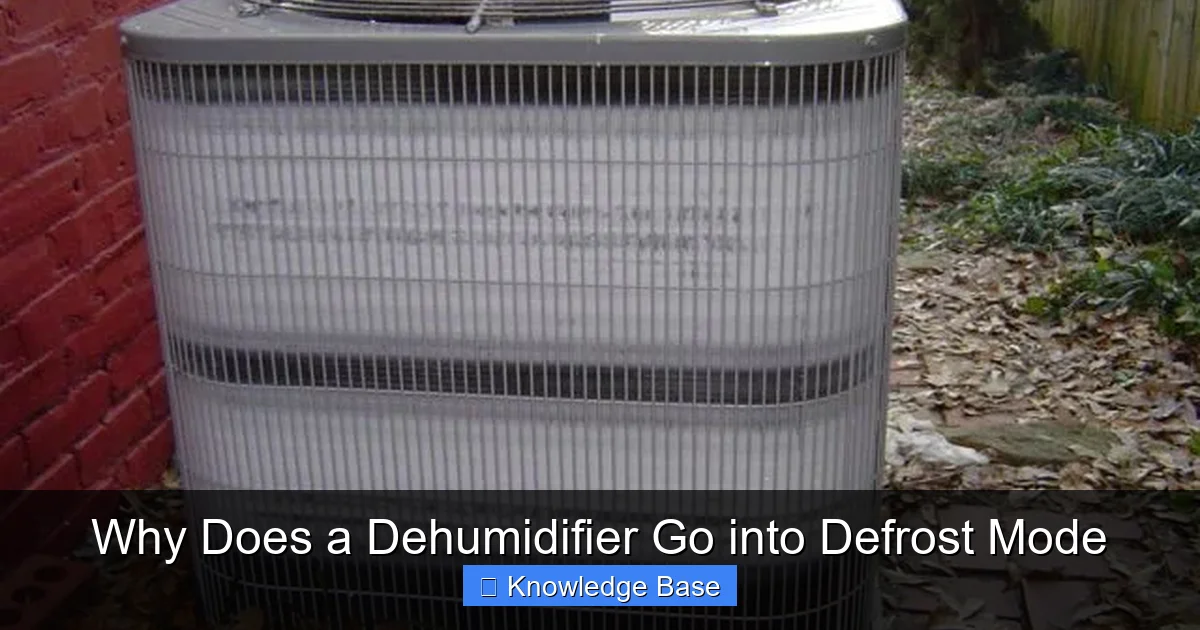
So, why does a dehumidifier go into defrost mode? Simply put, it’s fighting frost. When the air is cool and humid—like in a basement, crawl space, or garage—moisture in the air can freeze on the dehumidifier’s cold evaporator coils. Over time, this ice buildup acts like a barrier, blocking airflow and reducing the unit’s ability to extract water from the air. Defrost mode kicks in to melt that ice, restoring normal operation.
This process is completely normal and essential for units operating in environments below 65°F (18°C). Think of it like your car’s defroster clearing frost from the windshield—it’s a temporary fix so you can see clearly again. Similarly, your dehumidifier uses defrost mode to “see” and process moist air effectively.
Understanding this cycle helps you avoid unnecessary panic and ensures you’re using your dehumidifier correctly. It also highlights why placement, maintenance, and awareness of room temperature matter. Let’s dive deeper into how this system works, why it’s important, and how you can support your dehumidifier through the colder months.
How Dehumidifiers Work: The Basics

Visual guide about Why Does a Dehumidifier Go into Defrost Mode
Image source: temparrange.com
Before we explore defrost mode in detail, it helps to understand how a dehumidifier removes moisture from the air. Most residential dehumidifiers use a refrigeration-based system, similar to an air conditioner or refrigerator. Here’s a simple breakdown of the process:
Air is pulled into the unit by a fan and passed over a set of cold evaporator coils. As the warm, humid air touches these coils, the moisture condenses into water droplets—just like how dew forms on a cold drink can. This water collects in a reservoir or drains out through a hose. The now-drier air then passes over warm condenser coils, where it’s reheated to room temperature and blown back into the space.
This cycle repeats continuously, lowering the humidity level in the room. The key to efficiency lies in maintaining the right temperature difference between the evaporator and condenser coils. When the evaporator coils get too cold—especially in chilly environments—they can drop below freezing. That’s when moisture doesn’t just condense; it freezes, forming a layer of ice.
This ice buildup is the main reason your dehumidifier goes into defrost mode. Without intervention, the coils would become completely blocked, airflow would stop, and the unit could overheat or suffer mechanical stress. Defrost mode is the system’s way of hitting pause, melting the ice, and getting back to work.
The Role of the Evaporator Coils
The evaporator coils are the heart of the dehumidification process. They’re designed to be cold—typically between 40°F and 50°F (4°C to 10°C)—to encourage condensation. But in a cold room, especially one below 60°F (15.5°C), these coils can easily drop below 32°F (0°C), the freezing point of water.
When that happens, instead of dripping into the collection tank, moisture turns to ice. A thin layer might not seem like a big deal, but over time, it thickens. Imagine trying to breathe through a scarf that’s slowly freezing solid—eventually, you can’t get enough air. The same principle applies to your dehumidifier: airflow drops, efficiency plummets, and the unit struggles to function.
That’s why manufacturers include defrost sensors and timers. These components monitor coil temperature and runtime, triggering defrost mode when needed. It’s a proactive measure to prevent long-term damage and maintain performance.
Why Cold Environments Are a Challenge
You might wonder: if dehumidifiers are meant to remove moisture, why do they struggle in cold, damp places like basements? The answer lies in physics. Cold air holds less moisture than warm air, but basements and crawl spaces often have high relative humidity because they’re surrounded by damp earth and poor ventilation.
Even though the air feels “dry” in terms of actual moisture content, the relative humidity can still be high—sometimes over 70%. When that humid air hits the cold coils of a dehumidifier, it cools rapidly. If the coil temperature drops below freezing, condensation turns to frost.
This is especially common in unheated garages, cabins, or seasonal homes where temperatures fluctuate. A dehumidifier working hard in a 55°F (13°C) basement is a prime candidate for frequent defrost cycles. That’s not a flaw—it’s a sign the unit is doing its job under tough conditions.
What Happens During Defrost Mode?
Visual guide about Why Does a Dehumidifier Go into Defrost Mode
Image source: energyvanguard.com
When your dehumidifier enters defrost mode, it doesn’t just stop working. Instead, it shifts into a temporary maintenance cycle designed to clear ice from the evaporator coils. Here’s what actually happens behind the scenes:
First, the compressor—the part that pumps refrigerant and creates the cold coils—shuts off. The fan may continue running to help circulate air and speed up the melting process. In some models, a small heating element or hot gas bypass system activates to warm the coils directly. This targeted heat melts the ice quickly and safely.
The entire defrost cycle usually lasts between 5 and 15 minutes, depending on how much ice has built up. Once the sensors detect that the coils are clear and above freezing, the unit automatically returns to normal dehumidifying mode. You’ll hear the compressor kick back on, and the familiar hum will resume.
This process is completely automatic and requires no user intervention. You don’t need to press any buttons or reset the machine. In fact, trying to force the unit to run during defrost could cause damage.
Signs Your Dehumidifier Is in Defrost Mode
How can you tell if your dehumidifier is defrosting? Look for these common indicators:
– The compressor stops running, but the fan may still spin.
– The unit feels warmer than usual near the air outlet.
– You hear a change in sound—less of a deep hum, more of a quiet whir.
– The water collection tank isn’t filling as quickly (temporarily).
– On digital models, a “Defrost” or “DF” indicator light may appear.
These signs are normal and expected, especially during colder weather. If your unit cycles in and out of defrost every 30 to 60 minutes, that’s typically a sign it’s working properly in a cool environment.
How Long Does Defrost Mode Last?
Defrost cycles are designed to be short and efficient. Most units complete the process in under 15 minutes. If your dehumidifier seems to be in defrost mode for much longer—say, 30 minutes or more—it could indicate a problem, such as excessive ice buildup, a faulty sensor, or poor airflow.
However, in very cold or extremely humid conditions, longer or more frequent defrost cycles are normal. For example, a dehumidifier in an unheated garage during winter might defrost every 20 minutes. As long as it returns to normal operation afterward, there’s no cause for concern.
Why Defrost Mode Is Important for Performance and Longevity
You might think, “If the dehumidifier stops removing moisture during defrost, isn’t that inefficient?” In the short term, yes—there’s a brief pause in dehumidification. But in the long run, defrost mode is crucial for maintaining performance and protecting your investment.
Without defrost mode, ice would continue to accumulate on the coils. Eventually, the unit would lose all airflow. The fan would struggle to push air through the frozen coils, and the compressor would have to work harder to maintain cooling. This extra strain can lead to overheating, mechanical failure, or even a burned-out motor.
Moreover, prolonged ice buildup can cause refrigerant leaks or damage to the coil fins. Repairing or replacing these components is costly and often not worth the expense compared to buying a new unit.
By automatically entering defrost mode, your dehumidifier avoids these risks. It’s a self-preservation feature that ensures the appliance can keep running season after season.
Protecting the Compressor
The compressor is one of the most expensive and critical parts of a dehumidifier. It’s responsible for circulating refrigerant and creating the temperature difference needed for condensation. When ice blocks the coils, the compressor has to work against increased pressure and reduced efficiency.
This can cause it to overheat or cycle on and off too frequently—a condition known as “short cycling.” Over time, this wears out the compressor prematurely. Defrost mode prevents this by keeping the coils clear and maintaining proper airflow.
Think of it like taking a break during a long workout. You pause to catch your breath so you can keep going strong. Defrost mode gives the compressor that break, ensuring it doesn’t burn out.
Maintaining Airflow and Efficiency
Airflow is essential for dehumidification. The fan pulls humid air into the unit, where it passes over the cold coils. If ice blocks the coils, air can’t flow through. The result? The dehumidifier stops removing moisture, even if the compressor is running.
Defrost mode restores that airflow by melting the ice. Once the coils are clear, air can move freely again, and the unit resumes pulling water from the air. This keeps your space dry and prevents mold, mildew, and musty odors.
In short, defrost mode isn’t a flaw—it’s a feature that keeps your dehumidifier working when you need it most.
When Is Defrost Mode Most Common?
Defrost mode is most frequently activated in environments where the air is both cool and humid. These conditions are common in certain areas of the home and during specific seasons.
Basements and Crawl Spaces
Basements are prime candidates for defrost cycles. They’re often below ground level, surrounded by damp soil, and poorly insulated. Even if you don’t feel “cold,” the air temperature can hover around 60°F (15.5°C)—perfect for ice formation on dehumidifier coils.
Crawl spaces are even worse. These tight, enclosed areas trap moisture and rarely get heated. A dehumidifier working in a crawl space may enter defrost mode multiple times per hour during colder months.
If you’re using a dehumidifier in a basement, consider placing it on a raised platform or stand to improve airflow. Also, ensure the room has some ventilation—even a small window or exhaust fan can help reduce humidity and lower the load on the unit.
Garages and Workshops
Unheated garages are another common location for defrost cycles. These spaces are exposed to outdoor temperatures and often have concrete floors that stay cool year-round. During fall and winter, the combination of cold air and vehicle exhaust (which adds moisture) creates ideal conditions for frost.
If you use your garage as a workshop or storage area, a dehumidifier can prevent rust on tools and protect stored items. Just be prepared for frequent defrost cycles. Some models are specifically designed for low-temperature operation and handle defrost more efficiently.
Seasonal and Vacation Homes
If you own a cabin, lake house, or vacation home that’s unoccupied during colder months, a dehumidifier can prevent mold and mildew. However, these homes often lack central heating, so indoor temperatures can drop significantly.
In such cases, consider using a dehumidifier with an auto-defrost feature and a low-temperature rating. Some units can operate effectively down to 41°F (5°C) or even lower. Check the manufacturer’s specifications before purchasing.
Winter Months in Cool Climates
Even in homes with central heating, certain rooms—like laundry rooms, mudrooms, or sunrooms—may stay cooler than the rest of the house. If you run a dehumidifier in one of these spaces during winter, expect to see defrost mode in action.
The key is to monitor performance. If the unit is defrosting frequently but still collecting water during normal cycles, it’s working as intended. If it seems to be stuck in defrost or not collecting any water at all, it may need maintenance or a different placement.
How to Reduce Unnecessary Defrost Cycles
While defrost mode is normal, you can take steps to minimize how often it occurs. This helps maintain consistent dehumidification and reduces wear on the system.
Improve Room Temperature
The simplest way to reduce defrost cycles is to raise the ambient temperature. Even a few degrees can make a big difference. If possible, use a space heater in the room where the dehumidifier runs—just ensure it’s safe and doesn’t create a fire hazard.
Alternatively, consider insulating the space. Adding insulation to basement walls or garage doors can help retain heat and reduce temperature fluctuations.
Ensure Proper Airflow
Blocked airflow forces the dehumidifier to work harder, increasing the chance of ice buildup. Keep at least 6 to 12 inches of clearance around the unit. Don’t place it in a corner or behind furniture.
Also, clean the air filter regularly. A dirty filter restricts airflow, causing the coils to get colder and freeze more easily. Most manufacturers recommend cleaning the filter every 2 to 4 weeks during heavy use.
Use a Dehumidifier Designed for Cold Climates
Not all dehumidifiers are created equal. Some models are specifically engineered for low-temperature operation. These units often have enhanced defrost systems, better insulation, and components rated for colder environments.
Look for models labeled “cold climate,” “low temp,” or “basement use.” They typically operate efficiently down to 45°F (7°C) or lower. While they may cost more upfront, they save money in the long run by reducing energy use and extending lifespan.
Consider a Desiccant Dehumidifier
Refrigerant-based dehumidifiers (the most common type) rely on cold coils, making them prone to frost. Desiccant dehumidifiers, on the other hand, use a moisture-absorbing material (like silica gel) and don’t require cold surfaces. As a result, they don’t form ice and rarely need defrost mode.
Desiccant units are ideal for very cold environments, such as garages, RVs, or cabins. They’re quieter and more energy-efficient in low temperatures, though they may be less effective in high-humidity conditions.
Common Misconceptions About Defrost Mode
Despite being a standard feature, defrost mode is often misunderstood. Let’s clear up some common myths.
“Defrost Mode Means the Dehumidifier Is Broken”
This is the biggest misconception. Defrost mode is a normal, protective function—not a sign of failure. If your unit enters defrost periodically and resumes normal operation, it’s working correctly.
Only be concerned if the unit gets stuck in defrost, doesn’t collect water at all, or shows error codes. These could indicate a sensor issue, refrigerant leak, or electrical problem.
“I Should Turn Off the Dehumidifier in Winter”
While it’s true that dehumidifiers are less effective in very cold weather, turning them off completely can lead to moisture problems. Basements and crawl spaces still accumulate humidity from groundwater, plumbing leaks, or seasonal changes.
Instead of turning it off, consider using a cold-climate model or running the unit during milder days. Some smart dehumidifiers can be programmed to operate only when temperatures are above a certain threshold.
“Defrost Mode Uses a Lot of Extra Energy”
Defrost cycles are brief and use minimal energy. The compressor is off, and only the fan (and possibly a small heater) runs. The energy used is negligible compared to the cost of repairing or replacing a damaged unit.
In fact, defrost mode can improve overall efficiency by preventing ice buildup that would otherwise force the system to work harder.
When to Call a Professional
While defrost mode is normal, there are times when it could signal a deeper issue. Contact a technician if you notice:
– The unit stays in defrost mode for more than 30 minutes.
– No water is collected during normal cycles.
– The compressor makes unusual noises or fails to restart.
– Ice forms on parts of the unit other than the coils (like the fan or housing).
– Error codes appear on the display.
These symptoms could indicate a faulty defrost sensor, low refrigerant, or electrical problem. A professional can diagnose and repair the issue before it leads to costly damage.
Conclusion
So, why does a dehumidifier go into defrost mode? It’s a smart, automatic response to ice buildup on the evaporator coils—a common issue in cool, humid environments. This temporary cycle melts frost, restores airflow, and protects the compressor and other components from damage.
Rather than a malfunction, defrost mode is a sign that your dehumidifier is working hard to keep your space dry, even in challenging conditions. By understanding how it works and taking simple steps to support your unit—like maintaining proper temperature, cleaning the filter, and choosing the right model—you can ensure reliable performance year-round.
Whether you’re managing moisture in a basement, garage, or vacation home, knowing when and why defrost mode activates helps you use your dehumidifier more effectively. Embrace this feature as a helpful ally in the fight against dampness, mold, and musty odors. With the right care, your dehumidifier will keep your air fresh and your belongings protected, no matter the season.
Frequently Asked Questions
Is it normal for a dehumidifier to go into defrost mode?
Yes, it’s completely normal—especially in cool or humid environments. Defrost mode prevents ice buildup on the coils, ensuring efficient operation and protecting the unit from damage.
How often should a dehumidifier defrost?
Most units defrost every 30 to 60 minutes in cold conditions. Frequency depends on room temperature and humidity levels. Frequent cycles are normal in basements or garages.
Can I stop my dehumidifier from defrosting?
No, and you shouldn’t try. Defrost mode is automatic and necessary. Instead, improve room temperature or use a cold-climate model to reduce cycle frequency.
Does defrost mode use more electricity?
No, defrost cycles use very little energy. The compressor is off, and only the fan (and sometimes a small heater) runs briefly. The energy cost is minimal.
What if my dehumidifier won’t come out of defrost mode?
If the unit stays in defrost for over 30 minutes or won’t restart, there may be a sensor or electrical issue. Contact a technician for diagnosis and repair.
Can I use a dehumidifier in a cold garage?
Yes, but choose a model rated for low temperatures. Desiccant dehumidifiers or cold-climate refrigerant units work best in unheated garages and workshops.