

If your dehumidifier bucket keeps filling up even when a hose is connected, it’s likely due to a clogged hose, improper installation, or a faulty float switch. This issue prevents continuous drainage and can lead to overflow, mold growth, or system shutdowns. Understanding the root causes and applying simple fixes can restore efficient operation and protect your home from excess moisture.
Key Takeaways
- Clogged or kinked drainage hose: A blocked or bent hose stops water from flowing out, causing the bucket to fill despite the hose being attached.
- Improper hose installation: If the hose isn’t positioned correctly—such as being too high or not sloped downward—gravity can’t assist drainage, leading to backup.
- Faulty float switch: This safety mechanism detects water levels and shuts off the unit when full. If it’s stuck or damaged, it may not recognize drainage, causing the bucket to overfill.
- Incorrect bucket placement: If the collection bucket isn’t seated properly, the float switch won’t engage correctly, tricking the system into thinking it’s full.
- Excessive humidity or high runtime: In very damp environments, the dehumidifier may produce water faster than the hose can drain it, especially if the hose is narrow or long.
- Air leaks or poor seals: Gaps around the bucket or hose connections can disrupt suction and drainage efficiency.
- Defective pump (if applicable): Some models use a condensate pump for drainage. A malfunctioning pump won’t move water, leading to bucket overflow.
📑 Table of Contents
Why Does Dehumidifier Bucket Fill When Hose Attached?
You’ve set up your dehumidifier with a continuous drainage hose, expecting it to run hassle-free without constant bucket emptying. But instead, you return to find the water bucket full—again. Frustrating, right? You’re not alone. Many homeowners face this puzzling issue: the dehumidifier bucket fills up even when a hose is attached for drainage.
At first glance, it seems counterintuitive. If water is supposed to flow out through the hose, why is it still collecting in the bucket? The answer lies in a combination of mechanical, installation, and environmental factors. Understanding these can save you time, prevent water damage, and keep your indoor air quality in check.
Dehumidifiers work by pulling moist air over cold coils, causing condensation. That water drips into a collection bucket or, ideally, flows out through a drainage hose. When the hose is properly installed, gravity should carry the water away continuously. But when something interrupts this flow—like a clog, a kink, or a sensor malfunction—the system defaults to filling the bucket instead.
This problem isn’t just inconvenient. It can lead to overflow, mold growth, musty odors, and even damage to your flooring or walls. Worse, many dehumidifiers are designed to shut off automatically when the bucket is full, meaning your unit stops working entirely until you manually empty it. That defeats the whole purpose of using a continuous drain hose in the first place.
In this guide, we’ll explore the most common reasons why your dehumidifier bucket fills when a hose is attached, how to diagnose the issue, and what you can do to fix it. Whether you’re dealing with a simple kink in the hose or a more complex sensor problem, we’ve got practical solutions to get your dehumidifier back to working efficiently.
Common Causes of Bucket Filling with Hose Attached

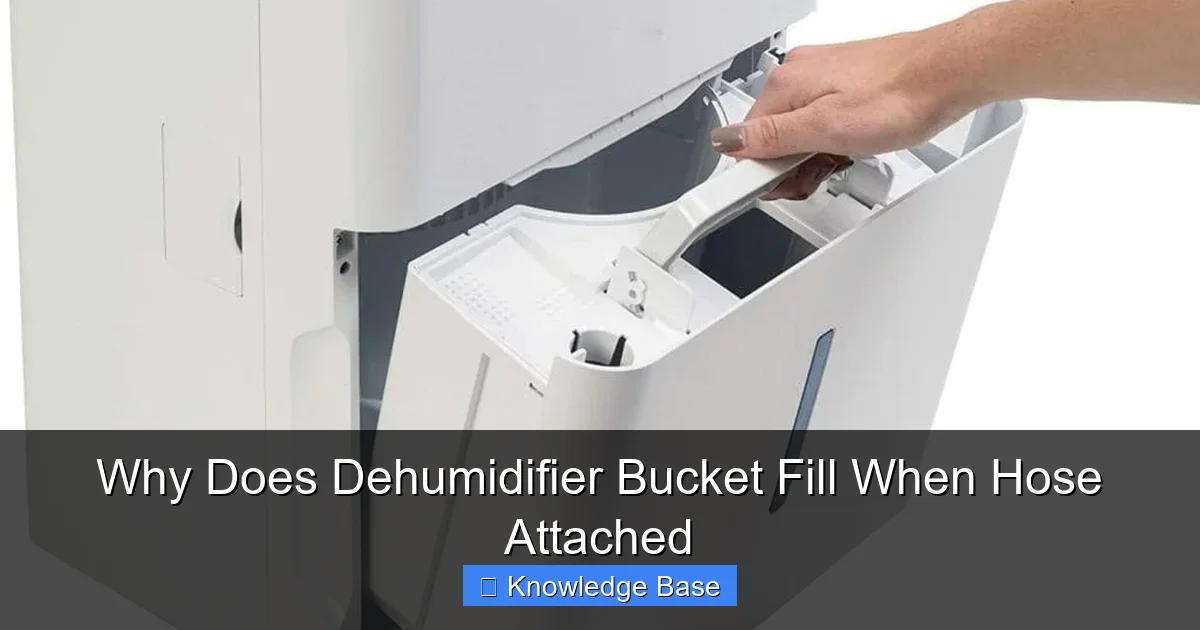
Visual guide about Why Does Dehumidifier Bucket Fill When Hose Attached
Image source: hvacseer.com
There are several reasons why your dehumidifier might still fill its bucket even when a drainage hose is connected. Let’s break down the most frequent culprits so you can identify and resolve the issue quickly.
Clogged or Kinked Drainage Hose
One of the most common reasons for bucket overflow is a clogged or kinked hose. Over time, mineral deposits, mold, or debris can build up inside the hose, especially if you’re using hard water or the unit runs frequently. Even a small blockage can significantly reduce or completely stop water flow.
Kinks are another issue. If the hose bends sharply—like when it’s routed around a corner or under furniture—it can restrict or block the flow of water. Gravity drainage relies on a smooth, downward path. Any obstruction disrupts this process, causing water to back up into the bucket.
Tip: Inspect your hose regularly. Disconnect it from the dehumidifier and check for visible kinks or bends. Run water through it to test for clogs. If you find buildup, soak the hose in a mixture of vinegar and water to dissolve mineral deposits.
Improper Hose Installation
Even a clean, straight hose won’t work if it’s installed incorrectly. For gravity drainage to function, the hose must slope downward from the dehumidifier to the drain point. If the hose rises at any point—such as when routed over a baseboard or up a wall—water can pool and stop flowing.
Additionally, the hose should not be submerged in water at the drain end. If the outlet is sitting in a sink, bucket, or floor drain filled with water, it creates backpressure that prevents proper drainage. This is especially common when draining into a sink or utility tub.
Example: Imagine your dehumidifier is in the basement, and you’ve run the hose up to a window well. If the hose goes up before going down, water will collect at the highest point and never reach the exit. Always ensure the hose has a consistent downward slope.
Faulty or Stuck Float Switch
The float switch is a small but critical component inside the dehumidifier. It rises with the water level in the bucket and triggers the unit to shut off when full. When a hose is attached, the system assumes water is draining, so the float should stay low. But if the float switch is stuck in the “up” position—due to dirt, corrosion, or mechanical failure—it tricks the dehumidifier into thinking the bucket is full, even when it’s not.
Sometimes, the float switch isn’t physically stuck but is misaligned or damaged. In other cases, the sensor that detects the float’s position may fail, sending incorrect signals to the control board.
Tip: Gently lift and release the float switch to see if it moves freely. If it’s stiff or doesn’t return to its original position, it may need cleaning or replacement. Consult your user manual for guidance on accessing and testing the float mechanism.
Incorrect Bucket Placement
Believe it or not, how you place the bucket matters. If the collection bucket isn’t seated correctly in its designated slot, the float switch may not engage properly. This can cause the dehumidifier to think the bucket is full, even if it’s mostly empty.
Some models have a safety interlock that prevents operation if the bucket isn’t fully inserted. If this interlock is misaligned or dirty, it can give a false “full” reading.
Tip: Remove the bucket, clean the area around the float switch, and reinsert the bucket firmly. Listen for a click or feel for a secure fit. This ensures proper contact and accurate water level detection.
Excessive Moisture or High Runtime
In extremely humid environments—like a damp crawl space or during rainy seasons—your dehumidifier may produce water faster than the hose can drain it. This is especially true if the hose is narrow (less than 1/4 inch in diameter) or very long (over 10 feet). The longer the hose, the more resistance there is to flow, slowing drainage.
If your unit runs continuously and the hose can’t keep up, water will accumulate in the bucket faster than it exits. This creates the illusion that the hose isn’t working, even if it’s installed correctly.
Solution: Consider upgrading to a wider or shorter hose. Alternatively, use a condensate pump if your model supports it. Pumps actively push water out, overcoming gravity and distance limitations.
How to Diagnose the Problem
Visual guide about Why Does Dehumidifier Bucket Fill When Hose Attached
Image source: bestdehumidifier.reviews
Before replacing parts or calling a technician, it’s important to diagnose the issue accurately. A systematic approach can save you time and money. Here’s how to troubleshoot step by step.
Step 1: Check the Hose for Blockages
Start by disconnecting the hose from the dehumidifier. Look inside both ends for visible debris, mold, or mineral buildup. Run a steady stream of water through the hose to test flow. If water doesn’t pass easily, the hose is likely clogged.
Use a pipe cleaner or flexible brush to scrub the interior. For stubborn clogs, soak the hose in a 50/50 vinegar and water solution for 30 minutes, then rinse thoroughly. Vinegar dissolves calcium and lime deposits common in hard water areas.
Step 2: Inspect Hose Routing and Slope
Reconnect the hose and examine its path. Ensure it slopes downward from the dehumidifier to the drain point without any upward bends. Use clips or tape to secure the hose and maintain the correct angle.
Avoid routing the hose through tight spaces or under heavy objects that could cause kinks. If you must go around a corner, use a gentle curve rather than a sharp bend.
Step 3: Test the Float Switch
With the bucket removed, locate the float switch—usually a small plastic arm or disc near the top of the bucket well. Gently lift it and release it. It should move smoothly and return to its resting position.
If it’s sticky or doesn’t move, clean it with a damp cloth. Avoid using harsh chemicals that could damage the mechanism. If the float appears damaged or the switch doesn’t respond, it may need replacement.
Step 4: Verify Bucket Alignment
Reinsert the bucket and ensure it clicks into place. Wiggle it slightly to confirm it’s secure. Some models have alignment tabs or sensors that must be engaged for proper operation.
If the bucket sits crooked or doesn’t fit snugly, adjust it or check for obstructions in the slot.
Step 5: Monitor Water Production Rate
Run the dehumidifier for an hour with the hose disconnected and measure how much water collects in the bucket. Then, reconnect the hose and repeat the test. Compare the results.
If the bucket fills at the same rate with or without the hose, the drainage system isn’t working. If it fills slower with the hose, the system is partially functional but may need optimization.
Solutions and Fixes
Once you’ve identified the cause, it’s time to apply the right fix. Most issues can be resolved with simple adjustments or maintenance.
Clean or Replace the Drain Hose
If the hose is clogged, clean it thoroughly as described above. If it’s old, cracked, or permanently kinked, replace it with a new one. Use a food-grade vinyl hose with a smooth interior to reduce friction and prevent buildup.
Choose a hose with an internal diameter of at least 1/4 inch for optimal flow. Longer hoses should be wider to compensate for resistance.
Re-route the Hose for Proper Slope
Adjust the hose path to ensure a consistent downward slope. Use hose clips or adhesive mounts to secure it along baseboards, under doors, or through walls. Avoid sharp bends and elevation changes.
If draining into a floor drain, use a hose adapter that fits securely and prevents backflow. Never let the hose rest in standing water.
Repair or Replace the Float Switch
If the float switch is dirty, clean it carefully. If it’s damaged or unresponsive, order a replacement part from the manufacturer. Installation is usually straightforward—just disconnect the old switch and connect the new one.
Some models allow you to bypass the float switch temporarily for testing, but this should only be done under supervision to avoid overflow.
Use a Condensate Pump
For basements, crawl spaces, or areas where gravity drainage isn’t feasible, consider installing a condensate pump. These small devices attach to the dehumidifier and actively pump water to a higher elevation or distant drain.
Look for a pump with a built-in float switch and overflow protection. Many are compatible with standard dehumidifier hoses and require minimal setup.
Upgrade to a Larger or More Efficient Unit
If your dehumidifier constantly struggles with high humidity, it may be undersized for the space. A larger unit with a higher pint-per-day (PPD) rating can handle moisture more effectively and may include better drainage options.
Check the manufacturer’s specifications for recommended room size and humidity levels. Upgrading can reduce runtime and improve overall performance.
Preventive Maintenance Tips
Preventing bucket overflow starts with regular maintenance. A little effort goes a long way in keeping your dehumidifier running smoothly.
Clean the Hose Monthly
Even if you don’t see clogs, mineral buildup can occur over time. Make it a habit to inspect and clean the drainage hose every month, especially during humid seasons.
Check Hose Position Weekly
Ensure the hose remains properly sloped and free of kinks. Pets, furniture moves, or cleaning can accidentally shift the hose, disrupting drainage.
Clean the Bucket and Float Switch
Empty and wash the bucket weekly with mild soap and water. Wipe the float switch to remove dust or residue that could interfere with movement.
Use a Hose Filter
Install an inline filter or mesh screen at the hose inlet to catch debris before it enters the line. This is especially useful in dusty or high-particulate environments.
Monitor Humidity Levels
Use a hygrometer to track indoor humidity. Aim for 30–50% relative humidity. If levels are consistently high, address the source—such as leaks, poor ventilation, or inadequate insulation.
When to Call a Professional
Most bucket-filling issues can be fixed at home. But if you’ve tried all the steps and the problem persists, it may be time to consult a technician.
Signs you need professional help include:
- The dehumidifier shuts off repeatedly despite an empty bucket
- You hear unusual noises or see water leaking from the unit
- The compressor or fan isn’t running
- Electrical components appear damaged or burnt
A certified HVAC technician can diagnose internal faults, such as a failed control board, refrigerant issues, or motor problems, that aren’t visible during basic troubleshooting.
Conclusion
Finding your dehumidifier bucket full when a hose is attached can be frustrating, but it’s usually a solvable problem. Most cases stem from simple issues like a clogged hose, improper installation, or a faulty float switch. By understanding how your dehumidifier’s drainage system works and following a few maintenance steps, you can keep it running efficiently and avoid water damage.
Regular inspection, proper hose routing, and timely cleaning are key to preventing overflow. If gravity drainage isn’t enough, consider upgrading to a condensate pump or a more powerful unit. And don’t hesitate to seek professional help if the issue persists.
With the right care, your dehumidifier can provide years of reliable service, keeping your home dry, comfortable, and mold-free. Remember: a little prevention today can save you from a big mess tomorrow.
Frequently Asked Questions
Why is my dehumidifier bucket filling up even with a hose connected?
This usually happens due to a clogged or kinked hose, improper installation, or a faulty float switch. The system can’t drain properly, so water backs up into the bucket despite the hose being attached.
Can a dehumidifier drain hose be too long?
Yes, a hose that’s too long (over 10–15 feet) can create too much resistance, slowing or stopping drainage. Use a wider hose or a condensate pump for longer runs.
How often should I clean my dehumidifier’s drain hose?
Clean the hose at least once a month, especially in humid environments or if you have hard water. Regular cleaning prevents clogs and ensures smooth drainage.
What size should my dehumidifier drain hose be?
A 1/4-inch internal diameter hose is standard. For longer runs or high water output, consider a 3/8-inch hose to improve flow and reduce clogging.
Can I use a dehumidifier without a bucket if I have a hose?
Most models require the bucket to be in place for safety, even with a hose. The bucket ensures the float switch works correctly and prevents leaks if the hose fails.
Is it safe to run a dehumidifier with a clogged hose?
No, it’s not safe. A clogged hose can cause overflow, water damage, or trigger the unit to shut off. Always clear blockages before running the dehumidifier.