

If your dehumidifier keeps freezing up, it’s usually due to low temperatures, poor airflow, or dirty coils. This issue stops moisture removal and can damage the unit if ignored. Simple fixes like adjusting room temperature, cleaning filters, and ensuring proper ventilation often solve the problem fast.
Key Takeaways
- Low room temperature is a top cause: Most dehumidifiers work best above 65°F (18°C). Below that, coils can freeze.
- Dirty air filters restrict airflow: Clogged filters make the unit work harder, leading to ice buildup on coils.
- Frozen evaporator coils stop moisture removal: Ice blocks airflow and reduces efficiency until the system shuts down.
- Refrigerant leaks require professional help: Low refrigerant levels cause coils to get too cold and freeze.
- Improper placement matters: Placing the unit in a corner or near cold walls increases freezing risk.
- Regular maintenance prevents most issues: Clean filters monthly and inspect coils seasonally.
- Auto-defrost features aren’t foolproof: Some models defrost automatically, but extreme cold can still overwhelm the system.
📑 Table of Contents
Why Does Dehumidifier Keep Freezing Up? A Complete Guide
You’ve just bought a shiny new dehumidifier to tackle that damp basement smell or reduce humidity in your laundry room. You plug it in, set the humidity level, and walk away—only to return hours later and find it’s stopped working. Worse, you notice a thick layer of ice covering the internal coils. Sound familiar?
Don’t panic. A dehumidifier freezing up is one of the most common issues homeowners face, especially during colder months or in poorly insulated spaces. While it might seem like a major malfunction, in most cases, it’s a fixable problem caused by environmental factors, lack of maintenance, or improper use. Understanding why your dehumidifier keeps freezing up is the first step toward solving it—and preventing it from happening again.
In this guide, we’ll walk you through the most common causes, explain how your dehumidifier works, and give you practical, step-by-step solutions. Whether you’re dealing with a small portable unit in your closet or a whole-house system in your basement, the principles remain the same. By the end, you’ll know exactly what to check, how to fix it, and how to keep your dehumidifier running smoothly all year long.
How a Dehumidifier Works (And Why It Freezes)

Visual guide about Why Does Dehumidifier Keep Freezing Up
Image source: cdn.shortpixel.ai
Before we dive into the “why,” let’s quickly cover the “how.” Understanding the basic mechanics of your dehumidifier will help you see why ice forms and how to stop it.
Most residential dehumidifiers use a refrigeration-based system, similar to an air conditioner. Here’s a simplified breakdown:
– A fan pulls humid air from the room into the unit.
– The air passes over cold evaporator coils, where moisture condenses into water droplets.
– The water drips into a collection bucket or drains out through a hose.
– The now-dry air passes over warm condenser coils and is blown back into the room.
The evaporator coils are intentionally kept very cold—often below freezing—to maximize moisture removal. But if the surrounding air is too cold or the airflow is restricted, those coils can drop below 32°F (0°C), causing moisture to freeze instead of drip. This ice builds up, blocks airflow, and eventually shuts down the system.
Think of it like breathing on a cold window: the moisture in your breath fogs the glass. But if the window is below freezing, that fog turns to ice. The same principle applies inside your dehumidifier.
Now, here’s the key: a little frost is normal during startup or in high-humidity conditions. But if the entire coil is covered in ice within minutes or the unit shuts off repeatedly, something’s wrong.
Normal Frost vs. Problematic Ice Buildup
It’s important to distinguish between normal operation and a real issue. A light coating of frost on the coils during the first 10–15 minutes of operation is common, especially in humid environments. This usually melts away as the unit warms up.
However, if you see:
– Thick, solid ice covering the coils
– The unit stops removing moisture
– The fan continues running but no air feels dry
– The machine shuts off and won’t restart
…then you’ve got a freezing problem that needs attention.
Top 5 Causes of Dehumidifier Freezing Up
Visual guide about Why Does Dehumidifier Keep Freezing Up
Image source: goodairgeeks.com
Now that you know how your dehumidifier works, let’s look at the most common reasons it freezes. Each cause has a solution—some simple, some requiring a bit more effort.
1. Low Room Temperature
This is the #1 reason dehumidifiers freeze up. Most standard dehumidifiers are designed to operate efficiently in rooms between 65°F and 80°F (18°C to 27°C). When the ambient temperature drops below 60°F (15.5°C), the evaporator coils can get too cold, causing moisture to freeze instead of condense.
For example, if you’re running a dehumidifier in an unheated garage, crawl space, or basement during winter, the air might be cool and damp—perfect conditions for ice buildup.
Real-life example: Sarah placed her dehumidifier in her basement to tackle musty smells. She turned it on in December, but by morning, the unit was frozen solid. The basement temperature was 52°F (11°C)—well below the recommended range.
Solution: Move the dehumidifier to a warmer area, like a heated utility room or near a furnace. If that’s not possible, consider upgrading to a cold-climate dehumidifier, which uses special refrigerants and defrost cycles to operate in temperatures as low as 38°F (3°C).
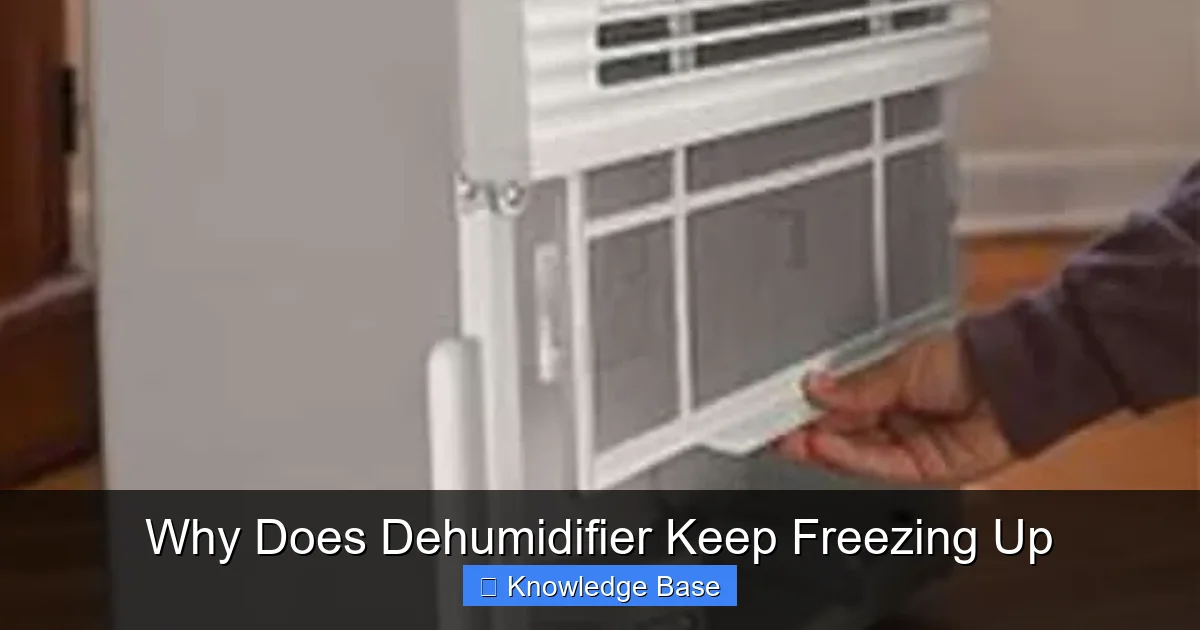
2. Dirty or Clogged Air Filters
Your dehumidifier has an air filter—usually a mesh or foam panel—that traps dust, pet hair, and other particles. Over time, this filter gets clogged, restricting airflow.
When airflow is reduced, the evaporator coils don’t get enough warm air to balance their cold temperature. The coils drop below freezing, and ice forms.
Real-life example: Mike hadn’t cleaned his dehumidifier filter in over six months. He noticed it was running constantly but not collecting much water. When he opened it, he found the filter packed with dust and the coils covered in ice.
Solution: Clean the filter every 2–4 weeks, or monthly during heavy use. Most filters are washable—just rinse under warm water, let dry completely, and reinstall. If the filter is damaged or too dirty to clean, replace it with a new one.
3. Blocked Air Vents or Poor Airflow
Even with a clean filter, airflow can be blocked by poor placement. If your dehumidifier is shoved into a corner, placed too close to a wall, or covered with a blanket or box, air can’t circulate properly.
Restricted airflow means the coils stay too cold, leading to freezing.
Real-life example: Lisa placed her dehumidifier in a narrow closet to save space. The unit ran nonstop but kept freezing. She later realized the intake and exhaust vents were blocked by shelves and clothes.
Solution: Always leave at least 6–12 inches of clearance around all sides of the unit. Keep it away from walls, furniture, and curtains. Never cover the dehumidifier or run it in an enclosed space without ventilation.
4. Refrigerant Leak or Low Charge
Refrigerant is the chemical that absorbs and releases heat inside your dehumidifier. If there’s a leak or the system is undercharged, the evaporator coils can become excessively cold—cold enough to freeze moisture.
This is a more serious issue and usually requires professional repair.
Signs of a refrigerant problem:
– Unit runs but doesn’t remove moisture
– Coils are extremely cold to the touch
– Ice forms rapidly, even in warm rooms
– Hissing or bubbling sounds from the unit
Real-life example: Tom’s dehumidifier froze up in his 70°F (21°C) basement. He cleaned the filter and checked airflow, but the problem persisted. A technician found a small leak in the refrigerant line and recharged the system.
Solution: If you suspect a refrigerant issue, contact a qualified HVAC technician. DIY refrigerant handling is dangerous and illegal without certification. Most manufacturers void warranties if users attempt repairs.
5. Faulty Defrost Sensor or Control Board
Many modern dehumidifiers have an auto-defrost feature. A sensor monitors coil temperature and triggers a defrost cycle when ice builds up. If this sensor is broken or the control board fails, the unit won’t defrost, and ice will keep accumulating.
Signs of a defrost issue:
– Ice forms even in warm rooms
– Unit runs continuously without stopping
– Defrost light (if present) doesn’t activate
Real-life example: Emma’s dehumidifier had a defrost light that never turned on, even when ice was visible. After troubleshooting, she discovered the defrost sensor was disconnected.
Solution: Check your user manual for defrost troubleshooting steps. Some models allow you to reset the system by unplugging it for 10 minutes. If that doesn’t work, contact customer support or a repair technician.
How to Fix a Frozen Dehumidifier (Step-by-Step)
If your dehumidifier is already frozen, don’t panic. Follow these steps to safely thaw and restore it.
Step 1: Turn Off and Unplug the Unit
Safety first. Always unplug the dehumidifier before inspecting or cleaning it. This prevents electrical shock and protects the motor.
Step 2: Let It Thaw Completely
Place the unit in a warm room and let it sit for 4–6 hours. You can speed up the process by placing a fan nearby to circulate warm air. Do not use a hair dryer or heat gun—this can damage internal components.
Step 3: Clean the Air Filter
Once thawed, remove and clean the air filter. Rinse it under warm water, scrub gently if needed, and let it dry completely before reinstalling.
Step 4: Inspect the Coils and Vents
Use a flashlight to check the evaporator and condenser coils. Look for dirt, dust, or signs of damage. If the coils are dirty, gently clean them with a soft brush or compressed air. Never use water directly on the coils.
Step 5: Check for Obstructions
Make sure the intake and exhaust vents are clear. Remove any debris, dust, or blockages. Ensure the unit has proper clearance on all sides.
Step 6: Test the Unit
Plug the dehumidifier back in and turn it on. Set it to a moderate humidity level (around 50%) and monitor it for the first hour. If it runs smoothly and doesn’t freeze, you’re good to go.
If it freezes again within minutes, the issue may be more serious—like a refrigerant leak or faulty sensor—and you should consult a professional.
Preventing Future Freezing: Maintenance Tips
The best way to avoid a frozen dehumidifier is regular maintenance. A little effort goes a long way in keeping your unit efficient and ice-free.
Clean the Filter Monthly
Set a calendar reminder to clean or replace the air filter every month during humid seasons. This is the single most effective way to prevent freezing.
Check Coils Seasonally
Every 3–6 months, inspect the evaporator and condenser coils for dust buildup. Use a soft brush or vacuum with a brush attachment to gently clean them.
Monitor Room Temperature
Keep the room above 65°F (18°C) when running the dehumidifier. Use a thermometer to check, especially in basements or garages.
Use a Hygrometer
A hygrometer measures humidity levels. Aim for 30–50% indoor humidity. If the air is too dry, the dehumidifier may cycle too often, increasing freezing risk.
Choose the Right Model
If you live in a cold climate or plan to use the dehumidifier in a chilly space, invest in a cold-climate model. These units are specifically designed to operate in low temperatures and have enhanced defrost systems.
Schedule Professional Maintenance
Once a year, consider having a technician inspect your dehumidifier, especially if it’s a whole-house system. They can check refrigerant levels, test sensors, and ensure everything is in working order.
When to Call a Professional
While many freezing issues can be fixed at home, some problems require expert help. Don’t hesitate to call a technician if:
– The unit freezes repeatedly after cleaning and troubleshooting
– You hear unusual noises (hissing, buzzing, grinding)
– There’s a burning smell or smoke
– The unit leaks water or refrigerant
– The defrost cycle doesn’t activate
Attempting DIY repairs on electrical or refrigerant systems can be dangerous and may void your warranty. When in doubt, it’s better to be safe than sorry.
Conclusion
So, why does your dehumidifier keep freezing up? In most cases, it’s due to low temperatures, dirty filters, or poor airflow—issues that are easy to fix with a little attention and maintenance.
By understanding how your dehumidifier works and following the tips in this guide, you can keep it running efficiently, extend its lifespan, and enjoy a healthier, more comfortable home. Remember: a frozen dehumidifier isn’t broken—it’s just asking for help.
Take action today: clean that filter, check the room temperature, and give your unit the space it needs. Your dehumidifier will thank you with years of reliable service.
Frequently Asked Questions
Can I use my dehumidifier in a cold basement?
Yes, but only if the temperature stays above 65°F (18°C). For colder spaces, choose a cold-climate dehumidifier designed to operate in temperatures as low as 38°F (3°C).
How often should I clean my dehumidifier filter?
Clean the filter every 2–4 weeks during humid seasons, or monthly if used regularly. A dirty filter restricts airflow and can cause freezing.
Is it safe to run a dehumidifier in winter?
It’s safe as long as the room is above 65°F (18°C). In colder areas, use a cold-climate model or only run it during warmer parts of the day.
Why does my dehumidifier freeze even in a warm room?
This could indicate a refrigerant leak, faulty defrost sensor, or blocked airflow. Clean the filter and vents first. If the problem persists, consult a technician.
Can I thaw a frozen dehumidifier with a heater?
No. Never use direct heat like a hair dryer or space heater. Let it thaw naturally in a warm room to avoid damaging internal components.
How do I know if my dehumidifier has a refrigerant leak?
Signs include rapid ice formation, lack of moisture removal, and hissing sounds. A professional technician can test refrigerant levels and repair leaks.