
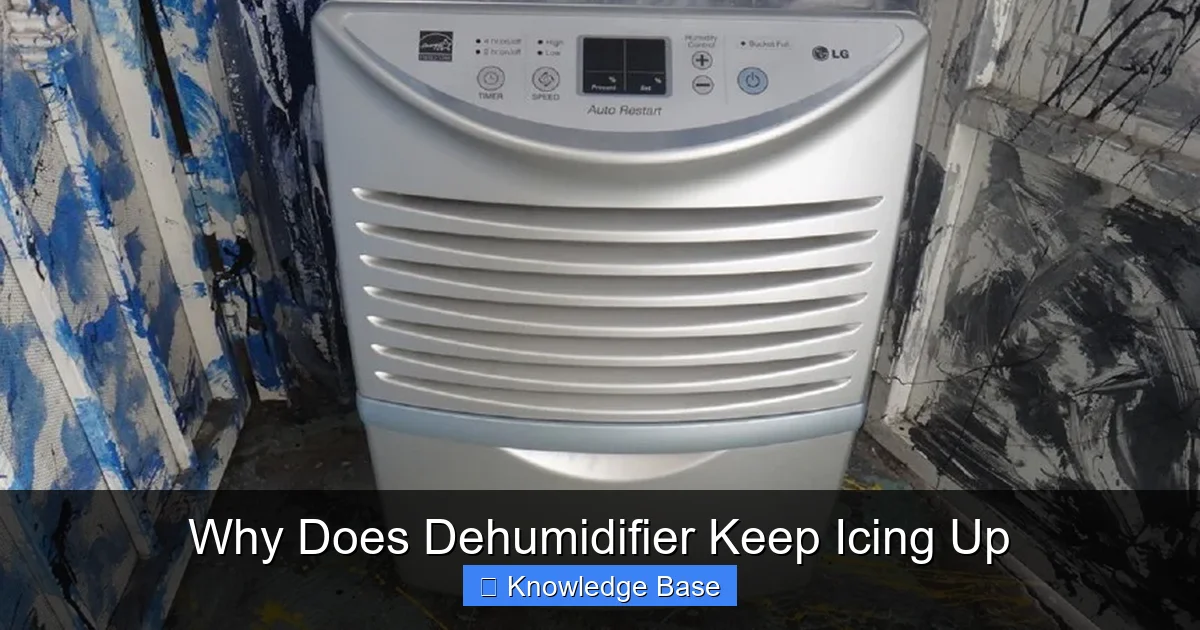
If your dehumidifier keeps icing up, it’s usually due to low temperatures, dirty coils, or restricted airflow. This common issue reduces efficiency and can damage the unit if ignored. With simple fixes like adjusting room temperature, cleaning filters, and proper placement, you can stop the ice buildup and keep your dehumidifier working like new.
Key Takeaways
- Low ambient temperature: Dehumidifiers are designed to work best above 65°F (18°C); colder air causes moisture to freeze on coils instead of draining.
- Dirty or clogged air filters: Restricted airflow over the evaporator coils leads to lower coil temperatures and ice formation.
- Frost buildup on coils: When the evaporator coil gets too cold, moisture in the air freezes, creating a layer of ice that blocks airflow.
- Refrigerant leaks or low charge: Insufficient refrigerant reduces cooling efficiency, causing coils to overcool and ice up.
- Faulty defrost sensor or control board: Modern units have defrost cycles; if sensors fail, the system won’t melt ice when needed.
- Poor ventilation or placement: Blocking intake or exhaust vents traps cold air and prevents proper heat exchange.
- Overuse in cold spaces: Running a standard dehumidifier in unheated basements or garages increases icing risk without proper models.
📑 Table of Contents
- Why Does Dehumidifier Keep Icing Up? A Complete Guide to Understanding and Fixing the Problem
- How Dehumidifiers Work: The Basics You Need to Know
- Common Causes of Dehumidifier Icing Up
- How to Prevent Your Dehumidifier from Icing Up
- What to Do If Your Dehumidifier Is Already Iced Up
- When to Replace vs. Repair Your Dehumidifier
- Conclusion: Keep Your Dehumidifier Ice-Free and Efficient
Why Does Dehumidifier Keep Icing Up? A Complete Guide to Understanding and Fixing the Problem
You’ve just bought a dehumidifier to tackle that musty basement smell or reduce humidity in your home. It starts strong—pulling moisture from the air, leaving things feeling fresher. But after a few hours, you notice something strange: frost or ice forming on the front grille or inside the unit. You turn it off, let it thaw, and try again. Same thing happens. Frustrating, right?
You’re not alone. Many homeowners face the same issue: a dehumidifier that keeps icing up. It’s one of the most common complaints, especially during colder months or in damp, chilly spaces like basements, crawl spaces, or garages. But why does this happen? And more importantly—how can you stop it?
In this guide, we’ll walk you through the science behind dehumidifier icing, the most common causes, and practical solutions to keep your unit running smoothly. Whether you’re a first-time buyer or a long-time user, understanding this problem can save you time, money, and headaches.
How Dehumidifiers Work: The Basics You Need to Know
Visual guide about Why Does Dehumidifier Keep Icing Up
Image source: hvaclifehack.com
Before we dive into why your dehumidifier keeps icing up, let’s quickly cover how these machines function. Knowing the basics helps you understand why ice forms and how to prevent it.
Most residential dehumidifiers use a refrigeration-based system, similar to an air conditioner. Here’s a simple breakdown:
– **Air intake:** A fan pulls humid air from the room into the unit.
– **Cooling process:** The air passes over cold evaporator coils. As it cools, moisture in the air condenses into water droplets.
– **Water collection:** The collected water drips into a bucket or drains out through a hose.
– **Reheating:** The now-dry air passes over warm condenser coils, where it’s reheated to room temperature.
– **Air output:** The dry, warm air is blown back into the room.
This cycle repeats continuously, lowering humidity levels over time.
Now, here’s the key: the evaporator coils must stay cold enough to condense moisture but not so cold that the moisture freezes. When the coils drop below freezing (32°F or 0°C), the water vapor turns directly into ice instead of liquid. This ice builds up, blocks airflow, and eventually stops the dehumidifier from working.
That’s why temperature, airflow, and system health are so important. If any part of this process is disrupted—like dirty filters or low refrigerant—the coils can get too cold, and ice forms.
Common Causes of Dehumidifier Icing Up
Visual guide about Why Does Dehumidifier Keep Icing Up
Image source: hvaclifehack.com
Now that you understand how dehumidifiers work, let’s look at the most common reasons your unit might be freezing up. Each cause has a fix, so identifying the root issue is the first step toward a solution.
1. Low Room Temperature
This is the number one reason dehumidifiers ice up. Most standard dehumidifiers are designed to operate in environments between 65°F and 80°F (18°C to 27°C). When the room temperature drops below 60°F (15°C), the evaporator coils can get cold enough to freeze moisture.
Imagine running your dehumidifier in an unheated basement during winter. The air is damp but cold—perfect conditions for ice buildup. Even if the room feels “not that cold” to you, it might still be too chilly for the unit.
Example: Sarah runs her dehumidifier in her basement every night. In summer, it works fine. But in January, she notices ice forming after just two hours. Her basement averages 55°F (13°C)—too cold for most standard models.
2. Dirty or Clogged Air Filters
Air filters trap dust, pet hair, and other particles to keep the internal components clean. But when they get clogged, airflow is restricted. Less air passing over the evaporator coils means the coils get colder than intended.
Think of it like a freezer: if you block the vents, the inside gets colder because air isn’t circulating. The same happens in your dehumidifier. Reduced airflow leads to super-cooled coils, which freeze moisture into ice.
Tip: Check your filter every 2–4 weeks, especially if you have pets or live in a dusty area. A clean filter ensures proper airflow and prevents icing.
3. Frost Accumulation on Evaporator Coils
Even in normal conditions, a light layer of frost can form on the coils during operation. Most modern dehumidifiers have an automatic defrost feature that kicks in when sensors detect ice buildup. The unit briefly stops dehumidifying and uses heat to melt the frost.
But if the defrost cycle isn’t working—or if ice builds up faster than it can be removed—the coils stay frozen. This creates a snowball effect: more ice blocks airflow, which makes the coils even colder, leading to more ice.
Signs of frost buildup: Visible ice on the front grille, reduced airflow, or the unit shutting off unexpectedly.
4. Refrigerant Leaks or Low Charge
Refrigerant is the chemical that absorbs heat in the evaporator coils. If there’s a leak or the system is undercharged, the coils can’t absorb heat properly. This causes them to become excessively cold, leading to rapid ice formation.
This issue is more technical and usually requires a professional. But you might notice other symptoms, like the unit running constantly, not removing much moisture, or making unusual noises.
Note: If you suspect a refrigerant problem, don’t try to fix it yourself. Handling refrigerant requires certification and special tools.
5. Faulty Defrost Sensor or Control Board
Modern dehumidifiers rely on sensors and electronic controls to manage the defrost cycle. If the defrost sensor fails, it won’t detect ice buildup. Or if the control board malfunctions, it might not trigger the defrost mode at all.
Without defrosting, ice keeps growing until it blocks the entire coil. The unit may overheat, shut down, or even trip a circuit breaker.
Example: Mark’s dehumidicator runs fine for 30 minutes, then stops. He opens it and finds a thick layer of ice. After thawing, it happens again. A technician later finds a faulty defrost sensor.
6. Poor Ventilation or Improper Placement
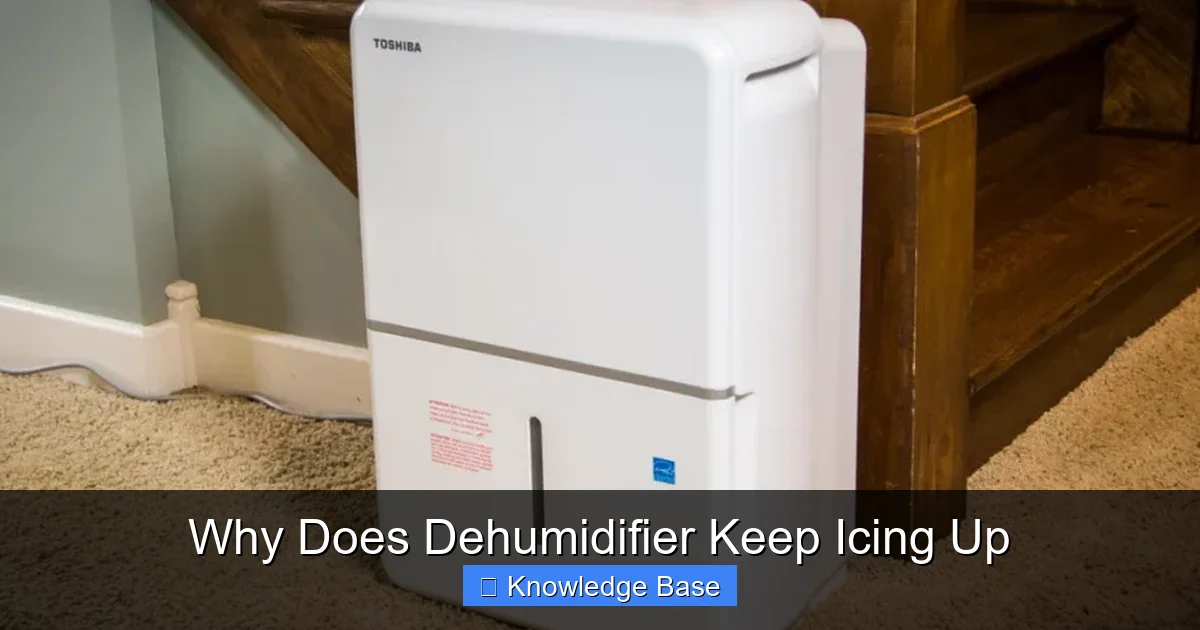
Dehumidifiers need space to breathe. If you place the unit too close to walls, furniture, or in a cramped corner, airflow is restricted. This traps cold air around the coils and prevents proper heat exchange.
Also, blocking the intake or exhaust vents—even partially—can cause the same problem. The unit works harder, coils get colder, and ice forms.
Best practices: Leave at least 6–12 inches of clearance around all sides. Avoid placing it behind furniture or in tight closets.
How to Prevent Your Dehumidifier from Icing Up
Now that you know the causes, let’s talk solutions. Preventing ice buildup is easier than fixing it after the fact. Here are proven tips to keep your dehumidifier running smoothly.
1. Maintain Proper Room Temperature
Keep the room where your dehumidifier operates above 65°F (18°C). If you’re using it in a basement or garage, consider using a space heater to warm the area slightly. Even a small increase in temperature can make a big difference.
Pro tip: Use a thermometer to monitor the room temperature. Some smart thermostats or hygrometers can alert you if it drops too low.
2. Clean or Replace Air Filters Regularly
Check your filter every few weeks. If it’s dirty, wash it (if reusable) or replace it (if disposable). Most manufacturers recommend cleaning every 2–4 weeks during heavy use.
Cleaning steps:
– Turn off and unplug the unit.
– Remove the filter (usually behind a front panel).
– Rinse with warm water or vacuum gently.
– Let it dry completely before reinstalling.
A clean filter improves airflow, reduces strain on the system, and prevents icing.
3. Ensure Proper Airflow Around the Unit
Give your dehumidifier room to breathe. Don’t stack boxes on top, and avoid placing it in tight spaces. Keep intake and exhaust vents clear of dust and debris.
If you’re using it in a corner, angle it slightly so air can flow freely. Better airflow means warmer coils and less ice.
4. Use a Dehumidifier Designed for Cold Spaces
Not all dehumidifiers are created equal. Standard models aren’t built for cold environments. If you’re running yours in a chilly basement or garage, consider upgrading to a **cold-climate dehumidifier**.
These units are specifically engineered to operate in temperatures as low as 38°F (3°C). They often have enhanced defrost systems, better insulation, and more efficient coils.
Popular cold-climate models:
– hOmeLabs 50 Pint Dehumidifier (rated for 38°F)
– Frigidaire FFAD5033W1 (works down to 41°F)
– Ivation IVADM35 (designed for basements and crawl spaces)
Investing in the right model can save you from constant icing and frequent repairs.
5. Schedule Regular Maintenance
Like any appliance, dehumidifiers need care. Besides cleaning filters, inspect the coils and drain hose periodically.
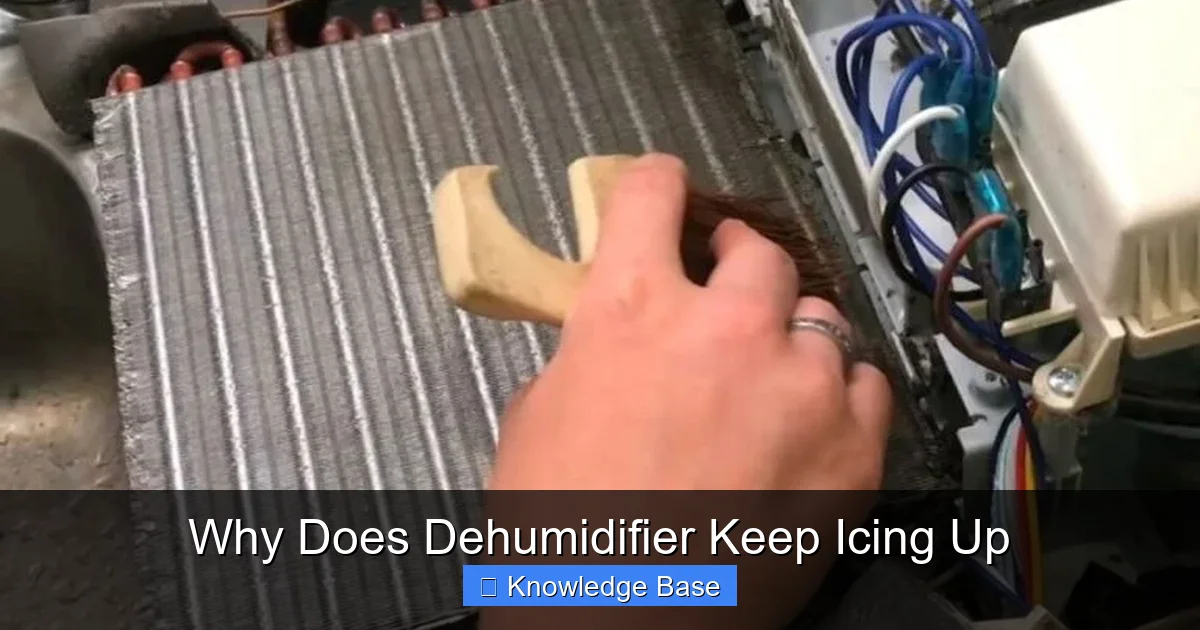
– **Coils:** Use a soft brush or compressed air to remove dust buildup.
– **Drain hose:** Check for clogs if using continuous drainage.
– **Bucket:** Empty and clean it regularly to prevent mold and odors.
A well-maintained unit runs more efficiently and is less likely to ice up.
6. Monitor Humidity Levels
Running your dehumidifier nonstop can overwork the system. Use a hygrometer to check humidity levels. Ideal indoor humidity is between 30% and 50%.
If the air is already dry, turn off the unit or use a lower setting. This gives the coils time to warm up and prevents unnecessary cooling.
What to Do If Your Dehumidifier Is Already Iced Up
So your dehumidifier is frozen solid. Don’t panic. Here’s how to safely thaw and restart it.
Step 1: Turn It Off and Unplug
Safety first. Never handle a frozen dehumidifier while it’s running. Turn it off and unplug it from the wall.
Step 2: Let It Thaw Naturally
Move the unit to a warm room if possible. Let it sit for 4–6 hours to thaw completely. Don’t use a hair dryer or heat gun—this can damage components.
Tip: Place a towel underneath to catch dripping water.
Step 3: Clean the Filter and Coils
Once thawed, inspect the filter and coils. Clean them if dirty. This ensures proper airflow when you restart.
Step 4: Check for Obstructions
Make sure vents aren’t blocked and the unit has enough space. Remove any nearby objects that could restrict airflow.
Step 5: Restart and Monitor
Plug it back in and turn it on. Watch for the first hour to see if ice forms again. If it does, the problem may be more serious—like a refrigerant leak or faulty sensor.
Step 6: Call a Professional if Needed
If icing continues after thawing and cleaning, it’s time to call a technician. Internal issues like refrigerant leaks or electrical faults require expert repair.
When to Replace vs. Repair Your Dehumidifier
Sometimes, the cost of repair isn’t worth it. Here’s how to decide whether to fix or replace your unit.
Consider Repair If:
– The unit is less than 5 years old.
– The repair cost is less than 50% of a new model.
– It’s a high-efficiency or cold-climate model.
Consider Replacement If:
– The unit is over 7–10 years old.
– Repairs are frequent or expensive.
– Energy efficiency has dropped (higher electricity bills).
– You need a model better suited for cold environments.
Newer dehumidifiers are more energy-efficient, quieter, and better at preventing ice buildup. Upgrading could save you money in the long run.
Conclusion: Keep Your Dehumidifier Ice-Free and Efficient
A dehumidifier that keeps icing up is more than an inconvenience—it’s a sign that something isn’t working right. But with the right knowledge and maintenance, you can stop the problem before it starts.
Remember: ice forms when coils get too cold, usually due to low temperatures, poor airflow, or system issues. By keeping your unit clean, placing it correctly, and using the right model for your space, you can enjoy dry, comfortable air all year long.
Don’t let frost stop you from controlling humidity. Take action today—clean that filter, check the room temperature, and give your dehumidifier the care it deserves. Your home (and your peace of mind) will thank you.
Frequently Asked Questions
Why does my dehumidifier keep icing up even in warm rooms?
Even in warm rooms, restricted airflow or a dirty filter can cause coils to overcool and freeze. Also, if the unit is oversized or running nonstop, it may cool the coils too much. Check filters and ensure proper ventilation.
Can I use my dehumidifier in a cold basement?
Yes, but only if it’s a cold-climate model rated for low temperatures. Standard units may ice up below 65°F. Look for models specifically designed for basements or garages.
How often should I clean my dehumidifier filter?
Clean or replace the filter every 2–4 weeks during heavy use, or monthly during lighter use. Dirty filters restrict airflow and increase icing risk.
Will a dehumidifier ice up if the humidity is too low?
Not directly, but running it when humidity is already low (below 30%) can cause the unit to work harder, cooling coils excessively. Use a hygrometer to monitor levels and adjust settings.
Can I manually defrost my dehumidifier?
Yes, but only after turning it off and unplugging it. Let it thaw naturally—do not use heat sources. Once thawed, clean the filter and coils before restarting.
Is it normal for a dehumidifier to make ice during defrost mode?
No. Defrost mode is designed to melt ice, not create it. If ice forms during defrost, the system may have a faulty sensor or control board and needs professional inspection.