
Choosing the right dehumidifier can improve air quality, prevent mold, and save energy. This guide walks you through size, type, features, and placement to help you make a smart, informed purchase.
Quick Answers to Common Questions
What size dehumidifier do I need for a 1,000 sq ft basement?
A 50–70 pint unit is ideal for a 1,000 sq ft basement with high humidity. Choose 50 pints for moderate dampness, 70+ for very wet conditions.
Can I run a dehumidifier all the time?
Yes, but use an auto-humidistat to maintain 40–50% humidity. This saves energy and prevents over-drying.
Is a dehumidifier better than an air purifier?
They serve different purposes. A dehumidifier reduces moisture; an air purifier removes particles. Use both for best air quality.
Do dehumidifiers use a lot of electricity?
It depends. ENERGY STAR® models use less. A 50-pint unit may cost $15–$25/month to run 8 hours daily.
Can I install a whole-home dehumidifier myself?
No—professional installation is required. It involves HVAC integration and ductwork, so hire a licensed technician.
How to Buy the Right Dehumidifier
Humidity isn’t just uncomfortable—it can damage your home and health. Excess moisture encourages mold, mildew, dust mites, and musty odors. It can also warp wood, ruin electronics, and worsen allergies or asthma. That’s where a dehumidifier comes in. But with so many models, sizes, and features on the market, how do you pick the right one?
This guide will walk you through everything you need to know to buy the right dehumidifier for your space, lifestyle, and budget. Whether you’re tackling a damp basement, a humid bathroom, or whole-home moisture issues, we’ll help you make a smart, confident decision. You’ll learn how to assess your needs, compare types, understand key features, and avoid common mistakes.
Step 1: Understand Why You Need a Dehumidifier
Before shopping, ask: Why do I need a dehumidifier? Different problems require different solutions. Common reasons include:

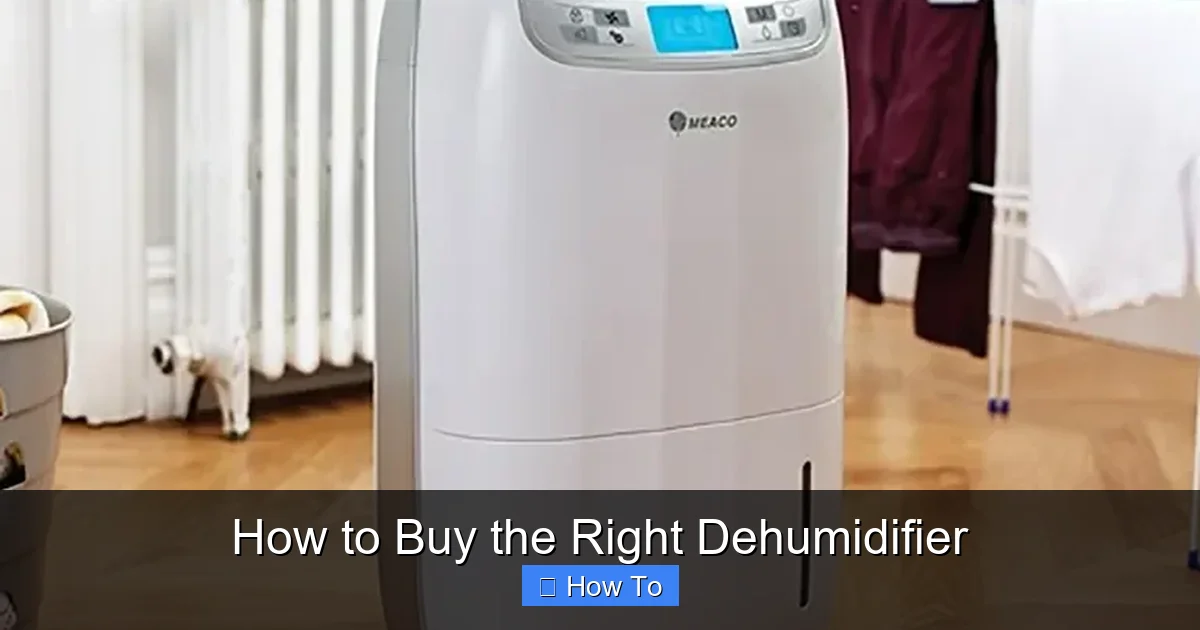
Visual guide about How to Buy the Right Dehumidifier
Image source: evaporativehumidifiers.com
- High humidity: Sticky air, condensation on windows, or a humidity level above 60%.
- Mold or mildew: Visible growth in corners, walls, or ceilings.
- Musty odors: Smells in basements, closets, or laundry rooms.
- Allergies or asthma: Dust mites and mold thrive in damp environments.
- Protecting belongings: Safeguarding books, electronics, or furniture from moisture damage.
Identifying your main concern helps narrow your search. For example, a basement with mold needs a powerful, continuous-drain model, while a small closet might only need a compact, portable unit.
Step 2: Measure Your Space and Humidity Level
Dehumidifiers are sized by how much moisture they can remove in 24 hours, measured in pints. But bigger isn’t always better. An oversized unit may cycle too quickly, failing to dehumidify properly. An undersized one will run nonstop and wear out faster.
Calculate Room Size
Start by measuring the square footage of the area you want to dehumidify. Use a tape measure or check your home’s floor plan. For example:
- Small bathroom: 50–100 sq ft
- Bedroom: 150–250 sq ft
- Basement: 500–1,000+ sq ft
Test Humidity Levels
Use a hygrometer (a humidity meter) to check moisture levels. You can buy one for under $20 or use a smart thermostat with built-in sensors. Ideal indoor humidity is between 30% and 50%.
- 30–50%: Comfortable, healthy range.
- 50–60%: Slightly high; consider a small dehumidifier.
- 60%+: High risk for mold; a larger or more powerful unit is needed.
Match Capacity to Conditions
Use this general guide to match dehumidifier capacity (in pints per day) to your space and humidity:
| Room Size | Humidity Level | Recommended Capacity |
|---|---|---|
| Up to 500 sq ft | Moderate (50–60%) | 20–30 pints |
| 500–1,000 sq ft | Moderate | 30–50 pints |
| 500–1,000 sq ft | High (60%+) | 50–70 pints |
| 1,000+ sq ft | High | 70+ pints or whole-home system |
Tip: If your space is poorly ventilated or prone to flooding, go one size up.
Step 3: Choose the Right Type of Dehumidifier
There are three main types of dehumidifiers. Each works differently and suits different environments.
Compressor (Refrigerant) Dehumidifiers
The most common type. They use a cold coil to condense moisture from the air, similar to an air conditioner.
- Best for: Warm, humid climates (above 65°F).
- Pros: Effective, affordable, widely available.
- Cons: Less efficient in cold temperatures; can be noisy.
- Ideal for: Basements, living rooms, garages in temperate zones.
Desiccant Dehumidifiers
These use a moisture-absorbing material (like silica gel) to pull water from the air. They don’t rely on cooling coils.
- Best for: Cold environments (below 65°F), like unheated basements or crawl spaces.
- Pros: Quiet, lightweight, effective in low temps.
- Cons: Higher energy use; smaller capacity.
- Ideal for: RVs, cabins, winterized spaces, or noise-sensitive areas.
Whole-Home (Whole-House) Dehumidifiers
Installed into your HVAC system, these units dehumidify your entire home.
- Best for: Large homes with central air or high humidity throughout.
- Pros: Consistent humidity control, no tanks to empty, energy-efficient at scale.
- Cons: Expensive ($1,000–$3,000+), requires professional installation.
- Ideal for: New builds, humid climates, or allergy sufferers.
Example: If you live in Florida and have a 1,200 sq ft home with high humidity, a 50-pint compressor unit may work. But if you’re in Minnesota with a cold basement, a desiccant model could be better.
Step 4: Look for Key Features
Modern dehumidifiers come with smart features that improve performance, convenience, and energy efficiency. Here’s what to look for.
Auto-Humidistat
This sensor measures humidity and turns the unit on/off to maintain your desired level (e.g., 45%).
- Why it matters: Prevents over-drying and saves energy.
- Look for: Digital display with adjustable settings (30–70%).
Timer and Auto-Restart
A timer lets you set run times (e.g., 2, 4, or 8 hours). Auto-restart resumes operation after a power outage.
- Why it matters: Great for energy savings and peace of mind.
- Tip: Use a timer to run the unit during off-peak electricity hours.
Continuous Drainage Option
Instead of emptying a tank, you can attach a hose for continuous drainage.
- Why it matters: Essential for basements or unattended areas.
- Look for: Built-in hose connector or gravity drain port.
- Tip: Use a condensate pump if draining uphill.
Washable Air Filter
A filter traps dust and allergens. Washable filters save money and reduce waste.
- Why it matters: Improves air quality and protects the unit.
- Maintenance: Clean every 2–4 weeks.
Low-Temperature Operation
Some compressor models work down to 41°F. Desiccant units work even colder.
- Why it matters: Critical for unheated spaces.
- Check specs: Look for “low-temp operation” or “auto-defrost.”
Noise Level (Decibels)
Measured in dB, noise levels vary by model.
- Quiet: Under 50 dB (like a whisper).
- Moderate: 50–55 dB (like a quiet conversation).
- Loud: Over 55 dB (like a refrigerator).
Tip: For bedrooms or offices, choose a model under 50 dB.
Step 5: Check Energy Efficiency
Dehumidifiers run for hours, so energy use adds up. An efficient model saves money and reduces environmental impact.
Look for ENERGY STAR® Certification
ENERGY STAR® models use 15–30% less energy than standard units.
- How to find: Check the yellow EnergyGuide label or ENERGY STAR website.
- Example: A 50-pint ENERGY STAR® unit uses about 500 watts; a non-certified one may use 700+.
Calculate Operating Cost
Estimate monthly cost using this formula:
Daily kWh = (Watts × Hours used per day) ÷ 1,000
Monthly cost = Daily kWh × 30 × Electricity rate ($/kWh)
Example: A 600-watt unit running 8 hours/day at $0.12/kWh:
- Daily kWh = (600 × 8) ÷ 1,000 = 4.8 kWh
- Monthly cost = 4.8 × 30 × 0.12 = $17.28
Tip: Use a smart plug with energy monitoring to track real usage.
Step 6: Consider Placement and Installation
Where you place your dehumidifier affects performance. Follow these guidelines:
Choose the Right Location
- Basements: Place near the center or dampest area. Avoid corners with poor airflow.
- Bathrooms: Use a small, portable unit or install a ventilation fan.
- Laundry rooms: Run the dehumidifier during and after laundry cycles.
- Whole-home systems: Install in a utility closet or attic with HVAC access.
Ensure Proper Airflow
Leave at least 6–12 inches of space around the unit. Don’t block vents.
Use a Drain Hose or Pump
For continuous drainage, connect a hose to a floor drain, sink, or sump pump.
- Gravity drain: Hose slopes downward.
- Condensate pump: Needed if draining uphill or to a remote location.
Step 7: Compare Brands and Read Reviews
Not all dehumidifiers are created equal. Research brands and models before buying.
Top Brands to Consider
- Frigidaire: Reliable, affordable, wide range of sizes.
- hOmeLabs: Popular for basements, strong online reviews.
- GE: ENERGY STAR® models, good warranty.
- Eva-Dry: Compact, desiccant units for small spaces.
- AprilAire: Whole-home systems, professional grade.
Read Customer Reviews
Check Amazon, Home Depot, or Consumer Reports for real-user feedback. Look for comments on:
- Noise level
- Tank capacity and ease of emptying
- Durability and reliability
- Customer service and warranty
Red flags: Frequent breakdowns, loud operation, or poor drainage.
Step 8: Set a Budget and Compare Prices
Dehumidifiers range from $50 to $3,000+. Set a realistic budget based on your needs.
Price Ranges
- $50–$150: Small, portable units (10–20 pints). Best for closets or RVs.
- $150–$400: Mid-range models (30–50 pints). Ideal for most homes.
- $400–$800: High-capacity or smart features (50–70 pints).
- $800+: Whole-home systems or commercial-grade units.
Tip: A $250 dehumidifier that lasts 8 years is better value than a $150 one that fails in 2.
Step 9: Check Warranty and Return Policy
A good warranty protects your investment. Look for:
- 1–2 years: Standard for most models.
- 3–5 years: Sign of quality (common with Frigidaire, GE).
- Extended warranty: Optional for high-end units.
Also check the return policy. Some retailers offer 30–90 days to return if the unit doesn’t work.
Step 10: Maintain Your Dehumidifier
Regular maintenance keeps your unit running efficiently and extends its life.
Clean the Filter Monthly
Remove and wash the air filter with warm, soapy water. Let it dry completely.
Empty the Tank Regularly
If not using continuous drainage, empty the tank when full (usually every 8–12 hours).
Inspect the Coils and Drain
Check for frost (on compressor units) or clogs in the drain hose.
Store Properly Off-Season
In dry months, clean the unit, remove water, and store in a dry place.
Troubleshooting Common Issues
Even the best dehumidifiers can have problems. Here’s how to fix common ones.
Unit Won’t Turn On
- Check power cord and outlet.
- Ensure the tank isn’t full (most units shut off when full).
- Reset the circuit breaker.
Not Removing Moisture
- Clean the filter and coils.
- Check humidity settings (should be 40–50%).
- Ensure room is sealed (close doors/windows).
Too Noisy
- Place on a flat, stable surface.
- Check for loose parts or debris in the fan.
- Consider a quieter model for bedrooms.
Freezing Up (Compressor Units)
- Room is too cold (below 65°F).
- Clean coils and ensure airflow.
- Switch to a desiccant model for cold spaces.
Conclusion
Buying the right dehumidifier doesn’t have to be overwhelming. Start by assessing your space, humidity level, and needs. Choose the right type and capacity, prioritize energy efficiency and smart features, and don’t forget maintenance. With the right unit, you’ll enjoy fresher air, fewer allergens, and a healthier home.
Remember: the best dehumidifier is the one that fits your lifestyle and environment. Whether you need a small closet unit or a whole-home system, this guide gives you the tools to make a confident, informed decision. Breathe easier—your home will thank you.