
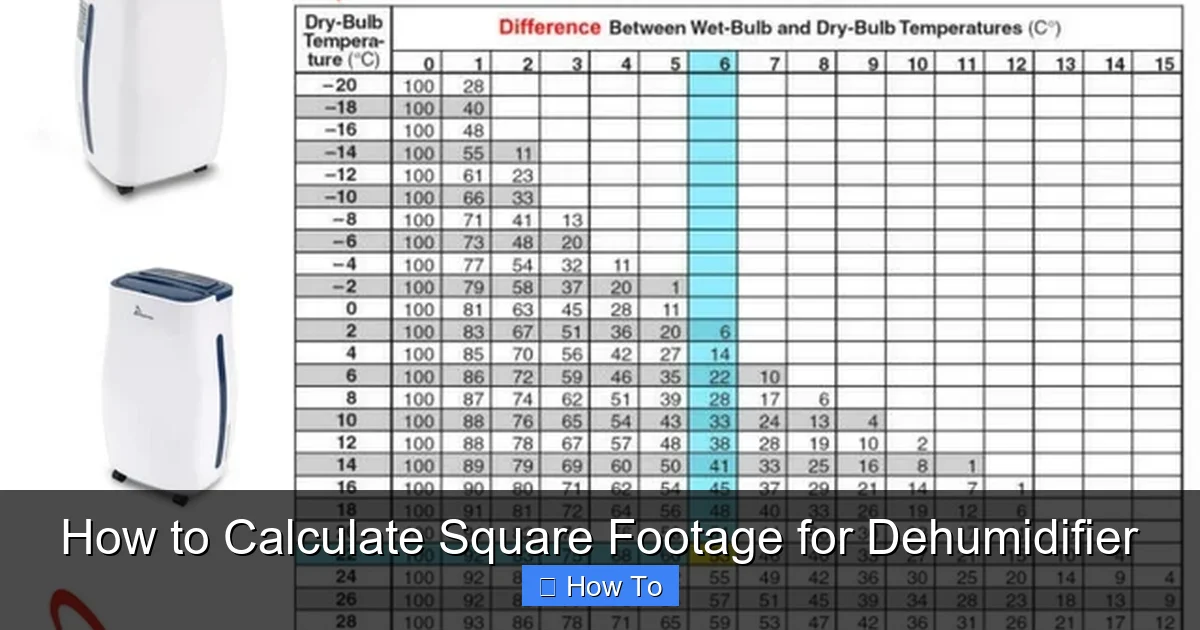
Choosing the right dehumidifier starts with accurate square footage calculation. This guide walks you through measuring your space, adjusting for humidity levels, and selecting the perfect unit for maximum efficiency and comfort.
Quick Answers to Common Questions
Tip/Question?
Should I include closets in my square footage calculation?
Only include closets if they’re open to the main space or prone to dampness. Small, enclosed closets can usually be excluded unless they contribute to overall humidity.
Tip/Question?
Can I use one dehumidifier for multiple rooms?
Yes, if the rooms are connected and open to each other. For separate rooms, consider a whole-house unit or multiple portable dehumidifiers.
Tip/Question?
What if my room is oddly shaped?
Break it into rectangles, calculate each area, and add them together. Round up slightly to ensure full coverage.
Tip/Question?
Is a higher PPD always better?
Not necessarily. An oversized unit can short-cycle, wasting energy and reducing lifespan. Match PPD to your room size and moisture level.
Tip/Question?
How often should I clean my dehumidifier?
Clean the filter monthly and the water tank weekly. Deep-clean coils and vents every 3–6 months.
How to Calculate Square Footage for Dehumidifier: A Complete Guide
Choosing the right dehumidifier can feel overwhelming—especially when you’re not sure how big or powerful it needs to be. Many people make the mistake of buying a unit based solely on room size, only to find it’s either too weak to handle the moisture or so strong it cycles on and off constantly, wasting energy. The secret? It all starts with accurately calculating square footage—and then adjusting for real-world conditions like humidity level, ceiling height, and room usage.
In this comprehensive guide, you’ll learn exactly how to calculate square footage for a dehumidifier, step by step. We’ll cover everything from basic room measurements to advanced considerations like moisture sources and airflow. By the end, you’ll know not only how big your space is—but also what kind of dehumidifier will keep it dry, comfortable, and mold-free.
Why Square Footage Matters for Dehumidifiers
Dehumidifiers are rated by how much moisture they can remove in a day, usually measured in pints per day (PPD). But those ratings are based on specific room sizes and humidity levels. If you buy a unit designed for a 500-square-foot space but install it in a 1,200-square-foot basement, it simply won’t keep up. Conversely, a oversized unit in a small bathroom might over-dry the air, leading to discomfort and wasted electricity.
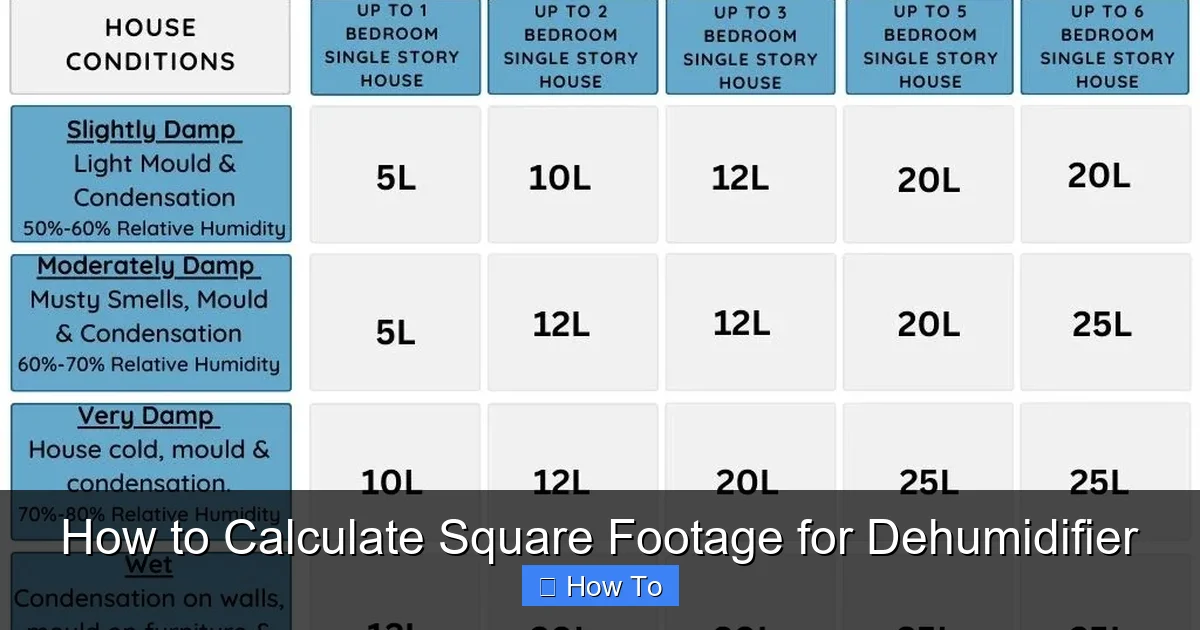
Visual guide about How to Calculate Square Footage for Dehumidifier
Image source: cdn.shopify.com
That’s why square footage is the foundation of your dehumidifier decision. It tells you the baseline capacity needed. But—and this is important—it’s only the starting point. You’ll also need to consider how damp the space actually is. A 500-square-foot crawl space with standing water needs a much stronger unit than a 500-square-foot bedroom with occasional condensation.
Think of it like buying a heater: you don’t just look at room size—you also consider insulation, window quality, and outside temperature. The same logic applies here. Square footage gives you the canvas; humidity level, room use, and layout determine the paint.
Step 1: Measure the Length and Width of the Room
The first step in calculating square footage is simple: measure the length and width of the area you want to dehumidify. Use a tape measure or laser measuring tool for accuracy. Measure from wall to wall, including any alcoves, closets, or built-in shelves that are part of the main space.
How to Measure Correctly
- Start at one corner of the room and stretch your tape measure to the opposite wall.
- Record the measurement in feet. If it’s not a whole number, round to the nearest quarter-foot (e.g., 12.3 feet becomes 12.25 feet).
- Repeat for the width.
- For irregular shapes, divide the room into rectangles, measure each, and add them together.
Example: Your basement is 24 feet long and 18 feet wide. Multiply 24 × 18 = 432 square feet. That’s your base square footage.
Include Connected Spaces
If your basement includes a laundry room, storage closet, or unfinished hallway that’s open to the main area, include those in your total. These spaces contribute to overall moisture levels and should be dehumidified together. However, if a closet is small and enclosed (like a coat closet), you can usually exclude it unless it’s prone to dampness.
Use a Floor Plan (If Available)
If you have a blueprint or digital floor plan, you can often find square footage listed directly. This is especially helpful for new homes or renovations. Just make sure the plan reflects the current layout—walls may have been moved since the original design.
Step 2: Multiply Length by Width to Get Square Footage
Once you have your length and width measurements, multiply them to get the total square footage.
Formula:
Square Footage = Length (ft) × Width (ft)
Using the earlier example:
24 ft × 18 ft = 432 square feet
This number is your starting point. But remember—it’s not the final answer. You’ll need to adjust it based on other factors, which we’ll cover next.
Handling Odd Shapes
Not all rooms are perfect rectangles. If your space is L-shaped, U-shaped, or has cutouts, break it into smaller rectangles.
Example: An L-shaped basement might consist of two rectangles:
– Section A: 20 ft × 15 ft = 300 sq ft
– Section B: 10 ft × 12 ft = 120 sq ft
Total = 300 + 120 = 420 square feet
Always round up slightly to ensure full coverage. It’s better to slightly overestimate than underestimate.
Step 3: Adjust for Ceiling Height
Most dehumidifier guidelines assume an 8-foot ceiling. But if your room has higher ceilings—common in basements, garages, or vaulted living areas—you’ll need to adjust your calculation.
Why? Because taller rooms hold more air, and more air means more moisture to remove. A 10-foot ceiling doesn’t just add visual space—it adds volume.
How to Adjust for Height
- For ceilings 9 feet high: increase capacity by 10%
- For ceilings 10 feet high: increase by 20%
- For ceilings over 10 feet: increase by 25–30%
Example: Your 432-square-foot basement has 9-foot ceilings.
432 × 1.10 = 475 square feet (adjusted)
This adjusted number better reflects the actual air volume. Use it when comparing dehumidifier models.
What If Ceilings Are Lower?
For rooms with ceilings under 8 feet (like some crawl spaces or attics), you can reduce the capacity slightly—by about 5–10%. However, most residential dehumidifiers are designed for standard heights, so this is rarely necessary unless the space is very small and confined.
Step 4: Assess the Humidity Level
Square footage tells you the size of the space—but not how wet it is. A damp bathroom and a flooded basement might have the same square footage, but they need very different dehumidifiers.
To choose the right unit, you must evaluate the moisture level in your space. This is where a hygrometer comes in handy. It’s a small, inexpensive device that measures relative humidity (RH).
How to Use a Hygrometer
- Place the hygrometer in the center of the room, away from windows, doors, or vents.
- Wait 10–15 minutes for it to stabilize.
- Record the reading. Ideal indoor humidity is between 30% and 50%.
Based on the reading, categorize your space:
- Slightly damp (50–60% RH): Occasional condensation, musty smell after rain. Requires a basic dehumidifier.
- Moderately damp (60–70% RH): Persistent dampness, visible moisture on walls or floors. Needs a mid-range unit.
- Very damp (70–80% RH): Frequent puddles, mold growth, strong odor. Requires a high-capacity dehumidifier.
- Wet (80%+ RH): Standing water, flooding, or constant seepage. May need a commercial-grade unit or professional remediation.
No Hygrometer? Use Visual Clues
If you don’t have a hygrometer, look for these signs:
- Water stains on walls or ceilings
- Peeling paint or wallpaper
- Warped wood or swollen doors
- Mold or mildew spots
- Condensation on windows or cold surfaces
These indicate high moisture levels and suggest you need a more powerful dehumidifier—even if the square footage is small.
Step 5: Factor in Room Usage and Moisture Sources
Not all rooms produce the same amount of moisture. A laundry room generates far more humidity than a bedroom, even if they’re the same size. That’s why you must consider how the space is used.
High-Moisture Areas
- Laundry rooms: Washing machines and dryers (especially ventless ones) release大量 steam. Add 10–20% to your capacity needs.
- Kitchens: Cooking, boiling water, and dishwashing increase humidity. If the kitchen is open to the living area, include it in your calculation.
- Bathrooms: Showers and baths produce bursts of steam. Small bathrooms may need a compact unit, but frequent use demands higher capacity.
- Gyms or workout spaces: Exercise increases perspiration and breathing, adding moisture to the air.
- Indoor pools or hot tubs: These require specialized dehumidifiers designed for high-humidity environments.
Low-Moisture Areas
- Bedrooms and living rooms: Typically have lower moisture output unless occupied by many people or pets.
- Storage areas: If rarely used and well-ventilated, they may not need constant dehumidification.
Pro Tip: If your space has multiple moisture sources—like a basement with a laundry room and a workshop—treat it as a high-moisture area, even if the square footage is modest.
Step 6: Use a Dehumidifier Sizing Chart
Once you have your adjusted square footage and humidity level, use a sizing chart to find the right dehumidifier. Most manufacturers provide these based on room size and moisture conditions.
Here’s a general guide:
| Room Size (sq ft) | Moisture Level | Recommended Capacity (Pints/Day) |
|---|---|---|
| 500 or less | Slightly damp | 20–30 PPD |
| 500 or less | Moderately damp | 30–40 PPD |
| 500 or less | Very damp | 40–50 PPD |
| 500–1,000 | Slightly damp | 30–40 PPD |
| 500–1,000 | Moderately damp | 40–50 PPD |
| 500–1,000 | Very damp | 50–70 PPD |
| 1,000–1,500 | Moderately damp | 50–70 PPD |
| 1,000–1,500 | Very damp | 70–90 PPD |
| 1,500+ | Very damp to wet | 90+ PPD (consider whole-house or commercial units) |
Note: These are estimates. Always check the manufacturer’s specifications, as performance can vary.
What Is PPD?
PPD stands for pints per day—the amount of moisture a dehumidifier can remove in 24 hours under standard conditions (80°F and 60% RH). Higher PPD = more power. But don’t just go for the highest number. An oversized unit can short-cycle (turn on and off too quickly), reducing efficiency and lifespan.
Step 7: Consider Airflow and Placement
Even the best dehumidifier won’t work well if it’s poorly placed. Airflow is critical. The unit needs to circulate air effectively to pull in moist air and release dry air.
Ideal Placement Tips
- Place the dehumidifier in the center of the room or near the source of moisture (e.g., near a washing machine).
- Keep it at least 6–12 inches away from walls and furniture.
- Ensure vents are not blocked.
- In large spaces, consider using fans to improve air circulation.
- Avoid placing it in corners or behind large objects.
Example: In a basement, place the dehumidifier near the sump pump or where water tends to collect. Use a fan to blow air toward the unit if needed.
Whole-House vs. Portable Units
For large or multi-room spaces, a whole-house dehumidifier integrated with your HVAC system may be more effective. These units treat the entire home and are ideal for open floor plans or high-humidity climates. Portable units are better for single rooms or targeted areas.
Troubleshooting Common Issues
Even with the right size, dehumidifiers can underperform. Here’s how to fix common problems:
Unit Runs But Doesn’t Remove Moisture
- Check the filter—clean or replace if clogged.
- Ensure the room is sealed (close windows and doors).
- Verify the humidity setting—set it to 45–50% for most homes.
- Make sure the coil isn’t frozen (common in cold basements). If frozen, turn off the unit and let it thaw.
Water Tank Fills Too Quickly
- The unit may be oversized or the humidity extremely high.
- Consider a model with a built-in pump for continuous drainage.
- Check for leaks or poor insulation allowing outside moisture in.
Unit Cycles On and Off Frequently
- This indicates an oversized unit.
- Switch to a lower capacity model or use a humidistat to control runtime.
- Ensure the room isn’t too small for the unit’s capacity.
Musty Smell Persists
- Clean the water tank and coils regularly.
- Check for hidden mold or water damage.
- Run the dehumidifier continuously for a few days to dry out the space.
Final Tips for Long-Term Success
Once you’ve chosen and installed your dehumidifier, maintain it properly to ensure lasting performance.
- Clean the filter monthly: A dirty filter restricts airflow and reduces efficiency.
- Empty the tank regularly: Or use a hose for continuous drainage.
- Inspect coils and vents: Dust buildup can impair function.
- Monitor humidity levels: Use a hygrometer to ensure levels stay between 30–50%.
- Service annually: Have a professional check refrigerant levels and electrical components if needed.
By following these steps, you’ll not only calculate square footage correctly—you’ll create a healthier, more comfortable living environment.
Conclusion
Calculating square footage for a dehumidifier isn’t just about measuring walls—it’s about understanding your space, its moisture challenges, and how to address them effectively. Start with accurate measurements, adjust for ceiling height and humidity, consider room usage, and use a sizing chart to find the right PPD rating. Don’t forget airflow and maintenance—they’re just as important as size.
With this guide, you’re equipped to make an informed decision. Whether you’re tackling a damp basement, a humid bathroom, or a whole-house moisture problem, the right dehumidifier will keep your air fresh, your home protected, and your family healthy. Take the time to measure, assess, and choose wisely—your comfort depends on it.