

Wondering if your dehumidifier is working properly? This guide walks you through simple tests to verify performance, check humidity levels, and troubleshoot common issues. Keep your home comfortable and mold-free with a fully functional dehumidifier.
Quick Answers to Common Questions
Tip/Question?
How often should I check my dehumidifier?
Check it weekly during humid seasons. Empty the tank, clean the filter, and listen for unusual sounds.
Tip/Question?
Can I run a dehumidifier in cold weather?
Most units work best above 65°F. In colder areas, use a low-temperature or “cold climate” dehumidifier.
Tip/Question?
Should I run the dehumidifier all the time?
Not necessarily. Use a humidistat to maintain 30–50% humidity. Run it continuously only in very damp areas.
Tip/Question?
Why is my dehumidifier making a clicking sound?
Clicking is normal when the compressor starts or stops. Loud or constant clicking may indicate a problem.
Tip/Question?
Can a dehumidifier help with allergies?
Yes! By reducing humidity, it limits mold and dust mites—common allergy triggers.
How to Check If a Dehumidifier Works
If you’ve noticed dampness, musty smells, or condensation on windows, your dehumidifier might not be doing its job. But how can you be sure? Dehumidifiers are essential for maintaining healthy indoor air quality, preventing mold growth, and protecting your home from moisture damage. However, like any appliance, they can develop issues over time.
In this comprehensive guide, you’ll learn exactly how to check if a dehumidifier works. We’ll walk you through simple visual inspections, performance tests, and troubleshooting steps. Whether you’re using a small portable unit in your basement or a whole-house system, these methods will help you confirm that your dehumidifier is operating efficiently.
By the end of this guide, you’ll know how to measure humidity levels, interpret normal and abnormal sounds, inspect key components, and fix common problems. You’ll also learn when it’s time to call a professional or replace your unit. Let’s get started!
Step 1: Understand How a Dehumidifier Works
Before testing your dehumidifier, it helps to understand how it functions. Most residential dehumidifiers use a refrigeration-based system. Here’s a quick breakdown:
Basic Operation
A dehumidifier pulls in moist air using a fan. The air passes over cold coils, causing moisture to condense into water droplets. These droplets collect in a tank or drain hose. The drier air then passes over warm coils to reheat it slightly before being released back into the room.
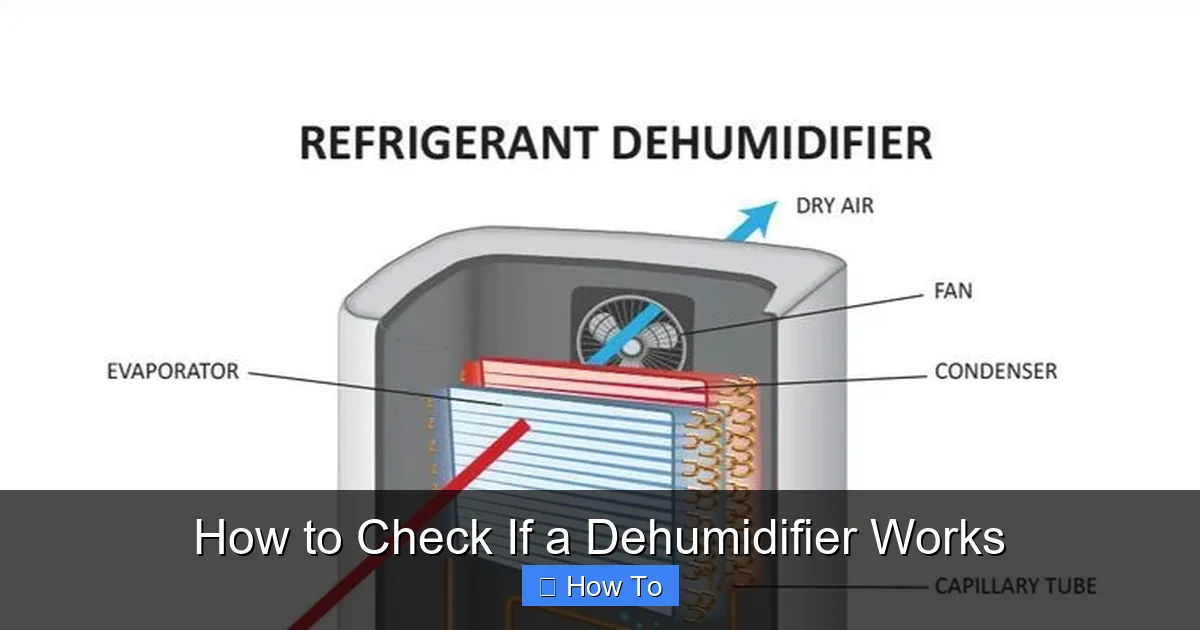
Visual guide about How to Check If a Dehumidifier Works
Image source: i.pinimg.com
Key Components
- Fan: Draws air into the unit.
- Evaporator coils: Cool the air to remove moisture.
- Condenser coils: Reheat the air before it exits.
- Compressor: Circulates refrigerant to cool the coils.
- Water tank or drain hose: Collects or removes collected water.
- Air filter: Traps dust and debris to protect internal parts.
Knowing these parts will help you identify issues during your inspection. For example, if the fan isn’t running, no air is being processed. If the coils are frozen, moisture can’t condense properly.
Step 2: Check the Power and Settings
The first step in testing your dehumidifier is making sure it’s powered on and set correctly.
Verify Power Connection
Ensure the unit is plugged into a working outlet. Try plugging in another device to confirm the outlet has power. If the dehumidifier has a power indicator light, check that it’s on.
Test the Control Panel
Press the power button and adjust the humidity setting. Most dehumidifiers let you set a target humidity level (e.g., 45%). The unit should respond by turning on or off based on the current humidity.
Set to Continuous Mode (If Available)
For testing purposes, switch the dehumidifier to “continuous” or “on” mode. This ensures it runs regardless of humidity levels, allowing you to observe its operation.
Tip: If the unit doesn’t turn on, check the circuit breaker. Dehumidifiers can trip breakers if they draw too much power or if there’s an electrical fault.
Step 3: Listen for Normal Operating Sounds
A working dehumidifier makes predictable sounds. Listening carefully can reveal a lot about its condition.
Expected Sounds
- A steady, low hum from the fan and compressor.
- Occasional clicking when the compressor starts or stops.
- A soft gurgling sound as refrigerant flows through the coils.
Warning Sounds
- Loud banging or rattling: May indicate loose parts or a failing compressor.
- Squealing or screeching: Often a sign of a worn motor or fan bearing.
- No sound at all: Could mean the unit isn’t receiving power or the fan/compressor has failed.
Spend a few minutes near the dehumidifier while it’s running. Compare the sounds to what’s normal for your model. If something sounds off, note it for further investigation.
Step 4: Feel the Air Temperature
One of the easiest ways to check if a dehumidifier works is by feeling the air around it.
Check the Intake and Exhaust
Place your hand near the intake grille (where air enters). The air should feel cool. Then, feel the air coming out of the exhaust vent. It should be slightly warmer.
This temperature difference confirms that the refrigeration cycle is active. Cool air entering and warm air exiting means the coils are working and moisture is being removed.
What If There’s No Temperature Change?
If the air feels the same temperature on both sides, the unit may not be cooling properly. Possible causes include:
- Low refrigerant levels
- Frozen coils
- Faulty compressor
- Blocked airflow
This test is quick and requires no tools—just your senses.
Step 5: Inspect the Water Tank
The water tank is a direct indicator of your dehumidifier’s performance.
Check for Water Collection
After running the dehumidifier for 4–6 hours in a humid environment (like a basement or laundry room), check the tank. If it has collected water, the unit is removing moisture from the air.
A full or partially full tank is a good sign—especially if the room feels less damp than before.
Empty and Reinstall the Tank
Always empty the tank after checking. A full tank can trigger an automatic shutoff, preventing further operation. Make sure the tank is properly seated so the unit recognizes it’s in place.
Use a Drain Hose (Optional)
If your dehumidifier has a continuous drain option, connect a hose to direct water outside or into a floor drain. This eliminates the need to empty the tank and allows you to monitor water output over time.
Example: In a humid basement, a 30-pint dehumidifier might collect 1–2 pints of water per day. If it’s collecting significantly less, there may be an issue.
Step 6: Measure Humidity Levels with a Hygrometer
The most accurate way to check if a dehumidifier works is by measuring the actual humidity in the room.
What Is a Hygrometer?
A hygrometer is a device that measures relative humidity (RH). You can buy a digital hygrometer for under $20 at most hardware or electronics stores. Some smart thermostats and weather stations also include this feature.
How to Use a Hygrometer
- Place the hygrometer in the room where the dehumidifier is running.
- Wait 10–15 minutes for an accurate reading.
- Record the humidity level.
Ideal Humidity Range
For most homes, the ideal indoor humidity is between 30% and 50%. Levels above 60% encourage mold and dust mites. Below 30% can cause dry skin and respiratory irritation.
Test Over Time
Run the dehumidifier for 12–24 hours and check the hygrometer again. If the humidity has dropped into the ideal range, your unit is working well. If it remains high, the dehumidifier may be undersized, malfunctioning, or the room may have a severe moisture problem.
Tip: Take readings in different areas of the room. Humidity can vary, especially in large or poorly ventilated spaces.
Step 7: Look for Ice or Frost on the Coils
Frost or ice buildup on the coils is a red flag.
Why It Happens
Ice forms when the evaporator coils get too cold, usually due to:
- Low ambient temperature (below 65°F)
- Dirty air filter restricting airflow
- Low refrigerant levels
- Faulty defrost sensor or timer
How to Check
Turn off the dehumidifier and unplug it. Remove the front panel or access cover (refer to your manual). Look at the coils. If you see frost or ice, the unit is not operating efficiently.
What to Do
- Let the ice melt completely (this may take several hours).
- Clean the air filter.
- Ensure the room is warm enough (above 65°F).
- Restart the unit and monitor for ice recurrence.
If ice returns quickly, there may be a refrigerant leak or a mechanical issue requiring professional repair.
Step 8: Clean and Maintain the Unit
A dirty dehumidifier won’t work properly, even if all parts are functional.
Clean the Air Filter
The air filter traps dust and debris. A clogged filter reduces airflow, making the unit work harder and less efficiently.
To clean it:
- Unplug the dehumidifier.
- Remove the filter (usually behind a front grille).
- Rinse it under warm water or vacuum it.
- Let it dry completely before reinstalling.
Clean the filter every 2–4 weeks during heavy use.
Wash the Water Tank
Mineral deposits and mold can grow in the tank. Wash it monthly with a mild bleach solution (1 tablespoon bleach per gallon of water). Rinse thoroughly.
Inspect the Coils and Vents
Use a soft brush or vacuum to remove dust from the coils and vents. Never use water on the coils unless the unit is fully disconnected and dry.
Regular maintenance ensures your dehumidifier works at peak performance.
Step 9: Troubleshoot Common Problems
Even with testing, some issues may persist. Here’s how to address common problems.
Dehumidifier Won’t Turn On
- Check the power cord and outlet.
- Test the circuit breaker.
- Ensure the water tank is properly seated (many units won’t run if the tank is missing or misaligned).
- Look for a reset button on the unit or plug.
Unit Runs But Doesn’t Remove Moisture
- Verify the humidity setting is below the current room humidity.
- Clean the air filter.
- Check for ice on the coils.
- Ensure the room isn’t too cold (below 65°F).
- Confirm the unit is the right size for the space.
Water Tank Fills Too Slowly
- The room may not be very humid.
- The unit could be undersized.
- Airflow is restricted (clean filter and vents).
- The coils are dirty or frozen.
Loud or Unusual Noises
- Tighten loose panels or screws.
- Check for foreign objects in the fan.
- If the compressor is making loud noises, it may be failing—contact a technician.
Unit Shuts Off Unexpectedly
- The tank may be full (even if not visibly so).
- The auto-defrost feature may have activated due to ice buildup.
- Overheating protection may have triggered—let the unit cool down.
Step 10: Know When to Replace Your Dehumidifier
Even with proper care, dehumidifiers don’t last forever. Most units last 5–10 years.
Signs It’s Time to Replace
- Frequent breakdowns or repairs.
- Reduced moisture removal despite maintenance.
- High energy bills (older units are less efficient).
- Rust or corrosion on internal parts.
- Refrigerant leaks (which are costly to fix).
Choose the Right Replacement
When buying a new dehumidifier, consider:
- Capacity: Measured in pints per day. Match it to your room size and humidity level.
- Energy efficiency: Look for ENERGY STAR® models.
- Features: Auto-humidistat, continuous drain, washable filter, and quiet operation.
- Size and portability: Ensure it fits your space and has handles or wheels if needed.
Investing in a quality dehumidifier pays off in comfort, air quality, and home protection.
Conclusion
Checking if a dehumidifier works doesn’t require special tools or technical expertise. By following the steps in this guide, you can confidently assess your unit’s performance and take action if needed.
Start by ensuring it’s powered on and set correctly. Listen for normal sounds, feel the air temperature, and inspect the water tank. Use a hygrometer to measure humidity levels and look for ice on the coils. Clean the filter and tank regularly, and troubleshoot common issues like poor moisture removal or unusual noises.
Remember, a working dehumidifier keeps your home dry, healthy, and comfortable. It prevents mold, reduces allergens, and protects your belongings from moisture damage. If your unit isn’t performing well, don’t ignore it—address the problem early to avoid bigger issues down the road.
With regular checks and maintenance, your dehumidifier will continue to work efficiently for years to come.