
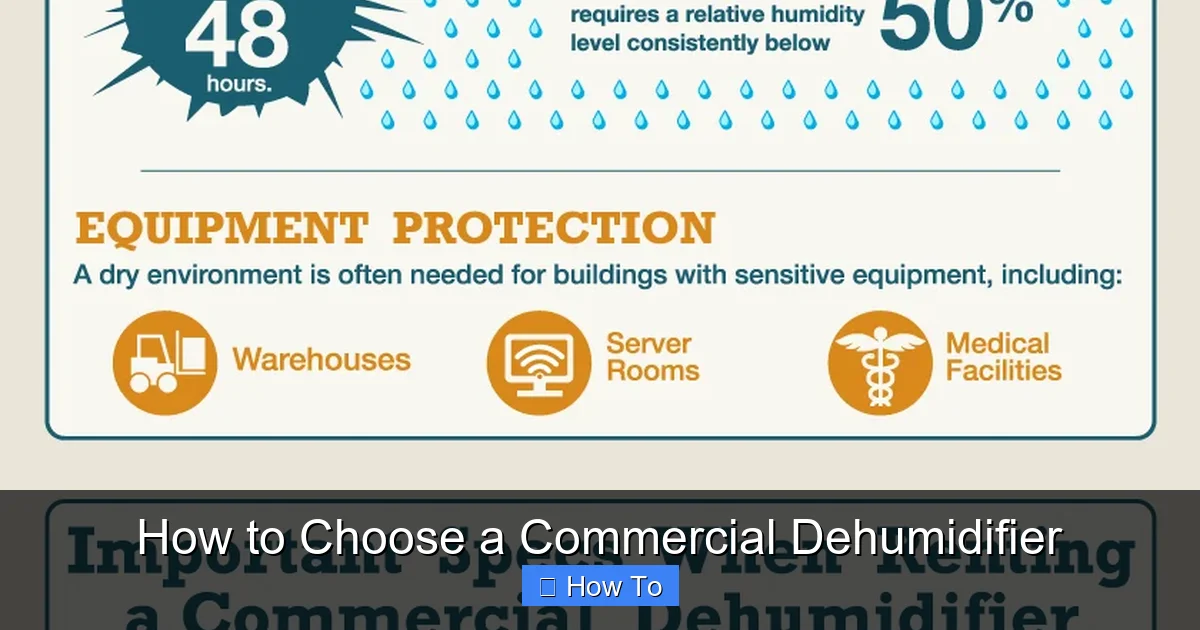
Choosing the right commercial dehumidifier is essential for maintaining air quality, protecting equipment, and ensuring comfort in large spaces. This guide walks you through key factors like size, capacity, energy efficiency, and features so you can make a smart, informed decision.
Quick Answers to Common Questions
What size dehumidifier do I need for a 2,000 sq. ft. warehouse?
For a moderately damp 2,000 sq. ft. space, choose a unit with 70–100 pints per day capacity. Adjust upward if there are leaks, poor ventilation, or high occupancy.
Can I use a residential dehumidifier in a commercial setting?
Not recommended. Residential units aren’t built for constant use, lack durability, and may not meet commercial humidity demands. Always choose a commercial-grade model.
How often should I clean the filter?
Clean or replace the filter every 1–3 months, depending on dust levels. A clogged filter reduces efficiency and can damage the unit.
Should I run the dehumidifier all the time?
Use auto mode with a humidity sensor. The unit will run only when needed, saving energy and extending its life.
Can I duct a portable dehumidifier?
Yes, many commercial models have ducting ports. This helps direct airflow to specific areas, improving coverage and efficiency.
Introduction: Why Choosing the Right Commercial Dehumidifier Matters
If you manage a warehouse, gym, office, restaurant, or industrial facility, you know how quickly excess moisture can become a problem. Damp air leads to mold, rust, musty odors, and damaged inventory. A commercial dehumidifier is your best defense—but not all units are created equal. Picking the wrong one can waste money, underperform, or even create new problems.
This guide will walk you step by step through how to choose a commercial dehumidifier that fits your space, budget, and needs. You’ll learn how to assess your environment, understand key specs, compare features, and avoid common mistakes. By the end, you’ll feel confident selecting a unit that keeps your space dry, safe, and efficient.
Step 1: Understand Your Space and Humidity Challenges
Before shopping, take time to evaluate your environment. The right dehumidifier depends on more than just square footage—it’s about the source and severity of moisture.
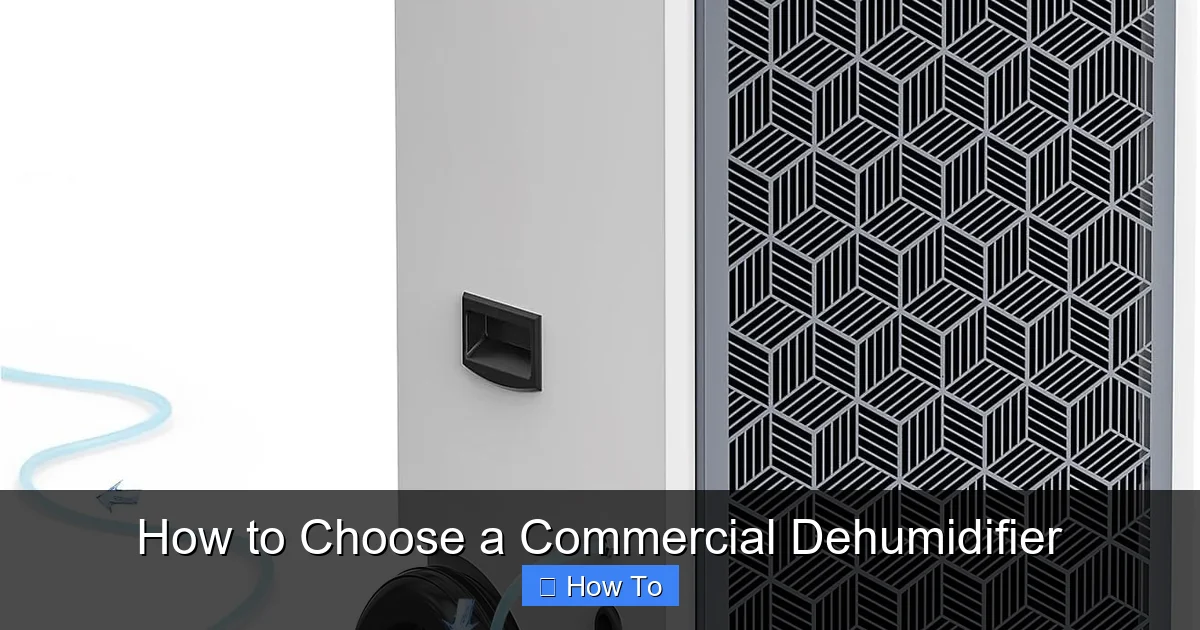
Visual guide about How to Choose a Commercial Dehumidifier
Image source: m.media-amazon.com
Measure the Area
Start by measuring the length and width of the space. Multiply them to get the total square footage. For example, a 40-foot by 50-foot warehouse is 2,000 square feet. If the space has high ceilings (over 10 feet), note that too—some manufacturers adjust capacity recommendations for taller rooms.
Identify Moisture Sources
Ask yourself: Where is the moisture coming from? Common sources include:
- Leaky roofs or walls
- Poor ventilation in bathrooms or kitchens
- High occupancy (people breathe out moisture)
- Industrial processes like washing, drying, or cooling
- Outdoor air infiltration in humid climates
For example, a restaurant kitchen with steam vents and frequent dishwashing will need a much more powerful unit than a dry storage warehouse.
Assess Humidity Levels
Use a hygrometer (a humidity meter) to check current moisture levels. Ideal indoor humidity is between 30% and 50%. If it’s consistently above 60%, you likely need a dehumidifier. In very damp areas—like basements or coastal buildings—levels may exceed 70%, requiring heavy-duty equipment.
Consider Climate and Seasonal Changes
If you’re in a humid region like Florida or Louisiana, your dehumidifier will work harder year-round. In seasonal climates, you might only need it during summer. Choose a unit that can handle peak conditions, even if it’s overkill in winter.
Step 2: Determine the Right Capacity (Pints Per Day)
Capacity is the most important spec—it tells you how much moisture the unit can remove in 24 hours. It’s measured in pints per day (PPD).
Use a Sizing Chart as a Starting Point
Most manufacturers provide general guidelines. Here’s a simplified version:
- 500–1,000 sq. ft., mildly damp: 30–50 PPD
- 1,000–2,000 sq. ft., moderately damp: 50–70 PPD
- 2,000–3,000 sq. ft., very damp or wet: 70–100+ PPD
For example, a 1,500-square-foot gym with showers and high traffic might need a 70 PPD unit. A 3,000-square-foot warehouse with occasional leaks may require 100 PPD or more.
Adjust for Conditions
These are just starting points. Adjust based on your findings:
- Add 10–20 PPD if the space has poor ventilation.
- Add 15–25 PPD if there’s frequent water intrusion.
- Choose a higher capacity if the space is used 24/7.
Tip: It’s better to slightly oversize than undersize. A unit that’s too small will run constantly, wear out faster, and fail to control humidity.
Don’t Confuse Residential and Commercial Ratings
Residential dehumidifiers often list “AHAM” ratings, which are tested under ideal lab conditions. Commercial units are rated under real-world, high-humidity conditions. A 70 PPD commercial unit is stronger than a 70 PPD residential one. Always check the manufacturer’s testing standards.
Step 3: Choose the Right Type of Commercial Dehumidifier
Commercial dehumidifiers come in several types, each suited to different applications.
Refrigerant (Compressor) Dehumidifiers
These are the most common. They use a cold coil to condense moisture from the air. Best for:
- Indoor spaces with temperatures above 65°F
- Offices, gyms, schools, and retail stores
- Moderate to high humidity levels
Pros: Affordable, widely available, effective in warm conditions.
Cons: Less efficient in cold environments; coils can freeze below 60°F.
Desiccant Dehumidifiers
These use a moisture-absorbing material (like silica gel) instead of cooling coils. Ideal for:
- Cold environments (below 60°F)
- Museums, archives, and cold storage
- Spaces requiring very low humidity (below 40%)
Pros: Work well in cold temps, quiet operation, precise humidity control.
Cons: Higher energy use, more expensive upfront.
Dry Air Systems (Industrial-Grade)
Used in large facilities like data centers, pharmaceutical plants, or food processing. These are custom-built and often integrated into HVAC systems. Best for:
- Critical environments needing strict humidity control
- Large-scale operations with 24/7 demands
Pros: Extremely reliable, high capacity, automated.
Cons: High cost, complex installation, require professional maintenance.
Portable vs. Fixed Units
Portable units have wheels and can be moved between rooms. Great for temporary use or multi-room facilities. Fixed units are mounted or placed permanently—better for consistent, high-demand areas.
Step 4: Evaluate Energy Efficiency and Operating Costs
A dehumidifier can run for hours every day, so energy use adds up. Choosing an efficient model saves money and reduces environmental impact.
Look for ENERGY STAR Certification
ENERGY STAR-certified commercial dehumidifiers meet strict efficiency guidelines. They use 10–20% less energy than standard models. Over a year, this can save hundreds of dollars in electricity.
Check the Energy Factor (EF)
The EF measures how many liters of water removed per kilowatt-hour (kWh) of energy. Higher is better. For example:
- EF of 1.5 = 1.5 liters per kWh
- EF of 2.0 = 2.0 liters per kWh (more efficient)
Compare EF ratings when shopping. A unit with a higher EF may cost more upfront but pays off in energy savings.
Estimate Annual Operating Cost
Use this formula:
Annual Cost = (Watts ÷ 1,000) × Hours per Day × Days per Year × Electricity Rate ($/kWh)
Example: A 700-watt unit running 10 hours/day for 365 days at $0.12/kWh:
(700 ÷ 1,000) × 10 × 365 × 0.12 = $306.60 per year
Compare this across models to find the most cost-effective option.
Step 5: Consider Drainage and Water Removal Options
Dehumidifiers collect water—how you remove it matters for convenience and maintenance.
Gravity Drain
The most common method. Water flows out through a hose into a floor drain or bucket. Requires the unit to be elevated or near a drain. Best for fixed installations.
Pump Drain
A built-in pump pushes water upward through a hose—ideal for basements or areas without floor drains. Can lift water up to 15 feet vertically. Great for portable units.
Manual Emptying
Some units have a bucket you must empty manually. Only suitable for small spaces or infrequent use. Avoid for commercial settings—labor-intensive and risky if forgotten.
Auto-Restart and Overflow Protection
Look for models that restart automatically after a power outage and shut off when the bucket is full. Prevents water damage and ensures continuous operation.
Step 6: Check Noise Levels and Placement
Noise matters, especially in occupied spaces like offices, schools, or healthcare facilities.
Measure in Decibels (dB)
Most commercial dehumidifiers range from 50 to 70 dB. For reference:
- 50 dB = quiet office
- 60 dB = normal conversation
- 70 dB = vacuum cleaner
Choose a quieter model (under 60 dB) for customer-facing or quiet areas.
Consider Placement and Airflow
Place the unit where air can circulate freely—away from walls and furniture. Avoid corners. Use ducting if needed to direct airflow. Some units have built-in fans or duct adapters for better distribution.
Step 7: Look for Smart Features and Controls
Modern commercial dehumidifiers come with features that improve performance and ease of use.
Humidity Sensors and Auto Mode
The unit monitors humidity and adjusts fan speed automatically. Saves energy and maintains consistent levels.
Digital Controls and Timers
Set schedules (e.g., run only during business hours). Useful for gyms, offices, or seasonal use.
Remote Monitoring (Optional)
Some high-end models offer Wi-Fi connectivity and apps. Monitor humidity, receive alerts, and adjust settings from your phone. Great for multi-site managers.
Alarms and Diagnostics
Alerts for full buckets, filter changes, or system errors. Helps prevent downtime and damage.
Step 8: Evaluate Durability and Build Quality
Commercial units face tough conditions—dust, vibrations, and constant use. Choose a model built to last.
Metal vs. Plastic Casings
Metal (steel or aluminum) is more durable and resistant to damage. Plastic is lighter but can crack or warp over time.
Corrosion Resistance
Look for coated coils and rust-resistant components, especially in humid or coastal environments.
Warranty and Support
A good warranty (3–5 years) shows manufacturer confidence. Check if service and parts are available locally.
Step 9: Compare Brands and Read Reviews
Not all brands are equal. Research before you buy.
Top Commercial Dehumidifier Brands
- Quest: Known for high efficiency and reliability in industrial settings.
- Dri-Eaz: Popular in restoration and construction.
- AlorAir: Great value with strong performance in basements and garages.
- AprilAire: Excellent for whole-building integration.
- Therma-Stor: Premium models for critical environments.
Read Real-World Reviews
Check reviews on sites like Amazon, Grainger, or HVAC forums. Look for comments on:
- Actual performance vs. specs
- Noise levels
- Ease of maintenance
- Customer service
Step 10: Plan for Installation and Maintenance
A great dehumidifier won’t work well if it’s poorly installed or neglected.
Professional Installation (If Needed)
Large or fixed units may require ducting, electrical work, or mounting. Hire a qualified technician to ensure safety and performance.
Regular Maintenance Tasks
- Clean or replace filters every 1–3 months
- Inspect coils for dust or ice buildup
- Check drainage hoses for clogs
- Wipe down exterior and vents
Set a maintenance schedule and train staff if needed.
Troubleshooting Common Issues
Even the best units can have problems. Here’s how to fix common ones:
Unit Won’t Turn On
- Check power source and circuit breaker
- Ensure the bucket is properly seated (if applicable)
- Test the outlet with another device
Not Removing Enough Moisture
- Verify capacity matches space size
- Check for air leaks or open windows
- Clean clogged filters or coils
Freezing Coils (Refrigerant Units)
- Ensure room temperature is above 65°F
- Reduce fan speed or use defrost mode
- Clean coils to improve airflow
Excessive Noise or Vibration
- Place unit on a level, stable surface
- Check for loose panels or fan blades
- Ensure nothing is blocking airflow
Conclusion: Make the Smart Choice
Choosing a commercial dehumidifier doesn’t have to be overwhelming. By following these steps—assessing your space, sizing correctly, comparing types, and evaluating features—you’ll find a unit that delivers reliable performance and long-term value.
Remember: the cheapest option isn’t always the best. Invest in quality, efficiency, and durability. A well-chosen dehumidifier protects your property, improves air quality, and saves money on energy and repairs.
Take your time, do your research, and don’t hesitate to consult a professional if needed. With the right dehumidifier, you’ll create a healthier, more comfortable environment for everyone.