
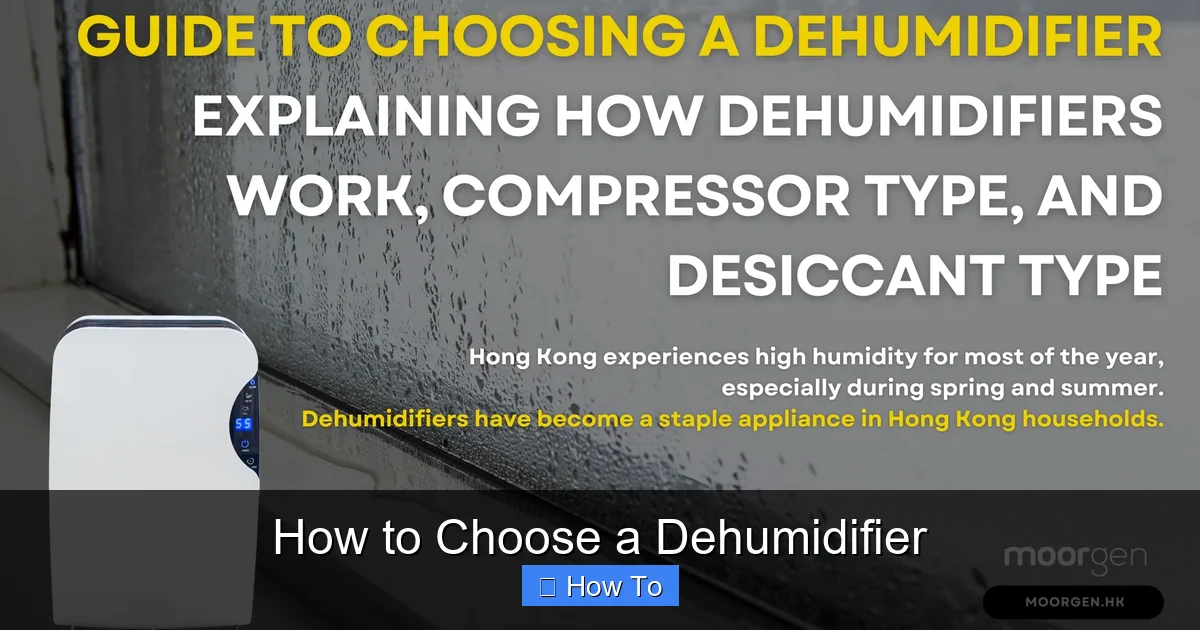
Choosing the right dehumidifier can improve air quality, reduce mold, and boost comfort in your home. This guide walks you through size, type, features, and placement to help you pick the best model for your needs.
Quick Answers to Common Questions
What size dehumidifier do I need for a 1,000 sq. ft. basement?
For a 1,000 sq. ft. basement that’s moderately damp, choose a 50-pint dehumidifier. If it’s very damp or has standing water, go for a 70-pint model.
Can I run a dehumidifier all the time?
Yes, especially in humid climates. Use a model with an adjustable humidistat and continuous drainage to save energy and prevent overflows.
Is a desiccant or compressor dehumidifier better?
Compressor models are better for warm, humid areas. Desiccant models work better in cold spaces like garages or crawl spaces.
How often should I clean the filter?
Clean the filter every 2–4 weeks during heavy use. A dirty filter reduces efficiency and can cause the unit to overheat.
Do dehumidifiers use a lot of electricity?
It depends on the model and usage. Energy Star models are more efficient. A 50-pint unit may use 500–700 watts—about $10–$20 per month if run 8 hours a day.
How to Choose a Dehumidifier: A Complete Step-by-Step Guide
Too much moisture in your home can lead to musty smells, peeling paint, and even health problems like allergies or asthma. A dehumidifier helps by pulling excess water from the air, making your space more comfortable and healthier. But with so many models on the market, how to choose a dehumidifier that actually works for your needs can feel overwhelming.
This guide will walk you through everything you need to know—from understanding humidity levels to picking the right size, type, and features. By the end, you’ll feel confident selecting a dehumidifier that fits your home, budget, and lifestyle. Whether you’re dealing with a damp basement, a humid bathroom, or just want better air quality, we’ve got you covered.
Step 1: Understand Why You Need a Dehumidifier
Before buying, ask yourself: Why do I need a dehumidifier? The answer will help you choose the right model. Common reasons include:
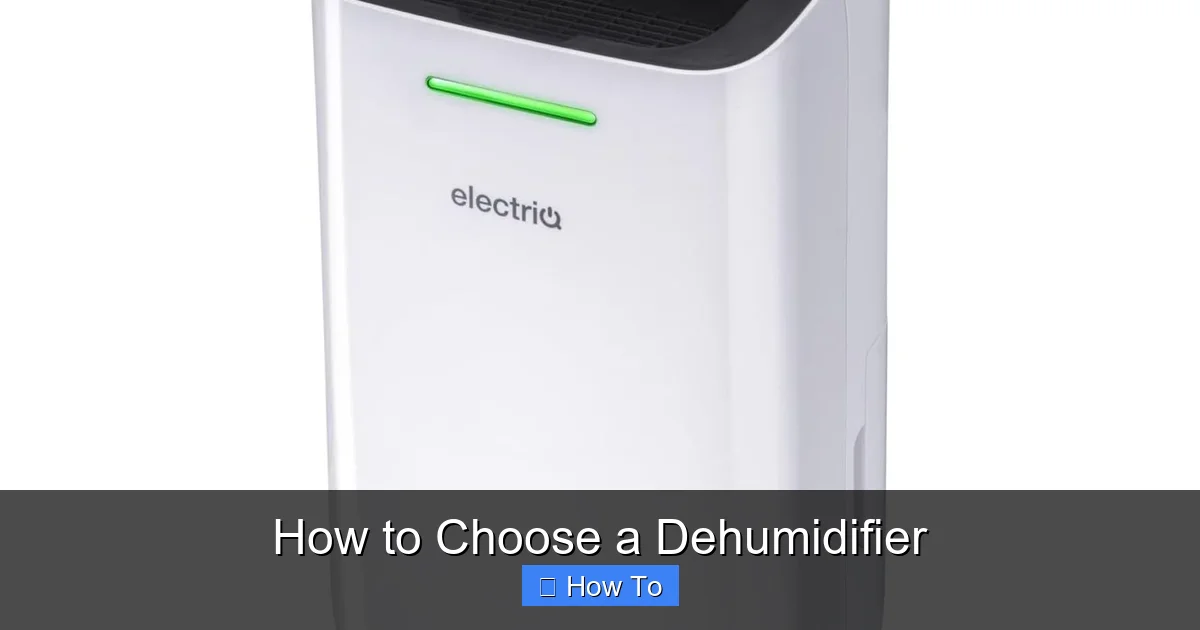
Visual guide about How to Choose a Dehumidifier
Image source: cdn.mos.cms.futurecdn.net
- High humidity: If your indoor humidity is above 60%, you’re at risk for mold, dust mites, and mildew.
- Damp spaces: Basements, crawl spaces, and garages often trap moisture.
- Allergies or asthma: Lower humidity reduces allergens like mold and dust mites.
- Musty odors: Lingering smells often mean hidden moisture.
- Condensation on windows: This is a clear sign of excess indoor humidity.
Use a hygrometer (a simple humidity meter) to check your home’s humidity level. Ideal indoor humidity is between 30% and 50%. If it’s higher, a dehumidifier is a smart investment.
Step 2: Determine the Right Size (Capacity)
One of the most important steps in how to choose a dehumidifier is picking the right capacity. This is measured in pints per day (PPD)—how much water the unit can remove in 24 hours.
Calculate Room Size
Start by measuring the square footage of the area you want to dehumidify. For example:
- A 500 sq. ft. basement
- A 300 sq. ft. laundry room
- A 1,000 sq. ft. whole-house space
Assess Humidity Level
Next, determine how damp the space is:
- Slightly damp: Feels humid, maybe a musty smell. Use a 30–40 PPD unit.
- Moderately damp: Visible moisture, damp spots, or occasional condensation. Choose a 40–50 PPD model.
- Very damp or wet: Standing water, strong odor, or mold. Go for 50+ PPD.
Use a Sizing Chart
Here’s a general guide:
- 100–500 sq. ft., slightly damp: 20–30 PPD
- 500–1,000 sq. ft., moderately damp: 30–50 PPD
- 1,000+ sq. ft., very damp: 50–70+ PPD
Pro Tip: If your space is near a water source (like a basement with a sump pump), go one size up. It’s better to have a slightly larger unit than one that struggles.
Step 3: Choose the Right Type of Dehumidifier
There are two main types: compressor (refrigerant) and desiccant. Each works differently and suits different environments.
Compressor (Refrigerant) Dehumidifiers
These are the most common and work like an air conditioner. They pull in moist air, cool it to condense water, then reheat the air before releasing it.
- Best for: Warm, humid climates (above 65°F)
- Pros: Energy-efficient, effective at high humidity, affordable
- Cons: Less effective in cold temperatures, can be noisy
Desiccant Dehumidifiers
These use a moisture-absorbing material (like silica gel) to pull water from the air. They don’t rely on cooling, so they work well in cold spaces.
- Best for: Cold areas like garages, crawl spaces, or winter basements (below 65°F)
- Pros: Quiet, effective in low temperatures, lightweight
- Cons: Less energy-efficient, may need frequent filter changes
Example: If you live in Florida and want to dehumidify your living room, a compressor model is ideal. But if you’re drying out a chilly garage in Minnesota, go with a desiccant.
Step 4: Look for Key Features
Modern dehumidifiers come with features that make them easier to use and more efficient. Here’s what to look for:
Adjustable Humidistat
This lets you set your desired humidity level (e.g., 45%). The unit will turn on and off automatically to maintain it. Without this, you’re guessing—and wasting energy.
Auto Shut-Off and Tank Full Alert
When the water tank is full, the dehumidifier stops and alerts you. This prevents overflows and water damage. Essential if you won’t be home often.
Continuous Drainage Option
Instead of emptying a tank, you can attach a hose to drain water directly into a floor drain or sump pump. Great for basements or 24/7 use.
Washable or Reusable Filter
A clean filter improves airflow and efficiency. Look for models with easy-to-remove, washable filters. Replaceable filters add ongoing cost.
Programmable Timer
Set the dehumidifier to run only during certain hours (e.g., overnight). Saves energy and reduces noise during the day.
Low-Temperature Operation
Some compressor models can work in temps as low as 41°F. Check the specs if your space gets cold.
Energy Efficiency
Look for the Energy Star label. These models use 15–30% less energy than standard units, saving you money over time.
Step 5: Consider Noise Level
Dehumidifiers can be noisy, especially if placed in living areas. Noise is measured in decibels (dB). Here’s a quick guide:
- 35–45 dB: Quiet, like a whisper—ideal for bedrooms
- 45–55 dB: Moderate, like a refrigerator—fine for living rooms
- 55+ dB: Noticeable, like a conversation—better for basements or garages
Tip: Desiccant models are usually quieter than compressor types. If noise is a concern, check the product specs or read user reviews.
Step 6: Think About Portability and Placement
Where will you put the dehumidifier? This affects your choice.
Portability Features
Look for:
- Built-in handles
- Wheels or casters
- Compact design
These make it easy to move the unit from room to room or store it when not in use.
Placement Tips
- Place it in the dampest area—usually the basement, bathroom, or laundry room.
- Keep it at least 6 inches away from walls for proper airflow.
- Avoid placing it near heat sources or in direct sunlight.
- For whole-house dehumidifiers, consider a whole-home system integrated with your HVAC.
Example: If you’re using it in a basement, place it near the center or where moisture collects. Use a hose for continuous drainage to avoid frequent emptying.
Step 7: Set Your Budget
Dehumidifiers range from $100 to $600+. Here’s what you get at different price points:
- $100–$200: Basic models, 20–30 PPD, limited features. Good for small, slightly damp rooms.
- $200–$350: Mid-range, 30–50 PPD, humidistat, auto shut-off, better filters. Best for most homes.
- $350+: High-capacity, 50+ PPD, advanced features, Energy Star, quiet operation. Ideal for large or very damp spaces.
Budget Tip: Don’t just look at the upfront cost. A $300 Energy Star model may save $50/year in electricity, paying for itself in a few years.
Step 8: Read Reviews and Compare Brands
Before buying, do your homework. Check:
- Customer reviews on Amazon, Home Depot, or Lowe’s
- Reliability ratings from Consumer Reports or Wirecutter
- Warranty length—most offer 1–2 years; some go up to 5
Top brands include:
- Frigidaire: Reliable, good value, wide range
- hOmeLabs: Popular for basements, strong performance
- GE: Energy-efficient, quiet operation
- Eva-Dry: Great for small spaces and desiccant models
Pro Tip: Look for reviews that mention real-world performance—like how well it handles a damp basement or how loud it is at night.
Step 9: Install and Use Your Dehumidifier Correctly
Even the best dehumidifier won’t work well if used wrong. Follow these steps:
Initial Setup
- Unbox and place the unit on a flat, stable surface.
- Plug it into a grounded outlet—don’t use an extension cord.
- Set the humidistat to 45–50% for most homes.
Daily Use
- Run it continuously during humid seasons or as needed.
- Empty the tank regularly (unless using continuous drainage).
- Clean the filter every 2–4 weeks.
Seasonal Tips
- In summer, run it more often.
- In winter, use it in basements or garages if needed.
- Store it properly during off-seasons: clean, dry, and cover.
Troubleshooting Common Issues
Even the best dehumidifiers can have problems. Here’s how to fix common ones:
Unit Won’t Turn On
- Check the power cord and outlet.
- Make sure the tank isn’t full (auto shut-off may be triggered).
- Reset the unit by unplugging for 10 seconds.
Not Removing Enough Moisture
- Check the humidistat setting—lower it if needed.
- Clean the filter—clogged filters reduce airflow.
- Ensure proper placement and airflow.
- The unit may be too small for the space.
Too Noisy
- Make sure it’s on a level surface.
- Check for loose parts or vibrations.
- Move it to a less sensitive area if needed.
Water Leaking
- Check the tank for cracks or improper seating.
- If using a hose, ensure it’s securely attached and draining properly.
- Look for ice buildup (in cold temps)—this can block drainage.
Ice on Coils (Compressor Models)
- This happens in cold temperatures.
- Turn off the unit and let it thaw.
- Use a desiccant model or one rated for low temps.
Conclusion
Learning how to choose a dehumidifier doesn’t have to be complicated. Start by assessing your space and humidity level, then pick the right size and type. Look for key features like an adjustable humidistat, auto shut-off, and continuous drainage. Consider noise, energy use, and placement to get the best results.
A good dehumidifier improves air quality, protects your home, and makes living more comfortable. Take your time, compare options, and don’t rush the decision. With the right model, you’ll enjoy fresher, healthier air for years to come.