
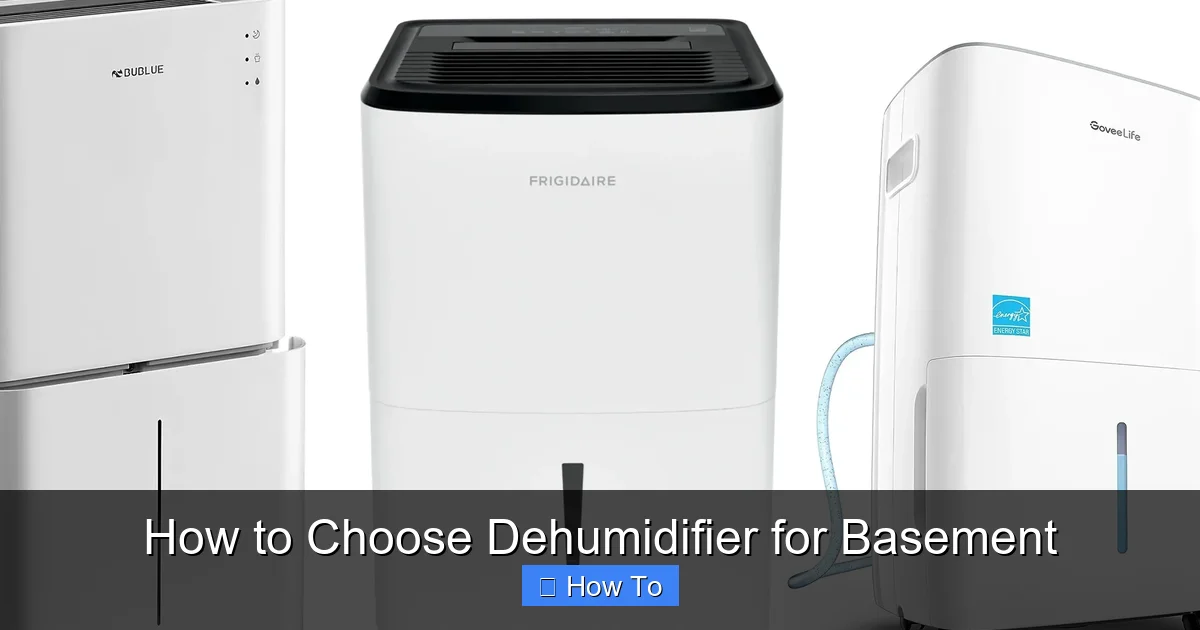
Choosing the right dehumidifier for your basement can prevent mold, musty odors, and structural damage. This guide walks you through sizing, types, features, and placement tips to help you pick the perfect unit for your space.
Quick Answers to Common Questions
Tip/Question?
What size dehumidifier do I need for a 800 sq ft basement?
A 50-pint unit is ideal for an 800 sq ft basement with moderate dampness. If it’s very damp or near a water source, go for 70 pints.
Tip/Question?
Can I run a dehumidifier in winter?
Yes, but compressor models may freeze below 60°F. Use a desiccant unit or one with a defrost function in cold basements.
Tip/Question?
How often should I clean the filter?
Clean the filter every 4–6 weeks during heavy use. A dirty filter reduces efficiency and can cause odors.
Tip/Question?
Should I use a drain hose or empty the tank?
Use a drain hose if you have a floor drain or sump pump. It’s more convenient and prevents overflow.
Tip/Question?
Do dehumidifiers use a lot of electricity?
They can, but ENERGY STAR models are efficient. Look for one with a high energy factor (EF) to save on bills.
How to Choose a Dehumidifier for Basement
If your basement feels damp, smells musty, or shows signs of mold, you’re not alone. Basements are naturally prone to high humidity due to poor ventilation, ground moisture, and temperature differences. Left unchecked, excess moisture can damage walls, furniture, and even your home’s foundation. The good news? A dehumidifier can solve these problems—but only if you choose the right one.
This guide will walk you through everything you need to know to pick the perfect dehumidifier for your basement. From understanding humidity levels to comparing types, features, and placement tips, you’ll learn how to make a smart, long-lasting investment. Whether your basement is a finished living space or a storage area, we’ve got you covered.
Step 1: Assess Your Basement’s Humidity Level
Before buying any appliance, it’s important to know what you’re dealing with. The first step in choosing a dehumidifier is measuring your basement’s humidity.
Use a Hygrometer
A hygrometer is a small, inexpensive device that measures relative humidity (RH). You can find digital hygrometers at hardware stores or online for under $20. Place it in the center of your basement and let it sit for 24 hours. Ideal indoor humidity should be between 30% and 50%. If your reading is above 60%, you have a moisture problem that needs addressing.
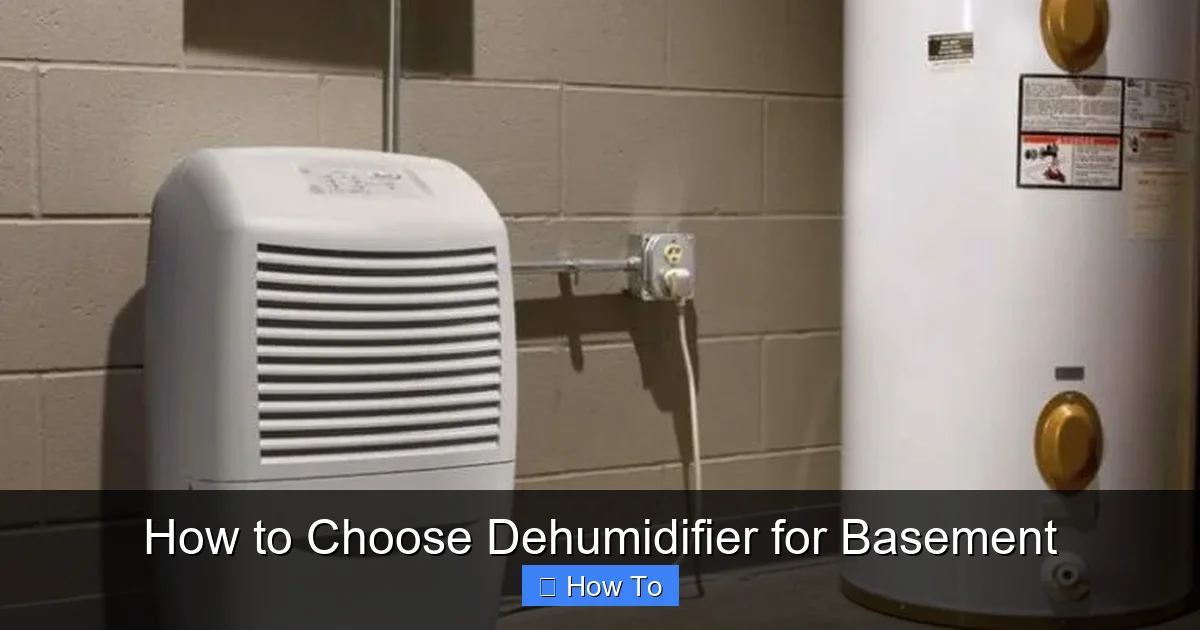
Visual guide about How to Choose Dehumidifier for Basement
Image source: evaporativehumidifiers.com
Look for Visual Clues
Even without a hygrometer, you can spot signs of high humidity. Check for:
- Damp or wet walls
- Condensation on windows or pipes
- Peeling paint or wallpaper
- Mold or mildew spots (especially in corners or behind furniture)
- A musty or earthy smell
If you notice any of these, your basement likely needs a dehumidifier.
Determine the Severity
Basements fall into three general moisture categories:
- Moderately damp: Slight dampness, occasional musty smell. A standard dehumidifier should work.
- Very damp: Frequent condensation, noticeable odor. You’ll need a stronger unit with better drainage.
- Wet or flooded: Standing water, active leaks. Fix the water source first, then use a heavy-duty dehumidifier.
Understanding your basement’s condition helps you choose the right capacity and features.
Step 2: Calculate the Right Size (Capacity)
Dehumidifiers are rated by how many pints of moisture they can remove in 24 hours. Choosing the right size is crucial—too small, and it won’t keep up; too large, and it may short-cycle, wasting energy.
Measure Your Basement’s Square Footage
Use a tape measure to find the length and width of your basement. Multiply them to get the square footage. For example, a 20 ft x 30 ft basement is 600 sq ft.
Match Capacity to Space and Dampness
Use this general guide to match dehumidifier capacity to your basement:
- 30-pint: Up to 500 sq ft, moderately damp
- 50-pint: 500–1,000 sq ft, very damp
- 70-pint or higher: Over 1,000 sq ft, wet conditions or high humidity
For example, a 600 sq ft basement with a musty smell and occasional dampness would benefit from a 50-pint unit. But if it’s frequently wet or near a high water table, go for 70 pints or more.
Consider the “AHAM Rating”
Most dehumidifiers list their capacity based on AHAM (Association of Home Appliance Manufacturers) standards, which test at 60% humidity and 80°F. Real-world basements are often cooler and more humid, so you may need a slightly larger unit than the chart suggests.
Step 3: Choose the Right Type of Dehumidifier
There are two main types of dehumidifiers: compressor (refrigerant) and desiccant. Each works differently and suits different environments.
Compressor (Refrigerant) Dehumidifiers
These are the most common and affordable. They use a refrigeration cycle to cool air, causing moisture to condense and collect in a tank. Pros:
- High efficiency in warm, humid conditions
- Lower upfront cost
- Great for basements above 60°F
Cons:
- Less effective in cold temperatures
- Can freeze up in unheated basements
Best for: Finished basements, garages, or areas with consistent warmth.
Desiccant Dehumidifiers
These use a moisture-absorbing material (like silica gel) to pull water from the air. They don’t rely on cooling, so they work well in cold spaces. Pros:
- Effective in temperatures as low as 40°F
- Quiet operation
- No risk of freezing
Cons:
- Higher energy use
- More expensive upfront
- May require a heater to regenerate the desiccant
Best for: Unheated basements, crawl spaces, or cold climates.
Hybrid Models
Some newer units combine both technologies for better performance across temperatures. These are ideal if your basement temperature fluctuates.
Step 4: Look for Essential Features
Modern dehumidifiers come with a range of features. While not all are necessary, some can make a big difference in convenience and performance.
Auto-Humidistat
This built-in sensor lets you set your desired humidity level (e.g., 45%). The unit turns on and off automatically to maintain it. Without this, you’d have to manually monitor and adjust the settings.
Continuous Drainage Option
Most dehumidifiers have a water tank that needs emptying every 12–24 hours. A continuous drainage feature lets you attach a hose to drain water directly into a floor drain or sump pump. This is a must if you can’t check the unit daily.
Auto-Restart
If the power goes out, this feature restarts the dehumidifier at its last setting when power returns. Great for areas with frequent outages.
Defrost Function
Essential for compressor units in cold basements. It prevents the coils from freezing, which can damage the unit or reduce efficiency.
Air Filter
A washable or replaceable filter traps dust, mold spores, and allergens. Look for a MERV 8 or higher filter for better air cleaning. Some models include HEPA or activated carbon filters for extra purification.
UV Light or Ionizer (Optional)
These features kill bacteria and mold spores in the air. While not essential, they can improve air quality in damp basements.
Digital Display and Controls
A clear display showing humidity level, timer, and settings makes operation easier. Touch controls are more durable than buttons.
Timer and Sleep Mode
A 24-hour timer lets you run the unit only when needed. Sleep mode reduces noise and dims lights for nighttime use.
Step 5: Consider Noise Level
Basements are often used as home gyms, offices, or playrooms. If yours doubles as a living space, noise matters.
Check the Decibel (dB) Rating
Most dehumidifiers range from 45 to 65 dB. For reference:
- 45 dB: Quiet library
- 50 dB: Quiet conversation
- 60 dB: Normal conversation
- 65 dB: Vacuum cleaner
Aim for under 55 dB if noise is a concern. Desiccant models tend to be quieter than compressor units.
Placement Affects Noise
Even a quiet unit can sound loud if placed on a hard surface or near a wall. Use a rubber mat or place it on carpet to reduce vibration. Keep it at least 6 inches from walls for airflow and quieter operation.
Step 6: Evaluate Energy Efficiency
Dehumidifiers run frequently, so energy use adds up. Choosing an efficient model saves money and reduces environmental impact.
Look for ENERGY STAR Certification
ENERGY STAR-certified dehumidifiers use 15–30% less energy than standard models. They also meet strict performance and efficiency guidelines. Check the yellow EnergyGuide label for estimated annual operating cost.
Understand the Energy Factor (EF)
This measures how many liters of water the unit removes per kilowatt-hour of electricity. Higher EF = more efficient. For example:
- EF of 1.5: Removes 1.5 liters per kWh
- EF of 2.0: Removes 2.0 liters per kWh (better)
Aim for an EF of at least 1.8 for good efficiency.
Use a Timer or Smart Features
Running the dehumidifier only when needed saves energy. Some smart models connect to Wi-Fi and let you control settings via an app. Others integrate with smart thermostats to optimize humidity based on weather.
Step 7: Plan for Installation and Maintenance
A great dehumidifier won’t work well if it’s poorly placed or neglected.
Choose the Right Location
Place the unit in the center of the basement or near the source of moisture (e.g., near a sump pump or damp wall). Avoid corners or tight spaces. Leave at least 6–12 inches of clearance on all sides for airflow.
Use a Hose for Continuous Drainage
If your basement has a floor drain or sump pit, connect a garden hose to the drain outlet. This eliminates the need to empty the tank. Make sure the hose slopes downward to prevent backflow.
Clean the Filter Monthly
A dirty filter restricts airflow and reduces efficiency. Most filters are washable—rinse with warm water and let dry. Replace disposable filters every 3–6 months.
Empty the Tank Regularly (If Not Using Drain Hose)
Check the tank every day or two. Most units have a float switch that shuts off the machine when full, but it’s best not to rely on it.
Inspect Coils and Vents
Dust and debris can build up on coils and vents. Use a soft brush or vacuum attachment to clean them every few months.
Winter Storage
If you don’t use your basement in winter, unplug the dehumidifier, clean it thoroughly, and store it in a dry place. Cover it to prevent dust buildup.
Troubleshooting Common Issues
Even the best dehumidifiers can have problems. Here’s how to fix common issues:
Unit Isn’t Removing Moisture
- Check the filter—clean or replace it.
- Ensure the room is sealed (close windows and doors).
- Verify the humidity setting—lower it if needed.
- Make sure the coils aren’t frozen (defrost if necessary).
Water Tank Fills Too Fast
- Your basement may be wetter than expected—consider a larger unit.
- Check for leaks or poor drainage—fix water sources first.
- Use a continuous drain hose to avoid frequent emptying.
Unit Is Too Loud
- Place it on a soft surface or rubber mat.
- Ensure it’s not vibrating against a wall.
- Check for loose parts or debris in the fan.
Ice Builds Up on Coils
- This happens in cold basements with compressor units.
- Enable the defrost function if available.
- Consider switching to a desiccant model.
Musty Smell Returns
- Clean the water tank and coils—mold can grow inside.
- Replace the air filter.
- Run the unit longer or increase capacity.
Conclusion
Choosing the right dehumidifier for your basement doesn’t have to be overwhelming. Start by measuring humidity and square footage, then match the capacity and type to your needs. Prioritize features like auto-humidistat, continuous drainage, and energy efficiency. Don’t forget about noise, placement, and maintenance—these factors affect long-term performance.
A good dehumidifier does more than remove moisture. It protects your home from mold, improves air quality, and makes your basement a more comfortable space. Whether you’re storing holiday decorations or setting up a home theater, the right unit will keep your basement dry and healthy year-round.
Invest in a quality model from a reputable brand, follow the manufacturer’s instructions, and enjoy peace of mind knowing your basement is protected.