
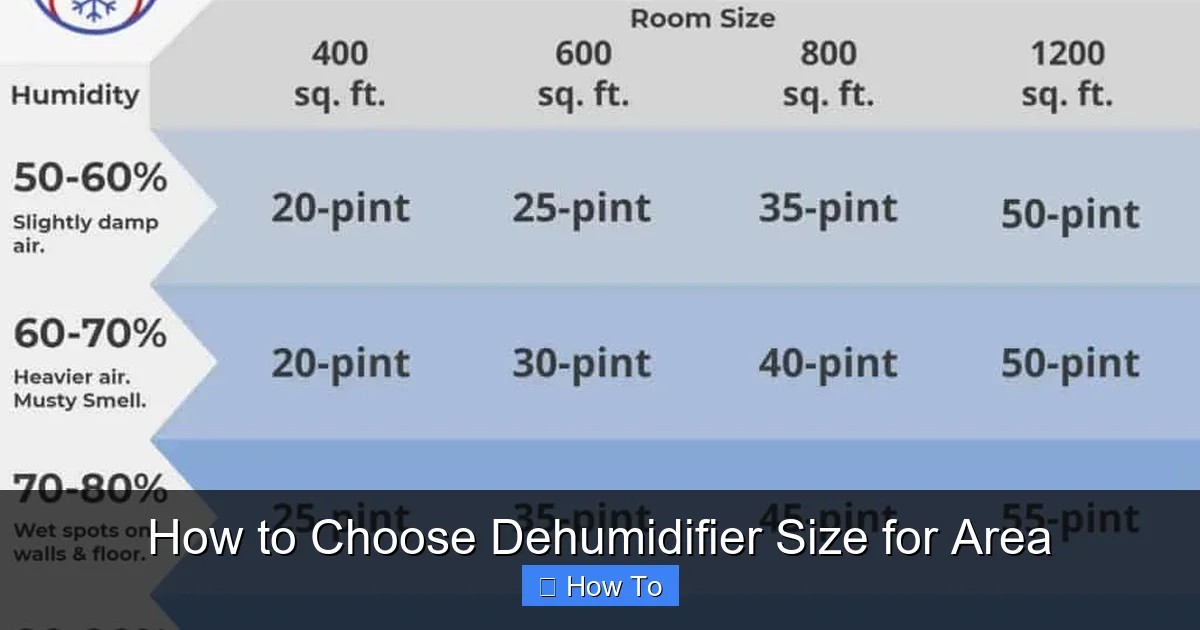
Choosing the correct dehumidifier size ensures efficient moisture control and energy savings. This guide walks you through room size, humidity levels, and capacity to help you pick the best unit for your space.
Quick Answers to Common Questions
What’s the first step in choosing a dehumidifier size?
Measure your room’s square footage. This gives you the baseline for capacity recommendations.
How do I know if my room is too humid?
Use a hygrometer to check humidity levels. Anything above 50% is considered damp and may need dehumidification.
Can a dehumidifier be too big?
Yes. An oversized unit cycles on and off too quickly, wasting energy and reducing lifespan. Choose based on need, not maximum capacity.
Do I need a dehumidifier in a dry climate?
Only if you have a specific moisture problem, like a damp basement or indoor pool. Most dry climates don’t require one.
Should I buy a dehumidifier with a built-in pump?
If you can’t use a drain hose, a pump helps empty the bucket automatically—great for basements or unattended areas.
How to Choose Dehumidifier Size for Area
Excess moisture in your home can lead to mold, musty odors, and even structural damage. A dehumidifier helps maintain healthy indoor air quality by removing excess humidity. But here’s the catch: not all dehumidifiers are created equal. Choosing the right size for your area is crucial. Too small, and it won’t keep up with moisture. Too large, and you’ll waste energy and money.
In this guide, you’ll learn exactly how to choose the perfect dehumidifier size for your space. We’ll cover room measurements, humidity levels, capacity ratings, and real-world factors like climate and insulation. By the end, you’ll be confident in picking a unit that works efficiently and effectively—no guesswork needed.
Step 1: Measure Your Room Size
The first step in choosing a dehumidifier is knowing how much space you need to cover. Most manufacturers base their recommendations on square footage. So, grab a tape measure and get started.
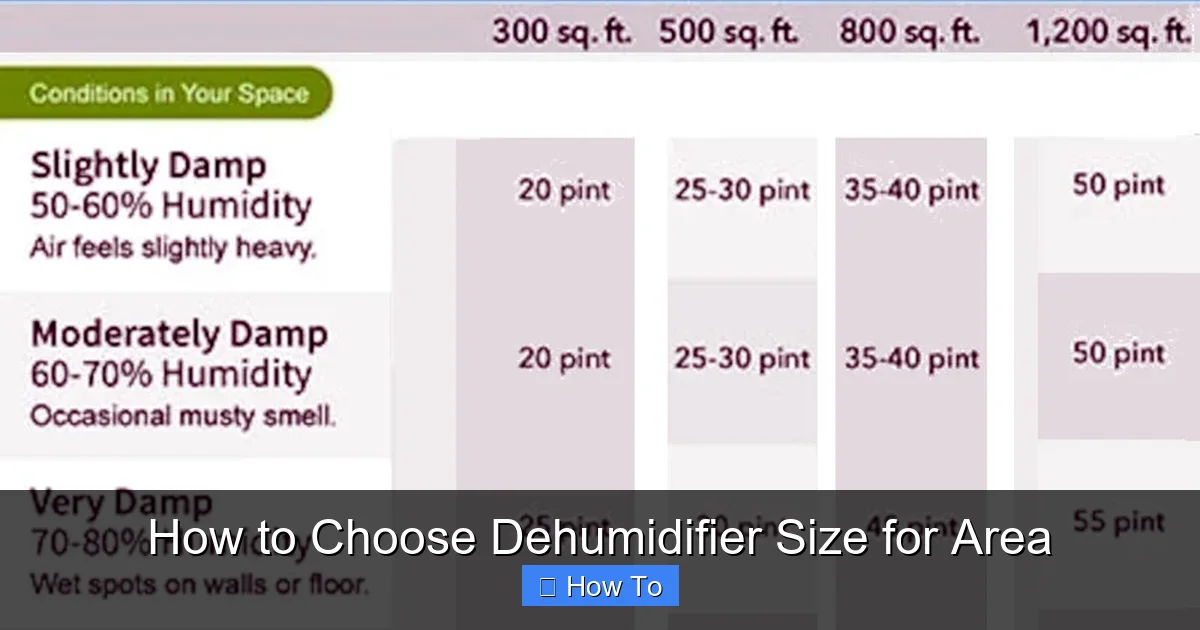
Visual guide about How to Choose Dehumidifier Size for Area
Image source: daggaseeds.com
Calculate Square Footage
Measure the length and width of the room in feet. Multiply them together to get the total square footage. For example, a room that’s 12 feet by 15 feet equals 180 square feet.
If your space is irregular—like an L-shaped basement—break it into smaller rectangles, calculate each, and add them up. Don’t forget closets, crawl spaces, or attached garages if they’re part of the problem area.
Account for Ceiling Height
While most guides focus on floor area, ceiling height matters too. Rooms with high ceilings (over 8 feet) hold more air and may require a slightly larger unit. If your ceiling is 10 feet or higher, consider moving up one size category in capacity.
Use a Room Size Chart
Here’s a quick reference:
- Up to 500 sq. ft.: Small dehumidifier (15–25 pints/day)
- 500–1,000 sq. ft.: Medium dehumidifier (25–40 pints/day)
- 1,000–1,500 sq. ft.: Large dehumidifier (40–60 pints/day)
- Over 1,500 sq. ft.: Extra-large or whole-house unit (60+ pints/day)
These ranges are a starting point. Your actual needs depend on humidity levels, which we’ll cover next.
Step 2: Assess Humidity Levels
Room size tells part of the story—but humidity level tells the rest. A small bathroom with constant steam needs a stronger dehumidifier than a dry living room of the same size.
Test Indoor Humidity
Use a hygrometer (a humidity meter) to check moisture levels. You can find affordable digital models online or at hardware stores. Ideal indoor humidity is between 30% and 50%.
If your reading is:
- Below 30%: Air is too dry—no dehumidifier needed.
- 30–50%: Comfortable range—maintain with occasional use.
- 50–60%: Mildly damp—consider a small to medium unit.
- 60–70%: Moderately damp—opt for a medium to large unit.
- Above 70%: Very damp or wet—use a large or high-capacity unit.
Identify Problem Areas
Some rooms are naturally more humid. Basements, laundry rooms, bathrooms, and crawl spaces often trap moisture. If you notice condensation on windows, peeling paint, or a musty smell, that’s a sign of high humidity.
For example, a 600 sq. ft. basement with 70% humidity will need a 40–50 pint/day dehumidifier, while a 600 sq. ft. living room at 45% humidity might only need a 25-pint model.
Consider Water Sources
Ask yourself: Is there a water source nearby? Flooding, leaks, or poor drainage can increase moisture. If your basement floods after heavy rain, you’ll need a heavy-duty unit—even if the space is small.
Step 3: Understand Dehumidifier Capacity (Pints per Day)
Dehumidifiers are rated by how many pints of water they can remove in 24 hours. This is called pint capacity. It’s the most important spec when sizing your unit.
What Does “Pints per Day” Mean?
A 30-pint dehumidifier can extract up to 30 pints of moisture from the air daily under standard conditions (80°F and 60% humidity). Real-world performance may vary based on temperature and humidity.
Match Capacity to Conditions
Use this guide to match capacity to your situation:
- Moderately damp (50–60% humidity): 10–20 pints/day per 500 sq. ft.
- Very damp (60–70% humidity): 20–30 pints/day per 500 sq. ft.
- Wet or flooded (70%+ humidity): 30–50+ pints/day per 500 sq. ft.
For example, a 1,000 sq. ft. basement that’s very damp (65% humidity) would need a 40–60 pint/day unit. A 500 sq. ft. closet with mild dampness might only need a 15-pint model.
Beware of Overestimating
Some manufacturers exaggerate capacity. Look for units tested under AHAM (Association of Home Appliance Manufacturers) standards. These ratings are more reliable and reflect real performance.
Step 4: Factor in Climate and Season
Your local weather plays a big role in dehumidifier needs. A unit that works in Arizona may not cut it in Florida.
Humid vs. Dry Climates
In humid regions (like the Southeast U.S.), moisture lingers longer. You’ll need a larger or more efficient unit. In dry climates (like the Southwest), even a small dehumidifier may be overkill unless you have a specific problem area.
Seasonal Changes
Humidity spikes in summer and rainy seasons. If you only have moisture issues during certain months, consider a portable unit you can store when not in use. For year-round problems, invest in a permanent or whole-house solution.
Indoor Activities
Do you run a home gym, indoor pool, or greenhouse? These activities add moisture. A yoga studio with frequent use may need a dehumidifier even in a dry climate.
Step 5: Evaluate Air Circulation and Insulation
Even the best dehumidifier can’t work well if air doesn’t circulate or heat escapes.
Check Ventilation
Rooms with poor airflow—like basements with no windows—trap moisture. A dehumidifier with a built-in fan helps, but you may still need a higher-capacity unit. Consider adding vents or fans to improve circulation.
Insulation Matters
Uninsulated walls or floors let in cold air, which can cause condensation. If your basement feels chilly and damp, improving insulation may reduce the need for a large dehumidifier. But if you can’t insulate, size up your unit.
Door and Window Seals
Leaky windows and doors let in humid outdoor air. Fix drafts first. If moisture persists, choose a dehumidifier with extra capacity to handle the influx.
Step 6: Choose the Right Type of Dehumidifier
Not all dehumidifiers are the same. The type you choose affects sizing and performance.
Compressor (Refrigerant) Dehumidifiers
Most common type. Work best in warm, humid conditions (above 65°F). Ideal for basements, laundry rooms, and living areas. Available in 15–70 pint capacities.
Desiccant Dehumidifiers
Use moisture-absorbing materials instead of cooling coils. Better in cold environments (like garages or crawl spaces below 65°F). Often smaller capacity but effective in low temps.
Whole-House Dehumidifiers
Installed in your HVAC system. Cover entire homes (up to 3,000+ sq. ft.). Best for large spaces or severe humidity issues. Require professional installation.
Mini or Portable Units
Great for small spaces like closets, RVs, or under sinks. Usually 10–20 pints/day. Not suitable for large or very damp areas.
Step 7: Look for Energy Efficiency and Smart Features
A well-sized dehumidifier saves money and works smarter—not harder.
ENERGY STAR Certification
Look for the ENERGY STAR label. These models use 15–30% less energy than standard units. Over time, the savings add up.
Built-In Humidistat
A humidistat lets you set your desired humidity level (e.g., 45%). The unit turns on and off automatically, preventing over-drying and saving energy.
Auto-Defrost and Auto-Restart
Auto-defrost prevents ice buildup in cold areas. Auto-restart resumes operation after a power outage—great for basements.
Continuous Drain Option
Instead of emptying a bucket, connect a hose for continuous drainage. Essential for large units or unattended spaces.
Step 8: Use a Sizing Calculator or Chart
Still unsure? Use a dehumidifier sizing chart or online calculator.
AHAM Sizing Chart
The AHAM provides a standard chart based on room size and humidity:
- 500 sq. ft., slightly damp: 10–15 pints/day
- 500 sq. ft., very damp: 20–25 pints/day
- 1,000 sq. ft., wet: 30–40 pints/day
- 1,500 sq. ft., extremely wet: 50+ pints/day
Online Calculators
Many retailers (like Home Depot, Lowe’s, or Amazon) offer free sizing tools. Enter your room size, humidity level, and location for a personalized recommendation.
Troubleshooting Common Sizing Mistakes
Even with the best planning, things can go wrong. Here’s how to fix common issues.
Dehumidifier Runs Constantly But Doesn’t Dry the Air
This usually means the unit is too small. Check if it’s rated for your room size and humidity level. If it’s undersized, upgrade to a higher-capacity model.
Unit Cycles On and Off Too Often
Could be too large for the space. It removes moisture quickly, then shuts off. This wastes energy and wears out the compressor. Choose a unit with adjustable settings or a smaller capacity.
Water Bucket Fills Too Fast
Normal in very damp areas. But if it fills in hours, check for leaks, poor drainage, or excessive moisture sources. Consider a model with a continuous drain hose.
Ice Builds Up on Coils
Happens in cold environments with compressor units. Switch to a desiccant dehumidifier or move the unit to a warmer area.
Musty Smell Returns Quickly
The dehumidifier may not be running long enough. Ensure it has a humidistat and runs until the target humidity is reached. Clean the filter monthly to maintain airflow.
Final Tips for Choosing the Right Size
Before you buy, keep these tips in mind:
- Start with square footage and humidity. These are the two biggest factors.
- Don’t go too small. It’s better to have a slightly larger unit than one that can’t keep up.
- Read reviews. Real user experiences reveal performance in similar conditions.
- Check warranty and support. A good warranty (2–5 years) shows manufacturer confidence.
- Consider noise level. Basement units can be loud—look for decibel ratings under 50 dB for quiet operation.
Conclusion
Choosing the right dehumidifier size for your area doesn’t have to be overwhelming. By measuring your space, testing humidity, understanding capacity, and considering climate and features, you can find a unit that works efficiently and effectively. A properly sized dehumidifier improves air quality, prevents mold, and protects your home—all while saving energy and money.
Remember: size matters, but so does fit. Take the time to assess your needs, and you’ll enjoy a drier, healthier home for years to come.