
Most dehumidifier problems are fixable with basic troubleshooting and maintenance. From frozen coils to drainage issues, many repairs can be done at home with the right tools and guidance. However, electrical or refrigerant problems may require professional help.
Key Takeaways
- Many dehumidifier issues are repairable: Common problems like clogged filters, frozen coils, or drainage blockages can often be fixed at home.
- Regular maintenance prevents breakdowns: Cleaning filters and coils every few months keeps your unit running efficiently.
- Frozen coils are a frequent culprit: This usually happens due to low temperatures or dirty coils and can be resolved by defrosting and cleaning.
- Electrical problems may need a pro: If the unit won’t turn on or makes strange noises, it could be a capacitor or motor issue requiring expert help.
- Refrigerant leaks are serious: These require a licensed technician and should not be attempted at home.
- DIY repairs save money: Simple fixes like replacing a hose or cleaning the water tank cost far less than buying a new unit.
- Know when to replace: If the unit is over 10 years old or repair costs exceed half the price of a new one, replacement may be smarter.
Quick Answers to Common Questions
Can a dehumidifier be fixed if it’s not collecting water?
Yes, this is often due to a clogged filter, frozen coils, or incorrect humidity settings. Clean the filter, check for ice buildup, and adjust the humidistat.
Is it worth repairing an old dehumidifier?
If the unit is over 10 years old or repair costs exceed half the price of a new one, replacement is usually better. Newer models are more efficient and reliable.
Why is my dehumidifier making a loud noise?
Loud noises can indicate a failing motor, loose parts, or a worn belt. Turn it off, inspect for loose screws, and consider professional help if the noise persists.
Can I fix a refrigerant leak myself?
No, refrigerant leaks require a licensed technician. Handling refrigerant without certification is illegal and dangerous.
How often should I clean my dehumidifier?
Clean the filter every 2–4 weeks, the water tank monthly, and the coils every 3–6 months for optimal performance.
📑 Table of Contents
- Can a Dehumidifier Be Fixed? A Complete Guide to Troubleshooting and Repairs
- Common Dehumidifier Problems and How to Fix Them
- Frozen Coils: A Common and Fixable Issue
- When to Call a Professional
- DIY Repair Tips and Tools You’ll Need
- Repair vs. Replace: Making the Right Decision
- Preventative Maintenance to Avoid Future Problems
- Conclusion
Can a Dehumidifier Be Fixed? A Complete Guide to Troubleshooting and Repairs
So, your dehumidifier has stopped working—or maybe it’s just not pulling moisture like it used to. Before you rush out to buy a new one, take a breath. The good news? A dehumidifier can often be fixed with a little know-how and some basic tools. In fact, many common problems are surprisingly easy to resolve at home, saving you both time and money.
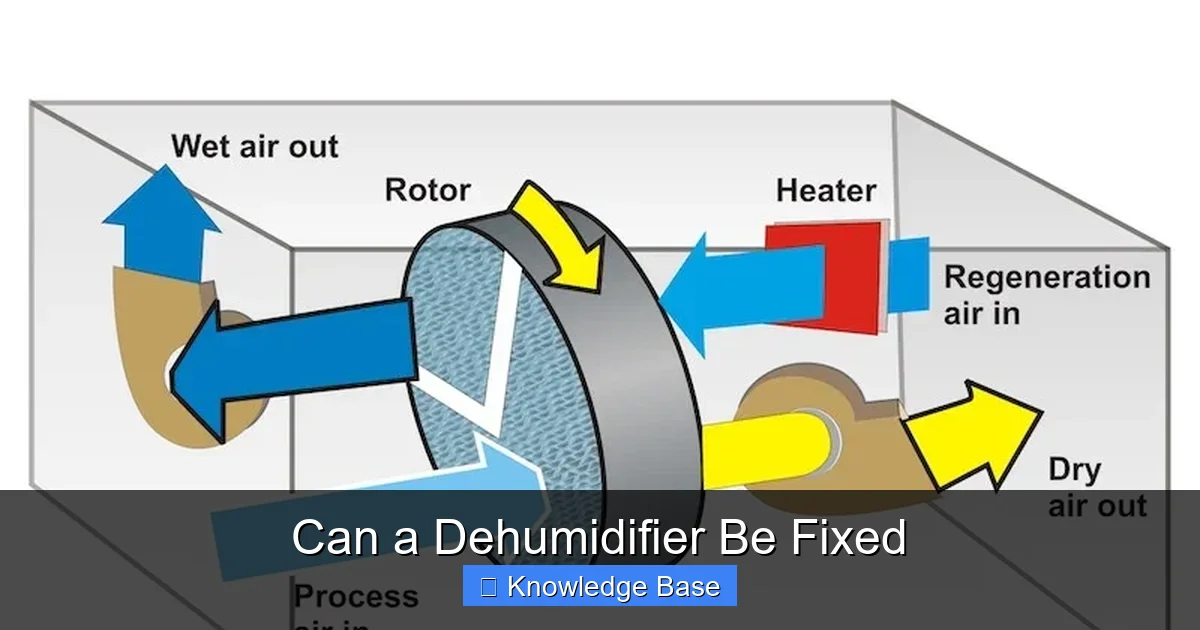
Dehumidifiers are essential appliances in homes with high humidity, especially in basements, laundry rooms, or during humid summer months. They work by drawing in moist air, cooling it to remove moisture, and then reheating it before releasing it back into the room. Over time, however, components can wear out, filters get clogged, or coils freeze up. But that doesn’t always mean it’s time to toss the unit. With a bit of patience and the right approach, you can often bring your dehumidifier back to life.
In this guide, we’ll walk you through the most common dehumidifier problems, how to diagnose them, and step-by-step solutions you can try yourself. We’ll also cover when it’s best to call in a professional and how to decide whether repair or replacement makes more sense. Whether you’re dealing with a unit that won’t turn on, isn’t collecting water, or is making strange noises, this article will help you figure out what’s wrong—and how to fix it.
Common Dehumidifier Problems and How to Fix Them
Visual guide about Can a Dehumidifier Be Fixed
Image source: evaporativehumidifiers.com
Let’s start with the most frequent issues people encounter with their dehumidifiers. Most of these are not only fixable but often preventable with regular maintenance.
1. The Dehumidifier Won’t Turn On
If your dehumidifier is completely unresponsive—no lights, no fan, no hum—the first thing to check is the power source. Make sure it’s plugged in securely and that the outlet is working. Try plugging another device into the same outlet to confirm it has power. If the outlet is fine, check the power cord for any visible damage like fraying or cuts.
Another common cause is a tripped internal thermal fuse or overload protector. These safety features shut off the unit if it overheats. Let the unit cool down for 30 minutes, then try turning it back on. If it still doesn’t work, the thermal fuse may be blown and need replacement. This is a relatively inexpensive part and can often be found online by searching your model number.
2. The Unit Runs but Doesn’t Remove Moisture
This is one of the most frustrating problems. The dehumidifier is on, the fan is spinning, but the water tank isn’t filling up. There are several possible causes.
First, check the humidity setting. If it’s set too low—say, 30%—and the room is already at 40%, the unit won’t run. Adjust the humidistat to a higher setting, like 50%, and give it a few hours to see if it starts collecting water.
Next, inspect the air filter. A clogged filter restricts airflow, which reduces the unit’s ability to pull moisture from the air. Remove the filter (usually located behind a front or side panel), rinse it with warm water, and let it dry completely before reinstalling. Most manufacturers recommend cleaning the filter every 2–4 weeks during heavy use.
If the filter is clean and the settings are correct, the issue might be with the coils. Dirty or frozen coils can prevent proper operation. We’ll dive deeper into coil problems in the next section.
3. The Water Tank Fills Too Slowly or Not at All
Even if the unit is running, it might not be collecting water efficiently. This could be due to low humidity in the room—dehumidifiers work best when the relative humidity is above 50%. If your home is already dry, the unit may simply have little moisture to remove.
Another possibility is a clogged drain hose or blocked water tank. If your model has a continuous drainage option, check the hose for kinks, clogs, or leaks. Disconnect it and flush it with water to clear any buildup. Also, make sure the tank is properly seated and the float switch isn’t stuck. The float switch detects when the tank is full and shuts off the unit to prevent overflow. If it’s jammed in the “full” position, the dehumidifier will stop working even if the tank is empty.
4. The Unit Makes Unusual Noises
Dehumidifiers should run quietly. If you hear grinding, squealing, or rattling sounds, something is likely wrong.
A grinding noise often points to a failing fan motor or compressor. These are more complex repairs and may require professional assistance. However, sometimes the noise comes from loose parts. Turn off the unit, unplug it, and check for any screws or panels that may have come loose. Tighten them carefully.
Squealing could indicate a worn belt (in belt-driven models) or a dry motor bearing. While some motors can be lubricated, many are sealed and not serviceable. In that case, replacement may be necessary.
5. The Dehumidifier Leaks Water
Water on the floor around your dehumidifier is a clear sign of trouble. The most common cause is an overflowing tank that wasn’t emptied in time. Always check the tank regularly, especially during humid weather.
If the tank isn’t full but water is still leaking, inspect the drain hose and connections. A cracked hose or loose fitting can cause drips. Also, check the tank itself for cracks or warping. Over time, plastic tanks can degrade, especially if exposed to sunlight or harsh chemicals.
Another possibility is a faulty condensate pump (if your model has one). These small pumps help move water from the tank to a drain. If the pump fails, water can back up and leak. Replacing a condensate pump is usually straightforward and costs between $30 and $60.
Frozen Coils: A Common and Fixable Issue

Visual guide about Can a Dehumidifier Be Fixed
Image source: waterleak.co.uk
One of the most frequent—and misunderstood—problems with dehumidifiers is frozen coils. If you notice ice buildup on the front or back of the unit, or if it runs but doesn’t seem to be working, frozen coils could be the culprit.
Why Do Dehumidifier Coils Freeze?
Dehumidifiers work by cooling air to condense moisture, similar to an air conditioner. The evaporator coils get very cold—often below freezing—especially in low-humidity or low-temperature environments. If the coils get too cold and there’s moisture in the air, ice can form.
Common causes include:
– Operating the unit in a room below 65°F (18°C)
– Dirty air filter restricting airflow
– Dirty evaporator or condenser coils
– Low refrigerant levels (less common)
How to Fix Frozen Coils
The first step is to turn off the dehumidifier and unplug it. Let it sit for at least 2–4 hours to allow the ice to melt naturally. Do not use a hairdryer or other heat source, as this can damage components.
Once the ice has melted, inspect the air filter. If it’s dirty, clean or replace it. Then, check the coils. You’ll need to remove the front or side panel (consult your user manual for instructions). Use a soft brush or vacuum with a brush attachment to gently remove dust and debris from the coils. Avoid using water or cleaning sprays unless specified by the manufacturer.
After cleaning, reassemble the unit and plug it back in. Set it to run in a room above 65°F. If the problem persists, the issue may be low refrigerant, which requires a licensed technician.
Preventing Future Freezing
To avoid frozen coils in the future:
– Only use the dehumidifier in rooms above 65°F
– Clean the filter every 2–4 weeks
– Clean the coils every 3–6 months
– Ensure proper airflow around the unit (at least 6 inches from walls)
When to Call a Professional
While many dehumidifier issues can be fixed at home, some problems require expert attention. Attempting complex repairs yourself can void your warranty or cause further damage.
Electrical Problems
If your dehumidifier won’t turn on despite checking the power source and thermal fuse, the issue could be internal. Problems like a failed capacitor, burnt motor, or faulty control board are best left to professionals. These components require specialized tools and knowledge to diagnose and replace safely.
For example, a capacitor helps start the compressor and fan motor. If it’s bulging, leaking, or making a buzzing sound, it needs replacement. While capacitors are inexpensive (around $10–$20), replacing them involves working with high-voltage components and should only be done by someone with experience.
Refrigerant Leaks
Dehumidifiers use refrigerant to cool the coils. If the refrigerant level drops due to a leak, the unit won’t remove moisture effectively. Signs of a refrigerant leak include:
– Ice buildup on coils
– Warm air blowing from the unit
– Hissing or bubbling sounds
Refrigerant leaks are serious and regulated by environmental laws. Only licensed HVAC technicians can handle refrigerant. They’ll need to locate the leak, repair it, and recharge the system. This service typically costs $150–$300, depending on the model and leak severity.
Compressor Failure
The compressor is the heart of the dehumidifier. If it fails, the unit won’t cool the coils, and no moisture will be removed. Symptoms include the fan running but no cooling, or the unit turning on and off rapidly.
Compressor replacement is expensive—often $200–$400—and may not be worth it for older units. In many cases, buying a new dehumidifier is more cost-effective.
DIY Repair Tips and Tools You’ll Need
If you’re comfortable with basic home repairs, many dehumidifier fixes are within your reach. Here’s what you’ll need to get started.
Essential Tools
– Screwdrivers (Phillips and flathead)
– Multimeter (to test electrical components)
– Soft brush or vacuum with brush attachment
– Compressed air (for cleaning tight spaces)
– Replacement parts (filter, hose, capacitor, etc.)
Step-by-Step Repair Process
1. **Unplug the unit** – Always disconnect power before opening the dehumidifier.
2. **Consult the manual** – Find your model number and download the user manual or service guide.
3. **Diagnose the problem** – Use the troubleshooting steps above to identify the issue.
4. **Order replacement parts** – Search online using your model number to find compatible parts.
5. **Perform the repair** – Follow safety guidelines and take photos as you disassemble to help with reassembly.
6. **Test the unit** – Plug it back in and run it for a few hours to ensure it’s working properly.
Safety Tips
– Never work on a plugged-in unit.
– Avoid touching capacitors—they can hold a charge even when unplugged.
– Wear gloves and safety glasses when handling sharp or dirty components.
– If you’re unsure, stop and consult a professional.
Repair vs. Replace: Making the Right Decision
At some point, you’ll need to decide whether to fix your dehumidifier or buy a new one. Here are some guidelines to help you choose.
When to Repair
– The unit is less than 5–7 years old
– The repair cost is less than 50% of a new unit’s price
– The problem is simple (e.g., clogged filter, frozen coils)
– You have the time and tools to do the repair
For example, replacing a $15 filter or a $20 drain hose is almost always worth it. Even a $50 capacitor replacement can extend the life of a reliable unit.
When to Replace
– The unit is over 10 years old
– Repair costs exceed $100–$150
– The compressor or refrigerant system is failing
– Energy efficiency is poor (older models use more electricity)
Newer dehumidifiers are more energy-efficient and often come with smart features like humidity sensors, auto-defrost, and Wi-Fi controls. If your current unit is outdated, upgrading could save you money on electricity bills in the long run.
Cost Comparison Example
Let’s say your 8-year-old dehumidifier stops working. A technician quotes $250 to replace the compressor. A new 50-pint dehumidifier costs $200–$300 and comes with a 2-year warranty. In this case, replacement makes more sense.
But if your 3-year-old unit just needs a new filter and coil cleaning—costing $20 in parts and an hour of your time—repair is the clear winner.
Preventative Maintenance to Avoid Future Problems
The best way to keep your dehumidifier running smoothly is regular maintenance. A little effort now can prevent costly repairs later.
Monthly Maintenance
– Clean or replace the air filter
– Empty and rinse the water tank
– Check the drain hose for clogs
Seasonal Maintenance
– Clean the evaporator and condenser coils
– Inspect the fan blades for dust buildup
– Check electrical connections for corrosion
Annual Maintenance
– Have a professional inspect the refrigerant level and electrical components
– Replace worn parts like gaskets or seals
By following these steps, you can extend the life of your dehumidifier and ensure it works efficiently when you need it most.
Conclusion
So, can a dehumidifier be fixed? The answer is a resounding yes—most of the time. From simple fixes like cleaning a filter to more involved repairs like replacing a capacitor, many issues are within the reach of a handy homeowner. Frozen coils, drainage problems, and electrical faults are all common and often solvable with the right approach.
However, it’s important to know your limits. Electrical and refrigerant-related problems should be handled by professionals to ensure safety and compliance with regulations. And when repair costs start to outweigh the value of the unit, it’s time to consider a replacement.
Regular maintenance is your best defense against breakdowns. A clean filter, clear drain, and well-ventilated unit will run more efficiently and last longer. By staying proactive, you can enjoy dry, comfortable air for years to come—without breaking the bank.
Whether you’re troubleshooting a stubborn unit or just looking to keep yours in top shape, remember: a little knowledge goes a long way. With the tips in this guide, you’re well-equipped to handle most dehumidifier problems and make smart decisions about repair or replacement.
Frequently Asked Questions
Can a dehumidifier be fixed if it won’t turn on?
Yes, check the power source, thermal fuse, and circuit breaker. If those are fine, the issue may be a faulty capacitor or control board, which may need professional repair.
Why does my dehumidifier freeze up?
Frozen coils usually happen in cold rooms or due to dirty filters and coils. Let it defrost, clean the components, and avoid using it below 65°F.
How do I clean dehumidifier coils?
Unplug the unit, remove the panel, and gently brush or vacuum the coils. Avoid water unless the manual specifies it’s safe.
Can I use a dehumidifier in a cold basement?
Only if the temperature stays above 65°F. Below that, coils may freeze. Consider a low-temperature model designed for cold spaces.
What causes a dehumidifier to leak water?
Common causes include an overflowing tank, cracked hose, faulty pump, or stuck float switch. Inspect and replace damaged parts.
How long do dehumidifiers last?
With proper maintenance, most dehumidifiers last 5–10 years. Regular cleaning and timely repairs can extend their lifespan.