
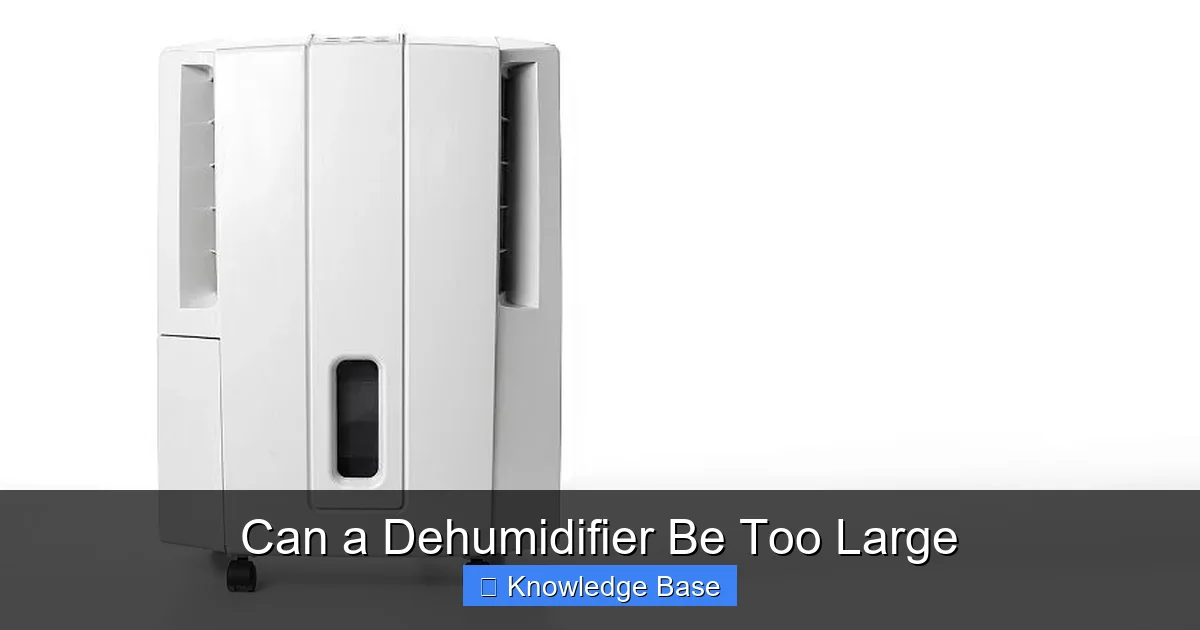
Yes, a dehumidifier can be too large for your space. While it might seem like bigger is always better, an oversized unit can lead to short cycling, wasted energy, and ineffective humidity control. Choosing the right size ensures comfort, efficiency, and long-term savings.
Key Takeaways
- Oversized dehumidifiers can short cycle: They remove moisture too quickly, turning on and off frequently, which reduces efficiency and increases wear.
- Energy waste is a real concern: Larger units consume more power even when running briefly, leading to higher electricity bills.
- Humidity control suffers: Rapid dehumidification doesn’t allow proper air circulation, leaving some areas damp while others feel overly dry.
- Noise and comfort issues arise: Big units often have louder fans and may disrupt your living space with frequent, loud operation.
- Proper sizing depends on room size and humidity level: Match the pint-per-day (PPD) rating to your square footage and moisture conditions.
- Look beyond capacity: Features like auto-humidistats, drainage options, and energy efficiency matter just as much as size.
- Consult a professional if unsure: For basements, crawl spaces, or whole-home systems, expert advice ensures optimal performance.
Quick Answers to Common Questions
Can a dehumidifier be too large for a small room?
Yes, a dehumidifier can be too large for a small room. An oversized unit may short cycle, turning on and off frequently, which reduces efficiency and fails to maintain consistent humidity levels.
What happens if my dehumidifier is too big?
If your dehumidifier is too big, it may remove moisture too quickly, leading to short cycling, higher energy bills, uneven humidity, and potential damage to the unit over time.
How do I know if my dehumidifier is oversized?
Signs include frequent on/off cycling, rapid humidity drops, inconsistent room comfort, quick tank filling, and loud, disruptive operation.
Is a 70-pint dehumidifier too big for a basement?
It depends on the basement size and humidity level. A 70-pint unit is suitable for large or extremely damp basements (over 2,000 sq ft), but may be too large for smaller spaces.
Can an oversized dehumidifier cause mold?
Indirectly, yes. If the unit short cycles and doesn’t circulate air properly, moisture can remain trapped in hidden areas, promoting mold growth despite lower overall humidity readings.
📑 Table of Contents
- Can a Dehumidifier Be Too Large? The Surprising Truth
- What Happens When a Dehumidifier Is Too Big?
- How to Determine the Right Dehumidifier Size
- The Hidden Costs of an Oversized Dehumidifier
- Signs Your Dehumidifier Is Too Large
- Tips for Choosing the Perfect Dehumidifier
- Conclusion: Bigger Isn’t Always Better
Can a Dehumidifier Be Too Large? The Surprising Truth
You walk into a damp basement, smell that musty odor, and think, “I need a dehumidifier—big one!” It’s a natural reaction. After all, bigger machines usually mean better performance, right? But when it comes to dehumidifiers, that logic can backfire. In fact, can a dehumidifier be too large? The short answer is yes—and the consequences might surprise you.
While a powerful dehumidifier might seem like the ultimate solution to moisture problems, choosing one that’s too big for your space can lead to a host of issues. From inefficient operation to wasted energy and even discomfort in your home, an oversized unit doesn’t just fail to solve your humidity problems—it can make them worse. Many homeowners assume that more capacity equals better results, but dehumidification is a delicate balance. It’s not just about how much moisture a unit can remove, but how consistently and efficiently it does so over time.
Understanding the right size for your needs isn’t just about square footage. It involves considering humidity levels, room usage, insulation, and even seasonal changes. A dehumidifier that’s too large may remove moisture too quickly, causing it to turn off before the air has been properly circulated. This leads to short cycling, a problem that reduces efficiency, increases wear on the compressor, and fails to maintain stable humidity levels. In this article, we’ll explore why bigger isn’t always better, how to choose the right size, and what happens when you get it wrong.
What Happens When a Dehumidifier Is Too Big?

Visual guide about Can a Dehumidifier Be Too Large
Image source: bestdehumidifier.reviews
When a dehumidifier is oversized for the space it’s meant to serve, it doesn’t just work harder—it works poorly. The most common issue is short cycling, which occurs when the unit removes moisture so quickly that it reaches the target humidity level in just a few minutes. Instead of running in longer, steady cycles, it turns on and off frequently. This constant starting and stopping puts stress on the motor and compressor, shortening the appliance’s lifespan.
Short cycling also means the dehumidifier isn’t running long enough to properly circulate air. Humidity isn’t always evenly distributed—some corners of a room may remain damp while others feel bone dry. This inconsistency can lead to mold growth in hidden areas, even if the main space feels comfortable. Additionally, because the unit isn’t running long enough, it may not effectively filter the air, missing out on removing allergens, dust, and mold spores.
Another consequence is energy inefficiency. Larger dehumidifiers typically have higher wattage and consume more electricity per hour. Even if they run for shorter periods, the frequent startups draw a surge of power each time. Over time, this can lead to noticeably higher utility bills. You’re paying more for a machine that’s working against itself.
Let’s say you have a 500-square-foot basement with moderate humidity. You install a 70-pint dehumidifier designed for 2,000 square feet. It might drop the humidity from 70% to 50% in under an hour, then shut off. But because the air hasn’t been fully circulated, pockets of moisture remain. The unit turns back on within minutes, repeating the cycle. This not only wastes energy but also fails to create a truly dry, comfortable environment.
How to Determine the Right Dehumidifier Size
Visual guide about Can a Dehumidifier Be Too Large
Image source: hvactrainingshop.com
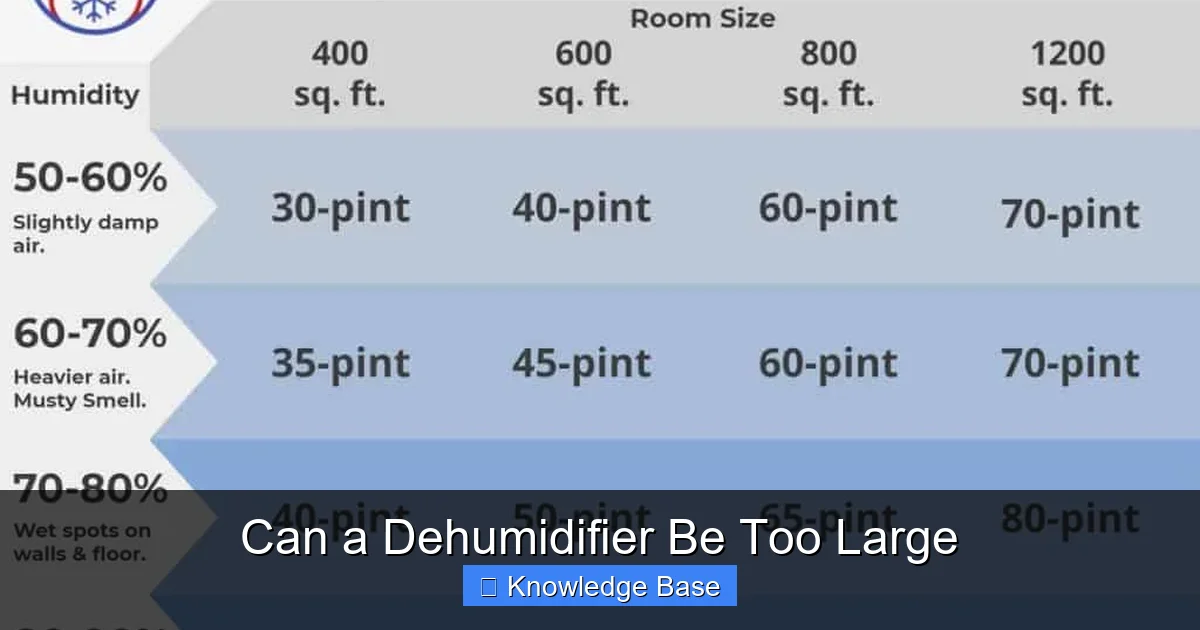
Choosing the correct dehumidifier size starts with understanding two key factors: room size and humidity level. Most manufacturers rate dehumidifiers by their pint-per-day (PPD) capacity—how many pints of moisture they can remove in 24 hours under standard conditions (80°F and 60% relative humidity). But these ratings are based on ideal lab settings, not real-world basements or crawl spaces.
To find the right size, begin by measuring the square footage of the area you want to dehumidify. A 30-pint unit is typically sufficient for spaces up to 1,500 square feet with moderate moisture, while a 50-pint model suits areas up to 2,500 square feet. For extremely damp or flooded spaces, you might need a 70-pint or higher unit—but only if the space justifies it.
Next, assess the humidity level. Is the area just slightly damp, or do you see standing water, mold, or a strong musty smell? Use a hygrometer to measure relative humidity. Ideal indoor humidity ranges from 30% to 50%. If your space consistently reads above 60%, you’re dealing with high moisture.
Here’s a practical example: A 1,200-square-foot basement with visible condensation on walls and a humidity reading of 65% would benefit from a 50-pint dehumidifier. But if you install a 70-pint model, it may short cycle and fail to maintain consistent conditions. Conversely, a 30-pint unit might struggle to keep up, running constantly without reaching the target humidity.
Don’t forget to consider other factors like insulation, ventilation, and seasonal changes. A poorly insulated room in a humid climate will need a more powerful unit than a well-sealed space in a dry region. Also, basements and crawl spaces often require specialized models with built-in pumps or continuous drainage options.
The Hidden Costs of an Oversized Dehumidifier
While the upfront cost of a large dehumidifier might seem justified by its high capacity, the long-term expenses can add up quickly. One of the most overlooked costs is energy consumption. Larger units draw more watts, and even short run times can result in significant electricity use over time. For example, a 70-pint dehumidifier might use 700–800 watts per hour, while a 30-pint model uses around 300–400 watts. If both run for just 10 minutes every hour, the larger unit still consumes nearly double the energy.
Maintenance and repair costs also increase with oversized units. Short cycling puts extra strain on the compressor, fan motor, and internal components. Over time, this can lead to premature failure, requiring costly repairs or replacement. A dehumidifier that lasts 10 years under normal use might only last 5–6 years if it’s constantly cycling on and off.
There’s also the cost of ineffective performance. If your dehumidifier isn’t maintaining stable humidity, you may still face mold growth, musty odors, and damage to furniture, flooring, or stored items. These issues can lead to additional expenses for cleaning, repairs, or even structural remediation. In extreme cases, mold infestations may require professional removal, which can cost thousands of dollars.
Another hidden cost is noise and disruption. Larger dehumidifiers often have bigger fans and louder motors. If placed in a living area or bedroom, the frequent, loud operation can disturb sleep or daily activities. Some models emit a low hum even when not actively dehumidifying, adding to the annoyance.
Finally, there’s the environmental cost. Excess energy use contributes to higher carbon emissions, especially if your electricity comes from non-renewable sources. Choosing an appropriately sized, energy-efficient model reduces your carbon footprint and supports sustainable living.
Signs Your Dehumidifier Is Too Large
How can you tell if your dehumidifier is oversized? Several telltale signs indicate that your unit is too powerful for your space. The most obvious is frequent on/off cycling. If you notice the unit turning on for just a few minutes, then shutting off for a short time before restarting, it’s likely short cycling. This pattern is inefficient and harmful to the machine.
Another sign is rapid humidity drops. If your hygrometer shows humidity levels plummeting from 60% to 40% in under an hour, the dehumidifier is working too fast. While this might seem like a good thing, it prevents proper air circulation and can leave moisture trapped in walls, carpets, or furniture.
You might also notice inconsistent comfort. One part of the room feels dry and cool, while another remains damp or clammy. This uneven distribution is a red flag that the dehumidifier isn’t running long enough to mix the air thoroughly.
Additionally, check the water tank. If it fills up extremely quickly—say, within an hour—but the room still feels humid, the unit may be removing surface moisture too fast without addressing deeper dampness. This is common in basements where moisture seeps through concrete walls.
Finally, listen to the noise. If the dehumidifier is loud and disruptive, especially during brief run times, it’s likely oversized. A properly sized unit should operate quietly and steadily, not with short, jarring bursts of sound.
If you spot these signs, consider downsizing to a smaller model or adjusting the humidistat to a higher setting to allow longer run times. Some advanced units also have variable-speed fans or adaptive humidity control, which can help mitigate the effects of oversizing.
Tips for Choosing the Perfect Dehumidifier
Selecting the right dehumidifier doesn’t have to be overwhelming. Start by measuring your space and assessing moisture levels. Use a hygrometer to get accurate humidity readings over several days, as levels can fluctuate with weather and usage.
Next, match the pint-per-day (PPD) rating to your needs. Here’s a quick guide:
– 30-pint: Up to 1,500 sq ft, moderate humidity
– 50-pint: Up to 2,500 sq ft, high humidity
– 70-pint or higher: Large or extremely damp spaces (e.g., flooded basements)
Look for features that enhance efficiency and convenience. An auto-humidistat allows the unit to maintain a set humidity level without constant monitoring. Continuous drainage eliminates the need to empty the tank, ideal for basements or unattended areas. A built-in pump lets you drain water upward, useful if your floor drain is below the unit.
Energy efficiency matters too. Choose models with the ENERGY STAR label, which use 15–30% less energy than standard units. Check the energy factor (liters of water removed per kilowatt-hour)—higher is better.
Placement is also key. Position the dehumidifier in the center of the room or near the source of moisture, with at least 6–12 inches of clearance on all sides for proper airflow. Avoid placing it near walls or furniture that could block vents.
For whole-home dehumidification, consider a whole-house dehumidifier integrated with your HVAC system. These are more expensive but provide consistent, efficient humidity control throughout your home.
Finally, read reviews and consult professionals if you’re unsure. HVAC technicians can assess your home’s specific needs and recommend the best solution.
Conclusion: Bigger Isn’t Always Better
So, can a dehumidifier be too large? Absolutely. While it’s tempting to go for the biggest, most powerful model, doing so can lead to short cycling, energy waste, inconsistent humidity control, and higher long-term costs. The goal isn’t to remove moisture as quickly as possible, but to maintain a stable, comfortable environment over time.
Choosing the right size dehumidifier involves more than just square footage. It requires understanding your humidity levels, room conditions, and usage patterns. A properly sized unit will run efficiently, maintain consistent humidity, and last for years with minimal maintenance.
Remember, the best dehumidifier is the one that matches your needs—not the one with the highest pint rating. Take the time to assess your space, consider key features, and invest in a model that delivers reliable performance without excess. Your wallet, your home, and your comfort will thank you.
Frequently Asked Questions
What size dehumidifier do I need for a 1,000 sq ft basement?
For a 1,000 sq ft basement with moderate humidity, a 30- to 50-pint dehumidifier is usually sufficient. Choose 50-pint if the space is very damp or prone to flooding.
Can I use a large dehumidifier in a small bathroom?
It’s not recommended. A large dehumidifier in a small bathroom will likely short cycle and waste energy. A small, portable 15- to 20-pint unit is more appropriate.
Does a bigger dehumidifier use more electricity?
Yes, larger dehumidifiers typically consume more watts per hour. Even with shorter run times, they can lead to higher energy bills due to frequent startups and higher power draw.
Should I buy a dehumidifier with a built-in pump?
A built-in pump is helpful if you need to drain water upward or into a sink. It’s especially useful in basements without floor drains or for continuous operation without manual emptying.
How often should a dehumidifier run per day?
A properly sized dehumidifier should run in cycles of 10–15 minutes on, 10–15 minutes off, depending on humidity levels. It may run more in very damp conditions.
Can I run a dehumidifier all the time?
Yes, most modern dehumidifiers are designed for continuous operation. Use the auto-humidistat to maintain your desired humidity level and avoid over-drying the air.