
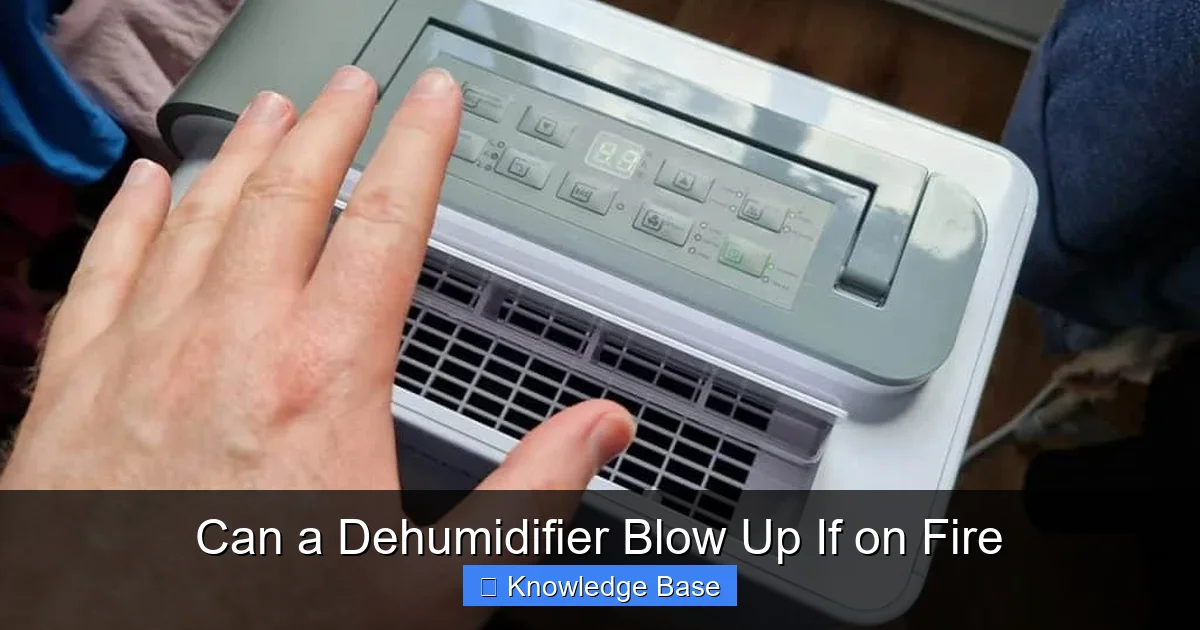
While extremely rare, a dehumidifier can potentially explode if it catches fire due to pressure buildup or flammable components. Most units are designed with safety features to prevent this, but improper use, poor maintenance, or manufacturing defects can increase the risk. Understanding how these appliances work and following safety guidelines drastically reduces the chance of any fire-related incident.
Key Takeaways
- Dehumidifier explosions are extremely rare: Modern units include safety mechanisms to prevent catastrophic failure, even during a fire.
- Fire is more likely than explosion: Electrical faults, overheating compressors, or clogged filters are common fire causes—explosions require extreme conditions.
- Refrigerant and pressure play a role: If a fire damages the sealed refrigerant system, rapid pressure changes could theoretically cause a rupture, but not a true “explosion” like a bomb.
- Proper maintenance is critical: Cleaning filters, checking for blockages, and avoiding overloading circuits reduce fire risks significantly.
- Buy from reputable brands: Certified appliances (UL, ETL, etc.) meet strict safety standards and are less likely to malfunction dangerously.
- Unplug during storms or long absences: Power surges and unattended operation increase fire hazards—always err on the side of caution.
- Know the signs of trouble: Unusual noises, burning smells, or excessive heat mean it’s time to stop using the unit and inspect it.
Quick Answers to Common Questions
Can a dehumidifier explode if it overheats?
While overheating can cause a fire, a true explosion is extremely rare. However, if the compressor or refrigerant lines rupture due to extreme heat and pressure, a loud pop or burst could occur—mistaken for an explosion.
What should I do if my dehumidifier starts smoking?
Immediately unplug the unit, move it away from flammable materials, and use a Class C fire extinguisher if safe. If the fire spreads, evacuate and call 911.
Are older dehumidifiers more likely to catch fire?
Yes. Older units may lack modern safety features, have worn wiring, or use outdated refrigerants. Replace units over 10 years old, especially if they show signs of wear.
Can a dehumidifier catch fire while turned off?
Unlikely, but possible if there’s a power surge, faulty wiring, or moisture damage. Always unplug the unit during storms or long absences.
Is it safe to run a dehumidifier overnight?
Yes, if it’s a modern, well-maintained unit with auto-shutoff and a humidistat. Avoid running it unattended for days without checking it.
📑 Table of Contents
- Can a Dehumidifier Blow Up If on Fire? Understanding the Real Risks
- How Dehumidifiers Work: The Basics You Need to Know
- Can a Dehumidifier Actually Explode?
- Common Causes of Dehumidifier Fires
- Safety Features That Prevent Explosions and Fires
- How to Prevent Dehumidifier Fires and Ensure Safety
- What to Do If Your Dehumidifier Catches Fire
- Conclusion: Peace of Mind Through Prevention
Can a Dehumidifier Blow Up If on Fire? Understanding the Real Risks
Imagine this: You’ve just finished cleaning your basement, running your trusty dehumidifier nonstop for three days to pull moisture out of the air. It’s humming along, doing its job. Then, suddenly, you smell something burning. You rush downstairs and see smoke curling from the unit. Your heart races—could it blow up?
It’s a scary thought, and one that’s crossed the minds of many homeowners. Dehumidifiers are essential for controlling humidity, preventing mold, and protecting your home’s structure and air quality. But like any electrical appliance, they come with risks—especially when it comes to fire. The big question on everyone’s mind: *Can a dehumidifier blow up if it catches fire?*
The short answer is: **It’s highly unlikely, but not impossible under extreme conditions.** While dehumidifiers are not designed to explode, a severe fire involving internal components—especially the compressor or refrigerant system—could lead to a rupture or pressure release that might feel like an explosion. However, this is not the same as a bomb-like detonation. Real explosions are rare, but understanding why they *could* happen—and how to prevent them—is crucial for home safety.
In this article, we’ll break down how dehumidifiers work, what causes them to catch fire, whether they can actually blow up, and what you can do to keep your home safe. Whether you’re a first-time buyer or a long-time user, this guide will help you use your dehumidifier with confidence.
How Dehumidifiers Work: The Basics You Need to Know
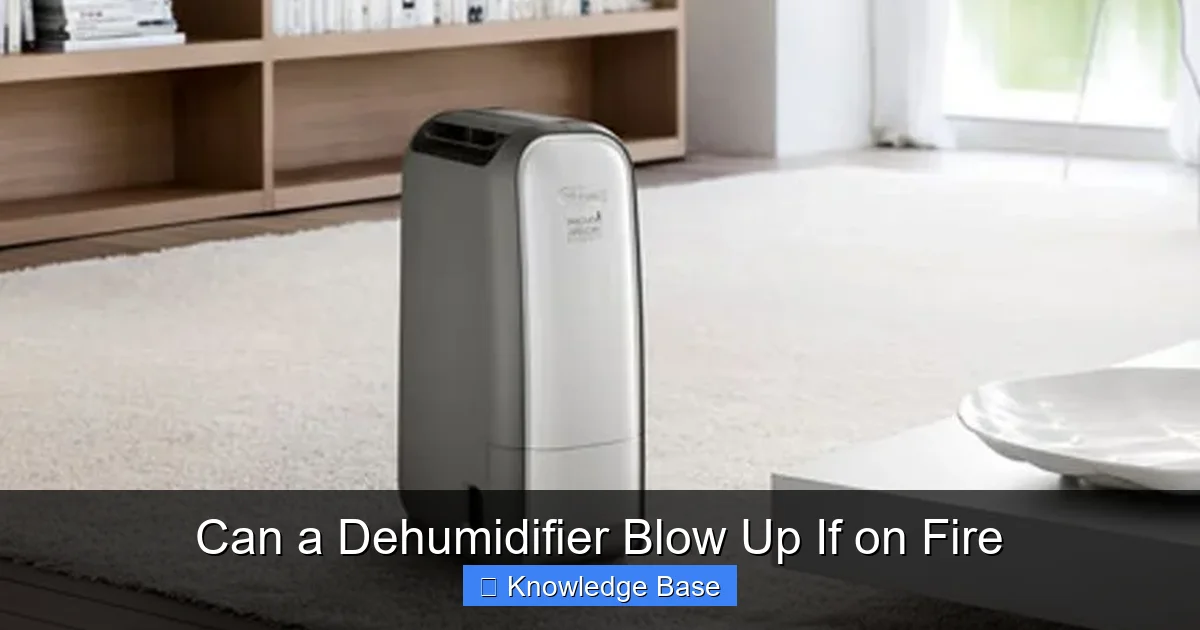
Visual guide about Can a Dehumidifier Blow Up If on Fire
Image source: i.pinimg.com
Before we dive into fire risks and explosions, let’s quickly go over how dehumidifiers function. Knowing the mechanics helps explain why certain parts are more vulnerable during a fire.
Most home dehumidifiers use a refrigeration cycle, similar to an air conditioner or refrigerator. Here’s a simplified breakdown:
– **Air intake:** A fan pulls humid air from the room into the unit.
– **Cooling coils:** The air passes over cold evaporator coils, causing moisture to condense into water droplets.
– **Water collection:** The collected water drips into a tank or is drained via a hose.
– **Reheating:** The now-dry air passes over warm condenser coils and is blown back into the room at a slightly higher temperature.
– **Compressor:** This is the heart of the system. It pressurizes the refrigerant gas, enabling the heat exchange process.
This cycle repeats continuously, reducing indoor humidity levels. The entire system is sealed and relies on electrical components, motors, and refrigerants to operate.
Key Components and Their Fire Risks
Several parts of a dehumidifier can become fire hazards if they malfunction:
– **Compressor:** This motor-driven pump is under constant stress. If it overheats due to poor ventilation, electrical faults, or age, it can spark or catch fire.
– **Electrical wiring and switches:** Frayed wires, loose connections, or faulty switches can create sparks, especially in damp environments.
– **Fan motor:** If the fan jams or overheats, it can ignite nearby insulation or dust.
– **Refrigerant lines:** These carry pressurized gas. While refrigerants like R-410A are non-flammable, older models may use mildly flammable types. A rupture during a fire could release gas under pressure.
– **Control board:** The electronic brain of the unit. Power surges or moisture can cause short circuits.
Understanding these components helps explain why a fire might start—and why, in rare cases, it could lead to a pressure-related rupture.
Can a Dehumidifier Actually Explode?
Visual guide about Can a Dehumidifier Blow Up If on Fire
Image source: thehumidistat.com
Now, let’s tackle the big question head-on: *Can a dehumidifier blow up if it’s on fire?*
The answer isn’t a simple yes or no—it depends on what you mean by “blow up.”
What Does “Blow Up” Mean in This Context?
When people say a dehumidifier “blew up,” they usually mean one of two things:
1. **A violent rupture or explosion**—like a bomb going off, sending shrapnel flying.
2. **A sudden burst or loud pop**—often from pressure release or electrical arcing, which may sound dramatic but isn’t truly explosive.
In reality, **true explosions are extremely rare**. Dehumidifiers are not pressurized vessels like gas cylinders or boilers. They don’t store large amounts of flammable gas or fuel. However, under very specific and severe conditions, a *rupture* could occur—especially if the fire damages the sealed refrigerant system.
The Role of Refrigerant and Pressure
Dehumidifiers use refrigerants to transfer heat. These gases are stored under pressure inside sealed copper or aluminum coils. Most modern refrigerants (like R-410A or R-32) are **non-flammable**, but they are still under high pressure—typically 100–300 psi when operating.
If a fire severely damages the refrigerant lines or compressor, the sudden release of pressurized gas could cause a loud *pop* or *bang*. In rare cases, if the container ruptures violently, it might send pieces flying—this could be mistaken for an explosion.
However, this is **not a chemical explosion** (like TNT), but a **mechanical rupture** due to overpressure. Think of it like a soda can bursting when shaken and heated—it’s dramatic, but not explosive in the traditional sense.
Real-World Examples and Incidents
There are very few documented cases of dehumidifiers “exploding,” but some incidents have made headlines:
– In 2019, a recall was issued for certain Frigidaire dehumidifiers due to overheating compressors that could cause fires. While no explosions were reported, the risk of fire was significant.
– In 2021, a homeowner in Ohio reported a loud bang and smoke from a 10-year-old dehumidifier. Investigation revealed the compressor failed, ruptured, and ignited nearby insulation. The unit didn’t “explode,” but the sudden pressure release startled the family.
These cases highlight that while **fire is a real risk**, **explosion is not typical**. Most incidents involve smoke, burning smells, or small fires—not flying debris or structural damage.
Common Causes of Dehumidifier Fires
To understand whether a dehumidifier can blow up, we first need to understand how fires start. Most dehumidifier fires are preventable and stem from a few common causes.
1. Electrical Faults and Overheating
The most common cause of dehumidifier fires is **electrical malfunction**. This includes:
– **Faulty wiring:** Poor manufacturing or wear over time can lead to short circuits.
– **Overloaded circuits:** Plugging a dehumidifier into an overloaded power strip or outlet can cause overheating.
– **Power surges:** Lightning strikes or grid fluctuations can fry the control board or motor.
Example: A dehumidifier left running during a thunderstorm may experience a power surge. If the surge protector fails, the compressor motor could overheat and ignite.
2. Compressor Failure
The compressor is the most hardworking part of the unit. It runs constantly, especially in humid climates. Over time, it can wear out. Signs of compressor trouble include:
– Loud knocking or grinding noises
– The unit runs but doesn’t remove moisture
– Excessive heat from the back or sides
If the compressor seizes or overheats, it can spark, melt insulation, or ignite nearby materials.
3. Dirty or Clogged Filters and Coils
A dirty air filter restricts airflow, causing the unit to work harder. This leads to overheating. Similarly, clogged evaporator or condenser coils reduce efficiency and increase strain on the system.
Tip: Clean or replace the filter every 1–2 months during heavy use. Vacuum the coils annually.
4. Lack of Maintenance
Neglecting routine care is a major fire risk. Dust buildup, blocked drainage, or a full water tank can cause the unit to overheat or short-circuit.
Example: A dehumidifier with a full tank may tilt or leak, allowing water to reach electrical components. This can cause a short circuit and fire.
5. Using Damaged or Counterfeit Units
Buying cheap, uncertified dehumidifiers from unknown brands increases the risk of fire. These units may lack proper insulation, use substandard wiring, or skip safety certifications.
Always look for labels like **UL (Underwriters Laboratories)** or **ETL (Intertek)**. These indicate the unit has been tested for safety.
Safety Features That Prevent Explosions and Fires
The good news? Modern dehumidifiers come with multiple safety features designed to prevent fires and catastrophic failures.
Thermal Cutoff Switches (TCO)
These are small devices that automatically shut off power if the unit overheats. They’re often located near the compressor or motor. Once triggered, the unit won’t restart until it cools down.
Automatic Shutoff for Full Tanks
Most units stop running when the water tank is full. This prevents overflow, which could lead to water damage or electrical shorts.
Tip-Over Switches
If the unit is knocked over, this switch cuts power immediately. It’s especially useful in homes with pets or children.
Ground Fault Circuit Interrupters (GFCI)
Some models plug into GFCI outlets, which detect electrical leaks and cut power to prevent shocks or fires.
Flame-Retardant Materials
Internal components are often housed in flame-resistant plastic or metal casings to contain any flames.
These features significantly reduce the risk of fire—and make a true explosion virtually impossible under normal conditions.
How to Prevent Dehumidifier Fires and Ensure Safety
Prevention is always better than reaction. Here’s how to keep your dehumidifier safe and functional for years.
1. Buy from Reputable Brands
Stick to well-known manufacturers like Frigidaire, Honeywell, GE, or Toshiba. Check for safety certifications (UL, ETL, CSA).
Avoid no-name brands sold online at suspiciously low prices.
2. Follow the Manufacturer’s Instructions
Read the manual. Pay attention to:
– Recommended room size
– Maximum runtime
– Clearance requirements (keep 12–18 inches of space around the unit)
– Drainage options
3. Perform Regular Maintenance
– **Clean the filter monthly:** Use warm, soapy water or a vacuum.
– **Check the water tank:** Empty it regularly or use a continuous drain hose.
– **Inspect coils:** Use a soft brush or coil cleaner once a year.
– **Clear vents:** Ensure intake and exhaust vents are unobstructed.
4. Use a Dedicated Outlet
Plug your dehumidifier directly into a wall outlet—not a power strip or extension cord. This reduces the risk of overloading.
If you must use an extension cord, choose a heavy-duty, grounded one rated for the unit’s wattage.
5. Install a Surge Protector
Protect your unit from power surges with a high-quality surge protector. This is especially important in areas prone to thunderstorms.
6. Never Leave It Unattended for Long Periods
Avoid running the dehumidifier 24/7 if you’re away from home. If you must, use a model with a built-in humidistat and auto-shutoff.
7. Watch for Warning Signs
Stop using the unit immediately if you notice:
– Burning smell
– Unusual noises (buzzing, grinding, clicking)
– Excessive heat
– Flickering lights when it turns on
– Smoke or sparks
Unplug it and contact the manufacturer or a technician.
What to Do If Your Dehumidifier Catches Fire
Even with precautions, accidents can happen. Here’s how to respond safely.
1. Stay Calm and Assess the Situation
If the fire is small and contained, you may be able to act quickly. If it’s spreading, evacuate immediately.
2. Cut the Power
If it’s safe to do so, unplug the unit or turn off the circuit breaker. Never touch a burning appliance with wet hands.
3. Use the Right Fire Extinguisher
Dehumidifier fires are typically **Class C** (electrical). Use a **CO2 or dry chemical extinguisher**. Never use water—it can conduct electricity and worsen the fire.
4. Evacuate and Call 911
If the fire grows or you’re unsure, leave the area and call emergency services. Smoke inhalation is a serious risk.
5. Do Not Reuse the Unit
Even if the fire is out, the dehumidifier is likely damaged beyond repair. Dispose of it safely and replace it.
Conclusion: Peace of Mind Through Prevention
So, can a dehumidifier blow up if it’s on fire? The honest answer is: **It’s possible in extreme, rare cases—but highly unlikely.** Most dehumidifier fires result in smoke, damage, or small flames, not explosions. With proper use, maintenance, and safety precautions, the risk is minimal.
Think of your dehumidifier like a car. It’s a powerful tool that needs regular care. Change the oil (clean the filter), check the tires (inspect coils), and don’t ignore warning lights (unusual noises or smells). Do that, and it will serve you reliably for years.
The key takeaway? **Fire is a real but preventable risk. Explosion is not.** By choosing a quality unit, maintaining it properly, and staying alert to warning signs, you can enjoy the benefits of a dry, comfortable home—without fear.
Your dehumidifier isn’t a ticking time bomb. It’s a helpful appliance. Treat it right, and it will do the same for you.
Frequently Asked Questions
Can a dehumidifier blow up if on fire?
While extremely rare, a dehumidifier could rupture or burst if a fire severely damages its pressurized components. However, this is not a true explosion like a bomb. Most units have safety features to prevent such incidents.
What causes dehumidifier fires?
Common causes include electrical faults, compressor overheating, clogged filters, lack of maintenance, and using damaged or uncertified units. Power surges and overloaded circuits also contribute.
How can I prevent my dehumidifier from catching fire?
Clean filters regularly, ensure proper ventilation, use a dedicated outlet, install a surge protector, and replace old or damaged units. Always follow the manufacturer’s guidelines.
Are dehumidifiers with refrigerants dangerous?
Modern refrigerants are non-flammable and safe when contained. Risks arise only if the sealed system is breached during a fire, which is rare and typically results in gas release, not explosion.
Should I unplug my dehumidifier when not in use?
It’s a good practice, especially during storms or long absences. Unplugging reduces the risk of power surges and unattended operation, enhancing safety.
What safety certifications should I look for?
Look for UL (Underwriters Laboratories), ETL (Intertek), or CSA marks. These indicate the unit has passed rigorous safety and performance tests.