
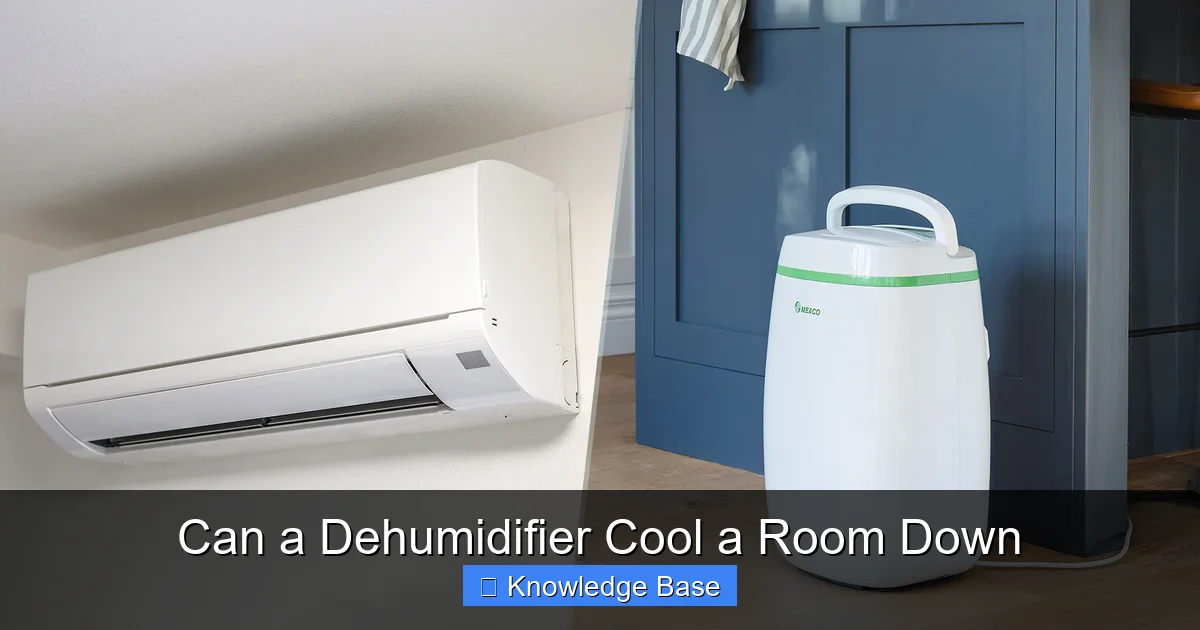
Dehumidifiers don’t actually lower air temperature like air conditioners, but they can make a room feel cooler by reducing humidity. High humidity makes you feel hotter because sweat doesn’t evaporate easily. By removing excess moisture, dehumidifiers improve comfort and may reduce the need for air conditioning.
Key Takeaways
- Dehumidifiers reduce humidity, not temperature: They remove moisture from the air, which can make a room feel more comfortable without actually cooling it.
- Lower humidity = better sweat evaporation: When the air is less humid, your body cools more efficiently, creating a perceived cooling effect.
- Energy-efficient comfort boost: Using a dehumidifier can help you raise the thermostat setting on your AC, saving energy while staying comfortable.
- Not a replacement for air conditioning: Dehumidifiers don’t produce cold air and won’t cool a room in hot, dry climates or during heatwaves.
- Improved air quality and health benefits: Lower humidity reduces mold, dust mites, and allergens, leading to cleaner, healthier indoor air.
- Best in humid climates: Dehumidifiers work best in damp environments like basements, bathrooms, or coastal areas where humidity is consistently high.
- Complement, not replace, cooling systems: Pairing a dehumidifier with an AC or fan enhances comfort and efficiency in humid conditions.
Quick Answers to Common Questions
Can a dehumidifier lower room temperature?
No, a dehumidifier does not lower the actual air temperature. It removes moisture from the air, which can make the room feel cooler by improving sweat evaporation.
Will a dehumidifier help during a heatwave?
Not as a primary cooling solution. During extreme heat, you’ll need an air conditioner or fan. A dehumidifier can help by reducing humidity, making the AC more efficient.
Can I use a dehumidifier instead of an air conditioner?
Only in mild, humid weather. In hot or dry climates, a dehumidifier won’t provide enough cooling and may even add slight heat to the room.
Does a dehumidifier use a lot of electricity?
It depends on the model and usage. Modern energy-efficient dehumidifiers use less power than older units. Look for ENERGY STAR-certified models to save on electricity.
Where should I place a dehumidifier for best results?
Place it in the most humid area, such as a basement, bathroom, or laundry room. Ensure good airflow around the unit and avoid heat sources.
📑 Table of Contents
- Can a Dehumidifier Cool a Room Down?
- How Dehumidifiers Work: The Science Behind Moisture Removal
- The Role of Humidity in Perceived Temperature
- Dehumidifiers vs. Air Conditioners: Key Differences
- Practical Benefits of Using a Dehumidifier
- When a Dehumidifier Won’t Help Cool a Room
- Tips for Maximizing Comfort with a Dehumidifier
- Conclusion: Comfort Through Moisture Control
Can a Dehumidifier Cool a Room Down?
If you’ve ever stepped into a damp, sticky room during summer, you know how uncomfortable high humidity can be. The air feels thick, your clothes cling to your skin, and even a fan doesn’t seem to help. You might have wondered: Can a dehumidifier cool a room down? After all, it pulls moisture out of the air—doesn’t that make things cooler?
The short answer is: not exactly. A dehumidifier doesn’t lower the actual temperature of the room like an air conditioner does. But it can make the space feel significantly cooler and more comfortable. That’s because high humidity interferes with your body’s natural cooling process—sweat evaporation. When the air is full of moisture, sweat doesn’t evaporate as easily, so you feel hotter than the thermometer suggests.
Think of it this way: on a 75°F (24°C) day with 80% humidity, you’ll feel much warmer than on a 75°F day with 40% humidity. That’s why weather reports often include a “feels like” temperature. Your body perceives the heat differently based on moisture levels. A dehumidifier tackles this issue at the source by reducing indoor humidity, helping you feel cooler without changing the thermostat.
So while a dehumidifier won’t replace your AC on a scorching summer day, it can be a powerful ally in improving comfort, especially in humid climates. It’s not about cooling the air—it’s about making the air feel cooler. And in many cases, that’s exactly what you need.
How Dehumidifiers Work: The Science Behind Moisture Removal

Visual guide about Can a Dehumidifier Cool a Room Down
Image source: honeywellaircomfort.com
To understand whether a dehumidifier can cool a room down, it helps to know how these devices actually work. Unlike air conditioners, which cool air by removing heat, dehumidifiers focus solely on moisture. They pull humid air into the unit, remove the water vapor, and release drier air back into the room.
There are two main types of dehumidifiers: refrigerant (compressor-based) and desiccant. Both operate differently but achieve the same goal—lowering indoor humidity.
Refrigerant Dehumidifiers: The Most Common Type
Refrigerant dehumidifiers are the ones you’ll find in most homes. They work similarly to air conditioners. Here’s the process:
1. A fan draws humid air into the unit.
2. The air passes over cold coils (evaporator coils), causing moisture to condense into water droplets.
3. The collected water drips into a built-in tank or drains out through a hose.
4. The now-drier air passes over warm coils (condenser coils) to reheat it slightly.
5. The air is released back into the room—drier, but not necessarily cooler.
Because the air is reheated before being expelled, refrigerant dehumidifiers don’t lower room temperature. In fact, they generate a small amount of heat as a byproduct of the compression process. So, technically, they might make the room slightly warmer, not cooler.
Desiccant Dehumidifiers: Absorbing Moisture Without Cooling
Desiccant dehumidifiers use a moisture-absorbing material (like silica gel) to pull water vapor from the air. They’re often used in colder environments or for targeted moisture control, like in closets or RVs.
Here’s how they work:
– Humid air flows over a desiccant wheel or material that absorbs moisture.
– The dry air is released back into the room.
– The absorbed moisture is then removed from the desiccant using heat (usually from an internal heater), and the water is collected or vented.
Like refrigerant models, desiccant dehumidifiers don’t cool the air. In fact, the heating element used to regenerate the desiccant can add a small amount of warmth to the room.
The Real Effect: Perceived Cooling, Not Actual Cooling
So, if dehumidifiers don’t remove heat, how do they make a room feel cooler? The answer lies in human physiology. Your body cools itself primarily through sweat evaporation. When humidity is high, sweat lingers on your skin, and you feel hot and clammy. When humidity is low, sweat evaporates quickly, creating a cooling sensation.
By reducing indoor humidity to a comfortable level—ideally between 30% and 50%—a dehumidifier helps your body cool itself more efficiently. This creates a perceived cooling effect, even though the air temperature hasn’t changed.
For example, imagine you’re in a room at 78°F (26°C) with 70% humidity. It feels sticky and uncomfortable. After running a dehumidifier for a few hours, the humidity drops to 45%. The temperature is still 78°F, but now it feels more like 74°F because your body can cool itself better. That’s the magic of moisture control.
The Role of Humidity in Perceived Temperature
Visual guide about Can a Dehumidifier Cool a Room Down
Image source: gabesguides.com
To fully grasp why a dehumidifier can make a room feel cooler, it’s important to understand the relationship between humidity and how hot we feel. This concept is often explained using the heat index—a measure that combines air temperature and relative humidity to describe how hot it feels to the human body.
What Is Relative Humidity?
Relative humidity (RH) is the amount of moisture in the air compared to the maximum amount the air can hold at that temperature. Warm air can hold more moisture than cold air. So, even if two rooms have the same moisture content, the warmer room will have lower relative humidity.
For example:
– At 80°F (27°C), air can hold about 2.5 times more moisture than at 50°F (10°C).
– If both rooms contain the same amount of water vapor, the cooler room will have higher relative humidity.
This is why basements often feel damp and clammy—even if they’re not warm, the cooler air can’t hold much moisture, so RH stays high.
How Humidity Affects Comfort
High humidity makes hot weather feel worse because it slows down sweat evaporation. When sweat can’t evaporate, your body can’t cool itself effectively. This is why a 90°F (32°C) day with 90% humidity feels much hotter than a 90°F day with 30% humidity.
The National Weather Service uses the heat index to illustrate this. For instance:
– 90°F with 60% humidity feels like 100°F.
– 90°F with 30% humidity feels like 87°F.
Indoors, the same principle applies. A room at 75°F with 70% humidity will feel significantly warmer and more uncomfortable than one at 75°F with 40% humidity.
Dehumidifiers and the Heat Index
When you run a dehumidifier, you’re effectively lowering the “feels like” temperature by reducing humidity. Even though the thermometer hasn’t changed, your body perceives the environment as cooler.
This is especially helpful in homes without air conditioning or during mild summer days when you don’t want to run the AC but still need relief from humidity. A dehumidifier can make the difference between a stuffy, uncomfortable room and a pleasant, breathable space.
Dehumidifiers vs. Air Conditioners: Key Differences
Many people confuse dehumidifiers with air conditioners because both improve indoor comfort. But they work in fundamentally different ways and serve different purposes.
How Air Conditioners Cool a Room
Air conditioners remove heat from indoor air and transfer it outside. They use a refrigeration cycle involving a compressor, condenser, evaporator, and refrigerant gas. Here’s a simplified breakdown:
1. Warm indoor air is drawn into the AC unit.
2. The air passes over cold evaporator coils, cooling it down.
3. Heat from the air is absorbed by the refrigerant and carried outside.
4. Cool air is blown back into the room.
5. Moisture in the air condenses on the cold coils and is drained away.
So, air conditioners both cool the air and reduce humidity as a side effect. That’s why you often see water dripping from an AC unit—it’s removing moisture.
How Dehumidifiers Differ
Dehumidifiers, on the other hand, are designed specifically to remove moisture. They don’t remove heat. In fact, as mentioned earlier, they can add a small amount of heat to the room due to the energy used in the process.
Here’s a quick comparison:
| Feature | Air Conditioner | Dehumidifier |
|——–|—————–|————–|
| Cools air | Yes | No |
| Removes humidity | Yes (as a side effect) | Yes (primary function) |
| Uses refrigerant | Yes | Yes (in most models) |
| Adds heat to room | No | Slightly (due to motor/compressor) |
| Best for | Hot, humid climates | Damp, humid spaces (basements, bathrooms) |
When to Use Each
– Use an air conditioner when you need to lower both temperature and humidity, especially during hot summer days.
– Use a dehumidifier when humidity is high but the temperature is manageable—like in a basement, laundry room, or during mild weather.
In many cases, the best solution is to use both. For example, you might run your AC to cool the house and use a dehumidifier in the basement to prevent mold and musty odors.
Practical Benefits of Using a Dehumidifier
Even though a dehumidifier doesn’t cool a room down in the traditional sense, it offers several practical benefits that improve comfort, health, and home maintenance.
Improved Comfort in Humid Weather
The most immediate benefit is increased comfort. In humid climates, a dehumidifier can make your home feel cooler and more breathable. You’ll notice:
– Less sticky, clammy feeling on your skin.
– Clothes and bedding feel drier and more comfortable.
– Reduced sweating and overheating.
This is especially helpful in bedrooms, where better sleep quality is linked to lower humidity. Studies show that people sleep better when indoor humidity is between 40% and 60%.
Energy Savings and AC Efficiency
Here’s a smart tip: using a dehumidifier can help you save on cooling costs. When humidity is lower, you can raise your thermostat setting by a few degrees without sacrificing comfort.
For example, instead of setting your AC to 72°F, you might feel just as comfortable at 75°F if the humidity is controlled. According to the U.S. Department of Energy, raising your thermostat by just 7–10°F for 8 hours a day can save up to 10% a year on cooling costs.
By reducing the load on your air conditioner, a dehumidifier helps your AC run more efficiently and last longer.
Health and Air Quality Improvements
High humidity creates the perfect environment for mold, mildew, dust mites, and bacteria. These allergens thrive in damp conditions and can trigger asthma, allergies, and respiratory issues.
By keeping humidity below 50%, a dehumidifier helps:
– Prevent mold growth on walls, ceilings, and furniture.
– Reduce dust mite populations (they need humidity above 50% to survive).
– Minimize musty odors in basements, closets, and bathrooms.
This leads to cleaner, healthier indoor air—especially important for children, the elderly, and people with respiratory conditions.
Protection for Your Home and Belongings
Excess moisture can damage your home over time. It can warp wood floors, peel paint, rust metal fixtures, and ruin electronics. Books, photos, and clothing can also develop mildew in humid environments.
A dehumidifier helps protect your investment by maintaining a stable, dry environment. This is crucial in areas prone to dampness, such as:
– Basements and crawl spaces.
– Laundry rooms.
– Bathrooms without proper ventilation.
– Coastal homes or regions with high rainfall.
Reduced Odors and Allergens
Musty smells are a telltale sign of high humidity. They’re caused by mold and mildew growing in hidden areas like under sinks, behind walls, or in carpet padding.
By removing excess moisture, a dehumidifier eliminates the conditions that cause these odors. You’ll notice fresher-smelling air and fewer allergy symptoms like sneezing, itchy eyes, or congestion.
When a Dehumidifier Won’t Help Cool a Room
While dehumidifiers are great for comfort and air quality, they’re not a solution for every situation. There are times when a dehumidifier won’t make a room feel cooler—or might even make it feel warmer.
In Dry Climates
If you live in a dry climate—like Arizona or Nevada—humidity is already low. Running a dehumidifier here won’t improve comfort and could make the air too dry, leading to irritated skin, dry throat, or static electricity.
In these areas, the real need is cooling, not dehumidification. An air conditioner or evaporative cooler is a better choice.
During Extreme Heat
On very hot days, especially when temperatures exceed 90°F (32°C), a dehumidifier alone won’t provide enough relief. Your body needs actual cooling, not just moisture control.
In these cases, you’ll need an air conditioner, fan, or both. A dehumidifier can still help by improving AC efficiency, but it shouldn’t be your primary cooling method.
In Poorly Insulated or Leaky Rooms
If a room has poor insulation, drafts, or large windows facing the sun, humidity control alone won’t solve the heat problem. Warm air from outside will keep entering, making the room feel hot regardless of humidity levels.
In such cases, focus on sealing leaks, adding insulation, or using reflective window film before relying on a dehumidifier.
When the Dehumidifier Is Too Small
Using an undersized dehumidifier in a large or very damp space won’t make a noticeable difference. It will run constantly without effectively lowering humidity.
Always choose a dehumidifier rated for the square footage and moisture level of your room. Look for the pint-per-day (PPD) rating—higher numbers mean greater moisture removal capacity.
Tips for Maximizing Comfort with a Dehumidifier
To get the most out of your dehumidifier and enhance that “cooling” effect, follow these practical tips:
Place It Strategically
Put the dehumidifier in the most humid area of your home—usually the basement, bathroom, or laundry room. Avoid placing it near heat sources like ovens or heaters, which can increase the unit’s workload.
Use It with a Fan
Pair your dehumidifier with a ceiling fan or portable fan. The moving air helps distribute the drier air and enhances sweat evaporation, making you feel cooler.
Set the Right Humidity Level
Aim for 30% to 50% relative humidity. Use a hygrometer (a small, inexpensive device) to monitor levels. Most modern dehumidifiers have built-in humidistats that let you set your desired humidity.
Empty the Water Tank Regularly
Most dehumidifiers have a water tank that needs emptying every 12 to 24 hours, depending on humidity. Some models have continuous drainage options—connect a hose to drain water directly into a floor drain or sump pump.
Maintain the Unit
Clean the air filter every few weeks to ensure proper airflow. Check the coils and water tank for mold or debris. Regular maintenance keeps the dehumidifier running efficiently.
Run It During Peak Humidity Times
Humidity often rises at night or during rainy weather. Run your dehumidifier during these times for maximum effect. Some models have timers, so you can set them to turn on automatically.
Conclusion: Comfort Through Moisture Control
So, can a dehumidifier cool a room down? Not in the literal sense—it doesn’t lower air temperature. But it can make a room feel significantly cooler by reducing humidity and improving your body’s ability to cool itself.
In humid environments, a dehumidifier is a valuable tool for enhancing comfort, protecting your home, and improving air quality. It works best as a complement to air conditioning, helping you stay comfortable while saving energy.
Remember: if you’re dealing with extreme heat or live in a dry climate, a dehumidifier alone won’t be enough. But in damp, sticky conditions, it can be a game-changer. By controlling moisture, you’re not just making the air drier—you’re making it feel cooler, fresher, and more inviting.
So the next time you’re sweltering in a humid room, don’t just reach for the AC. Consider adding a dehumidifier to your comfort toolkit. Your skin, your sleep, and your energy bill will thank you.
Frequently Asked Questions
Do dehumidifiers produce cold air?
No, dehumidifiers do not produce cold air. They remove moisture from the air and may slightly warm the room due to the heat generated by the compressor or heater.
Can a dehumidifier help with allergies?
Yes, by reducing humidity below 50%, dehumidifiers help prevent mold, dust mites, and mildew—common allergens that thrive in damp environments.
How often should I run my dehumidifier?
Run it continuously in very humid areas or during rainy seasons. In moderately humid spaces, 8–12 hours a day is usually sufficient.
Can a dehumidifier damage my furniture?
No, in fact, it protects furniture by preventing moisture damage, warping, and mold growth. Just avoid placing it too close to wooden items to prevent over-drying.
Is it safe to run a dehumidifier all night?
Yes, most modern dehumidifiers are safe to run overnight. Choose a quiet model with an auto-shutoff feature when the tank is full.
What’s the ideal humidity level for a home?
The ideal indoor humidity level is between 30% and 50%. This range balances comfort, health, and home protection.