
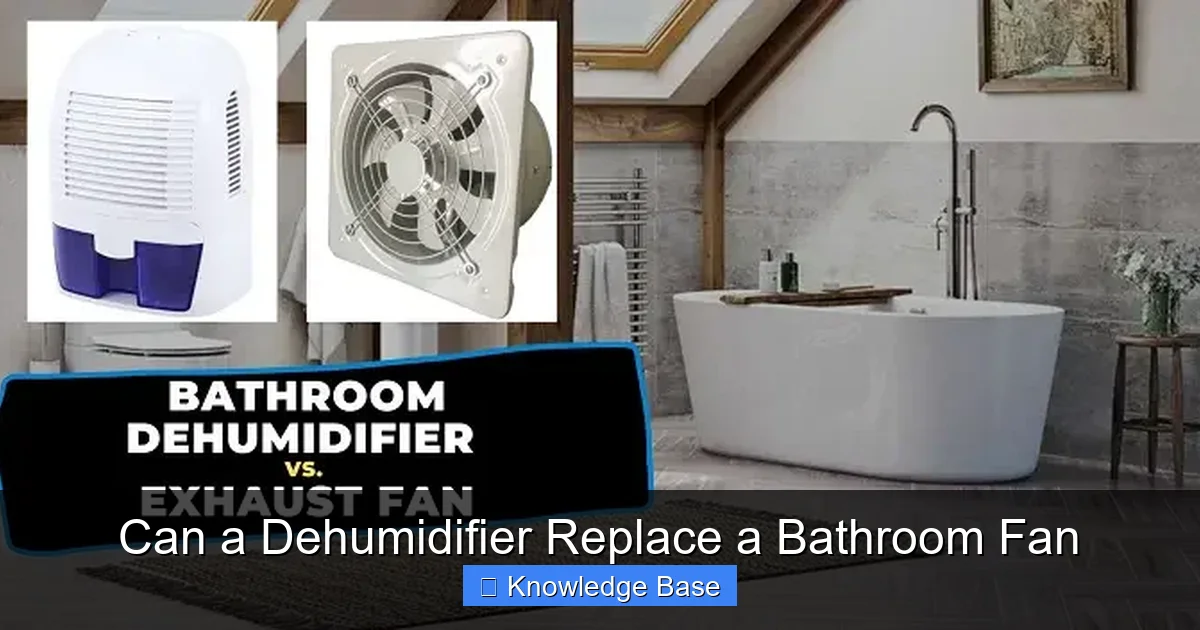
A dehumidifier cannot fully replace a bathroom fan because it doesn’t remove moisture-laden air or vent it outside. While it reduces humidity, it lacks the airflow and exhaust function essential for preventing mold, odors, and structural damage in bathrooms.
Key Takeaways
- Dehumidifiers reduce indoor humidity but do not exhaust moist air outside, unlike bathroom fans.
- Bathroom fans actively ventilate by pulling steam and odors out of the room and expelling them outdoors.
- Using only a dehumidifier may lead to mold and mildew because trapped moisture remains in the space.
- Dehumidifiers consume more energy when used continuously in small, high-moisture areas like bathrooms.
- Best results come from combining both—a fan for immediate ventilation and a dehumidifier for ongoing humidity control.
- Building codes often require exhaust fans in bathrooms without windows, making dehumidifiers insufficient for compliance.
- Portable dehumidifiers need frequent emptying and aren’t designed for constant bathroom use.
Quick Answers to Common Questions
Can a dehumidifier replace a bathroom fan?
No, a dehumidifier cannot fully replace a bathroom fan because it doesn’t remove moist air from the room or vent it outside.
What does a bathroom fan do that a dehumidifier doesn’t?
A bathroom fan actively exhausts humid, stale air outdoors, while a dehumidifier only recycles air and removes moisture.
Can I use a dehumidifier in my bathroom?
Yes, but only as a supplement. It’s not a substitute for proper ventilation and may require frequent maintenance.
Is it safe to run a dehumidifier in a small bathroom?
It can be, but it’s inefficient and may overheat the space. A fan is a better choice for moisture removal.
Do I need both a fan and a dehumidifier?
Not always, but in humid climates or problem areas, using both can provide better moisture control and air quality.
📑 Table of Contents
Can a Dehumidifier Replace a Bathroom Fan?
If you’ve ever stepped out of a hot shower into a foggy, steamy bathroom, you know how quickly moisture can take over. The mirror fogs up, the walls feel damp, and that musty smell starts to creep in. Most people reach for the bathroom fan to clear the air—but what if you don’t have one? Or maybe you’re wondering if a dehumidifier could do the same job?
It’s a common question, especially for homeowners looking to save money or simplify their bathroom setup. After all, both devices deal with moisture, right? A dehumidifier pulls water from the air, and a bathroom fan blows humid air out. So, can one replace the other?
The short answer is no—a dehumidifier cannot fully replace a bathroom fan. While both help manage humidity, they work in very different ways and serve different purposes. Understanding how each device functions, their limitations, and when to use them together is key to keeping your bathroom dry, healthy, and mold-free.
In this article, we’ll break down the differences between dehumidifiers and bathroom fans, explore why one can’t truly substitute for the other, and offer practical advice on how to use both effectively. Whether you’re remodeling, dealing with a broken fan, or just curious about indoor air quality, this guide will help you make the right choice for your home.
How Bathroom Fans Work

Visual guide about Can a Dehumidifier Replace a Bathroom Fan
Image source: breezeamazing.com
Bathroom fans, also known as exhaust fans or ventilation fans, are specifically designed to remove moist, stale, and odorous air from your bathroom. They’re typically installed in the ceiling or high on a wall and connected to a duct that leads outside your home—through the roof or an exterior wall.
When you turn on the fan after a shower, it creates suction that pulls humid air out of the room and expels it outdoors. This process helps prevent condensation on mirrors, walls, and ceilings, reduces the risk of mold and mildew growth, and improves overall air quality.
Most modern bathroom fans come with built-in humidity sensors or timers, so they can run automatically until the moisture level drops. Some even include heaters or night lights for added comfort and functionality.
One of the biggest advantages of a bathroom fan is its ability to quickly remove large amounts of steam. Within 15 to 30 minutes of a hot shower, a properly sized fan can clear most of the moisture from the air. This rapid ventilation is crucial in preventing water from settling on surfaces, where it can lead to peeling paint, warped wood, or microbial growth.
Why Ventilation Matters
Ventilation isn’t just about comfort—it’s about health and home preservation. Without proper airflow, bathrooms become breeding grounds for mold, mildew, and bacteria. These microorganisms thrive in warm, damp environments and can trigger allergies, asthma, and other respiratory issues.
Moreover, trapped moisture can damage building materials over time. Grout can crack, drywall can swell, and metal fixtures can rust. In extreme cases, structural integrity may be compromised.
A bathroom fan addresses these problems at the source by removing humid air before it has a chance to settle. It’s a proactive solution that works in real time, especially during and immediately after high-moisture activities like showering or bathing.
Types of Bathroom Fans
Not all bathroom fans are created equal. Here are a few common types:
– **Standard Exhaust Fans**: Basic models that vent air outside. They’re affordable and effective for most homes.
– **Fan-Light Combinations**: Include a light fixture and fan in one unit, ideal for bathrooms without separate lighting.
– **Fan-Heater Combinations**: Add warmth to the room, great for colder climates.
– **Quiet or Ultra-Quiet Fans**: Designed for low noise levels, perfect for master bathrooms or bedrooms.
– **Smart Fans**: Can be controlled via smartphone apps, voice assistants, or humidity sensors.
Choosing the right fan depends on your bathroom size, usage, and ventilation needs. A professional can help determine the correct CFM (cubic feet per minute) rating based on room volume and layout.
How Dehumidifiers Work

Visual guide about Can a Dehumidifier Replace a Bathroom Fan
Image source: hvactrainingshop.com
Dehumidifiers are appliances designed to reduce the amount of moisture in the air. They’re commonly used in basements, laundry rooms, and other areas prone to high humidity. But can they work in a bathroom?
A dehumidifier pulls in humid air, passes it over cold coils to condense the moisture into water, and then releases drier air back into the room. The collected water drips into a tank or can be drained continuously via a hose.
There are two main types: refrigerant (compressor-based) and desiccant dehumidifiers. Refrigerant models are more common and work best in warm environments, while desiccant types are better for cooler spaces.
While dehumidifiers are excellent at lowering overall humidity levels, they don’t remove air from the room—they just recycle it. This means they don’t eliminate odors, pollutants, or excess steam as effectively as an exhaust fan.
Dehumidifiers vs. Ventilation
The key difference lies in air exchange. A bathroom fan replaces indoor air with fresh outdoor air (after filtering and exhausting the humid air). A dehumidifier, on the other hand, keeps the same air circulating while removing moisture.
This distinction is crucial. Even if a dehumidifier reduces humidity, it doesn’t address the root cause: the influx of steam during a shower. Without ventilation, that moisture remains in the room, just in a drier form. Over time, this can still lead to condensation on cooler surfaces, especially in poorly insulated bathrooms.
Additionally, dehumidifiers aren’t designed for constant, high-moisture exposure. Running one in a bathroom 24/7 can strain the unit, increase energy bills, and require frequent maintenance.
When a Dehumidifier Might Help
That said, a dehumidifier can be a useful supplement in certain situations:
– If your bathroom has no window or external vent, and installing a fan isn’t feasible.
– In humid climates where ambient moisture levels are high even outside the bathroom.
– For homes with chronic dampness issues, such as poor insulation or high groundwater.
In these cases, a dehumidifier can help maintain a more stable indoor environment. But it should never be the sole solution for bathroom moisture control.
Why a Dehumidifier Can’t Fully Replace a Bathroom Fan
Now that we understand how both devices work, let’s address the core question: can a dehumidifier replace a bathroom fan?
The answer is a clear no—and here’s why.
1. No Air Exchange
The most significant limitation of a dehumidifier is that it doesn’t exchange air. It recycles the same air, removing moisture but leaving behind odors, bacteria, and pollutants. A bathroom fan, by contrast, actively removes contaminated air and replaces it with fresh air from outside (after proper filtration).
Without this exchange, your bathroom remains a closed system. Even if the humidity drops, the air quality may still be poor. Over time, this can lead to stuffiness, lingering smells, and potential health risks.
2. Slower Response to Steam
When you take a hot shower, steam fills the room in minutes. A bathroom fan can start clearing that steam almost immediately, especially if it’s on a timer or humidity sensor.
A dehumidifier, however, works more slowly. It takes time to pull moisture from the air, and it can’t keep up with the rapid influx of steam. By the time it reduces humidity, condensation may have already formed on mirrors, walls, and ceilings.
This delay increases the risk of water damage and mold growth—exactly what you’re trying to prevent.
3. Energy Inefficiency in Small Spaces
Dehumidifiers are built for larger areas like basements or whole-house systems. Using one in a small bathroom is like using a snowplow to clear a sidewalk—it’s overkill and inefficient.
Bathrooms typically range from 30 to 100 square feet. Running a dehumidifier in such a small space consumes more energy than necessary, especially when a simple exhaust fan could do the job faster and cheaper.
Moreover, dehumidifiers generate heat as a byproduct. In an already warm, steamy bathroom, this can make the room feel even more uncomfortable.
4. Maintenance and Practicality
Portable dehumidifiers require regular emptying of the water tank—sometimes daily in high-humidity conditions. This is inconvenient, especially in a bathroom where you want minimal upkeep.
Exhaust fans, once installed, are largely maintenance-free. They don’t need emptying, refilling, or constant monitoring. Just flip the switch and forget about it.
Additionally, dehumidifiers take up floor or counter space, which is often limited in bathrooms. An exhaust fan is hidden in the ceiling or wall, preserving your room’s layout and aesthetics.
5. Building Code Compliance
In many areas, building codes require bathrooms without windows to have an exhaust fan. This is not just a suggestion—it’s a legal requirement designed to protect homes and occupants.
Using a dehumidifier instead of a fan may violate these codes, potentially causing issues during home inspections, insurance claims, or resale.
Even in bathrooms with windows, codes often recommend mechanical ventilation to ensure consistent airflow, especially in tightly sealed modern homes.
When to Use Both a Fan and a Dehumidifier
While a dehumidifier can’t replace a bathroom fan, it can complement one—especially in challenging environments.
High-Humidity Climates
If you live in a tropical or coastal area, outdoor air may be just as humid as indoor air. In such cases, even with a fan running, moisture can seep back into the bathroom.
A dehumidifier can help maintain a lower baseline humidity level, reducing the workload on the fan and preventing mold growth between showers.
Bathrooms Without Exterior Walls
Some bathrooms are interior rooms with no access to an exterior wall or roof. Installing a ducted exhaust fan may be difficult or impossible.
In these situations, a ductless bathroom fan (which filters and recirculates air) or a dehumidifier can be a temporary solution. However, neither is as effective as a true exhaust system.
A better long-term fix might be a through-the-wall fan or a positive input ventilation (PIV) system, which introduces filtered outdoor air to push stale air out.
Chronic Moisture Problems
If your bathroom consistently feels damp, even with a fan, there may be underlying issues like poor insulation, leaks, or inadequate ventilation.
In these cases, a dehumidifier can help manage residual moisture while you address the root cause. But it should be part of a broader strategy—not a standalone fix.
Practical Tips for Combined Use
– Run the bathroom fan during and for 20–30 minutes after showering.
– Use a dehumidifier in the evening or overnight to maintain low humidity.
– Choose a dehumidifier with a built-in humidistat to automate operation.
– Ensure the dehumidifier has a continuous drain option to avoid frequent emptying.
– Keep the bathroom door closed when using either device to maximize efficiency.
Choosing the Right Solution for Your Bathroom
So, what’s the best approach? It depends on your specific situation.
If You Have a Working Exhaust Fan
Keep using it! It’s the most effective way to remove moisture and odors. Consider upgrading to a quieter or smarter model if needed.
If You Don’t Have a Fan and Can’t Install One
A dehumidifier can help, but it’s not ideal. Look into ductless ventilation options or consult a contractor about retrofitting an exhaust system.
If You Live in a Humid Climate
Use both devices strategically. The fan handles immediate steam, while the dehumidifier maintains comfort and prevents mold.
If You’re Remodeling
Install a high-quality exhaust fan during construction. It’s easier and more cost-effective than adding it later.
Budget Considerations
Exhaust fans are generally cheaper to buy and operate than dehumidifiers. A basic fan costs $20–$100, while a good dehumidifier runs $150–$400. Energy costs are also lower for fans, especially if used only when needed.
Conclusion
A dehumidifier is a useful tool for managing indoor humidity, but it cannot replace a bathroom fan. The two devices serve different purposes: one removes moisture from the air, while the other removes moist air from the room.
For a healthy, dry, and mold-free bathroom, proper ventilation is essential. A bathroom fan provides immediate, effective airflow that a dehumidifier simply can’t match. While a dehumidifier can support humidity control in certain situations, it should never be the only solution.
The best approach is to use both—when appropriate. Run the fan during and after showers to clear steam, and use a dehumidifier to maintain a comfortable humidity level between uses. This combination offers the most comprehensive protection for your home and your health.
If you’re unsure about your bathroom’s ventilation needs, consult a licensed HVAC professional. They can assess your space, recommend the right equipment, and ensure your setup meets local building codes.
Remember: when it comes to bathroom moisture, prevention is always better than cure. Invest in proper ventilation today to avoid costly repairs and health issues down the road.
Frequently Asked Questions
Can a dehumidifier prevent mold in the bathroom?
A dehumidifier can help reduce mold risk by lowering humidity, but it won’t prevent mold if moist air isn’t vented outside. Proper ventilation is still essential.
How long should I run a bathroom fan after a shower?
Run the fan for at least 20–30 minutes after showering to ensure all steam and moisture are removed from the room.
What if my bathroom has no window or exterior wall?
You may need a ductless fan or a dehumidifier as a temporary fix, but consult a professional about installing a vented system for long-term safety.
Are bathroom fans required by code?
Yes, in many areas, bathrooms without windows must have an exhaust fan to meet building code requirements for ventilation.
Can a dehumidifier make my bathroom feel colder?
No, dehumidifiers actually release warm air as a byproduct. They reduce humidity but don’t cool the room.
What’s the best way to reduce bathroom humidity?
The best method is to use an exhaust fan during and after showers, keep the door closed, and ensure proper airflow throughout the home.