

Most dehumidifiers do not produce carbon monoxide and should not trigger a CO detector under normal conditions. However, rare electrical faults or nearby combustion sources can cause false alarms. Understanding how your dehumidifier works and maintaining your detector ensures safety.
Key Takeaways
- Dehumidifiers typically do not produce carbon monoxide: Electric dehumidifiers use refrigeration or desiccant technology and do not burn fuel, so they don’t emit CO.
- False alarms can happen due to electrical issues: Overheating components or electrical arcing in a malfunctioning unit may trigger a CO detector.
- Nearby combustion appliances are a common cause: Furnaces, water heaters, or generators near the dehumidifier may leak CO and set off the alarm.
- CO detectors can react to other gases: Some sensors respond to hydrogen, ethanol, or volatile organic compounds (VOCs) released during dehumidifier operation.
- Regular maintenance prevents problems: Clean filters, inspect wiring, and replace old units to reduce risks.
- Test your CO detector monthly: Ensure it’s working properly and replace it every 5–7 years.
- When in doubt, evacuate and call for help: If your CO alarm sounds, leave the area immediately and contact emergency services.
Quick Answers to Common Questions
Can a dehumidifier produce carbon monoxide?
No, electric dehumidifiers do not produce carbon monoxide because they don’t burn fuel. Only combustion-based appliances can generate CO.
Why did my CO alarm go off when my dehumidifier was running?
It could be a false alarm caused by electrical interference, nearby combustion appliances, or a malfunctioning detector—not the dehumidifier itself.
Should I stop using my dehumidifier if the CO alarm sounds?
No—evacuate immediately and call for help. Don’t assume the dehumidifier is the cause. Let professionals investigate.
Can humidity affect a CO detector?
Extreme humidity can sometimes affect sensor performance, but it won’t produce CO. Keep detectors away from very damp areas.
How often should I replace my CO detector?
Replace CO detectors every 5–7 years, or as indicated by the manufacturer. Test them monthly to ensure they’re working.
📑 Table of Contents
- Can a Dehumidifier Set Off a Carbon Monoxide Detector?
- How Dehumidifiers Work: No Combustion, No CO
- How Carbon Monoxide Detectors Work
- Can a Dehumidifier Actually Trigger a CO Detector?
- Real-Life Examples and Case Studies
- How to Prevent False Alarms and Stay Safe
- Myths and Misconceptions
- Choosing the Right Dehumidifier and CO Detector
- Conclusion
Can a Dehumidifier Set Off a Carbon Monoxide Detector?
You’ve just installed a new dehumidifier in your basement to combat that musty smell and damp air. Everything seems fine—until suddenly, your carbon monoxide (CO) detector starts beeping. Your heart races. Is it a real CO leak? Could your dehumidifier be the culprit?
It’s a question many homeowners ask, especially during humid summer months or in damp basements where dehumidifiers run frequently. The short answer? Under normal operating conditions, a dehumidifier should not produce carbon monoxide or set off a CO detector. But there are rare situations where it might seem like the dehumidifier is to blame—even if it’s not directly responsible.
In this article, we’ll explore how dehumidifiers work, why CO detectors go off, and whether there’s any real connection between the two. We’ll also share practical tips to keep your home safe and your alarms accurate.
How Dehumidifiers Work: No Combustion, No CO
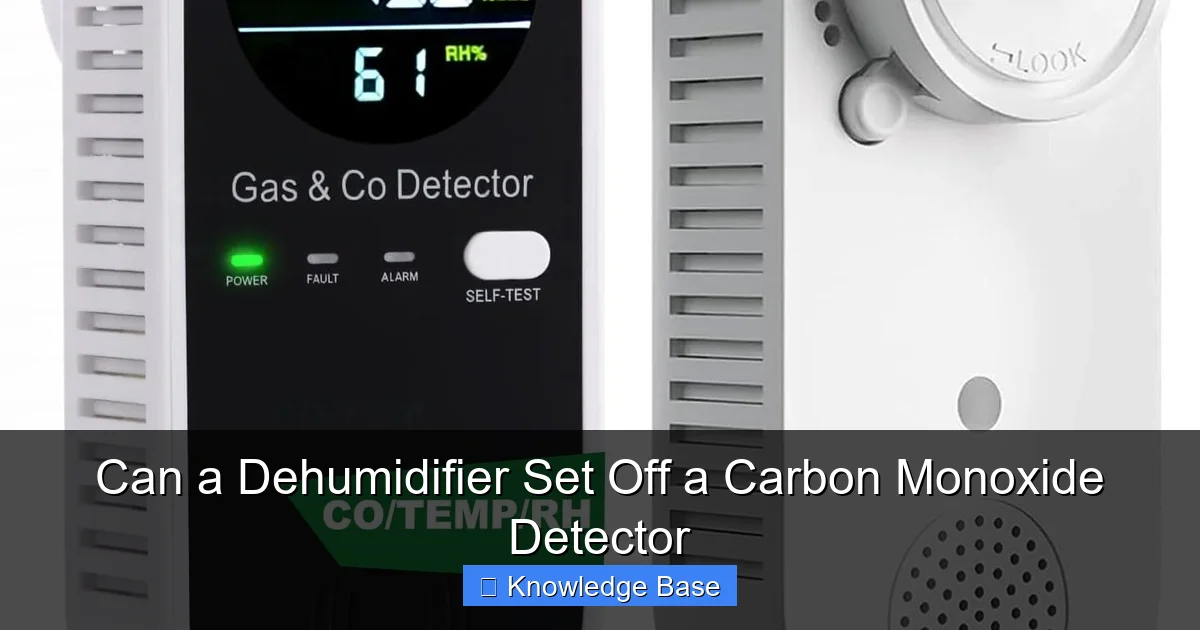
Visual guide about Can a Dehumidifier Set Off a Carbon Monoxide Detector
Image source: m.media-amazon.com
To understand whether a dehumidifier can set off a carbon monoxide detector, it’s important to know how these devices function.
Most household dehumidifiers are electric and use one of two technologies: refrigerant (also called compressor-based) or desiccant.
Refrigerant Dehumidifiers
These are the most common type. They work similarly to air conditioners. A fan pulls humid air into the unit. The air passes over cold coils, causing moisture to condense into water, which drips into a collection tank. The dry air is then reheated and released back into the room.
Because this process relies on electricity and refrigeration, there’s no combustion involved. No fuel is burned, so no carbon monoxide is produced.
Desiccant Dehumidifiers
These units use a moisture-absorbing material (like silica gel) to pull water from the air. The desiccant is then heated to release the moisture, which is collected or vented. Again, this is an electrical process with no flame or combustion.
Fuel-Burning Dehumidifiers (Rare)
In industrial or commercial settings, you might find dehumidifiers that use propane or natural gas for heating. These *can* produce carbon monoxide if not properly vented. However, these are not used in typical homes.
So, unless you’re using a specialized gas-powered unit (which is highly unlikely in a residential setting), your dehumidifier isn’t generating CO.
How Carbon Monoxide Detectors Work
Visual guide about Can a Dehumidifier Set Off a Carbon Monoxide Detector
Image source: storables.com
To understand why a dehumidifier might *seem* to trigger a CO alarm, let’s look at how these life-saving devices operate.
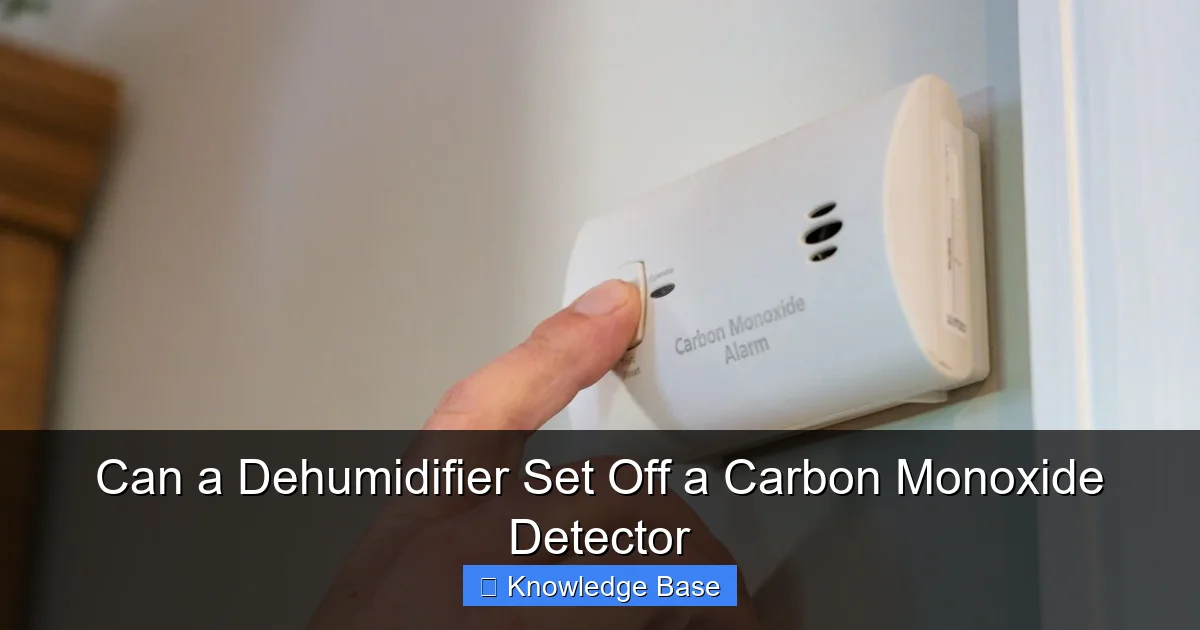
Carbon monoxide detectors are designed to sense the presence of CO gas in the air. CO is a colorless, odorless, and toxic gas produced when fuels like gas, oil, wood, or coal don’t burn completely.
There are three main types of CO sensors:
Electrochemical Sensors
These are the most common in home detectors. They contain a chemical solution that reacts with CO, producing an electrical current. The detector measures this current and sounds the alarm if levels are dangerous.
Metal Oxide Semiconductor Sensors
These use a heated metal oxide film that changes resistance when CO is present. They’re less common in homes but may be found in some industrial detectors.
Biomimetic Sensors
These mimic the way hemoglobin in blood binds to CO. When CO is detected, a color change triggers the alarm.
All these sensors are designed to respond specifically to carbon monoxide. However, they can sometimes react to other gases or electrical interference—leading to false alarms.
Can a Dehumidifier Actually Trigger a CO Detector?
Now for the big question: can a dehumidifier set off a carbon monoxide detector?
The direct answer is: No, not under normal conditions. But there are indirect ways a dehumidifier might be linked to a CO alarm going off.
Electrical Faults and Arcing
If a dehumidifier has a serious electrical problem—like damaged wiring, a failing motor, or internal arcing—it could potentially generate small amounts of gases or electromagnetic interference. Some CO detectors, especially older or lower-quality models, may misinterpret this as a CO signal.
For example, arcing in a motor can produce trace amounts of hydrogen or other gases. While not carbon monoxide, some electrochemical sensors may react to these compounds.
This is rare, but not impossible. If your dehumidifier is making strange noises, overheating, or emitting a burning smell, it could be malfunctioning and contributing to a false alarm.
Overheating Components
A dehumidifier that runs constantly or is clogged with dust may overheat. While it won’t produce CO, the heat could affect nearby materials or wiring. In extreme cases, overheating insulation or plastic components might release fumes that confuse a CO sensor.
Again, this is not the same as CO production, but it could trigger a sensitive detector.
Proximity to Combustion Sources
Here’s a more likely scenario: your dehumidifier is running in a basement near a furnace, water heater, or gas dryer. These appliances burn fuel and can produce carbon monoxide if they’re malfunctioning or poorly vented.
If one of these devices leaks CO, the gas can spread through the basement. Your dehumidifier isn’t the source—but it might be running at the same time, making you suspect it.
This is a common case of mistaken identity. The dehumidifier gets the blame, but the real culprit is a nearby combustion appliance.
Sensor Sensitivity and False Alarms
Some CO detectors are overly sensitive or nearing the end of their lifespan. They may react to household chemicals, cleaning products, or even humidity changes.
For instance, if your dehumidifier is releasing warm, dry air into a cold basement, it could create temperature fluctuations. While this won’t produce CO, it might affect sensor performance in older detectors.
Additionally, desiccant dehumidifiers may release small amounts of ethanol or other VOCs during regeneration. Some CO sensors can cross-react with these compounds.
Real-Life Examples and Case Studies
Let’s look at a few real-world scenarios to illustrate how this confusion can happen.
Case 1: The Overworked Basement Dehumidifier
Sarah installed a dehumidifier in her basement to fight mold. One night, her CO alarm went off. She turned off the dehumidifier, and the alarm stopped. She assumed the unit was faulty.
But after investigation, a technician found that her gas furnace had a cracked heat exchanger, leaking CO into the basement. The dehumidifier was running at the same time, so it got blamed. Once the furnace was repaired, the alarm stopped—even with the dehumidifier on.
Case 2: The Aging CO Detector
Mike’s CO alarm started beeping intermittently. He unplugged his dehumidifier, and the beeping stopped. He replaced the dehumidifier, but the alarm still went off.
Eventually, he realized his CO detector was 8 years old—past its recommended lifespan. He replaced it, and the false alarms stopped. The dehumidifier was innocent all along.
Case 3: The Faulty Motor
Lisa noticed her dehumidifier was making a buzzing noise. A few days later, her CO alarm sounded. She called an electrician, who found arcing in the motor. While no CO was produced, the electrical interference may have affected the detector’s sensor.
After replacing the dehumidifier, the problem disappeared.
These examples show that while dehumidifiers aren’t CO producers, they can be involved in situations that trigger alarms.
How to Prevent False Alarms and Stay Safe
Even though dehumidifiers aren’t typically dangerous, it’s smart to take precautions to avoid confusion and ensure your home is safe.
Maintain Your Dehumidifier
– Clean the air filter monthly to prevent dust buildup.
– Empty the water tank regularly to avoid overflow and mold growth.
– Inspect the unit for signs of wear, such as frayed cords or unusual noises.
– Replace older units (over 10 years) that may have degraded components.
Service Combustion Appliances Annually
Have your furnace, water heater, and dryer inspected by a professional each year. Look for signs of CO leaks, such as soot, rust, or pilot light issues.
Install CO Detectors Correctly
– Place detectors on every level of your home, especially near sleeping areas.
– Install them at least 15 feet away from fuel-burning appliances to avoid false alarms.
– Avoid placing them in humid areas like bathrooms or directly above dehumidifiers.
Test and Replace Detectors Regularly
– Test your CO alarms monthly by pressing the test button.
– Replace detectors every 5–7 years, or as recommended by the manufacturer.
– If your detector is beeping intermittently, it may be signaling low battery or end-of-life—don’t ignore it.
Know the Difference Between Alarms
– A steady, loud beep usually means CO is present—evacuate immediately.
– A chirping sound every 30–60 seconds often means low battery or end-of-life.
– A short beep every minute may indicate a malfunction.
When the Alarm Sounds: What to Do
1. Leave the house immediately.
2. Call 911 or your local fire department from outside.
3. Do not re-enter until professionals say it’s safe.
4. Once cleared, investigate the cause with a qualified technician.
Myths and Misconceptions
There are several myths about dehumidifiers and CO detectors that can lead to confusion.
Myth: All Appliances That Run on Electricity Can Produce CO
False. Only devices that burn fuel produce carbon monoxide. Electric appliances like dehumidifiers, refrigerators, and fans do not.
Myth: If the Alarm Stops When You Unplug the Dehumidifier, It Must Be the Cause
Not necessarily. Correlation doesn’t equal causation. The alarm may have stopped because you opened windows, turned off a nearby furnace, or the CO levels dropped naturally.
Myth: CO Detectors Can’t Be Triggered by Anything But CO
While designed for CO, some sensors can react to other gases or electrical noise—especially if they’re old or low-quality.
Myth: Dehumidifiers Dry the Air So Much They Create CO
No. Drying air doesn’t produce toxic gases. The process is purely physical, not chemical.
Choosing the Right Dehumidifier and CO Detector
To minimize risks and false alarms, choose reliable equipment.
For Dehumidifiers:
– Look for ENERGY STAR-certified models for efficiency.
– Choose units with automatic shut-off and humidity sensors.
– Avoid ultra-cheap models that may have poor electrical components.
For CO Detectors:
– Choose detectors with electrochemical sensors for better accuracy.
– Look for models with digital displays that show CO levels.
– Consider smart detectors that send alerts to your phone.
Conclusion
So, can a dehumidifier set off a carbon monoxide detector? The answer is: Not directly, and not under normal circumstances. Electric dehumidifiers don’t burn fuel, so they don’t produce carbon monoxide.
However, electrical faults, nearby combustion sources, or sensor sensitivity can create situations where the dehumidifier appears to be the cause. The key is to stay informed, maintain your appliances, and respond quickly to any alarm.
Your dehumidifier is a helpful tool for improving indoor air quality and preventing mold. Your CO detector is a vital safety device that protects your family from a silent killer. By understanding how they work—and how they interact—you can enjoy a safer, healthier home.
Don’t panic if your CO alarm goes off. Instead, treat it seriously, investigate thoroughly, and take action. And remember: when it comes to safety, it’s always better to be cautious than complacent.
Frequently Asked Questions
Can a dehumidifier set off a carbon monoxide detector?
Under normal conditions, no. Electric dehumidifiers don’t produce carbon monoxide. However, electrical faults or nearby combustion sources may cause false alarms.
What should I do if my CO alarm goes off?
Leave the house immediately, call 911 from outside, and do not return until professionals confirm it’s safe.
Can a dirty dehumidifier cause a CO alarm?
A dirty filter won’t produce CO, but it can cause overheating. Overheating may lead to electrical issues that could indirectly affect a CO detector.
Are all CO detectors equally reliable?
No. Electrochemical sensors are more accurate than older types. Choose high-quality detectors and replace them regularly.
Can a gas-powered dehumidifier produce CO?
Yes, industrial gas-powered dehumidifiers can produce CO if not properly vented. These are not used in typical homes.
How can I prevent false CO alarms?
Maintain appliances, service combustion systems annually, install detectors correctly, and replace old units to reduce false alarms.