
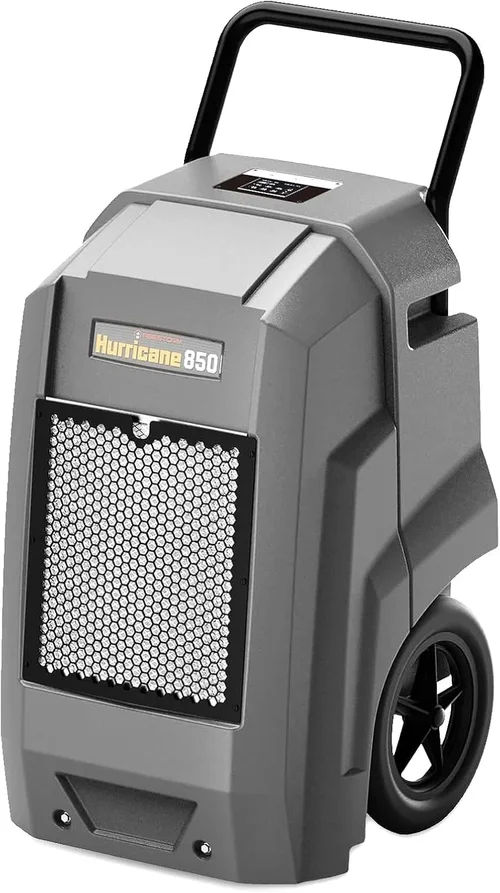
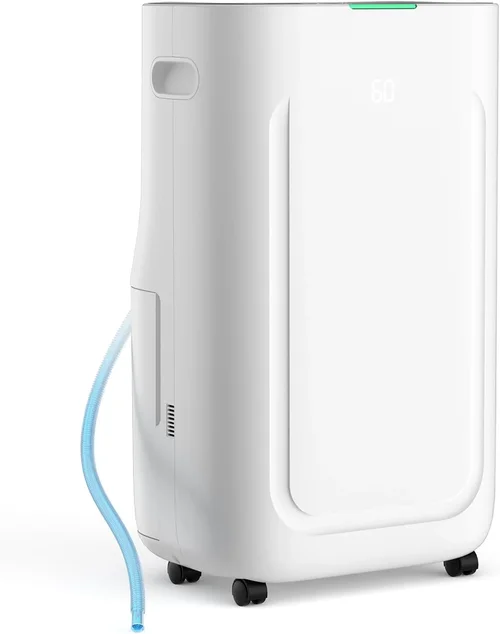
If you’ve ever walked into a basement that smells like wet socks, noticed condensation fogging up your windows in winter, or spotted mold creeping along the corners of your bathroom walls, you already know how disruptive excess humidity can be. High indoor moisture doesn’t just feel uncomfortable—it can damage your home’s structure, ruin furniture and electronics, trigger allergies, and even worsen respiratory conditions like asthma. That’s where a dehumidifier with a built-in pump comes in. Unlike standard models that rely solely on gravity drainage or manual emptying of a water tank, units equipped with an internal condensate pump offer continuous, hands-off operation by actively pumping collected moisture out through a hose—even upward or over long distances. This makes them ideal for basements, crawl spaces, garages, and other hard-to-reach areas where traditional drainage isn’t practical.
This comprehensive buying guide is designed to help you cut through the noise and make a confident, informed decision when choosing the best dehumidifier with a built-in pump for your specific needs. Whether you’re dealing with chronic dampness in a finished basement, protecting valuable equipment in a workshop, or simply aiming to improve indoor air quality, we’ll walk you through every critical factor—from performance specs and build quality to budget considerations and real-world usability. You’ll learn how to compare models accurately, avoid common pitfalls, understand warranty nuances, and ultimately select a unit that delivers reliable, long-term moisture control without constant maintenance. The market is flooded with options ranging from budget-friendly workhorses to high-end smart systems, so knowing what truly matters will save you time, money, and frustration down the line.
What to Look for When Buying Buying Guide
1. Budget & Price Range
Dehumidifiers with built-in pumps span a wide price spectrum, typically ranging from $250 to over $800 depending on capacity, features, and brand reputation. While it’s tempting to go for the cheapest option, skimping on price often means sacrificing essential functionality like pump reliability, energy efficiency, or durability. Entry-level models may include a basic pump but lack robust construction or smart controls, while premium units offer advanced humidity sensors, Wi-Fi connectivity, and commercial-grade components. Set a realistic budget based on your space size and usage frequency—remember, a well-chosen dehumidifier is an investment in your home’s health and longevity. Consider not just the upfront cost but also long-term operating expenses; Energy Star-certified models may cost slightly more initially but can save you significantly on electricity bills over time.
2. Performance Specifications
The core function of any dehumidifier is removing moisture from the air, so performance specs are non-negotiable. Look for two key metrics: pint capacity per day (PPD) and AHAM rating. Pint capacity indicates how much water the unit can extract in 24 hours under standardized conditions (typically 80°F and 60% relative humidity). For most residential basements (500–1,500 sq ft), a 50–70 PPD unit is sufficient, while larger or extremely damp spaces may require 70+ PPD. AHAM (Association of Home Appliance Manufacturers) ratings ensure apples-to-apples comparisons across brands—always check if the listed capacity is AHAM-certified. Also pay attention to the operating temperature range; some pumps fail below 40°F, which is problematic in unheated basements during winter. Opt for models that function reliably down to at least 38–40°F if you live in a cold climate.
3. Pump Capability & Drainage Options
Not all built-in pumps are created equal. A quality pump should be able to lift water vertically (e.g., from a basement floor to a sink or window) and push it horizontally over distances—often up to 15 feet vertically and 50+ feet horizontally. Check the manufacturer’s specifications for max lift height and flow rate. Additionally, ensure the unit supports continuous drainage via a standard garden hose (usually ⅝” or ¾” thread). Some models include quick-connect fittings or automatic shutoff when the hose is disconnected—a useful safety feature. Avoid units that only offer “pump assist” rather than a true condensate pump; these may still require gravity drainage as a backup. Also verify whether the pump activates automatically when the tank fills or only during defrost cycles—continuous pump operation is ideal for unattended use.
4. Build Quality & Durability
Since dehumidifiers with pumps are often used in harsh environments (damp basements, garages, etc.), robust construction is essential. Look for cabinets made from high-impact plastic or coated metal that resist rust and corrosion. Internal components like the compressor, coils, and pump should be designed for heavy-duty use—commercial-grade models often feature copper coils and sealed bearings. Check user reviews for reports of pump failures, leaks, or noisy operation, as these are common weak points. Units with washable air filters and accessible service panels tend to last longer because they’re easier to maintain. Also consider the weight and footprint: heavier units often indicate better materials, but ensure it’s still portable enough for your setup (look for recessed handles and casters).
5. Features & Functionality
Modern dehumidifiers come packed with features that enhance convenience and efficiency. Essential ones include a digital humidistat (so you can set your desired humidity level, typically between 30–50%), auto-restart after power outages, and defrost mode for cold-weather operation. Advanced models offer Wi-Fi connectivity (via apps like Frigidaire or GE SmartHQ), allowing remote monitoring and control. Timers, filter change indicators, and quiet operation modes (under 50 dB) are also valuable. However, don’t get swayed by flashy extras—focus on features that align with your actual needs. For example, if you’re placing the unit in a bedroom or home office, low noise is critical; if you travel frequently, remote access might be worth the upgrade.
6. Brand Reputation & Reliability
Stick with established brands known for HVAC and appliance reliability, such as Frigidaire, GE, hOmeLabs, AprilAire, and Tosot. These companies have proven track records, better customer support, and wider availability of replacement parts. Avoid obscure brands or private-label models sold exclusively through third-party retailers—they often lack proper certifications and suffer from poor after-sales service. Research recall histories and check if the brand offers extended warranties or service plans. User forums like Reddit’s r/Dehumidifiers or HVAC-Talk can provide unfiltered insights into real-world performance and longevity. A reputable brand may cost more upfront but pays dividends in peace of mind and reduced repair headaches.
7. Warranty & Support
A strong warranty is a strong indicator of a manufacturer’s confidence in their product. Most reputable dehumidifiers with pumps come with at least a 1-year full warranty, but premium models often include 2–5 years of coverage, sometimes with separate protection for the compressor and pump. Read the fine print: some warranties void if the unit is used in commercial settings or without regular filter cleaning. Also check what support channels are available—phone, email, live chat—and whether technicians are certified. Brands like AprilAire offer nationwide service networks, while others rely on third-party repair centers. If you’re buying online, ensure the seller is an authorized dealer; otherwise, your warranty may be invalidated.
8. Size & Portability
Even though many pump-equipped dehumidifiers are stationary units, portability matters—especially if you plan to move them seasonally or between rooms. Look for models under 50 lbs with integrated handles and smooth-rolling casters. Compact designs (under 18″ wide) fit better in tight basements or crawl spaces. Consider cord length too; a 6–8 ft power cord reduces the need for extension cords, which can be a tripping hazard or fire risk in damp areas. Some units include cord wraps or storage compartments for hoses and accessories, adding to their practicality. Don’t sacrifice capacity for size unless space is extremely limited—most mid-range models strike a good balance between footprint and performance.
Different Types of Buying Guide
Common Buying Mistakes to Avoid
❌ Mistake: Ignoring Pump Specifications
Why it’s bad: Many buyers assume “built-in pump” means universal compatibility, but pump performance varies wildly. A weak pump might only lift water 3–5 feet, making it useless if your drain point is higher or farther away.
What to do instead: Always check the max vertical lift and horizontal run specs. Measure your installation site beforehand and choose a unit that exceeds your requirements by at least 20% for safety margin.
❌ Mistake: Overlooking Operating Temperature Range
Why it’s bad: Standard dehumidifiers struggle in cold environments. If your basement drops below 50°F in winter, a non-low-temp model will ice up and stop working—even if the pump is functional.
What to do instead: Select a unit rated for operation down to at least 38–40°F. Look for automatic defrost cycles and cold-climate certifications.
❌ Mistake: Buying Based Solely on Pint Capacity
Why it’s bad: Pint ratings can be misleading if not AHAM-certified. Some manufacturers test under ideal lab conditions that don’t reflect real-world humidity levels.
What to do instead: Prioritize AHAM-rated capacities and cross-reference with user reviews. A 50-PPD AHAM unit is more reliable than a 70-PPD non-AHAM claim.
❌ Mistake: Neglecting Noise Levels
Why it’s bad: Dehumidifiers run continuously, and a loud unit (over 55 dB) can disrupt sleep or concentration, especially in finished basements used as living spaces.
What to do instead: Check decibel ratings and look for “quiet mode” or “sleep mode” features. Read owner feedback about real-world noise levels.
❌ Mistake: Skipping Warranty Details
Why it’s bad: Pump failures are common after the first year. A short or limited warranty leaves you paying hundreds for repairs on a relatively new unit.
What to do instead: Choose models with at least a 2-year comprehensive warranty, ideally covering the pump and compressor separately. Register your product immediately after purchase.
❌ Mistake: Assuming All Hoses Work
Why it’s bad: Not all dehumidifiers include a drain hose, and generic garden hoses may kink, leak, or degrade in damp conditions.
What to do instead: Verify if a hose is included or compatible. Use reinforced vinyl or reinforced rubber hoses designed for condensate drainage to prevent clogs and leaks.
❌ Mistake: Forgetting About Maintenance Access
Why it’s bad: Filters and coils need regular cleaning. If they’re hard to reach or require tools, you’re less likely to maintain the unit properly, leading to reduced efficiency and pump strain.
What to do instead: Choose models with tool-free filter access and visible coil designs. Washable filters are a must for long-term savings.
Budget Guidelines: How Much Should You Spend?
Entry-Level ($250–$350): These models offer basic pump functionality and decent capacity (40–50 PPD AHAM) but may lack advanced features like Wi-Fi, precise humidistats, or low-temperature operation. Ideal for small, moderately damp spaces where occasional manual intervention is acceptable. Expect plastic construction and shorter pump lifespans—typically 2–3 years with regular use.
Mid-Range ($350–$500): This is the sweet spot for most homeowners. Units in this tier deliver 50–70 PPD AHAM, reliable pumps with 10+ ft lift capacity, digital controls, auto-defrost, and Energy Star certification. Brands like hOmeLabs and Tosot excel here, offering excellent value without compromising core performance. Build quality improves significantly, with better seals, quieter fans, and longer warranties (often 2 years).
Premium ($500–$700): Designed for demanding environments, these dehumidifiers feature commercial-grade compressors, heavy-duty pumps, and smart capabilities. Expect Wi-Fi connectivity, app-based monitoring, multi-stage filtration, and operation down to 38°F. Models from Frigidaire and GE dominate this space, targeting users who want set-it-and-forget-it reliability for large basements or rental properties.
Luxury ($700+): Reserved for professionals or extreme conditions, luxury units boast 70+ PPD capacity, dual pumps, stainless steel coils, and industrial certifications. They’re overkill for typical homes but invaluable for flood restoration, large crawl spaces, or historic buildings requiring precise humidity control. AprilAire and Dri-Eaz offer top-tier options with 5-year warranties and nationwide service support.
Expert Tips for Getting the Best Deal
- Buy off-season: Prices drop significantly in late fall and winter (November–February) when demand is lowest. Retailers often clear inventory before spring humidity spikes.
- Check manufacturer rebates: Brands like AprilAire and Frigidaire occasionally offer $50–$100 mail-in rebates, especially during Earth Day or Energy Star promotions.
- Compare authorized dealers: Amazon, Home Depot, and Lowe’s usually carry the same models, but pricing and return policies vary. Stick to authorized sellers to protect your warranty.
- Look for bundle deals: Some retailers include free drain hoses, extension cords, or filter 3-packs with purchase—these can save $30–$50 in accessories.
- Test return policies: Even the best specs can’t predict fit or noise in your space. Choose retailers with 30–60 day return windows (e.g., Costco, Best Buy) so you can trial the unit risk-free.
- Inspect before setup: Upon delivery, check for shipping damage, verify pump operation (listen for a faint hum when the tank fills), and ensure all accessories are included.
- Register immediately: Most warranties start from the purchase date, not delivery. Register online within 10 days to activate full coverage and receive firmware updates.
- Join loyalty programs: Stores like Home Depot offer member-exclusive discounts and early access to sales—perfect for timing your purchase strategically.
Frequently Asked Questions
Q: Can I use a dehumidifier with a pump in an unheated basement during winter?
A: Yes—but only if it’s specifically rated for low-temperature operation (typically down to 38–40°F). Standard units will ice up and shut down below 50°F. Look for models with automatic defrost and cold-climate certifications.
Q: How often does the pump need maintenance?
A: The pump itself requires minimal upkeep, but you should clean the air filter monthly and inspect the drain hose quarterly for clogs. Flush the pump reservoir annually with a vinegar solution to prevent mineral buildup.
Q: Will a built-in pump work if there’s no nearby drain?
A: Absolutely. The pump’s job is to move water away from the unit—even upward to a sink, window, or sump pit. Just ensure the hose route doesn’t trap air (no U-shaped loops) and terminates below the pump outlet.
Q: Are dehumidifiers with pumps louder than standard models?
A: Not necessarily. Pump operation adds minimal noise (usually <2 dB). The main sound comes from the compressor and fan, which vary by model. Look for units under 52 dB for quiet performance.
Q: Can I run the drain hose through a wall or floor?
A: Yes, but use a grommet or sealant to prevent air leaks and moisture intrusion. Ensure the hose has a slight downward slope away from the unit to avoid backflow.
Q: Do I still need to empty the tank if I use the pump?
A: Only as a backup. Most pump-equipped models automatically switch to tank collection if the hose is disconnected or the pump fails. However, it’s wise to check the tank periodically during the first few uses.
Q: How do I know if my pump is working?
A: When the tank reaches capacity, you should hear a brief pump cycle (a low hum or gurgle) and see water flowing through the hose. If the tank fills without pumping, the pump may be faulty or clogged.
Q: Can I use a smart plug with a Wi-Fi dehumidifier?
A: Generally no—smart plugs can interfere with the unit’s internal controls and void the warranty. Use the manufacturer’s app for scheduling and monitoring instead.
Q: What humidity level should I set?
A: For most homes, 40–50% relative humidity is ideal. Below 40% can cause dry skin and static; above 50% encourages mold and dust mites. Use a separate hygrometer to verify accuracy.
Q: Are there any safety concerns with continuous drainage?
A: Minimal, but ensure the drain hose is secured and won’t trip anyone. In rare cases of pump failure, water could overflow—so placing the unit on a waterproof tray adds an extra layer of protection.
Our Final Recommendations
Best for Budget-Conscious Buyers: hOmeLabs 50 Pint Dehumidifier with Pump – At around $320, this AHAM-certified unit offers reliable pump performance, quiet operation (48 dB), and a 2-year warranty. Perfect for small to mid-sized basements where cost is a priority but pump functionality is non-negotiable.
Best Overall Value: Frigidaire FFAD7033R1 70 Pint Dehumidifier with Built-In Pump – Priced near $450, it combines high capacity, Energy Star efficiency, Wi-Fi connectivity, and a robust pump capable of 15-ft vertical lift. Ideal for larger spaces and tech-savvy users who want smart controls without premium pricing.
Best Premium Option: AprilAire E080 Pro 80 Pint Dehumidifier – At $650+, this commercial-grade unit features a heavy-duty pump, stainless steel coils, and operation down to 38°F. Backed by a 5-year warranty and nationwide service, it’s built for lifelong performance in challenging environments.
Best for Beginners: Tosot 50 Pint Smart Dehumidifier with Pump – With intuitive controls, clear drainage instructions, and a helpful mobile app, this $380 model simplifies setup and maintenance. Great for first-time buyers who want hassle-free moisture control.
Best for Advanced Users: GE APER50LZ 50 Pint Smart Dehumidifier with Pump – Offers granular humidity settings (±2%), detailed usage analytics via the SmartHQ app, and compatibility with Alexa/Google Assistant. At $420, it’s perfect for those who want precise control and data-driven insights.
Conclusion: Making the Right Choice
Choosing the right dehumidifier with a built-in pump isn’t just about picking the biggest number or the shiniest features—it’s about matching the unit’s capabilities to your unique environment, lifestyle, and long-term goals. From understanding pint capacity and pump specs to avoiding common pitfalls like cold-weather limitations or inadequate warranties, every detail matters when you’re investing in your home’s health and comfort. Remember, the best dehumidifier is the one that runs reliably, requires minimal intervention, and keeps your space consistently dry—no matter the season.
As you weigh your options, prioritize your must-haves: Is continuous drainage non-negotiable? Do you need smart controls or ultra-quiet operation? Will the unit live in a freezing basement? Answering these questions honestly will guide you far more effectively than any marketing claim. And don’t forget to leverage seasonal sales, compare authorized retailers, and read real user experiences—they often reveal truths that spec sheets can’t.
Ultimately, a quality dehumidifier with a pump is more than an appliance; it’s a guardian against mold, mildew, and structural decay. By applying the insights from this guide, you’re not just buying a product—you’re making a smart, sustainable choice for your home and well-being. Take your time, do your research, and invest wisely. Your future self (and your basement) will thank you.