
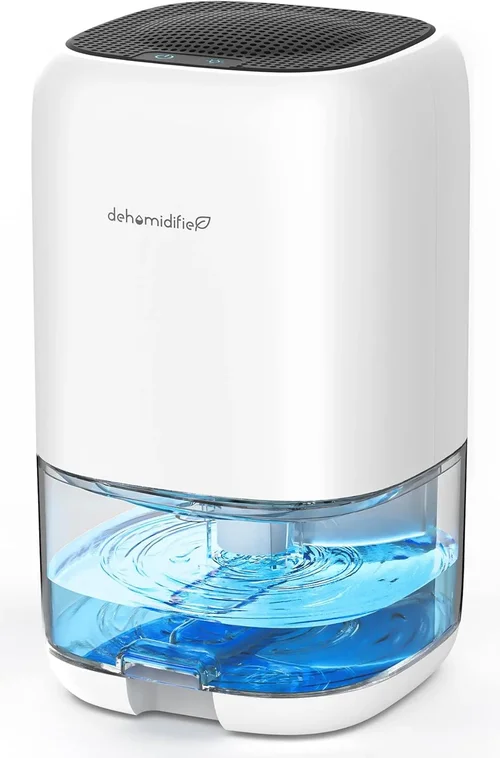
If you’ve ever woken up to foggy windows, peeling paint around the sills, or that unmistakable musty smell creeping into your living room, you’re not alone. Window condensation is one of the most common—and often overlooked—home moisture problems, especially during colder months. It might seem harmless at first, but persistent condensation can lead to mold growth, damaged window frames, warped wood, and even compromised indoor air quality. The good news? A high-quality dehumidifier designed specifically to combat window condensation can make a dramatic difference.
This guide exists because too many homeowners either ignore the problem or choose the wrong solution—often buying a generic dehumidifier that’s either too small, too loud, or poorly suited for the specific issue of cold-surface condensation. Our goal is to cut through the noise and help you find the best dehumidifier for window condensation based on real performance, practical features, and long-term value. Whether you’re dealing with a single drafty bedroom window or a whole-house humidity issue, we’ll walk you through everything you need to know—from understanding how condensation forms to selecting the right unit for your space, budget, and lifestyle.
The market is flooded with dehumidifiers ranging from $50 mini-units to $500+ industrial-grade machines, but not all are created equal when it comes to tackling window condensation. Some prioritize raw moisture removal over quiet operation, while others sacrifice durability for flashy smart features. In this comprehensive guide, you’ll learn how to evaluate key specs like pint capacity, energy efficiency, noise levels, and smart controls—all tailored to the unique challenge of preventing and eliminating condensation on windows. We’ll also compare different types of dehumidifiers, highlight common pitfalls, and share expert tips to ensure you get the best possible results without overspending.

What to Look for When Buying a Dehumidifier for Window Condensation
1. Pint Capacity & Room Size Matching
The single most important factor in choosing a dehumidifier for window condensation is matching the unit’s pint capacity to the size and humidity level of the room. Pint capacity refers to how much moisture (in pints) the dehumidifier can remove from the air in 24 hours under standard testing conditions (typically 60% relative humidity at 80°F). For window condensation, you’re usually dealing with moderate to high humidity caused by temperature differentials—cold windows meeting warm, moist indoor air.
As a rule of thumb:
- Small rooms (up to 500 sq ft): 20–30 pint capacity
- Medium rooms (500–1,000 sq ft): 30–50 pint capacity
- Large rooms or open floor plans (1,000+ sq ft): 50+ pint capacity
However, don’t just rely on square footage alone. If your home has poor insulation, single-pane windows, or frequent cooking/showering without ventilation, you may need a higher-capacity unit even in a smaller space. Oversizing slightly is better than undersizing—a dehumidifier that runs constantly because it’s too small will wear out faster and fail to control condensation effectively.
2. Energy Efficiency & Operating Costs
Dehumidifiers can be energy hogs, especially if they run for hours each day. Since window condensation often requires continuous or near-continuous operation during winter months, energy efficiency directly impacts your utility bill. The key metric here is the energy factor (EF), measured in liters of water removed per kilowatt-hour (L/kWh). Higher EF values mean more moisture removed per unit of electricity.
For example:
- A unit with an EF of 1.5 removes 1.5 liters per kWh
- An EF of 2.0 removes twice as much moisture for the same energy cost
Energy Star-certified models typically have EF ratings of 1.9 or higher. While they may cost more upfront, they can save you $20–$50 per year in electricity—adding up over the lifespan of the unit. Also consider units with auto-defrost features if you live in a cold climate; compressor-based dehumidifiers can ice up below 65°F, reducing efficiency or shutting down entirely.
3. Noise Level & Placement Flexibility
Nobody wants a loud, rattling machine disrupting their sleep or conversation—especially since dehumidifiers for window condensation are often placed in bedrooms, living rooms, or home offices. Noise is measured in decibels (dB), and most residential dehumidifiers range from 45 dB (quiet library) to 60+ dB (normal conversation).
For optimal comfort:
- Bedrooms: Choose units under 50 dB
- Living areas: Up to 55 dB is acceptable
- Basements or utility rooms: Noise is less critical
Fan design, compressor type, and vibration-dampening materials all affect noise. Inverter compressors (found in premium models) are quieter and more efficient than traditional on/off compressors. Also consider placement: can the unit sit near the window without blocking airflow or light? Some models come with casters or handles for easy repositioning.
4. Humidistat & Automatic Controls
A built-in humidistat is non-negotiable for effective condensation control. Without it, your dehumidifier will either run nonstop (wasting energy) or shut off too early (allowing humidity to creep back up). Look for models with digital humidity displays and precise settings—ideally adjustable in 5% increments.
Advanced features to look for include:
- Auto-restart: Resumes operation after a power outage
- Timer function: Schedule run times (e.g., only at night)
- Continuous drainage option: Use a hose to empty water automatically—no need to empty the bucket
- Smart connectivity: Wi-Fi enabled units let you monitor and adjust settings via smartphone apps
For window condensation, continuous drainage is particularly useful because you won’t want to constantly empty a full tank during winter months when the unit runs frequently.
5. Build Quality & Durability
Cheap plastic housings, flimsy filters, and weak compressors won’t last more than a season or two—especially in high-moisture environments. Invest in a dehumidifier with a metal chassis, reinforced water tank, and washable air filter. Check user reviews for reports of leaks, compressor failures, or mold growth inside the unit itself (a common issue with poorly designed models).
Pay attention to:
- Corrosion-resistant coils: Essential if you live near the coast or in humid climates
- Sealed compressor design: Reduces dust and moisture ingress
- Tank size: Larger tanks (2+ gallons) mean less frequent emptying
Brands like Frigidaire, hOmeLabs, and Tosot are known for reliable builds, while ultra-budget brands often cut corners on materials.
6. Portability & Design
Even if you plan to keep your dehumidifier in one spot, portability matters for cleaning, seasonal storage, or moving between rooms. Look for:
- Integrated handles
- Smooth-rolling casters
- Compact footprint (under 18” wide for tight spaces)
Some models are designed specifically for window areas—low-profile units that fit under sills or beside radiators without obstructing views. Others include cord storage or rear cord wraps to keep things tidy.
7. Brand Reputation & Customer Support
Not all dehumidifier brands are created equal. Established manufacturers typically offer better warranties, more responsive customer service, and longer product lifespans. Research brands that specialize in climate control appliances rather than generic electronics companies.
Top-tier brands like Frigidaire, hOmeLabs, Tosot, and GE consistently receive high marks for reliability and support. Avoid unknown Amazon-only brands with no physical presence or contact information. Check if the company offers live chat, phone support, or local service centers.
8. Warranty & Return Policy
A dehumidifier is a long-term investment, so protect it with a solid warranty. Most reputable brands offer:
- 1-year full warranty (standard)
- 2–3 year compressor warranty (premium models)
- 30–90 day return window (check retailer policies)
Extended warranties are rarely worth it, but registering your product immediately ensures you’re covered. Also verify whether the warranty covers labor, parts, and shipping—some only cover parts, leaving you with costly repair bills.
Different Types of Dehumidifiers for Window Condensation

For most homeowners battling window condensation, compressor-based dehumidifiers offer the best balance of power, efficiency, and affordability. They excel in typical indoor temperatures (68–80°F) and can remove large amounts of moisture quickly. However, if you live in a very cold climate (e.g., unheated garage or winter cabin), a desiccant dehumidifier may be more effective since it doesn’t rely on cooling coils that can freeze.
Thermo-electric models are tempting due to their silence and low cost, but they’re only suitable for tiny spaces—think shoe cabinets or RVs—not whole rooms. Their moisture removal is minimal (often less than 1 pint/day), making them ineffective for serious condensation issues.
Whole-house systems are overkill unless you have chronic, widespread moisture problems affecting multiple rooms. These require professional installation and ductwork integration but provide consistent humidity control throughout your home.
Finally, mini dehumidifiers (often USB-powered or battery-operated) are best used as supplementary tools—for example, placing one directly on a windowsill overnight. Never rely on them as your primary solution.
Common Buying Mistakes to Avoid
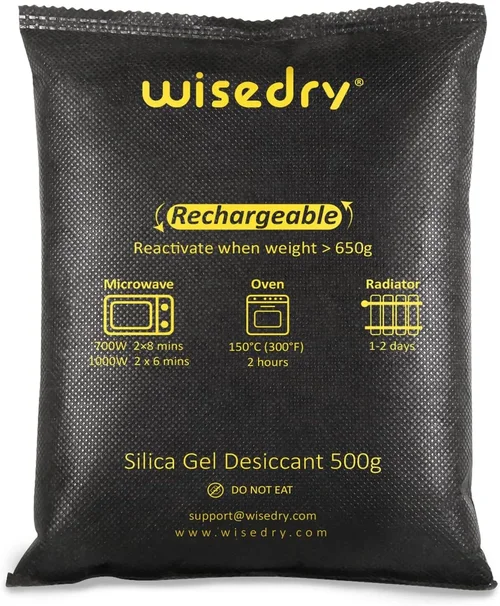
❌ Mistake: Buying Based Solely on Price
Why it’s bad: The cheapest dehumidifier often lacks essential features like a humidistat, auto-shutoff, or durable build. It may remove moisture too slowly to prevent condensation or break within months.
What to do instead: Set a realistic budget based on room size and prioritize features over upfront cost. A $200 unit that lasts 5 years is better value than a $80 model that fails in 6 months.
❌ Mistake: Ignoring Room Conditions
Why it’s bad: A dehumidifier rated for “50 pints” assumes ideal lab conditions. In a cold, drafty room with single-pane windows, it may perform closer to 30 pints—insufficient for your needs.
What to do instead: Measure your room’s actual humidity with a hygrometer. If it’s consistently above 60%, choose a unit with 20–30% higher capacity than recommended for your square footage.
❌ Mistake: Overlooking Drainage Options
Why it’s bad: Emptying a full water tank every 8–12 hours is tedious and easy to forget. If the tank overflows, it can cause water damage or trigger a safety shutoff.
What to do instead: Opt for a model with a continuous drain hose outlet. You can route the hose to a floor drain, sink, or even out a window (with proper sealing).
❌ Mistake: Placing the Unit Too Far from the Problem Area
Why it’s bad: Dehumidifiers work by drawing in air, removing moisture, and blowing dry air back out. If placed across the room from the window, it won’t effectively reduce localized condensation.
What to do instead: Position the unit within 6–10 feet of the affected window, ideally on the same wall. Ensure airflow isn’t blocked by furniture or curtains.
❌ Mistake: Neglecting Maintenance
Why it’s bad: Dirty filters and clogged coils reduce efficiency, increase noise, and can lead to mold growth inside the unit—worsening indoor air quality.
What to do instead: Clean the air filter monthly with mild soap and water. Wipe down the water tank weekly and inspect coils annually. Most manuals include maintenance schedules.
❌ Mistake: Assuming All Dehumidifiers Prevent Condensation
Why it’s bad: Some units only reduce overall humidity but don’t address the root cause: cold surfaces. Without lowering the dew point near windows, condensation will persist.
What to do instead: Combine dehumidification with other strategies: improve window insulation (thermal curtains, weatherstripping), increase ventilation (exhaust fans), or use a space heater near the window to raise surface temperature.
❌ Mistake: Buying Without Reading Real User Reviews
Why it’s bad: Marketing specs don’t tell the whole story. A unit may claim “whisper-quiet” operation but actually produce a noticeable hum that disrupts sleep.
What to do instead: Read verified purchase reviews on Amazon, Home Depot, or Reddit. Look for comments about real-world noise, reliability, and customer service experiences.
Budget Guidelines: How Much Should You Spend?
Dehumidifiers for window condensation fall into clear price tiers, each offering distinct value propositions. Here’s what to expect at each level:
Entry-Level ($50–$120):
These are typically mini or thermo-electric units. They’re quiet and portable but lack power for anything beyond a small bathroom or closet. Most don’t have humidistats or drainage options. Only consider if you have a single, minor condensation issue and a tight budget.
Mid-Range ($120–$250):
This is the sweet spot for most homeowners. You’ll find reliable compressor-based models with 30–50 pint capacities, digital controls, auto-defrost, and continuous drainage. Brands like hOmeLabs and Tosot dominate this range with excellent reviews and Energy Star ratings. Expect 3–5 years of service with proper care.
Premium ($250–$400):
Premium models offer advanced features: inverter compressors for quieter operation, Wi-Fi connectivity, larger tanks (3+ gallons), and superior build quality. Ideal for large rooms, open layouts, or allergy sufferers who need precise humidity control. Frigidaire and GE offer strong options here.
Luxury ($400+):
At this level, you’re paying for whole-house integration, ultra-quiet operation (<45 dB), smart home compatibility (Alexa/Google), and extended warranties. These are best for large homes, basements, or commercial spaces. Consider if you have severe moisture issues or want seamless automation.

Expert Tips for Getting the Best Deal
- Buy in spring or early summer: Retailers often discount dehumidifiers before peak humidity season (late summer). You’ll find better deals and wider selection than in winter when demand spikes.
- Check warehouse clubs: Costco, Sam’s Club, and BJ’s frequently offer name-brand dehumidifiers at 10–20% below retail—sometimes with extended return windows.
- Look for open-box deals: Stores like Best Buy and Home Depot sell returned units in perfect condition at steep discounts. Verify warranty coverage before buying.
- Use price-tracking tools: Set alerts on Honey, CamelCamelCamel, or Google Shopping to catch price drops on specific models.
- Bundle with other purchases: Some retailers offer discounts when you buy a dehumidifier with an air purifier, humidifier, or HVAC service.
- Read the fine print on warranties: Ensure the warranty starts at purchase date (not manufacture date) and covers both parts and labor.
- Test before committing: If possible, run the unit for 24–48 hours in your space. Check for noise, vibration, and actual humidity reduction using a hygrometer.
- Consider refurbished units: Manufacturer-refurbished models from Frigidaire or hOmeLabs often come with full warranties and significant savings.

Frequently Asked Questions
Q: Can a dehumidifier completely eliminate window condensation?
A: Yes—but only if sized correctly and used consistently. A properly chosen dehumidifier lowers indoor humidity enough to raise the dew point above the window surface temperature, preventing condensation. However, it works best when combined with insulation improvements and ventilation.
Q: Should I run my dehumidifier year-round?
A: Not necessarily. In most climates, it’s most needed during fall, winter, and spring when indoor-outdoor temperature differences are greatest. In summer, air conditioning often dehumidifies naturally. Use a hygrometer to monitor levels and run the unit only when humidity exceeds 50%.
Q: Is it safe to leave a dehumidifier on overnight?
A: Yes, as long as it has safety features like auto-shutoff when the tank is full, overheat protection, and a stable design. Modern units are designed for continuous operation. Just ensure it’s on a flat, non-flammable surface away from curtains or bedding.
Q: Do I need a dehumidifier if I have double-pane windows?
A: Possibly. While double-pane windows reduce condensation compared to single-pane, they can still fog up in very humid homes or during extreme cold snaps. If you see moisture between the panes, that’s a seal failure—not humidity—and requires window replacement.
Q: Can a dehumidifier help with mold on windows?
A: Absolutely. Mold thrives above 60% humidity. By maintaining 30–50% RH, a dehumidifier starves mold of the moisture it needs to grow. Clean existing mold with a vinegar solution, then use the dehumidifier to prevent recurrence.
Q: What’s the ideal humidity level to prevent condensation?
A: Between 30% and 50%. Below 30%, air feels dry and can irritate sinuses; above 50%, condensation and mold risk increase. Use a digital hygrometer to monitor levels accurately.
Q: Can I use a dehumidifier in an unheated room?
A: Only if it’s a desiccant or low-temperature model. Standard compressor dehumidifiers struggle below 65°F and may ice up. Check the manufacturer’s operating temperature range before purchasing.
Q: How often should I empty the water tank?
A: It depends on humidity and tank size. Most 2-gallon tanks need emptying every 12–24 hours in high-humidity conditions. Use continuous drainage to avoid this hassle.
Q: Are smart dehumidifiers worth the extra cost?
A: For tech-savvy users or remote monitoring (e.g., vacation homes), yes. Features like app alerts, scheduling, and integration with smart thermostats add convenience. For basic use, a non-smart model with a good humidistat suffices.
Q: Will a dehumidifier increase my heating bill?
A: Slightly—dehumidifiers generate heat as a byproduct. But in winter, this minor heat gain is usually negligible compared to your main heating system. The energy used is far less than a space heater.
Our Final Recommendations
Best for Budget-Conscious Buyers: hOmeLabs 30 Pint Dehumidifier
At under $200, this Energy Star-certified unit offers excellent performance for small to medium rooms. It includes a digital humidistat, continuous drain option, and quiet operation (under 50 dB). Ideal for bedrooms or apartments with occasional condensation.
Best Overall Value: Tosot 50 Pint Dehumidifier
Priced around $230, this model punches above its weight with a robust compressor, 3-gallon tank, and auto-defrost. Users praise its reliability and low noise. Perfect for living rooms, basements, or homes with persistent window moisture.
Best Premium Option: Frigidaire FFAD7033R1 70 Pint Dehumidifier
With Wi-Fi connectivity, a sleek design, and whisper-quiet operation (47 dB), this is the top choice for large spaces or tech enthusiasts. The built-in pump allows vertical drainage up to 12 feet—great for basements without floor drains.
Best for Beginners: GE APER50LZ 50 Pint Dehumidifier
Simple controls, clear display, and reliable performance make this a great starter unit. It’s easy to set up, maintain, and move thanks to integrated casters. Comes with a 1-year warranty and strong customer support.
Best for Advanced Users: AprilAire E080 Pro 80 Pint Whole-House Dehumidifier
For those with serious moisture challenges, this ducted system integrates with your HVAC to control humidity throughout the entire home. Professional installation required, but it’s unmatched for whole-house condensation prevention.
Conclusion: Making the Right Choice
Window condensation isn’t just an aesthetic nuisance—it’s a warning sign of excess indoor humidity that can lead to structural damage and health issues. Choosing the right dehumidifier is the most effective way to tackle this problem at its source. By focusing on pint capacity, energy efficiency, noise levels, and smart features, you can find a unit that fits your space, budget, and lifestyle.
Remember: the best dehumidifier is the one you’ll actually use consistently. Prioritize ease of maintenance, reliable controls, and placement flexibility. Don’t fall for flashy specs or rock-bottom prices—invest in quality, and your windows (and walls) will thank you for years to come.
Take the time to assess your specific needs, read real user reviews, and consider long-term operating costs. Whether you opt for a mid-range workhorse or a premium smart model, you’re taking a proactive step toward a healthier, more comfortable home. Ready to say goodbye to foggy mornings and musty smells? Start by measuring your room’s humidity today—and choose a dehumidifier that’s up to the task.