
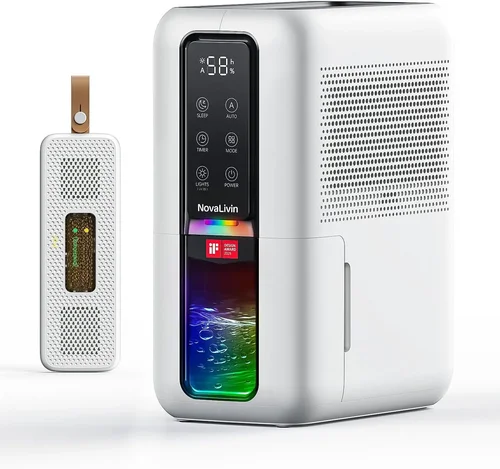
Maintaining optimal indoor humidity levels is one of the most overlooked yet impactful aspects of home comfort and health. Whether you’re battling dry winter air that cracks your skin and irritates your sinuses, or fighting off the musty smell of excess moisture in a damp basement, the right humidity control system can make all the difference. That’s where a humidifier and dehumidifier combo comes in—offering dual functionality in a single unit to keep your home’s relative humidity between the ideal 30% and 50% range year-round.
But here’s the catch: not all combo units are created equal. The market is flooded with options ranging from budget-friendly plug-and-play models to high-end smart systems with advanced sensors and app connectivity. Choosing the wrong one can lead to wasted money, poor performance, or even mold growth from improper moisture control. This guide exists to cut through the noise. Whether you’re a first-time buyer, upgrading an older unit, or simply trying to understand what features truly matter, you’ll walk away with a clear, expert-backed roadmap to selecting the best humidifier and dehumidifier combo for your specific needs.
We’ll cover everything from performance specs and build quality to smart features, budget considerations, and common pitfalls to avoid. You’ll learn how to match a unit to your room size, climate, and lifestyle—and discover which brands deliver real value versus those that rely on flashy marketing. By the end, you won’t just know what to buy—you’ll know why it’s the right choice for your home.

What to Look for When Buying Buying Guide
1. Performance Specifications
Performance is the backbone of any effective humidifier and dehumidifier combo. You need a unit that can both add and remove moisture efficiently, depending on the season and indoor conditions. Start by checking the humidification output, typically measured in gallons per day (GPD) or liters per day. For small rooms (under 300 sq ft), a 0.5–1 GPD output is usually sufficient. Medium spaces (300–600 sq ft) benefit from 1–2 GPD, while large areas (600+ sq ft) may require 2+ GPD for noticeable results.
On the dehumidification side, look for pint capacity per day (pints/day)—the standard industry measurement. A 30-pint unit handles moderate dampness in average-sized rooms, while 50+ pint models are better for basements, garages, or high-humidity climates. Crucially, ensure the unit’s coverage area matches your space. Manufacturers often overstate this, so cross-reference independent reviews or calculate based on square footage and ceiling height.
Another key spec is adjustable humidity range. Top-tier models allow you to set precise target humidity levels (e.g., 40%, 45%, 50%) and maintain them automatically. Avoid units with only “low/medium/high” settings—they lack precision and can lead to over-humidification or under-drying.
2. Build Quality & Durability
A combo unit is an investment, so it should last. Look for robust construction materials—sturdy plastic housings, corrosion-resistant tanks, and sealed electronic components. Units with metal internal frames or reinforced joints tend to withstand years of daily use better than all-plastic designs. Pay attention to the water tank design: wide-mouth openings make refilling and cleaning easier, while built-in handles improve portability.
The compressor and fan system in dehumidifiers should run quietly and efficiently. Cheaper models often use noisy, short-lived compressors that struggle in cold temperatures (below 60°F). If you plan to use the unit in a basement or garage during winter, opt for a model with an auto-defrost function or a refrigerant designed for low-temperature operation.
For humidifiers, ultrasonic technology is common due to its quiet operation, but it can disperse minerals into the air if you use tap water. Look for models with demineralization cartridges or built-in filters to reduce white dust. Alternatively, consider evaporative models, which use wick filters and fans—they’re less prone to mineral dispersion but require regular filter changes.
3. Features & Functionality
Modern combo units come packed with features, but not all are essential. Prioritize automatic humidity control (also called hygrostat or humidistat), which monitors ambient moisture and adjusts output accordingly. This prevents over-humidification, which can encourage mold growth, or under-humidification, which leaves you uncomfortable.
Programmable timers let you set run times (e.g., 2 hours before bedtime), saving energy and preventing tank overflows. Auto shut-off when the water tank is full or empty is non-negotiable for safety and convenience. Some premium models include remote controls or smart app integration, allowing you to monitor and adjust settings from your phone—ideal for busy households or vacation homes.
Look for multi-speed fan settings for customizable airflow, and filter indicators that alert you when it’s time to clean or replace filters. Advanced units may offer air purification modes, combining HEPA or carbon filters with humidity control for improved air quality.
4. Size & Portability
Even the most powerful unit is useless if it doesn’t fit your space or is too cumbersome to move. Measure your intended location—especially height clearance if placing under a shelf or table. Most combo units are designed for floor placement, but some compact models can sit on dressers or nightstands.
Weight and wheels matter for larger units. A 30–50 lb dehumidifier with recessed handles and smooth-rolling casters is far easier to relocate than a lighter but handle-less model. Consider tank size too: larger tanks (2–3 liters for humidifiers, 10+ pints for dehumidifiers) mean fewer refills but take up more space.
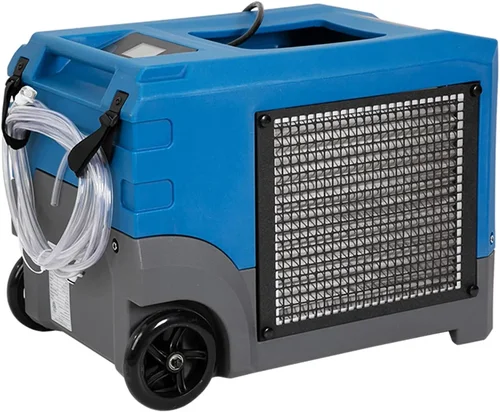
If you need coverage across multiple rooms, look for units with continuous drainage options. A hose attachment lets you drain the dehumidifier directly into a floor drain or sump pump, eliminating the need to empty the tank manually. Some humidifiers also offer hose attachments for direct water line connection—great for whole-home systems.
5. Noise Level
Humidity control shouldn’t disrupt your sleep or concentration. Noise levels are typically measured in decibels (dB). For bedroom use, aim for under 50 dB—comparable to a quiet conversation. Ultrasonic humidifiers are usually the quietest (30–45 dB), while compressor-based dehumidifiers can reach 50–60 dB.
Check manufacturer specs, but also read user reviews. Real-world noise often differs from lab tests. Look for mentions of “whirring,” “humming,” or “fan rattle” in customer feedback. Some models offer night mode or low-speed settings specifically designed for quiet operation.
6. Energy Efficiency
Running a combo unit 24/7 can spike your electricity bill. Look for the Energy Star certification, which guarantees the unit meets strict efficiency guidelines set by the EPA. Energy Star dehumidifiers use up to 15% less energy than standard models, saving you $20–$50 annually depending on usage.
Check the wattage (usually listed on the label or spec sheet). A typical dehumidifier draws 300–700 watts; humidifiers use 20–100 watts. Lower wattage doesn’t always mean better efficiency—focus on performance per watt. Some models include eco modes that reduce power consumption during mild humidity conditions.
7. Ease of Maintenance
Regular maintenance is key to performance and longevity. Choose units with removable, dishwasher-safe tanks and washable filters. Avoid models with complex internal mechanisms that require professional servicing.
For humidifiers, mineral buildup is a common issue. Units with self-cleaning modes (UV-C light, boiling water, or ultrasonic cleaning) reduce manual scrubbing. Dehumidifiers need cleanable air filters—preferably washable foam or mesh types—to prevent dust and mold accumulation.
8. Brand Reputation & Customer Support
Stick with established brands known for reliability and responsive customer service. Brands like Honeywell, Levoit, TaoTronics, Frigidaire, and hOmeLabs have strong track records in climate control appliances. Read recent reviews (not just star ratings) to spot trends in durability, noise, or support issues.
Check if the company offers live chat, phone support, or detailed FAQs. A 1–2 year warranty is standard; avoid brands with only 90-day coverage unless the price is drastically lower. Some premium brands extend warranties to 3–5 years with registration.
Different Types of Buying Guide

Common Buying Mistakes to Avoid
❌ Mistake: Ignoring Room Size and Climate
Why it’s bad: A unit too small for your space will run constantly without achieving target humidity, wasting energy and wearing out components. Conversely, an oversized unit may cycle too quickly, failing to remove enough moisture or causing temperature fluctuations.
What to do instead: Calculate your room’s square footage and consider local climate. Coastal or humid regions need higher-capacity dehumidifiers; dry inland areas require stronger humidification. Use manufacturer sizing charts but add 10–20% buffer for safety.
❌ Mistake: Overlooking Maintenance Requirements
Why it’s bad: Neglecting filter changes, tank cleaning, or descaling leads to bacterial growth, reduced efficiency, and unpleasant odors. Some users report mold inside neglected units within weeks.
What to do instead: Choose models with easy-access tanks and washable filters. Set recurring reminders on your phone. If you travel frequently, consider units with auto-clean functions or opt for distilled water to minimize mineral buildup.
❌ Mistake: Prioritizing Price Over Performance
Why it’s bad: The cheapest units often lack hygrostats, have flimsy builds, or use outdated technology. You may end up replacing them within a year—costing more long-term.
What to do instead: Aim for the mid-range tier ($150–$300), where you get reliable performance, decent warranties, and essential features. Read expert and user reviews to identify true value picks.
❌ Mistake: Assuming All “Combo” Units Work Equally Well
Why it’s bad: Some units are better at one function than the other. A model might humidify excellently but dehumidify poorly, or vice versa—leaving you needing a second appliance.
What to do instead: Check independent performance tests (e.g., from Consumer Reports or Wirecutter). Look for balanced specs: similar coverage area for both modes, comparable energy use, and consistent user feedback on dual functionality.
❌ Mistake: Skipping the Warranty Check
Why it’s bad: Humidity units contain motors, compressors, and electronics prone to failure. A short or vague warranty leaves you unprotected if issues arise after 90 days.
What to do instead: Register your product immediately after purchase. Keep receipts and photos of the unit. Choose brands with at least a 1-year comprehensive warranty and clear repair/replacement policies.
❌ Mistake: Not Testing Before Committing
Why it’s bad: Online specs don’t always reflect real-world performance. Noise, ease of use, and interface design vary widely.
What to do instead: If possible, test the unit in-store or buy from retailers with generous return policies (e.g., Amazon, Best Buy). Run it for a few days in your intended location before deciding.
Budget Guidelines: How Much Should You Spend?
Entry-Level ($50–$120):
These are basic ultrasonic or small evaporative models ideal for single rooms under 300 sq ft. Expect limited features—manual controls, no hygrostats, small tanks. Brands like Pure Enrichment or Guardian Technologies offer decent options here, but durability and efficiency are compromised. Best for occasional use or tight budgets.
Mid-Range ($120–$300):
This is the sweet spot for most homeowners. You’ll find reliable combo units from Levoit, Honeywell, or hOmeLabs with automatic humidity control, larger tanks, quiet operation, and solid build quality. Many include timers, filter indicators, and Energy Star ratings. Perfect for bedrooms, living rooms, or moderate basements.
Premium ($300–$600):
Designed for performance and convenience, these models feature smart connectivity, app control, advanced sensors, and robust dehumidification (40–70 pints/day). Look for brands like Dyson (for humidification) or AprilAire (for integrated systems). Ideal for large homes, allergy sufferers, or tech enthusiasts.
Luxury ($600+):
Whole-home systems that integrate with HVAC or offer hospital-grade air purification. These are overkill for most but invaluable for severe mold issues, large estates, or commercial use. Expect professional installation, multi-zone control, and 5+ year warranties.
Expert Tips for Getting the Best Deal
– Buy off-season: Dehumidifiers are cheapest in winter (January–March); humidifiers drop in price during summer (June–August). Retailers clear inventory to make room for seasonal stock.
– Watch for bundle deals: Some retailers offer discounts when you buy a humidifier and dehumidifier separately but together—sometimes cheaper than a combo unit with inferior specs.
– Use price-tracking tools: Apps like Honey or CamelCamelCamel alert you when prices drop on Amazon or other sites.
– Check refurbished models: Certified refurbished units from reputable sellers often come with full warranties at 20–40% off retail.
– Read the fine print on returns: Ensure the return window covers at least 30 days—some combo units take a week to show performance issues.
– Test humidity levels first: Use a $10 hygrometer to measure your home’s current humidity. You might not need a combo unit—just a humidifier or dehumidifier.
– Consider local rebates: Some utility companies offer rebates for Energy Star appliances—check your provider’s website.
– Avoid “as seen on TV” brands: They often prioritize marketing over engineering and lack long-term support.
Frequently Asked Questions
Q: Can a single unit really humidify and dehumidify effectively?
A: Yes—but with caveats. True combo units use separate mechanisms: ultrasonic or evaporative for humidifying, compressor or desiccant for dehumidifying. They work well in most homes, but extremely dry or humid climates may require dedicated units for peak performance.
Q: How often should I clean my combo unit?
A: Clean the water tank and filters every 1–2 weeks during active use. Deep-clean monthly with vinegar or manufacturer-recommended solutions. Neglecting this invites bacteria and mold.
Q: Will a combo unit help with allergies?
A: Indirectly. Proper humidity (40–50%) reduces dust mites, mold spores, and static electricity—all allergy triggers. However, for full relief, pair it with an air purifier with a HEPA filter.
Q: Can I use tap water in the humidifier?
A: It’s not recommended. Minerals in tap water cause white dust and can damage the unit. Use distilled or demineralized water, especially in ultrasonic models.
Q: How do I know if my home is too humid or too dry?
A: Use a hygrometer. Below 30% RH feels dry (cracked lips, static shocks); above 60% promotes mold and dust mites. Ideal range: 30–50%.
Q: Are smart combo units worth the extra cost?
A: If you value convenience and remote monitoring, yes. Apps let you adjust settings from anywhere, receive filter alerts, and track humidity trends. But if you prefer simplicity, manual models work just as well.
Q: Can I run the unit 24/7?
A: Yes, especially if it has an auto-humidistat. It will cycle on/off as needed, saving energy. Avoid constant max settings—they’re inefficient and noisy.
Q: What’s the difference between refrigerant and desiccant dehumidifiers?
A: Refrigerant types (most common) use a compressor and coils—effective in warm, humid air but struggle below 60°F. Desiccant models use moisture-absorbing materials and work better in cold, dry conditions (like garages).
Q: Do I need a combo unit if I have central HVAC?
A: Possibly. HVAC systems don’t always maintain ideal humidity, especially in extreme seasons. A combo unit adds precision control for comfort and health.
Q: How long do these units typically last?
A: With proper care, 5–8 years is typical. Ultrasonic parts may wear faster; compressor units last longer but cost more to repair.
Our Final Recommendations
– Best for Budget-Conscious Buyers: Levoit LV600HH Hybrid Ultrasonic Humidifier – While not a true dehumidifier, its large tank, warm/cool mist, and hygromstat make it a stellar humidifier. Pair it with a separate $100 dehumidifier for full control under $200.
– Best Overall Value: hOmeLabs HME020037N Combo Unit – Offers 45-pint dehumidification, 1.5-gallon humidification, auto-humidistat, and quiet operation under $250. Ideal for medium to large rooms.
– Best Premium Option: AprilAire E130V Whole-Home Dehumidifier + AprilAire Model 700 Humidifier – Not a single combo, but a matched system for central HVAC. Delivers precise, whole-house control with professional installation.
– Best for Beginners: TaoTronics TT-AH022 – Simple interface, app control, 5L tank, and reliable performance. Great for first-time users who want smart features without complexity.
– Best for Advanced Users: Dyson Purifier Humidify+Cool Formaldehyde (PH04) – Combines humidification, air purification, and cooling with real-time air quality monitoring. Expensive but unmatched for tech lovers and allergy sufferers.
Conclusion: Making the Right Choice
Choosing the best humidifier and dehumidifier combo isn’t about finding the most features or the lowest price—it’s about matching the right tool to your home’s unique needs. Whether you’re fighting winter dryness in a cozy bedroom or battling basement dampness in a humid climate, the ideal unit will maintain healthy humidity levels quietly, efficiently, and reliably.
Remember: prioritize performance specs that align with your room size, invest in build quality that lasts, and never skip regular maintenance. Use this guide to compare models, avoid common traps, and shop smart—especially during off-season sales. And if you’re still unsure, start with a trusted mid-range model from a reputable brand. You can always upgrade later, but getting the basics right ensures immediate comfort and long-term satisfaction.
Your home’s air quality directly impacts your health, sleep, and well-being. Don’t leave it to chance. With the right combo unit, you’ll breathe easier, sleep better, and protect your space from the hidden dangers of improper humidity. Take action today—your future self will thank you.