

Dehumidifiers often carry a Prop 65 warning because they may contain trace chemicals like lead or phthalates known to the state of California to cause cancer or reproductive harm. These warnings don’t mean the product is unsafe, but rather that it meets strict disclosure laws. Understanding why this label appears helps you make informed, confident choices about indoor air quality.
Key Takeaways
- Prop 65 is a California law: It requires businesses to warn consumers about exposure to chemicals known to cause cancer, birth defects, or reproductive harm.
- Dehumidifiers may contain trace chemicals: Components like circuit boards, wiring, or plastic casings can include substances such as lead, phthalates, or brominated flame retardants.
- The warning doesn’t mean the product is dangerous: It simply means exposure levels exceed California’s extremely low threshold for disclosure—not necessarily unsafe levels.
- Manufacturers include the label to comply legally: Even if exposure is minimal, companies add the warning to avoid lawsuits under Prop 65.
- You can still use dehumidifiers safely: Follow manufacturer guidelines, ensure proper ventilation, and avoid direct contact with internal components.
- Check for third-party certifications: Look for Energy Star, ETL, or UL listings to ensure safety and quality standards are met.
- Stay informed, not alarmed: Understanding Prop 65 helps you interpret warnings wisely and maintain a healthy home environment.
📑 Table of Contents
- Why Are Dehumidifiers Prop 65? Understanding the Warning Label
- What Is Proposition 65 and Why Does It Matter?
- Common Chemicals in Dehumidifiers That Trigger Prop 65 Warnings
- How Prop 65 Warnings Are Determined for Appliances
- Are Dehumidifiers Safe to Use Despite the Warning?
- How to Interpret Prop 65 Warnings Without Panic
- Tips for Choosing a Safe and Effective Dehumidifier
- Conclusion: Dehumidifiers Are Safe—and Worth Using
Why Are Dehumidifiers Prop 65? Understanding the Warning Label
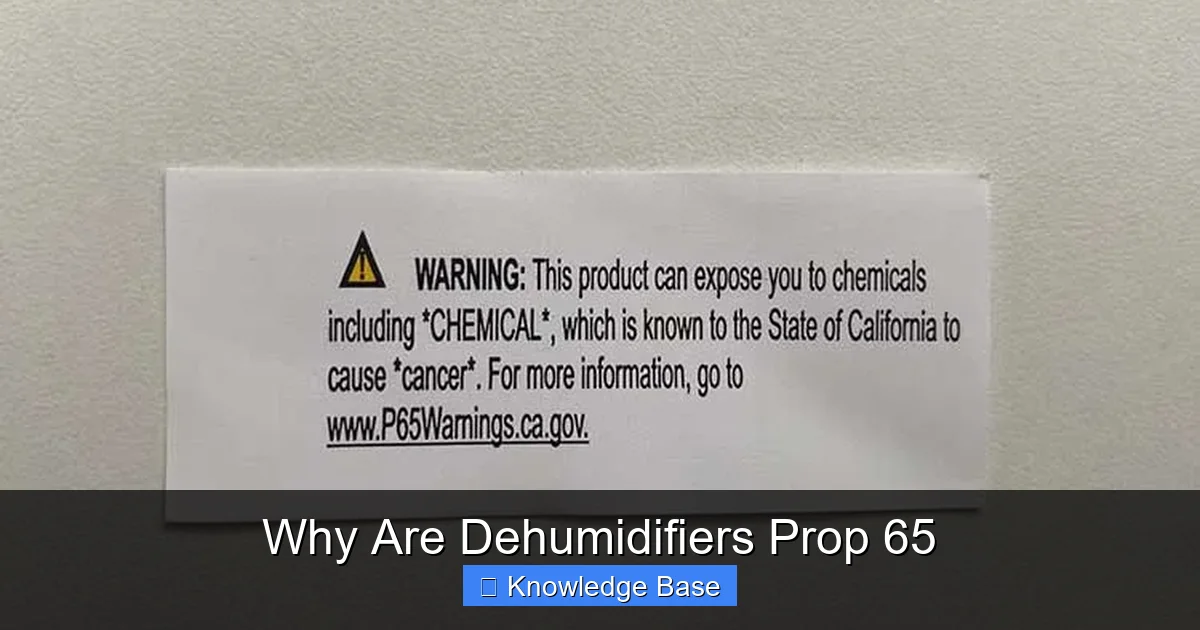
If you’ve ever shopped for a dehumidifier—especially online or in California—you’ve probably seen a familiar yellow or black-and-white warning label: “WARNING: This product contains chemicals known to the State of California to cause cancer, birth defects, or other reproductive harm.” This is known as a Proposition 65 warning, and it appears on everything from coffee makers to power tools to, yes, dehumidifiers.
At first glance, this label might seem alarming. After all, dehumidifiers are meant to improve your indoor air quality by reducing moisture, preventing mold, and easing allergy symptoms. So why would a device designed to make your home healthier carry a cancer warning?
The short answer? It’s not that dehumidifiers are dangerous. It’s that California has some of the strictest chemical disclosure laws in the world. Proposition 65, officially called the Safe Drinking Water and Toxic Enforcement Act of 1986, requires businesses to notify consumers if their products expose them to any of over 900 chemicals on the state’s official list—even in trace amounts.
So when you see “Why are dehumidifiers Prop 65?” pop up in search results, it’s usually because shoppers are trying to make sense of this confusing label. The truth is, the warning is more about legal compliance than immediate health risk. But understanding the reasoning behind it—and what it really means for you—can help you use your dehumidifier with confidence.
What Is Proposition 65 and Why Does It Matter?
Visual guide about Why Are Dehumidifiers Prop 65
Image source: thetibble.com
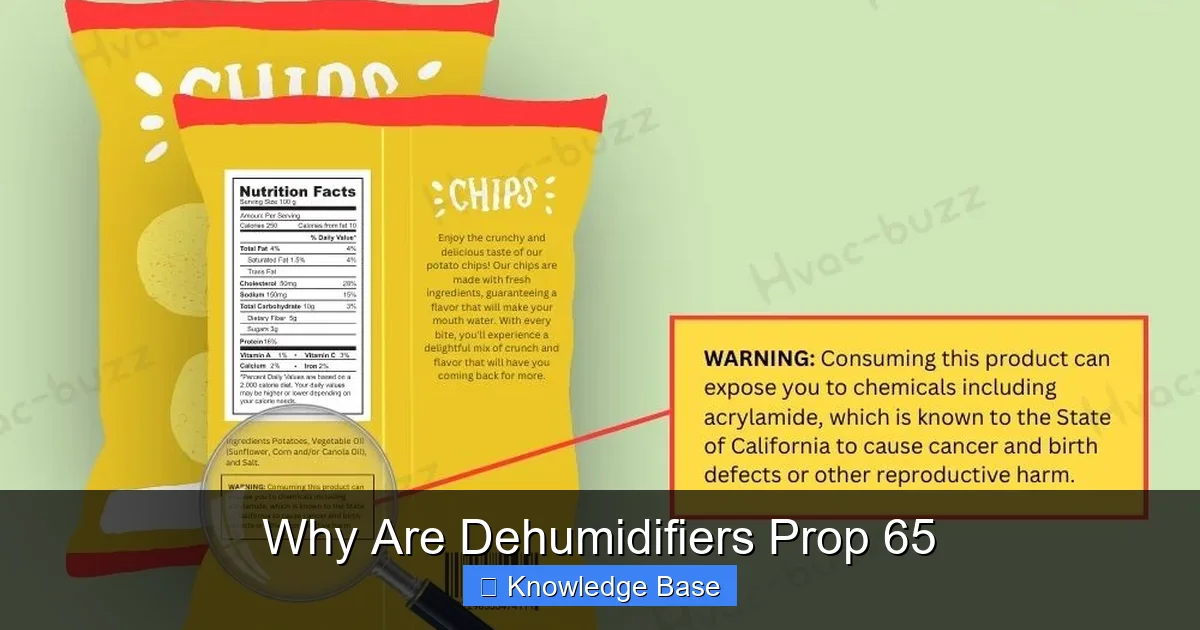
Proposition 65 was passed in 1986 by California voters with the goal of protecting drinking water from toxic substances. Over time, it evolved into a broader consumer right-to-know law. Today, it requires businesses with 10 or more employees to provide a “clear and reasonable warning” before knowingly exposing individuals to any chemical on the state’s list.
The list includes substances known to cause cancer, birth defects, or reproductive harm—based on scientific studies and regulatory findings. It covers everything from arsenic and asbestos to BPA, lead, and formaldehyde. The list is updated annually, and new chemicals are added regularly.
But here’s the catch: the warning threshold is incredibly low. For many chemicals, the level that triggers a warning is far below what regulatory agencies like the FDA or EPA consider harmful. For example, the Prop 65 limit for lead is 0.5 micrograms per day—so tiny that even trace amounts in dust or off-gassing from plastics can trigger the label.
This means that a product can be completely safe to use and still require a Prop 65 warning. It’s not a recall notice or a safety recall. It’s a disclosure, not a condemnation.
So when you ask, “Why are dehumidifiers Prop 65?” the answer lies in the materials used to build them. Modern appliances contain complex electronics, wiring, plastics, and coatings—many of which may contain trace amounts of listed chemicals. Even if the exposure is minimal and poses no real risk, manufacturers include the warning to avoid costly lawsuits under Prop 65’s strict liability rules.
Common Chemicals in Dehumidifiers That Trigger Prop 65 Warnings
Visual guide about Why Are Dehumidifiers Prop 65
Image source: evelynfashions.com
To understand why dehumidifiers carry a Prop 65 label, it helps to know which chemicals are typically involved. These aren’t added intentionally to harm users—they’re byproducts of manufacturing or components used for safety, durability, or functionality.
Lead in Electronic Components
One of the most common reasons dehumidifiers trigger a Prop 65 warning is the presence of lead. Lead is often found in solder used to connect circuit boards, wiring, and other electronic parts. While lead-free solder is now widely used, some manufacturers—especially those producing budget models—may still use older or mixed materials.
Even tiny amounts of lead dust, which could theoretically be released during manufacturing or disposal, can trigger the warning. But under normal use, you’re not exposed to lead from a dehumidifier. The components are sealed inside the unit, and there’s no direct contact.
Phthalates in Plastic Casings and Tubing
Phthalates are a group of chemicals used to make plastics more flexible and durable. They’re commonly found in PVC tubing, wire insulation, and the outer casing of appliances. Some phthalates, like DEHP, are on the Prop 65 list due to concerns about reproductive toxicity.
Again, the levels in a finished product are typically very low. But because Prop 65 requires disclosure even for minimal exposure, manufacturers include the warning.
Brominated Flame Retardants (BFRs)
To meet fire safety standards, many electronic devices—including dehumidifiers—use flame retardants in their plastic components. Some of these, particularly certain brominated compounds, are on the Prop 65 list due to potential endocrine-disrupting effects.
Modern regulations are phasing out the most hazardous BFRs, but older models or imported units may still contain them. The warning appears as a precaution, even if the actual exposure is negligible during normal use.
Formaldehyde and Other Volatile Organic Compounds (VOCs)
While not always present in high levels, some adhesives, coatings, or insulation materials used in dehumidifiers may emit trace amounts of formaldehyde or other VOCs. These can off-gas during manufacturing or in high-heat conditions.
Most dehumidifiers are designed to minimize off-gassing, but the possibility—however small—is enough to trigger a Prop 65 warning in California.
Other Trace Metals and Chemicals
Other substances like cadmium, mercury, or hexavalent chromium may appear in tiny amounts in batteries, switches, or plating. These are tightly regulated, but their presence—even in parts per million—can require disclosure under Prop 65.
The key takeaway? These chemicals aren’t added to dehumidifiers to harm you. They’re part of standard manufacturing processes. The warning is about transparency, not toxicity.
How Prop 65 Warnings Are Determined for Appliances
You might wonder: how do manufacturers decide whether to put a Prop 65 warning on a dehumidifier? The process isn’t always straightforward, but it generally follows a few key steps.
Chemical Inventory and Testing
Manufacturers often conduct internal testing or rely on supplier data to identify which chemicals are present in their products. This includes reviewing material safety data sheets (MSDS) and conducting lab tests for substances on the Prop 65 list.
If a listed chemical is found—even in trace amounts—the company must assess whether exposure could exceed the “safe harbor” level set by California’s Office of Environmental Health Hazard Assessment (OEHHA).
Exposure Assessment
This is where things get tricky. The safe harbor level is the maximum daily exposure that poses no significant risk. For cancer-causing chemicals, it’s based on a one-in-a-million lifetime risk. For reproductive toxins, it’s based on no observable effect level (NOEL) divided by 1,000.
If the estimated exposure from using the dehumidifier exceeds this threshold—even slightly—a warning is required. But estimating exposure is complex. It depends on factors like how much dust is generated, how often the unit is opened, and whether users handle internal components.
In many cases, the actual exposure is far below the threshold, but because the calculation is uncertain, manufacturers err on the side of caution.
Legal and Financial Incentives to Warn
Here’s the reality: Prop 65 allows private citizens to sue businesses for failing to provide warnings. These “bounty hunter” lawsuits can result in fines up to $2,500 per day per violation.
As a result, many companies—especially large retailers and brands—choose to label nearly all products sold in California, just to avoid legal risk. This is why you’ll see Prop 65 warnings on products that seem harmless, like books, furniture, or kitchen gadgets.
In the case of dehumidifiers, even if the risk is minimal, the cost of a lawsuit far outweighs the cost of printing a warning label. So the label appears—not because the product is dangerous, but because the law is strict and enforcement is aggressive.
Are Dehumidifiers Safe to Use Despite the Warning?
This is the million-dollar question: if dehumidifiers have a Prop 65 warning, are they still safe to use in your home?
The short answer is yes—dehumidifiers are safe when used as intended.
Normal Use Minimizes Exposure
Under normal operating conditions, you’re not handling the internal components of a dehumidifier. The electronics, wiring, and plastics are enclosed in a sealed unit. There’s no direct skin contact, ingestion, or inhalation of harmful chemicals.
Even if trace amounts of lead or phthalates are present, they’re not released into the air in meaningful quantities. The risk of exposure is virtually zero during everyday use.
Ventilation and Maintenance Help
To further reduce any potential risk, follow basic safety practices:
– Place your dehumidifier in a well-ventilated area.
– Avoid opening the unit unless necessary (e.g., for cleaning or repair).
– Wash your hands after handling the water tank or filter.
– Replace filters regularly to maintain airflow and efficiency.
These simple steps ensure you’re not inadvertently increasing exposure to dust or off-gassing.
Compare to Everyday Exposures
Consider this: you’re exposed to far higher levels of Prop 65-listed chemicals in everyday life. For example:
– Eating a tuna sandwich exposes you to mercury.
– Drinking coffee exposes you to acrylamide.
– Using a smartphone exposes you to lead and phthalates.
Yet we don’t avoid these things—because the exposure is low and the benefits outweigh the risks. The same logic applies to dehumidifiers.
Look for Safer Alternatives
If you’re concerned, you can take steps to choose a safer model:
– Opt for Energy Star-certified dehumidifiers, which meet strict efficiency and environmental standards.
– Choose brands that disclose their materials and avoid harmful chemicals.
– Look for third-party certifications like UL (Underwriters Laboratories) or ETL, which test for safety and performance.
Some manufacturers even offer “Prop 65 compliant” versions of their products, designed to minimize listed chemicals.
How to Interpret Prop 65 Warnings Without Panic
Seeing a Prop 65 warning can be unsettling—especially on a product you’re bringing into your home. But it’s important to interpret the label wisely, not emotionally.
Understand the Difference Between Disclosure and Danger
A Prop 65 warning is a disclosure, not a danger signal. It doesn’t mean the product is banned, recalled, or unsafe. It means the manufacturer is following the law by informing you about potential chemical exposure.
Think of it like a nutrition label. Just because a food contains sodium doesn’t mean it’s unhealthy—it just means you should be aware of how much you’re consuming.
Consider the Source and Context
Ask yourself:
– Is this a reputable brand with safety certifications?
– Is the warning on the product itself, or just on the website?
– Are there user reviews mentioning safety concerns?
If the dehumidifier is well-reviewed, energy-efficient, and from a trusted manufacturer, the warning is likely just a legal formality.
Focus on Real Health Benefits
Dehumidifiers offer significant health benefits:
– Reduce mold and mildew growth.
– Lower dust mite populations.
– Ease symptoms of asthma and allergies.
– Prevent musty odors and structural damage.
These benefits far outweigh the minimal risk posed by trace chemicals—especially when the unit is used properly.
Stay Informed, Not Alarmed
Knowledge is power. Instead of avoiding products with Prop 65 warnings, learn what they mean. Visit the official Prop 65 website (oehha.ca.gov) to see the full list of chemicals and their safe harbor levels.
You can also contact manufacturers directly to ask about materials and testing. Many are happy to provide information to reassure customers.
Tips for Choosing a Safe and Effective Dehumidifier
Now that you understand why dehumidifiers carry Prop 65 warnings, here’s how to pick one that’s safe, efficient, and right for your needs.
1. Choose the Right Size
Dehumidifiers are rated by how many pints of moisture they can remove per day. Match the capacity to your space:
– 30-pint: Small rooms (500 sq ft or less)
– 50-pint: Medium spaces (1,500 sq ft)
– 70-pint or higher: Large basements or whole-house use
An oversized unit will cycle on and off too frequently, while an undersized one won’t control humidity effectively.
2. Look for Energy Efficiency
Energy Star-certified dehumidifiers use 15–30% less energy than standard models. They also meet strict environmental guidelines, which often include reduced use of hazardous materials.
Check the energy factor (liters of water removed per kilowatt-hour) on the label. Higher is better.
3. Prioritize Safety Certifications
Look for:
– UL Listed: Indicates the product has been tested for electrical and fire safety.
– ETL Listed: Similar to UL, from Intertek.
– CSA Certified: Common in Canada, but also respected in the U.S.
These certifications mean the product has passed independent safety tests.
4. Consider Smart Features
Modern dehumidifiers often include:
– Humidistats to maintain ideal humidity (40–50%).
– Auto-defrost for cold environments.
– Continuous drainage options.
– Wi-Fi connectivity for remote control.
These features improve convenience and efficiency.
5. Read Reviews and Check Warranties
Look for user reviews that mention durability, noise level, and ease of maintenance. A good warranty (at least 2 years) is a sign of manufacturer confidence.
Avoid ultra-cheap models, which may use lower-quality materials and lack safety testing.
6. Maintain Your Unit Regularly
To keep your dehumidifier running safely and efficiently:
– Clean the filter monthly.
– Empty the water tank regularly.
– Wipe down the exterior with a damp cloth.
– Check for mold or mildew in the tank and coils.
Proper maintenance extends the life of your unit and ensures it continues to improve your indoor air quality.
Conclusion: Dehumidifiers Are Safe—and Worth Using
So, why are dehumidifiers Prop 65? Because California law requires warnings for any product that may expose users to trace amounts of certain chemicals—even if the risk is negligible. The label isn’t a sign of danger. It’s a sign of transparency.
Dehumidifiers are essential tools for maintaining healthy indoor air, preventing mold, and protecting your home. The benefits far outweigh the minimal risks associated with Prop 65-listed chemicals, especially when the unit is used and maintained properly.
Instead of avoiding these appliances, focus on choosing high-quality, certified models from reputable brands. Follow safety guidelines, keep your unit clean, and enjoy the comfort and health benefits of balanced humidity.
Remember: a Prop 65 warning doesn’t mean “don’t buy.” It means “be informed.” And now, you are.
Frequently Asked Questions
Why do dehumidifiers have a Prop 65 warning?
Dehumidifiers carry a Prop 65 warning because they may contain trace amounts of chemicals like lead, phthalates, or flame retardants used in their electronic components and plastic parts. California law requires this disclosure even if exposure levels are far below what’s considered harmful.
Is it safe to use a dehumidifier with a Prop 65 warning?
Yes, it’s safe to use a dehumidifier with a Prop 65 warning as long as you follow the manufacturer’s instructions. The warning is about legal compliance, not immediate danger, and normal use does not result in harmful exposure.
Can I remove or ignore the Prop 65 warning?
You shouldn’t remove the warning, but you don’t need to panic about it. The label is required by law and doesn’t mean the product is unsafe. Focus on proper use and maintenance instead.
Do all dehumidifiers have Prop 65 warnings?
Not all dehumidifiers have the warning, but many do—especially those sold in or shipped to California. Some manufacturers apply the label universally to avoid legal issues, even in states without Prop 65.
How can I find a dehumidifier without harmful chemicals?
Look for Energy Star-certified models, check for UL or ETL safety listings, and choose brands that disclose their materials. Some companies offer “low-emission” or “eco-friendly” versions designed to minimize Prop 65 chemicals.
Does the Prop 65 warning mean the dehumidifier causes cancer?
No, the warning does not mean the dehumidifier causes cancer. It means the product contains trace chemicals on California’s list, but exposure during normal use is extremely low and not linked to health risks.