

Dehumidifiers are expensive due to high-quality components, energy-efficient technology, and advanced features like smart controls and air filtration. While the upfront cost may seem steep, their durability, performance, and health benefits make them a worthwhile investment for moisture control and indoor air quality.
If you’ve ever shopped for a dehumidifier, you’ve probably done a double-take at the price tag. Why are dehumidifiers so expensive? It’s not uncommon to see basic models starting around $100, while high-end units can cost $500 or more. At first glance, it might seem like you’re just paying for a box that pulls moisture from the air. But the truth is, there’s a lot more going on under the hood.
Dehumidifiers are complex appliances designed to tackle one of the most persistent indoor problems: excess humidity. Whether you’re dealing with musty basements, damp laundry rooms, or allergy-triggering mold, a good dehumidifier can make a huge difference in your home’s comfort and health. But that effectiveness comes at a cost. From the quality of internal components to energy-saving technology and smart features, several factors contribute to the price. Understanding these elements can help you make a smarter purchase and appreciate why investing in a quality unit is worth it.
In this article, we’ll break down the reasons behind the high cost of dehumidifiers. We’ll explore everything from the engineering behind the compressor to the added value of smart controls and air purification. By the end, you’ll not only understand why these machines are priced the way they are—you’ll also know how to choose one that fits your needs and budget.
Key Takeaways
- Advanced compressor and refrigeration systems require precision engineering and durable materials, increasing manufacturing costs.
- Energy-efficient models use inverter technology and low-wattage components, which are more expensive to design and produce.
- Smart features like Wi-Fi, auto-humidity sensors, and app control add to the price but enhance convenience and efficiency.
- High-capacity units for large spaces need larger tanks, stronger motors, and robust casings, driving up the cost.
- Built-in air filtration systems with HEPA or activated carbon filters improve air quality but require ongoing maintenance and premium parts.
- Brand reputation and warranty support often reflect higher reliability and customer service, justifying a premium price.
- Long-term savings on energy bills and home maintenance offset the initial expense, making dehumidifiers a smart investment.
📑 Table of Contents
The Engineering Behind Dehumidifiers
At the heart of every dehumidifier is a refrigeration system that works similarly to an air conditioner. It pulls in humid air, cools it to condense the moisture, and then reheats the air before releasing it back into the room. This process sounds simple, but it requires precise engineering and high-quality components to work efficiently and reliably over time.
Compressor and Refrigeration System
The compressor is the engine of a dehumidifier. It circulates refrigerant through coils, creating the cold surface needed to condense moisture from the air. High-end models use rotary or inverter compressors, which are quieter, more efficient, and longer-lasting than the basic piston compressors found in cheaper units. These advanced compressors are more expensive to manufacture because they require tighter tolerances and better materials to handle continuous operation.
For example, a $150 dehumidifier might use a standard compressor that works fine for a few hours a day. But if you need it running 24/7 in a damp basement, that same compressor could overheat or fail within a year. In contrast, a $400 model with an inverter compressor adjusts its speed based on humidity levels, reducing wear and tear and saving energy. This kind of durability and efficiency doesn’t come cheap.
Condenser and Evaporator Coils
The condenser and evaporator coils are critical to the dehumidification process. The evaporator coil cools the air to remove moisture, while the condenser coil reheats it before it’s released. These coils are typically made from copper or aluminum, with copper being more efficient but also more expensive.
Premium dehumidifiers often use enhanced coil designs—like larger surface areas or anti-corrosion coatings—to improve performance and longevity. For instance, some models feature hydrophilic coatings that prevent water from beading up and slowing down evaporation. These small improvements add up in both performance and price.
Fan and Airflow Design
A powerful, well-designed fan ensures that air moves efficiently through the unit. Cheaper models may use smaller, noisier fans that struggle in larger rooms. High-end dehumidifiers often include multi-speed fans with optimized blade designs to maximize airflow while minimizing noise.
Imagine trying to dehumidify a 1,000-square-foot basement with a unit that only moves 100 cubic feet per minute (CFM). It would take days to make a dent in the humidity. A premium model with 200+ CFM can do the job in hours. That kind of performance requires better motors and engineering—both of which increase the cost.
Energy Efficiency and Operating Costs

Visual guide about Why Are Dehumidifiers So Expensive
Image source: preair.com
One of the biggest reasons dehumidifiers are expensive is their focus on energy efficiency. Running a dehumidifier constantly can add up on your electricity bill, so manufacturers invest in technology that reduces power consumption without sacrificing performance.
Inverter Technology
Inverter technology is a game-changer in appliance efficiency. Instead of turning on and off like a traditional compressor, an inverter compressor adjusts its speed based on the room’s humidity level. This means it uses only the energy it needs—no more, no less.
For example, if the humidity drops from 70% to 50%, an inverter dehumidifier will slow down instead of shutting off completely. This not only saves energy but also reduces wear on the motor. However, inverter systems are more complex and require advanced electronics, which increases the upfront cost.
According to the U.S. Department of Energy, energy-efficient dehumidifiers can use up to 30% less electricity than older models. Over a year, that could save you $50 or more on your utility bill. So while the initial price is higher, the long-term savings make it a smart investment.
Energy Star Certification
Many premium dehumidifiers are Energy Star certified, meaning they meet strict efficiency guidelines set by the Environmental Protection Agency. These units typically use 10–20% less energy than standard models.
To earn this certification, manufacturers must use high-efficiency compressors, better insulation, and optimized airflow systems. All of these improvements cost more to design and produce. But they also mean lower operating costs and a smaller environmental footprint.
If you’re comparing two similar-sized dehumidifiers, the Energy Star model might cost $50 more upfront—but it could save you that much in energy costs within a year or two.
Low-Wattage Components
Beyond the compressor, other components like the fan motor, control board, and sensors are designed to use less power. High-efficiency motors, for instance, convert more electrical energy into mechanical energy, reducing waste heat and electricity use.
Some models even include eco-modes that automatically adjust settings to minimize energy consumption. These features are common in mid-to-high-end units and contribute to their higher price tags.
Smart Features and Automation
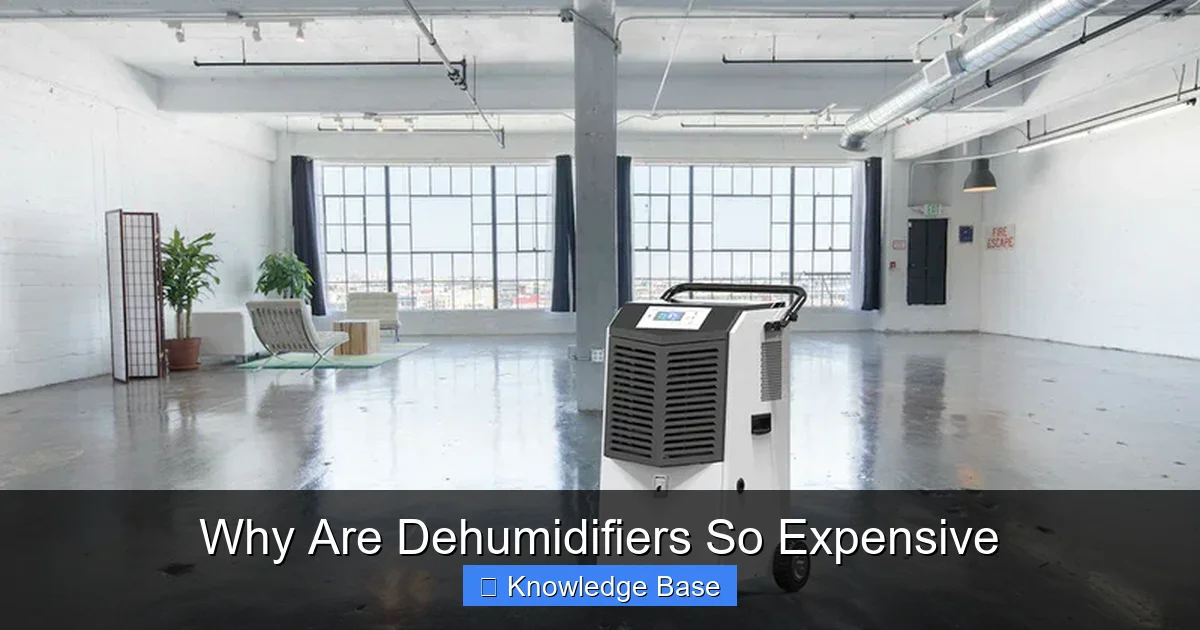
Visual guide about Why Are Dehumidifiers So Expensive
Image source: moiswell.com
Modern dehumidifiers are no longer just simple appliances—they’re becoming smarter, more connected, and more user-friendly. These advanced features add convenience and efficiency, but they also increase the cost.
Wi-Fi Connectivity and App Control
Many premium dehumidifiers now come with Wi-Fi capabilities, allowing you to control them from your smartphone. You can turn the unit on or off, adjust humidity levels, check the tank status, and even receive alerts when it’s full—all from your couch or while you’re away from home.
For example, the Frigidaire Gallery Series dehumidifier lets you set custom humidity levels and monitor performance through a mobile app. If you’re on vacation and it starts raining heavily, you can remotely turn it on to prevent mold growth. This kind of peace of mind comes at a price, but for many homeowners, it’s worth it.
Auto-Humidity Sensors and Defrost
Basic dehumidifiers often require manual adjustment. You set a humidity level, and the unit runs until it reaches that point—then shuts off. But in fluctuating conditions, this can lead to over-drying or under-drying.
High-end models use built-in hygrometers (humidity sensors) to continuously monitor the air and adjust operation automatically. Some even have auto-defrost features that prevent ice buildup on the coils in cold environments, ensuring consistent performance year-round.
Imagine using a dehumidifier in a chilly basement during winter. A cheaper model might freeze up and stop working. But a premium unit with auto-defrost will keep running smoothly, protecting your home from moisture damage.
Programmable Timers and Sleep Modes
Smart dehumidifiers often include programmable timers, so you can set them to run during off-peak energy hours or only when needed. Sleep modes reduce fan speed and dim lights for quieter nighttime operation.
These features not only improve comfort but also help you save money by avoiding peak electricity rates. Again, the added electronics and software development increase the cost—but they also add significant value.
Capacity and Performance for Different Spaces
Not all dehumidifiers are created equal. The size and capacity of the unit play a major role in its price. A small 30-pint dehumidifier might cost $150, while a 70-pint model can run $500 or more. But why such a big difference?
Tank Size and Drainage Options
The water tank is where collected moisture is stored. Larger tanks mean less frequent emptying, which is especially important in high-humidity areas. A 30-pint unit might need emptying every 8–12 hours, while a 70-pint model can go 24 hours or more.
But bigger tanks aren’t the only factor. Premium models often include continuous drainage options—like a built-in pump or hose connection—so you don’t have to manually empty the tank at all. This is a lifesaver in basements or crawl spaces where access is limited.
For example, the hOmeLabs 70-Pint Dehumidifier comes with a built-in pump that can push water up to 15 feet vertically, making it ideal for hard-to-reach areas. This kind of engineering adds to the cost but offers unmatched convenience.
Coverage Area and Airflow
Dehumidifiers are rated by the square footage they can effectively cover. A small unit might handle 500 square feet, while a large one can manage 4,000 square feet or more.
Larger coverage areas require more powerful fans, bigger coils, and stronger compressors—all of which increase the price. If you’re trying to dehumidify a whole basement or a large open-concept home, you’ll need a high-capacity model, and that means paying more.
It’s important to match the unit to your space. Buying a 70-pint dehumidifier for a small bathroom is overkill and a waste of money. But using a 30-pint model in a damp 2,000-square-foot basement will leave you frustrated and ineffective.
Noise Levels and Build Quality
High-capacity dehumidifiers often run more frequently and at higher speeds, which can lead to noise. But premium models are designed with sound-dampening materials and quieter motors to keep noise levels low.
For instance, some top-tier units operate at under 50 decibels—about the sound of a quiet conversation. Cheaper models can hit 60 decibels or more, which is like a loud refrigerator. If you’re using the dehumidifier in a living space or bedroom, noise matters—and quieter performance comes at a premium.
Air Filtration and Health Benefits
Beyond removing moisture, many dehumidifiers now include air filtration systems that improve indoor air quality. These features are especially valuable for people with allergies, asthma, or respiratory issues.
HEPA and Activated Carbon Filters
Some dehumidifiers come with HEPA filters that capture 99.97% of particles as small as 0.3 microns—including dust, pollen, pet dander, and mold spores. Others include activated carbon filters that absorb odors and volatile organic compounds (VOCs).
For example, the Ivation Energy Star dehumidifier features a washable pre-filter and a HEPA filter, making it ideal for allergy sufferers. These filters require regular cleaning or replacement, but they significantly improve air quality.
The inclusion of high-grade filters increases manufacturing costs. HEPA filters, in particular, are expensive to produce and must meet strict standards. But for many users, the health benefits are worth the extra cost.
UV-C Light and Ionizers
A few high-end models go even further with UV-C light technology or ionizers. UV-C light kills bacteria, viruses, and mold spores as air passes through the unit. Ionizers release negative ions that attach to airborne particles, causing them to fall out of the air.
These features are more common in premium dehumidifiers and add to the price. While they’re not essential for everyone, they can be a game-changer in homes with mold problems or compromised immune systems.
Maintenance and Filter Replacement
Advanced filtration systems require ongoing maintenance. HEPA filters typically need replacement every 6–12 months, and carbon filters may need refreshing every few months. Some models even have filter change indicators to remind you when it’s time.
This ongoing cost is part of the total ownership expense. But it’s also a sign of a higher-quality unit designed for long-term performance and health benefits.
Brand Reputation and Warranty Support
Finally, brand reputation and customer support play a big role in pricing. Well-known brands like Frigidaire, hOmeLabs, Ivation, and AprilAire often charge more because they offer better reliability, longer warranties, and superior customer service.
Extended Warranties and Service Plans
Premium dehumidifiers often come with 2- to 5-year warranties, compared to the standard 1-year coverage on budget models. Some brands even offer extended service plans or free repairs for the first few years.
This kind of support reduces long-term risk and gives you peace of mind. If something goes wrong, you’re not stuck with a broken appliance and no help.
Customer Reviews and Reliability
Brands with strong reputations invest in quality control and customer feedback. They’re more likely to use durable materials, rigorous testing, and responsive support teams. This builds trust—and allows them to charge a premium.
Reading reviews can help you spot patterns. If a $200 dehumidifier has hundreds of complaints about leaks or compressor failure, it’s probably not worth the savings. But a $400 model with consistent 4.5-star ratings and positive feedback on durability is likely a better long-term investment.
Resale Value and Longevity
High-quality dehumidifiers often last 8–10 years or more with proper maintenance. Cheaper models may fail after 2–3 years, forcing you to replace them more often.
When you factor in the cost of replacement, repairs, and energy use, the more expensive unit often comes out ahead. Plus, if you ever sell your home, a well-maintained dehumidifier can be a selling point for buyers concerned about moisture or mold.
Conclusion
So, why are dehumidifiers so expensive? The answer lies in a combination of advanced engineering, energy-efficient technology, smart features, high-capacity performance, air purification systems, and reliable brand support. While the upfront cost may seem high, these appliances are built to last, perform efficiently, and improve your home’s comfort and health.
When shopping for a dehumidifier, don’t just look at the price tag. Consider the long-term value: lower energy bills, reduced maintenance, better air quality, and fewer replacements. A $300 dehumidifier that lasts 10 years is a better deal than a $150 model that fails in 2.
Ultimately, the right dehumidifier is one that matches your space, humidity level, and lifestyle. Whether you need a basic unit for a closet or a high-capacity model for a basement, investing in quality pays off. You’re not just buying a machine—you’re investing in a healthier, more comfortable home.
Frequently Asked Questions
Why are dehumidifiers more expensive than humidifiers?
Dehumidifiers are more complex machines that use refrigeration systems, compressors, and advanced controls to remove moisture from the air. Humidifiers, in contrast, simply add moisture and require fewer components, making them cheaper to produce.
Can I save money by buying a cheaper dehumidifier?
While cheaper models cost less upfront, they often use more energy, break down sooner, and lack features like auto-humidity control or continuous drainage. Over time, the higher operating and replacement costs can outweigh the initial savings.
Do dehumidifiers really improve air quality?
Yes, especially models with HEPA or carbon filters. By reducing moisture, they prevent mold and mildew growth, and filtration systems remove allergens and odors, leading to cleaner, healthier air.
How much does it cost to run a dehumidifier per month?
On average, a 50-pint dehumidifier uses about 500 watts and costs $10–$20 per month to run, depending on usage and local electricity rates. Energy-efficient models can reduce this cost significantly.
Are smart dehumidifiers worth the extra cost?
If you value convenience and remote control, smart features like Wi-Fi and app integration are worth it. They allow you to monitor and adjust settings from anywhere, helping you save energy and prevent moisture issues.
How long do dehumidifiers typically last?
With proper maintenance, a quality dehumidifier can last 8–10 years. Cheaper models may fail in 2–3 years due to lower-quality components and lack of durability.