
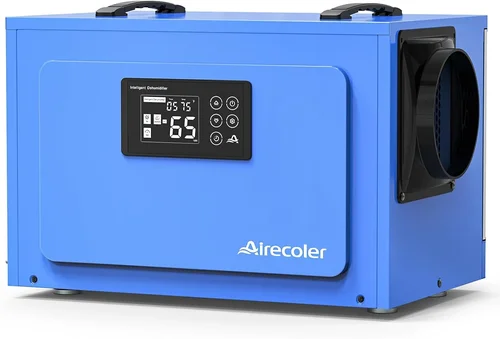
Crawl spaces are often the forgotten corners of a home—dark, damp, and out of sight. Yet, what happens beneath your floorboards can have a profound impact on your indoor air quality, structural integrity, and even your energy bills. Excess moisture in crawl spaces leads to mold growth, wood rot, pest infestations, and musty odors that seep into living areas. In fact, according to the Environmental Protection Agency (EPA), nearly 60% of the air in your home originates from the crawl space. That means a damp, contaminated crawl space doesn’t just stay down there—it rises into your home, affecting your health and comfort.
This is where a high-quality crawl space dehumidifier becomes essential. Unlike standard room dehumidifiers, crawl space units are specifically engineered to handle the unique challenges of confined, unconditioned spaces with high humidity levels and limited airflow. They’re built to run continuously in harsh conditions, often without direct supervision, and must be durable, efficient, and reliable. With the market flooded with options ranging from basic models to smart, Wi-Fi-enabled systems, choosing the right one can feel overwhelming. That’s why this comprehensive buying guide exists—to cut through the noise and help you make an informed decision that protects your home and your investment.
In this guide, you’ll learn everything you need to know about selecting the best crawl space dehumidifier for 2026. We’ll break down the key factors to consider, compare different types and technologies, highlight common pitfalls to avoid, and provide expert-backed recommendations tailored to various needs and budgets. Whether you’re a homeowner dealing with seasonal dampness, a contractor installing systems in new builds, or a property manager maintaining multiple units, this guide will equip you with the knowledge to choose a dehumidifier that delivers long-term performance and peace of mind. The crawl space dehumidifier market has evolved significantly in recent years, with advancements in energy efficiency, smart controls, and corrosion-resistant materials. Understanding these innovations is crucial to getting the most value from your purchase.

What to Look for When Buying Buying Guide
1. Budget & Price Range
Your budget is one of the first and most important considerations when shopping for a crawl space dehumidifier. Prices can range from under $300 for basic models to over $1,500 for premium, commercial-grade units. While it’s tempting to go for the cheapest option, remember that crawl space dehumidifiers are long-term investments in your home’s health and structural integrity. A low-cost unit may save you money upfront but could fail prematurely, consume more energy, or lack essential features like automatic drainage or remote monitoring.
When setting your budget, consider not just the purchase price but also long-term operating costs. Energy-efficient models with ENERGY STAR certification may cost more initially but can save you hundreds in electricity over their lifespan. Additionally, factor in potential installation costs if you’re not doing it yourself—some units require professional setup, especially if ducting or remote condensate pumping is involved. Aim to balance affordability with reliability and feature set. For most homeowners, spending between $600 and $1,000 will get you a high-performing, durable unit with smart features and strong warranty coverage.
2. Performance Specifications
Performance specs are the backbone of any dehumidifier evaluation. The most critical metric is the pint capacity, which indicates how much moisture the unit can remove per day under standard conditions (typically 80°F and 60% relative humidity). For crawl spaces, look for models rated between 50 and 100 pints per day. A 50-pint unit may suffice for a small, well-ventilated crawl space in a dry climate, while larger or damper areas—especially in humid regions like the Southeast U.S.—may require 70 pints or more.
Another key spec is the operating temperature range. Standard dehumidifiers often shut down below 65°F, but crawl spaces can get much colder, especially in winter. Look for units that operate efficiently down to 41°F or lower. Some advanced models use dual-mode compressors or refrigerant systems designed for cold environments. Also consider the airflow rate, measured in cubic feet per minute (CFM). Higher CFM means better air circulation, which is crucial in tight, stagnant crawl spaces. Aim for at least 150–200 CFM for effective moisture control.
Finally, check the humidity control accuracy. A good crawl space dehumidifier should maintain relative humidity (RH) within a tight range—ideally ±3% of your set point. This precision prevents over-drying (which wastes energy) or under-drying (which allows mold growth). Models with digital hygrostats offer better control than mechanical dials.
3. Build Quality & Durability
Crawl spaces are harsh environments—high humidity, dust, temperature swings, and potential exposure to standing water or pests. A dehumidifier must be built to withstand these conditions for years without failure. Look for units with corrosion-resistant coatings on coils and cabinets, such as epoxy or powder-coated steel. Stainless steel components are even better for long-term durability.
The condensate collection system is another durability factor. Some models use gravity drainage with a hose, while others include built-in condensate pumps. Pumps are essential if the drain outlet is higher than the unit or if the crawl space is below ground level. Ensure the pump is reliable and has a float switch to prevent overflow. Also, check the filter design—a washable, reusable filter is ideal for crawl spaces where dust and debris are common. Avoid models with disposable filters that require frequent replacement.
Finally, consider the compressor type. Rotary compressors are quieter and more efficient than reciprocating ones, making them better suited for continuous operation. Look for units with sealed bearings and thermal overload protection to prevent burnout during extended use.
4. Features & Functionality
Modern crawl space dehumidifiers come with a range of features that enhance convenience, efficiency, and performance. One of the most valuable is automatic drainage. Instead of manually emptying a bucket, units with gravity drains or built-in pumps can run indefinitely without supervision. This is especially important in hard-to-access crawl spaces.
Smart controls and Wi-Fi connectivity are becoming standard in premium models. These allow you to monitor humidity levels, adjust settings, and receive alerts via smartphone apps. Some systems integrate with home automation platforms like Google Home or Alexa. While not essential, smart features provide peace of mind and enable proactive maintenance.
Other useful features include defrost mode for cold-weather operation, remote sensors that can be placed away from the unit for more accurate readings, and ducting flanges for directing airflow to specific areas. Some models also offer dual-speed fans for energy savings during low-humidity periods.
Don’t overlook noise levels, especially if your crawl space is near living areas. Look for units rated below 55 decibels (dB) for quiet operation. Finally, check for ease of maintenance—removable panels, accessible filters, and clear indicator lights make routine care much simpler.
5. Brand Reputation
Not all dehumidifier brands are created equal. Some have decades of experience in moisture control, while others are generic manufacturers with limited support. Choosing a reputable brand ensures better build quality, reliable customer service, and access to replacement parts. Established names like AprilAire, Santa Fe, Dri-Eaz, and AlorAir are known for their durable, high-performance crawl space units.
Research customer reviews and professional feedback. Look for brands that specialize in crawl space or basement dehumidification rather than general room units. A strong track record in commercial or industrial applications is a good sign of reliability. Also, consider brands that offer comprehensive installation guides, video tutorials, and responsive technical support. A good brand doesn’t just sell a product—it supports you throughout the product’s lifecycle.
Avoid unknown or off-brand models sold exclusively through third-party marketplaces. These often lack proper certifications, have poor warranties, and may use substandard components. While they might seem like a bargain, the risk of early failure or safety issues isn’t worth the savings.
6. Warranty & Support
A solid warranty is a strong indicator of a manufacturer’s confidence in their product. For crawl space dehumidifiers, look for a minimum of a 3-year warranty on parts and labor, with at least 5 years on the compressor. Some premium brands offer up to 7 years of coverage. A longer warranty often correlates with higher build quality and better materials.
Pay attention to what the warranty covers. Does it include the condensate pump? The control board? Is labor included, or do you have to ship the unit back at your expense? Also, check if the warranty is transferable—this can add value if you sell your home.
Customer support is equally important. Can you reach a real person quickly? Are there local service centers? Do they offer troubleshooting guides or live chat? A brand with excellent support can save you time and frustration if issues arise. Read reviews about post-purchase service to gauge responsiveness and helpfulness.
7. Size & Portability
While crawl space dehumidifiers are typically stationary, size and weight still matter—especially during installation. Measure your crawl space access point and ensure the unit can fit through it. Most models are designed to be compact, but some high-capacity units can be bulky.
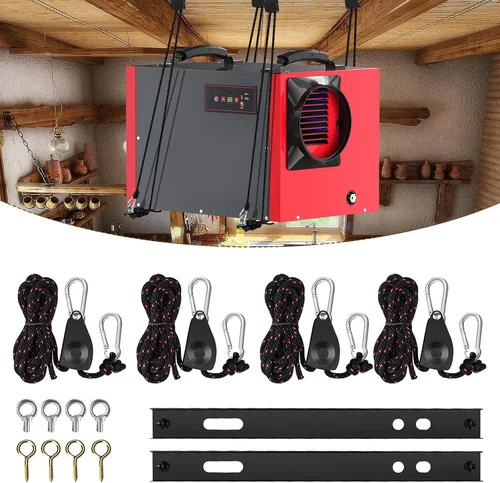
Weight is another consideration. Units range from 40 to 80 pounds. Heavier models may require two people to install. Look for handles or recessed grips to make lifting easier. Some models come with wheels or mounting brackets for wall or ceiling installation, which can save floor space.
Portability isn’t usually a priority for crawl spaces, but if you plan to move the unit between properties or use it temporarily in a basement, a lighter, more compact design could be beneficial. However, don’t sacrifice performance for portability—crawl spaces need powerful, stationary units for consistent moisture control.
8. User Reviews & Ratings
User reviews provide real-world insights that specs and marketing materials can’t match. Look for patterns in feedback—do multiple users report the same issue, like pump failure or noisy operation? Are there consistent praises for reliability or ease of use? Platforms like Amazon, Home Depot, and specialized HVAC forums are great sources.
Pay attention to reviews from users in similar climates and crawl space conditions. A unit that works well in Arizona may struggle in Florida’s humidity. Also, check how long users have owned the product. A review from someone who’s used it for three years is more valuable than one from a first-week owner.
Be wary of overly positive or negative reviews that seem scripted or lack detail. Look for balanced feedback that discusses both pros and cons. And remember: no product is perfect. The goal is to find a unit with more strengths than weaknesses for your specific needs.
Different Types of Buying Guide

Common Buying Mistakes to Avoid
❌ Mistake: Choosing Based Solely on Pint Capacity
Why it’s bad: Pint capacity is important, but it’s not the only factor. A 100-pint unit may be overkill for a small crawl space and waste energy. Conversely, a 50-pint unit might struggle in a large, damp area. Ignoring other specs like airflow, temperature range, and humidity control can lead to poor performance.
What to do instead: Match the unit to your crawl space size, climate, and moisture level. Use manufacturer sizing guides or consult an HVAC professional. Consider a slightly larger capacity for safety, but don’t oversize drastically.
❌ Mistake: Ignoring Drainage Options
Why it’s bad: Manual bucket emptying is impractical in crawl spaces. If the unit overflows, it can cause water damage or shut down, defeating the purpose. Gravity drains may not work if the outlet is uphill.
What to do instead: Choose a model with automatic drainage—either a gravity hose or a built-in condensate pump. Ensure the pump is reliable and has a float switch. Test the drain setup during installation.
❌ Mistake: Overlooking Cold-Weather Performance
Why it’s bad: Many dehumidifiers stop working below 65°F. In winter, crawl spaces can drop to 40°F or lower, allowing moisture to accumulate unchecked.
What to do instead: Select a unit rated for low-temperature operation (down to 41°F or lower). Look for defrost modes or desiccant technology if you live in a cold climate.
❌ Mistake: Buying a Room Dehumidifier for Crawl Space Use
Why it’s bad: Room dehumidifiers aren’t built for continuous operation in harsh conditions. They lack corrosion resistance, robust drainage, and proper airflow for confined spaces.
What to do instead: Invest in a purpose-built crawl space dehumidifier. These are designed for durability, efficiency, and long-term use in unconditioned environments.
❌ Mistake: Skipping Professional Installation
Why it’s bad: Improper installation can lead to poor performance, water leaks, or electrical hazards. Ducting, wiring, and drainage require expertise.
What to do instead: Hire a qualified HVAC technician, especially for complex setups. Many manufacturers require professional installation to maintain warranty coverage.
❌ Mistake: Neglecting Maintenance
Why it’s bad: Filters clog, coils freeze, and pumps fail if not maintained. A neglected unit loses efficiency and may break down prematurely.
What to do instead: Clean filters monthly, inspect coils and drains quarterly, and test the pump annually. Follow the manufacturer’s maintenance schedule.
❌ Mistake: Ignoring Energy Efficiency
Why it’s bad: Crawl space dehumidifiers run 24/7. An inefficient unit can add $100–$300 annually to your electricity bill.
What to do instead: Choose ENERGY STAR-certified models with high energy factors (EF). Look for units with variable-speed compressors or smart modes that reduce power during low-humidity periods.
Budget Guidelines: How Much Should You Spend?
Entry-Level ($300 – $500): These are basic refrigerant dehumidifiers suitable for small, dry crawl spaces. They often lack automatic drainage, smart features, or cold-weather operation. Expect shorter lifespans and higher energy use. Best for temporary fixes or low-risk areas.
Mid-Range ($600 – $900): This is the sweet spot for most homeowners. Units in this range offer 50–70 pint capacity, automatic drainage, corrosion-resistant coatings, and reliable performance. Many include digital controls, defrost modes, and decent warranties. Ideal for average-sized crawl spaces in moderate climates.
Premium ($900 – $1,300): For larger spaces, high humidity, or cold environments. These models feature high-capacity compressors, built-in pumps, smart controls, and advanced airflow systems. Brands like Santa Fe and AprilAire dominate this tier. Excellent for long-term protection and energy savings.
Luxury ($1,300+): Top-tier units with commercial-grade components, Wi-Fi connectivity, remote sensors, and ducting options. Designed for professionals or extreme conditions. Overkill for most homes but ideal for flood recovery, historic properties, or multi-unit buildings.
Expert Tips for Getting the Best Deal
- Buy in Spring or Fall: Avoid peak summer demand. Retailers often discount dehumidifiers in spring (pre-humidity season) and fall (post-summer clearance).
- Shop at Specialty Retailers: Stores like Grainger, HVAC supply houses, or online specialists (e.g., DehumidifierPros) often have better prices and expertise than big-box stores.
- Check for Rebates: Some utilities offer rebates for ENERGY STAR dehumidifiers. Visit dsireusa.org to find local programs.
- Bundle with Installation: Some contractors offer discounts when you purchase and install together.
- Read the Fine Print: Ensure the warranty covers labor and parts. Avoid “limited” warranties that exclude key components.
- Test Before Committing: If possible, rent a unit for a week to test performance in your crawl space.
- Consider Used or Refurbished: Reputable sellers sometimes offer certified refurbished models with full warranties at 20–30% off.
- Negotiate: Especially for premium models, ask for discounts or free shipping—many retailers have flexibility.

Frequently Asked Questions
Q: How often should I run my crawl space dehumidifier?
A: Ideally, it should run continuously during humid months and as needed in drier seasons. Most units have built-in hygrostats that automatically turn on when humidity exceeds your set point (typically 50–60% RH).
Q: Can I use a regular dehumidifier in my crawl space?
A: Not recommended. Room dehumidifiers aren’t built for the harsh conditions of crawl spaces and may fail quickly. Always choose a model specifically designed for crawl space use.
Q: Do I need a condensate pump?
A: If your drain outlet is higher than the unit or if the crawl space is below ground level, yes. A pump ensures continuous drainage without manual intervention.
Q: How do I know if my crawl space is too damp?
A: Signs include musty odors, mold growth, warped wood, or condensation on pipes. Use a hygrometer to measure humidity—levels above 60% indicate a problem.
Q: Should I insulate my crawl space before installing a dehumidifier?
A: Yes. Insulation (especially on the walls, not the floor) reduces moisture infiltration and improves dehumidifier efficiency. Combine with a vapor barrier for best results.
Q: Can a dehumidifier prevent foundation cracks?
A: Indirectly, yes. Excess moisture can cause soil expansion and contraction, leading to foundation movement. Controlling humidity helps stabilize the soil.
Q: How long do crawl space dehumidifiers last?
A: With proper maintenance, most last 7–10 years. High-quality models with corrosion-resistant parts can exceed 10 years.
Q: Are smart dehumidifiers worth the extra cost?
A: If you value remote monitoring, alerts, and energy tracking, yes. For remote properties or tech-savvy users, the convenience often justifies the price.
Q: Can I install a dehumidifier myself?
A: Basic models with gravity drainage can be DIY-friendly. However, units with pumps, ducting, or electrical connections should be installed by a professional to ensure safety and warranty compliance.
Q: What’s the ideal humidity level for a crawl space?
A: Aim for 50–60% relative humidity. This prevents mold growth while avoiding over-drying, which can damage wood.
Our Final Recommendations
Best for Budget-Conscious Buyers: AlorAir Sentinel HDi – At around $650, this 70-pint unit offers excellent value with automatic drainage, cold-weather operation, and a 5-year warranty. Ideal for medium-sized crawl spaces.
Best Overall Value: Santa Fe Compact 70 – Priced at $950, it’s a top performer with 70-pint capacity, built-in pump, Wi-Fi connectivity, and rugged construction. Perfect for most homes.
Best Premium Option: AprilAire E080 – At $1,200, this 80-pint unit features smart controls, remote sensors, and commercial-grade durability. Best for large or high-humidity crawl spaces.
Best for Beginners: Dri-Eaz F284 – Simple to install and operate, with clear indicators and reliable performance. Great for first-time buyers.
Best for Advanced Users: Quest 50 Overhead – A ductable, ceiling-mounted system with 50-pint capacity and remote monitoring. Ideal for tech enthusiasts or custom installations.
Conclusion: Making the Right Choice
Choosing the right crawl space dehumidifier is about more than just removing moisture—it’s about protecting your home’s foundation, improving indoor air quality, and ensuring long-term comfort. By focusing on key factors like performance, durability, drainage, and smart features, you can find a unit that meets your specific needs and budget. Avoid common pitfalls like oversizing, ignoring cold-weather performance, or skipping professional installation. Remember, a dehumidifier is a long-term investment, and cutting corners now can lead to costly repairs later.
Use this guide as your roadmap. Prioritize your crawl space’s unique challenges—whether it’s size, climate, or accessibility—and match them to the right type and model. Take advantage of seasonal sales, rebates, and expert advice to get the best deal. And don’t forget maintenance—regular care extends the life of your unit and keeps it running efficiently.
Ultimately, the best crawl space dehumidifier is the one that gives you peace of mind. With the right choice, you’ll enjoy a drier, healthier, and more energy-efficient home for years to come. Don’t wait for mold or structural damage to act—invest in moisture control today.