
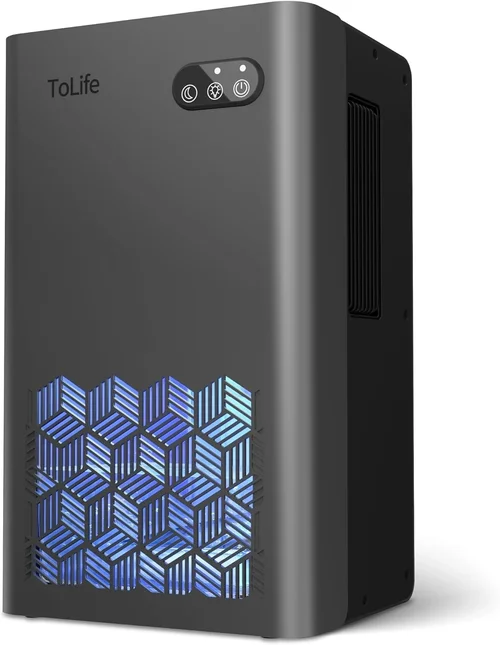
If you’ve ever walked into a room that feels thick, sticky, or smells faintly of mildew—even when the air conditioner is running—you’ve experienced the telltale signs of excess humidity. For homes around 1,000 square feet, managing indoor moisture isn’t just about comfort; it’s a critical step in protecting your health, your belongings, and the structural integrity of your home. High humidity can trigger mold growth, worsen allergies, damage wood furniture, warp flooring, and even reduce the efficiency of your HVAC system. That’s where a reliable dehumidifier comes in—not as a luxury, but as a necessity.
In this comprehensive buying guide, we’ll walk you through everything you need to know to choose the best dehumidifier for a 1,000-square-foot space. Whether you’re dealing with a damp basement, a humid living area, or seasonal moisture spikes, we’ll help you cut through the noise and marketing hype to find a unit that delivers real performance, durability, and value. You’ll learn how to evaluate key specs like pint capacity, energy efficiency, noise levels, and smart features—plus how to avoid common pitfalls that lead to buyer’s remorse. By the end, you’ll have a clear roadmap to make a confident, informed decision tailored to your specific needs.
The market for dehumidifiers has exploded in recent years, with dozens of brands offering models ranging from budget-friendly basics to high-end smart appliances. While this variety is great for consumers, it also makes shopping overwhelming. Some units promise to remove 50 pints of moisture per day but struggle in real-world conditions. Others boast whisper-quiet operation but lack the power to handle larger spaces effectively. Our goal is to simplify this process by focusing on what truly matters for a 1,000-square-foot home: balanced performance, energy efficiency, ease of use, and long-term reliability. Let’s dive in.
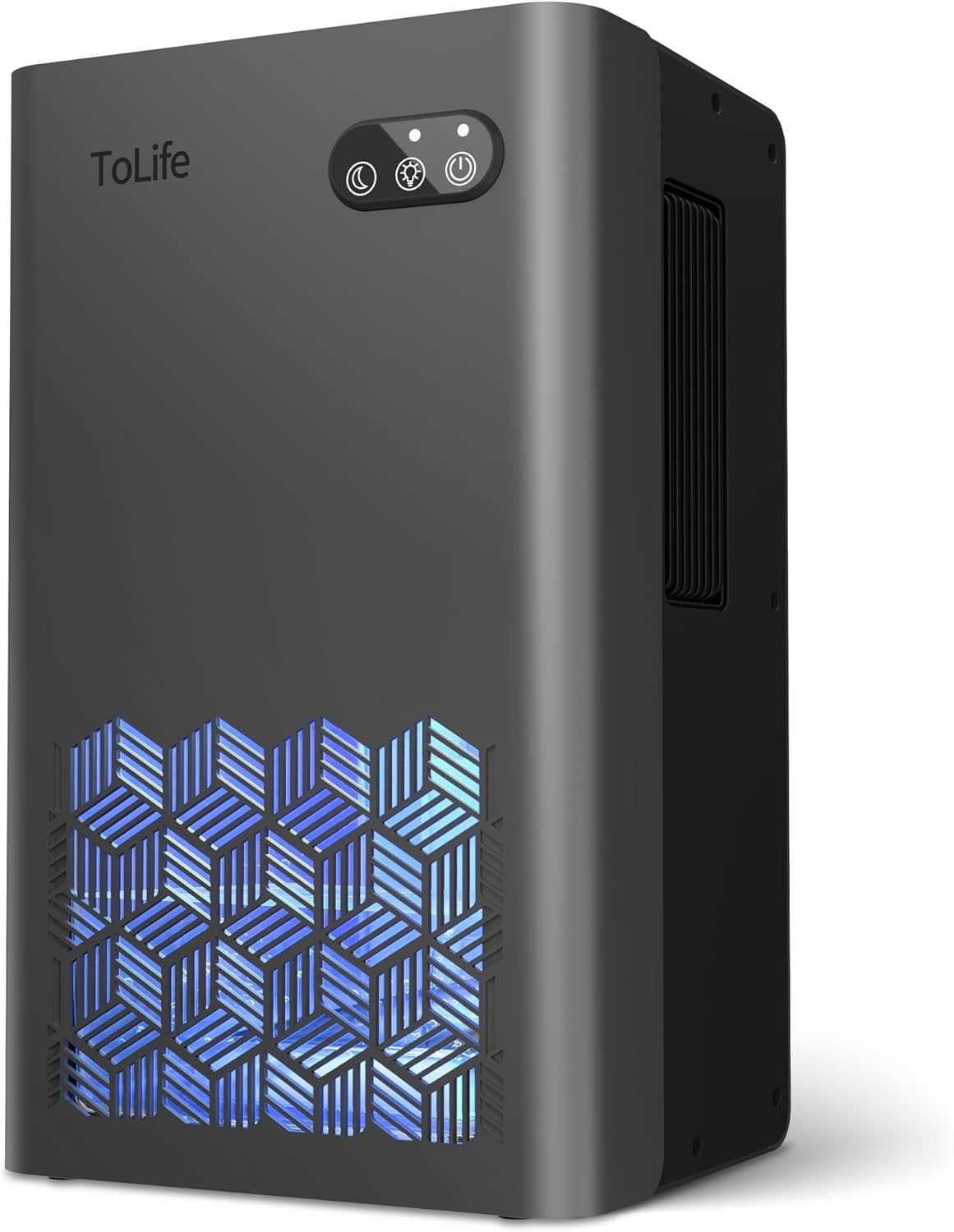
What to Look for When Buying a Dehumidifier
1. Pint Capacity & Moisture Removal Rate
The most fundamental spec to understand is the dehumidifier’s pint capacity—the amount of moisture it can remove from the air in 24 hours under standardized conditions (typically 60% relative humidity at 80°F). For a 1,000-square-foot space, you’ll generally want a unit rated between 30 and 50 pints per day (PPD), depending on the severity of your humidity problem.
– Moderate humidity (50–60% RH): A 30-pint model is usually sufficient.
– High humidity (60–70% RH): Opt for a 40- to 50-pint unit.
– Severe dampness or frequent flooding: Consider a 50-pint or higher commercial-grade model.
It’s important to note that manufacturers often test under ideal lab conditions, so real-world performance may vary. Basements, which are typically cooler and damper, may require a unit with a higher capacity than advertised. Look for ENERGY STAR-certified models, as they undergo more rigorous testing and often perform closer to their stated specs.
2. Energy Efficiency & Operating Costs
Dehumidifiers run for hours each day, so energy consumption directly impacts your utility bill. The key metric here is the Energy Factor (EF), measured in liters of water removed per kilowatt-hour (L/kWh). Higher EF values mean better efficiency.
For a 1,000-square-foot home, aim for a model with an EF of at least 1.5 L/kWh. ENERGY STAR-certified dehumidifiers typically exceed 1.8 L/kWh and can save you up to 30% on energy costs compared to standard models. Over a full humid season, that could mean $50–$100 in savings.
Also consider the wattage. A 50-pint dehumidifier might use between 500 and 750 watts. Multiply that by your local electricity rate and estimated daily runtime to estimate monthly costs. Many modern units include auto-humidistats and timers, which help reduce unnecessary runtime and further cut energy use.
3. Humidity Control & Smart Features
Manual dehumidifiers require you to constantly monitor and adjust settings—a hassle most people don’t want. Look for models with built-in humidistats that automatically maintain your desired humidity level (ideally between 30% and 50%).
Advanced units offer programmable timers, remote controls, Wi-Fi connectivity, and smartphone apps. These features let you monitor humidity levels, adjust settings, and receive alerts from anywhere. Some even integrate with smart home systems like Alexa or Google Home.
For example, the Frigidaire FFAD7033R1 allows you to set a target humidity level, and the unit runs only as needed. Others, like the Midea Cube, offer geofencing—automatically turning on when you’re near home and off when you leave.
4. Noise Level & Placement Flexibility
Dehumidifiers aren’t known for being quiet, but noise levels vary significantly. Most residential units operate between 45 and 60 decibels (dB)—comparable to a quiet conversation or a refrigerator hum. For living areas or bedrooms, aim for 50 dB or lower.
Check the manufacturer’s noise rating, but also read user reviews. Some models may claim “quiet operation” but produce noticeable fan or compressor noise under load. Units with variable-speed fans or eco modes tend to be quieter during light-duty cycles.
Placement matters too. If you plan to use the dehumidifier in a basement or garage, noise may be less of a concern. But for open-concept living spaces, choose a model with sound-dampening features or consider placing it on a rubber mat to reduce vibration.
5. Tank Size & Drainage Options
All dehumidifiers collect water in an internal tank. For a 1,000-square-foot space, a 1- to 2-gallon tank is standard. However, frequent emptying can be a chore—especially if the unit runs constantly.
Look for models with:
– Continuous drainage: A hose connection lets you route water directly to a floor drain, sink, or sump pump.
– Auto-shutoff: Stops the unit when the tank is full to prevent overflow.
– Easy-to-remove tanks: Sliding or lift-out designs with handles make emptying less messy.
If you don’t have a nearby drain, consider a model with a built-in pump (like the hOmeLabs HME020034N), which can push water vertically up to 15 feet—ideal for basements without floor drains.
6. Build Quality & Durability
A dehumidifier is a long-term investment. Cheap plastic components, thin coils, and flimsy casings may save money upfront but lead to breakdowns within a year or two. Look for:
– Stainless steel or coated coils: Resist corrosion from moisture.
– Reinforced casings: Durable ABS or polycarbonate plastic.
– Quality compressors: Rotary compressors are quieter and more durable than piston types.
Brands like Frigidaire, Midea, and hOmeLabs have strong reputations for reliability. Avoid no-name brands with vague specifications or missing warranty information.
7. Portability & Design
Even in a 1,000-square-foot home, you may need to move the dehumidifier between rooms—say, from the basement to the living room during a rainy week. Features that enhance portability include:
– Integrated handles: Ergonomic grips for easy lifting.
– Smooth-rolling casters: Lockable wheels prevent unwanted movement.
– Compact footprint: Units under 20 inches tall and 15 inches wide fit better in tight spaces.
Some models, like the Tosot 30 Pint, are designed with a low center of gravity and wide base for stability. Others, like the Ivation IVADM35, include a built-in cord wrap for tidy storage.
8. Warranty & Customer Support
A good warranty is a strong indicator of a manufacturer’s confidence in their product. Most reputable brands offer:
– 1-year limited warranty: Covers parts and labor.
– Extended warranties: Some include 2- or 3-year coverage, especially on compressors.
Check the fine print: Does the warranty cover labor? Is it voided by improper use? Are replacement parts readily available?
Customer support matters too. Brands with responsive service teams (like Frigidaire and hOmeLabs) make troubleshooting and repairs much easier. Avoid companies with no phone support or long response times.
Different Types of Dehumidifiers

For a 1,000-square-foot home, compressor-based dehumidifiers are the most practical choice. They offer the best balance of power, efficiency, and affordability. Desiccant models are excellent for cold basements but consume more energy. Thermoelectric and mini units lack the capacity for whole-room dehumidification. Whole-house systems are overkill unless you have a central HVAC setup and severe humidity issues throughout the entire home.
Common Buying Mistakes to Avoid
❌ Mistake: Buying Based Solely on Pint Rating
Why it’s bad: A 50-pint label doesn’t guarantee 50 pints of real-world performance. Many units lose efficiency in cooler or less humid conditions. Oversized units may short-cycle, reducing lifespan and increasing wear.
What to do instead: Match the pint capacity to your actual humidity level and room temperature. Use a hygrometer to measure indoor RH and choose a model rated for your specific conditions. When in doubt, consult ENERGY STAR’s product finder for verified performance data.
❌ Mistake: Ignoring Energy Efficiency
Why it’s bad: A cheap dehumidifier may cost more in the long run due to high electricity use. Units with low EF ratings can add $100+ annually to your energy bill.
What to do instead: Prioritize ENERGY STAR-certified models. Calculate annual operating costs using the formula: (Watts × Hours per Day × Days per Year × Electricity Rate) ÷ 1,000. Choose a unit with an EF above 1.5 L/kWh.
❌ Mistake: Overlooking Drainage Needs
Why it’s bad: Emptying a full tank every 8–12 hours is tedious and easy to forget. Overflow can cause water damage.
What to do instead: If possible, install a continuous drain hose to a floor drain or sump pump. If not, choose a model with a large tank (1.5+ gallons) and auto-shutoff. For basements, consider a pump-equipped unit.
❌ Mistake: Choosing the Cheapest Option
Why it’s bad: Budget models often use inferior components, lack warranties, and fail within a year. You may end up replacing it sooner than expected.
What to do instead: Invest in a mid-range model from a reputable brand. The extra $50–$100 upfront can save you hundreds in repairs, replacements, and energy costs over time.
❌ Mistake: Not Considering Noise
Why it’s bad: A loud dehumidifier can disrupt sleep, work, or relaxation—especially in open-plan homes.
What to do instead: Check decibel ratings and read user reviews. Opt for models with variable-speed fans or “quiet mode.” Place the unit on a soft surface to dampen vibrations.
❌ Mistake: Skipping the Warranty Check
Why it’s bad: Without a solid warranty, you’re on the hook for repair costs. Some brands offer only 90-day coverage.
What to do instead: Choose a model with at least a 1-year warranty. Register your product immediately and keep receipts. Consider extended coverage if available.
❌ Mistake: Buying Without Measuring Humidity
Why it’s bad: You might buy a unit that’s too weak—or too strong—for your needs, leading to inefficiency or discomfort.
What to do instead: Use a digital hygrometer ($10–$20) to measure humidity in the target area. Ideal indoor RH is 30–50%. Adjust your dehumidifier settings accordingly.
Budget Guidelines: How Much Should You Spend?
– Entry-Level ($100–$200): Basic 30-pint models with manual controls, small tanks, and limited features. Best for mild humidity in small spaces. Expect shorter lifespans and higher noise levels. Examples: Ivation IVADM35, Tosot 30 Pint.
– Mid-Range ($200–$350): The sweet spot for most 1,000-square-foot homes. These units offer 40–50 pint capacity, auto-humidistats, continuous drainage, and ENERGY STAR certification. Reliable brands include Frigidaire, hOmeLabs, and Midea. Expect 5–7 years of service with proper maintenance.
– Premium ($350–$500): High-efficiency models with smart features, Wi-Fi connectivity, pump-assisted drainage, and advanced filtration. Ideal for tech-savvy users or those with severe humidity issues. Examples: Frigidaire Gallery FGAC7044U1, Midea Cube Smart Dehumidifier.
– Luxury ($500+): Commercial-grade or whole-house systems with industrial components, extended warranties, and professional installation. Overkill for most residential use but justified for large properties or chronic moisture problems.
For the average homeowner, a mid-range dehumidifier ($250–$350) offers the best balance of performance, features, and longevity.
Expert Tips for Getting the Best Deal
– Buy in the off-season: Prices drop significantly in late fall and winter when demand is low. Retailers often discount inventory to make room for new models.
– Shop during sales events: Look for deals on Black Friday, Prime Day, or Memorial Day. Many brands offer $50–$100 off popular models.
– Compare retailers: Check Amazon, Home Depot, Lowe’s, and Costco. Online reviews and return policies vary—Amazon often has the best customer service.
– Check for rebates: Some utility companies offer rebates for ENERGY STAR dehumidifiers. Visit energystar.gov/rebate-finder to see if you qualify.
– Read return policies: Ensure the retailer allows returns within 30 days. Test the unit immediately to check for defects or performance issues.
– Test before committing: Run the dehumidifier for 24–48 hours. Monitor humidity levels, noise, and tank fill rate. If it’s not performing as expected, return it.
– Consider refurbished models: Certified refurbished units from reputable sellers (like Frigidaire or hOmeLabs) often come with full warranties and cost 20–30% less.
– Maintain your unit: Clean the filter monthly, inspect coils annually, and keep the area around the unit clear. Proper maintenance extends lifespan and maintains efficiency.

Frequently Asked Questions
Q: How many pints do I need for a 1,000-square-foot space?
A: For most homes, a 30- to 50-pint dehumidifier is sufficient. Choose 30 pints for moderate humidity, 40–50 pints for high humidity or basements. Always consider room temperature and moisture sources (e.g., laundry, showers).
Q: Can a dehumidifier help with allergies?
A: Yes. By reducing humidity below 50%, dehumidifiers inhibit mold, dust mites, and mildew—common allergens. Pair with an air purifier for best results.
Q: Should I run my dehumidifier continuously?
A: No. Most units have auto modes that cycle on and off to maintain your set humidity level. Continuous operation wastes energy and may over-dry the air.
Q: Can I use a dehumidifier in winter?
A: Only if the room stays above 60°F. Compressor models lose efficiency in cold air. Desiccant units work better in winter but use more energy.
Q: How often should I empty the tank?
A: It depends on humidity and tank size. A 1-gallon tank may fill in 8–12 hours in high humidity. Use continuous drainage or a pump to avoid frequent emptying.
Q: Will a dehumidifier cool my room?
A: No. Dehumidifiers remove moisture, not heat. They may feel slightly cooler due to reduced humidity, but they don’t lower temperature like an AC.
Q: Can I move my dehumidifier between rooms?
A: Yes, if it has wheels and a handle. Avoid moving it immediately after use—let it sit for 30 minutes to allow refrigerant to settle.
Q: How long do dehumidifiers last?
A: With proper care, most last 5–7 years. Clean filters regularly, avoid overuse, and store properly during off-seasons.
Q: Are smart dehumidifiers worth it?
A: If you value convenience and remote monitoring, yes. Wi-Fi models let you adjust settings from your phone and receive alerts. For basic use, manual controls are sufficient.
Q: Can a dehumidifier prevent basement flooding?
A: It can reduce moisture and mildew but won’t stop active leaks or flooding. Use it alongside proper drainage, gutters, and sump pumps for full protection.
Our Final Recommendations
– Best for Budget-Conscious Buyers: Tosot 30 Pint Dehumidifier – Reliable, energy-efficient, and priced under $200. Great for mild to moderate humidity in living areas.
– Best Overall Value: Frigidaire FFAD5033R1 – 50-pint capacity, ENERGY STAR certified, auto-humidistat, and continuous drain option. Priced around $280, it’s a workhorse for 1,000-square-foot homes.
– Best Premium Option: Frigidaire Gallery FGAC7044U1 – Smart Wi-Fi controls, 70-pint capacity, built-in pump, and sleek design. Ideal for tech-savvy users or severe humidity.
– Best for Beginners: hOmeLabs HME020034N – Easy setup, clear controls, 45-pint capacity, and excellent customer support. Perfect for first-time buyers.
– Best for Advanced Users: Midea Cube Smart Dehumidifier – App control, geofencing, compact design, and high efficiency. Great for those who want automation and precision.
Conclusion: Making the Right Choice
Choosing the best dehumidifier for a 1,000-square-foot home doesn’t have to be overwhelming. By focusing on key factors—pint capacity, energy efficiency, humidity control, noise, drainage, and warranty—you can find a unit that delivers consistent performance and long-term value. Avoid common pitfalls like oversizing, ignoring efficiency, or skipping the warranty. Instead, match the dehumidifier to your specific humidity level, room conditions, and lifestyle needs.
Remember, the goal isn’t just to remove moisture—it’s to create a healthier, more comfortable living environment. Whether you’re fighting mold in the basement or sticky air in the living room, the right dehumidifier can make a noticeable difference. Take the time to measure your humidity, compare models, and invest in quality. Your home—and your health—will thank you.
Now that you’re equipped with expert knowledge, it’s time to take action. Use this guide to compare top models, check seasonal sales, and make a confident purchase. A drier, fresher home is just one dehumidifier away.