
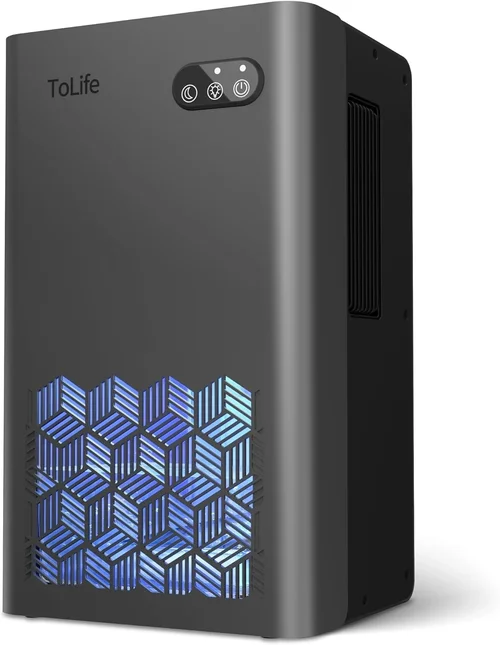
If you’ve ever walked into your basement and been greeted by that musty, damp smell—or worse, spotted mold creeping along the walls—you know how vital a good dehumidifier can be. Basements are naturally prone to high humidity due to poor ventilation, groundwater seepage, and cooler temperatures, all of which create the perfect breeding ground for mold, mildew, and allergens. Left unchecked, excess moisture doesn’t just damage your belongings—it can compromise your home’s structural integrity and even affect your family’s health. That’s why investing in an energy-efficient dehumidifier designed specifically for basement use isn’t just a convenience; it’s a necessity for long-term comfort, safety, and savings.
This comprehensive buying guide is crafted to help you navigate the crowded market of dehumidifiers with confidence. Whether you’re dealing with a small crawl space or a full-sized finished basement, we’ll walk you through everything you need to know to make a smart, informed decision. You’ll learn how to evaluate performance metrics like pint capacity and energy efficiency ratings, understand the differences between compressor-based and desiccant models, and discover which features truly matter—like auto-humidistats, continuous drainage options, and smart connectivity. We’ll also highlight common pitfalls to avoid, break down budget expectations, and share expert tips to ensure you get the best value for your investment. By the end of this guide, you’ll be equipped with the knowledge to choose a dehumidifier that not only tackles your basement’s humidity problems but does so efficiently, quietly, and reliably for years to come.
The dehumidifier market has evolved significantly in recent years, with manufacturers prioritizing energy efficiency, smart technology, and user-friendly designs. Today’s top models don’t just remove moisture—they do it while consuming less electricity, thanks to advancements like variable-speed compressors, ENERGY STAR certifications, and adaptive humidity sensors. However, with so many options available—from compact units under $150 to high-capacity industrial-grade machines costing over $500—it’s easy to feel overwhelmed. This guide cuts through the noise by focusing on what truly matters for basement applications: consistent performance in cool, damp environments, low operating costs, durability, and ease of maintenance. Whether you’re a first-time buyer or upgrading from an older unit, our goal is to empower you with actionable insights so you can protect your home and your wallet.
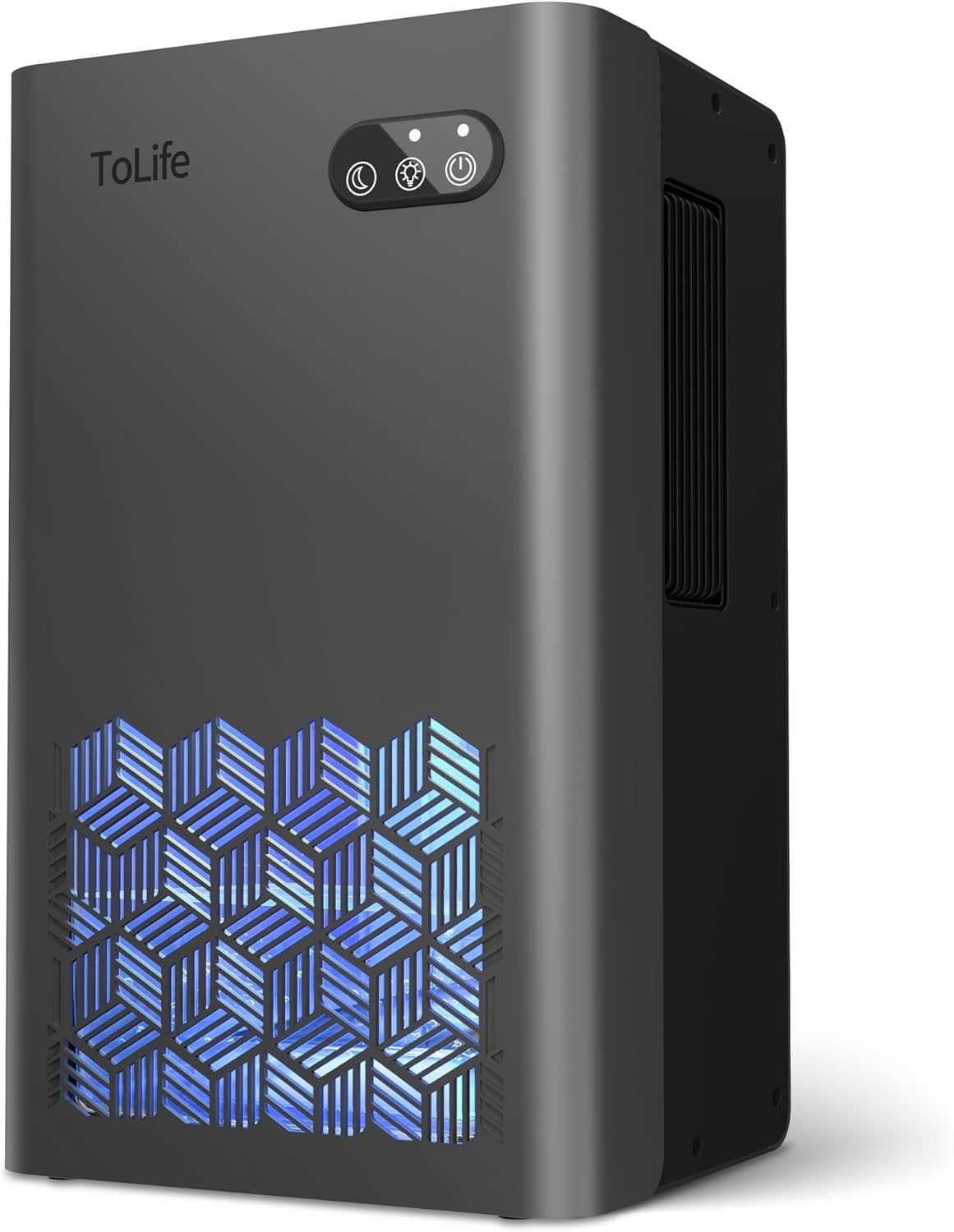
What to Look for When Buying Buying Guide
1. Pint Capacity & Coverage Area
The pint capacity of a dehumidifier refers to how much moisture it can remove from the air in 24 hours under standard testing conditions (typically 60% relative humidity at 80°F). For basements, this number is critical because larger, damper spaces require higher capacity. A unit rated for 30–50 pints per day may suffice for a small, moderately damp basement (up to 1,000 sq. ft.), but if your basement is over 1,500 sq. ft. or experiences frequent flooding or high humidity levels (above 60%), you’ll likely need a 70-pint or even 100-pint model. Always check the manufacturer’s recommended coverage area—don’t just rely on pint ratings alone, as real-world performance can vary based on temperature and humidity. Cooler basement temperatures (below 65°F) reduce a compressor-based dehumidifier’s efficiency, so look for models specifically rated for low-temperature operation if your basement stays chilly year-round.
2. Energy Efficiency (ENERGY STAR & EER)
Energy efficiency isn’t just about environmental responsibility—it directly impacts your utility bills. Look for dehumidifiers with the ENERGY STAR label, which indicates they meet strict efficiency guidelines set by the U.S. Environmental Protection Agency. ENERGY STAR-certified models use up to 15% less energy than standard units, which can save you $100 or more over the lifespan of the appliance. Another key metric is the Energy Factor (EF), measured in liters of water removed per kilowatt-hour (L/kWh). Higher EF values mean better efficiency—aim for at least 1.5 L/kWh or higher. Some premium models now feature variable-speed compressors or inverter technology, which adjust power output based on humidity levels, further reducing energy consumption during lighter loads.
3. Humidity Control & Auto Features
Manual dehumidifiers require constant monitoring and adjustment, which is impractical for most homeowners. Instead, opt for models with built-in humidistats that automatically maintain your desired humidity level (ideally between 30% and 50% for basements). Advanced units offer digital displays, programmable timers, and even Wi-Fi connectivity so you can monitor and control settings via smartphone apps. Features like auto-restart (which resumes operation after a power outage) and auto-defrost (to prevent ice buildup in cold basements) are also essential for reliability. A “continuous drain” option is another must-have—it allows you to connect a garden hose so the unit empties directly into a floor drain or sump pump, eliminating the need to manually empty the water tank.
4. Build Quality & Durability
Basements are harsh environments—damp, dusty, and often poorly lit—so your dehumidifier needs to be built to last. Look for units with sturdy, corrosion-resistant materials like powder-coated steel or reinforced plastic. Check the quality of the internal components: high-grade copper coils, sealed bearings in the fan motor, and robust filters all contribute to longevity. Avoid flimsy plastic housings or units with exposed wiring. Also consider the filter design—washable, reusable filters are more cost-effective and eco-friendly than disposable ones. Some premium models include anti-microbial filters that inhibit mold and bacteria growth, adding an extra layer of protection.
5. Noise Level & Placement Flexibility
While basements are typically away from living areas, excessive noise can still be disruptive—especially if your basement doubles as a home gym, workshop, or guest room. Most dehumidifiers operate between 45 and 60 decibels (dB); for context, 50 dB is similar to a quiet conversation. If noise is a concern, look for models with “quiet mode” or “low-noise” certifications. Placement flexibility matters too: units with top-mounted air discharge allow you to place the dehumidifier against a wall without blocking airflow, while casters or handles make it easier to move between rooms or store during warmer months.
6. Warranty & Customer Support
A dehumidifier is a long-term investment, so a solid warranty is a strong indicator of manufacturer confidence. Most reputable brands offer at least a one-year limited warranty, but premium models often come with two to five years of coverage—sometimes even longer for key components like the compressor. Read the fine print: some warranties require registration within 30 days of purchase or void coverage if the unit is used in commercial settings. Also research customer support responsiveness—check online reviews for mentions of repair times, replacement part availability, and technical assistance. Brands like Frigidaire, hOmeLabs, and AprilAire are known for reliable service networks.
7. Smart Features & Connectivity
Modern dehumidifiers are increasingly integrating smart home technology. Wi-Fi-enabled models let you monitor humidity levels, adjust settings, and receive alerts (e.g., when the tank is full) from your phone—even when you’re away from home. Some sync with voice assistants like Alexa or Google Assistant, allowing hands-free control. While these features add convenience, they’re not essential for everyone. If you value automation and remote monitoring, prioritize models with robust app ecosystems and regular firmware updates. Just ensure your home Wi-Fi signal reaches your basement, or consider a mesh network extender.
8. Portability & Maintenance Ease
Even in a basement, you may need to move your dehumidifier occasionally—for cleaning, seasonal storage, or targeting problem areas. Look for units with integrated handles, smooth-rolling casters, and lightweight designs (under 50 lbs for most residential models). Maintenance should be straightforward: easy-access water tanks, tool-free filter removal, and clear indicator lights for filter cleaning or tank full alerts simplify upkeep. Avoid models with complex disassembly requirements or hard-to-reach components.
Different Types of Buying Guide

Common Buying Mistakes to Avoid
❌ Mistake: Choosing Based Solely on Pint Rating
Why it’s bad: Pint capacity is often measured under ideal lab conditions (80°F, 60% RH), which don’t reflect real basement environments. A 70-pint unit may perform like a 40-pint model in a cold, damp basement, leaving you underprotected.
What to do instead: Cross-reference pint ratings with coverage area and look for models specifically rated for low-temperature operation. Consider sizing up by one category if your basement is below 65°F.
❌ Mistake: Ignoring Energy Efficiency
Why it’s bad: Running an inefficient dehumidifier 24/7 can add $100–$200 annually to your electricity bill. Over five years, that’s $500–$1,000 in wasted energy.
What to do instead: Always check for ENERGY STAR certification and compare Energy Factor (EF) ratings. A slightly higher upfront cost often pays for itself in energy savings.
❌ Mistake: Overlooking Drainage Options
Why it’s bad: Emptying a 1–2 gallon water tank every day is tedious and easy to forget. If the tank overflows, it can cause water damage or trigger a shutdown.
What to do instead: Choose a model with a continuous drain hose outlet and ensure your basement has a nearby floor drain, sump pump, or utility sink for easy hookup.
❌ Mistake: Buying the Cheapest Model Available
Why it’s bad: Budget units often use inferior components, lack humidity controls, and fail within 1–2 years. You’ll end up replacing them sooner, costing more in the long run.
What to do instead: Invest in a mid-range model ($250–$350) from a reputable brand. The added durability, features, and efficiency justify the cost.
❌ Mistake: Not Considering Noise Levels
Why it’s bad: A noisy dehumidifier can disrupt sleep, work, or relaxation—especially if your basement is used as a living space.
What to do instead: Check decibel ratings and read user reviews about noise. Opt for models with insulated cabinets or quiet-mode settings.
❌ Mistake: Skipping the Warranty Check
Why it’s bad: Dehumidifiers contain complex electronics and compressors that can fail. Without warranty coverage, repairs can cost nearly as much as a new unit.
What to do instead: Prioritize brands offering at least a 2-year warranty and verify what’s covered (e.g., labor, parts, shipping).
❌ Mistake: Assuming All Basements Need the Same Solution
Why it’s bad: A finished basement with carpet and furniture has different needs than a unfinished, concrete-floored storage area. One-size-fits-all approaches rarely work.
What to do instead: Assess your basement’s size, humidity level, temperature, and usage. Match these factors to the right type and capacity of dehumidifier.
Budget Guidelines: How Much Should You Spend?
Entry-Level ($100–$200): These budget models are suitable for very small, mildly damp basements (under 500 sq. ft.). Expect basic functionality—manual controls, small water tanks, and limited durability. Most lack ENERGY STAR certification and may struggle in cooler temperatures. Ideal for seasonal use or as a temporary fix, but not recommended for year-round protection.
Mid-Range ($200–$350): This is the sweet spot for most homeowners. Units in this range typically offer 50–70 pint capacity, ENERGY STAR efficiency, digital humidistats, auto-defrost, and continuous drain options. Brands like hOmeLabs, Frigidaire, and Tosot dominate this category with reliable performance and solid warranties. Perfect for basements up to 1,500 sq. ft. with moderate to high humidity.
Premium ($350–$600): Designed for large or problem basements, these models feature advanced controls, smart connectivity, larger tanks (or seamless drainage), and superior build quality. Look for variable-speed compressors, app integration, and extended warranties. Ideal for finished basements, homes in humid climates, or users who want minimal maintenance and maximum automation.
Luxury ($600+): At this tier, you’re investing in whole-house systems or commercial-grade units with professional installation requirements. These are overkill for most residential basements unless you have a massive space, severe moisture issues, or integration with HVAC systems. Expect top-tier efficiency, whisper-quiet operation, and comprehensive monitoring—but at a significant upfront cost.
Expert Tips for Getting the Best Deal
1. Buy During Off-Season Sales: Dehumidifiers are in highest demand during summer. Shop in late fall or winter (October–February) when retailers discount inventory to clear space for air conditioners. You can often save 20–30% on premium models.
2. Compare Retailers Strategically: Check Amazon, Home Depot, Lowe’s, and Costco for competitive pricing. Amazon often has user reviews and fast shipping, while big-box stores may offer in-store pickup and extended return windows. Don’t overlook manufacturer websites—they sometimes run exclusive promotions or bundle deals.
3. Look for Rebates and Incentives: Many utility companies offer rebates for ENERGY STAR appliances. Visit the ENERGY STAR Rebate Finder tool to see if your provider offers cash back on qualifying dehumidifiers—some rebates cover up to $50.
4. Read Real User Reviews: Skip the glossy marketing claims and focus on verified purchaser reviews. Pay attention to comments about real-world performance in basements, noise levels, and reliability over 6–12 months.
5. Test Before Committing (If Possible): If buying in-store, ask to see a demo unit. Listen to the noise level, check the display clarity, and inspect build quality. For online purchases, choose retailers with generous return policies (30+ days).
6. Consider Refurbished or Open-Box Models: Certified refurbished units from reputable sellers (like Amazon Renewed or manufacturer outlets) can save you 25–40% and often come with the same warranty as new models.
7. Bundle with Other Purchases: Some retailers offer discounts when you buy a dehumidifier with an air purifier, sump pump, or HVAC service. It’s worth asking about package deals.
8. Register Your Warranty Immediately: Many warranties require registration within 30 days. Do it the day you buy to ensure full coverage and access to customer support.

Frequently Asked Questions
Q: How do I know what size dehumidifier I need for my basement?
A: Start by measuring your basement’s square footage. Then assess the moisture level: lightly damp (30–50 pints), moderately damp (50–70 pints), or extremely wet (70+ pints). If your basement is below 65°F, choose a model rated for low-temperature operation. When in doubt, size up—it’s better to have slightly more capacity than not enough.
Q: Can I run a dehumidifier all the time?
A: Yes, and in many cases, you should. Most modern units are designed for continuous operation. Use the built-in humidistat to set your target humidity (30–50%), and the unit will cycle on and off automatically. Just ensure proper drainage to avoid overflow.
Q: Will a dehumidifier help with mold?
A: Absolutely—but only if used preventively. A dehumidifier reduces the moisture mold needs to grow. However, if mold is already present, you must clean it first (using appropriate safety gear and cleaners) before relying on a dehumidifier to prevent recurrence.
Q: Do I really need a continuous drain?
A: If your basement has a floor drain, sump pump, or utility sink, yes. Manual emptying is inconvenient and risky—if you forget, the unit shuts off and humidity spikes. Continuous drainage ensures uninterrupted protection.
Q: Are desiccant dehumidifiers better for cold basements?
A: Generally, yes. Unlike compressor models, desiccant units don’t rely on cooling coils, so they work efficiently in temperatures as low as 40°F. However, they tend to be less energy-efficient at higher temperatures and may cost more upfront.
Q: How often should I clean the filter?
A: Every 2–4 weeks during heavy use, or as indicated by a filter alert light. A clogged filter reduces airflow, lowers efficiency, and can cause the unit to overheat. Most filters are washable—just rinse with water and let dry completely.
Q: Can I use a dehumidifier in winter?
A: Only if your basement stays above 40°F. Most compressor-based models shut down below 65°F to prevent ice buildup. If your basement is unheated and very cold, consider a desiccant model or a whole-house system with ducting.
Q: Do smart dehumidifiers use a lot of extra energy?
A: No. Wi-Fi modules consume minimal power (typically under 5 watts). The energy savings from precise humidity control often outweigh the tiny additional draw.
Q: What’s the average lifespan of a dehumidifier?
A: With proper maintenance, most quality units last 5–8 years. Compressor failure is the most common issue—choosing a model with a longer compressor warranty can extend usable life.
Q: Should I buy a dehumidifier with a pump?
A: A built-in condensate pump is useful if you need to drain water upward (e.g., into a sink or window). It adds cost but offers greater placement flexibility. Only necessary if gravity drainage isn’t feasible.
Our Final Recommendations
Best for Budget-Conscious Buyers: hOmeLabs 50 Pint Dehumidifier – At under $250, this ENERGY STAR-certified model offers excellent value with a digital humidistat, continuous drain option, and quiet operation. Ideal for basements up to 1,500 sq. ft. with moderate humidity.
Best Overall Value: Frigidaire FFAD7033R1 70 Pint Dehumidifier – A top performer in its class, this unit combines high capacity, low energy use, and reliable build quality. Features include auto-defrost, washable filter, and a large 13.9-pint tank. Perfect for larger or damper basements.
Best Premium Option: AprilAire E070 Pro 70 Pint Whole-House Dehumidifier – Though pricier, this ducted system integrates seamlessly with your HVAC for whole-home humidity control. Extremely efficient, durable, and backed by a 5-year warranty. Best for large homes or serious moisture issues.
Best for Beginners: Tosot 50 Pint Smart Dehumidifier – User-friendly interface, Wi-Fi connectivity, and clear alerts make this model ideal for first-time users. App control lets you monitor humidity remotely, and the compact design fits easily in tight spaces.
Best for Advanced Users: AlorAir Sentinel HDi90 – Built for harsh environments, this commercial-grade unit handles extreme humidity and low temperatures with ease. Features a robust steel casing, pump-assisted drainage, and advanced diagnostics. Ideal for contractors or homeowners with severe basement challenges.
Conclusion: Making the Right Choice
Choosing the right dehumidifier for your basement isn’t just about picking the biggest or cheapest model—it’s about matching the unit’s capabilities to your specific environment, needs, and budget. Throughout this guide, we’ve emphasized the importance of energy efficiency, proper sizing, smart features, and long-term reliability. Remember: a well-chosen dehumidifier doesn’t just remove moisture—it protects your home’s structure, preserves your belongings, and improves indoor air quality for healthier living.
As you evaluate options, prioritize your non-negotiables. Do you need quiet operation for a finished basement? Is continuous drainage essential? Will you benefit from remote monitoring? Use the factors, comparisons, and tips outlined here to narrow your choices and avoid common pitfalls. And don’t rush the decision—take advantage of off-season sales, read real user feedback, and consider the total cost of ownership, not just the sticker price.
Ultimately, the best dehumidifier is the one that works seamlessly in your space, saves you money over time, and gives you peace of mind. Whether you’re battling seasonal dampness or chronic flooding, the right investment today will pay dividends in comfort, safety, and savings for years to come. So breathe easy—your basement deserves the protection, and now you have the knowledge to deliver it.