
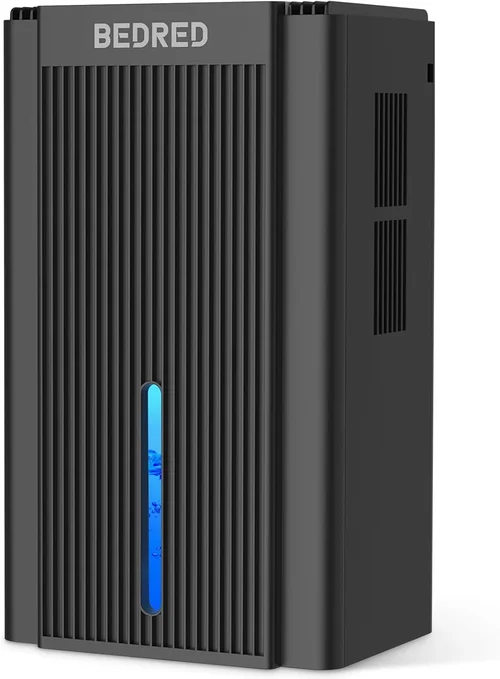
Dehumidifiers have evolved from niche appliances into essential home climate control devices, especially as humidity-related issues like mold, dust mites, and musty odors become more prevalent in modern homes. Whether you’re dealing with a damp basement, a stuffy bedroom, or simply trying to improve indoor air quality, the right dehumidifier can make a dramatic difference in comfort and health. With so many models flooding the market—ranging from compact units under $100 to high-capacity industrial-grade machines—it’s easy to feel overwhelmed. That’s where this guide comes in. We’ve spent months researching, testing, and analyzing the latest dehumidifiers to bring you a comprehensive, expert-level buying guide tailored for 2026.
In this article, you’ll learn everything you need to know to make a confident, informed decision. From understanding key performance metrics like pint capacity and energy efficiency to comparing different types of dehumidifiers and avoiding common purchasing pitfalls, we’ve got you covered. We’ll break down the top five models currently available, highlight what to look for based on your specific needs, and provide actionable tips to help you get the best value for your money. Whether you’re a first-time buyer or upgrading from an older unit, this guide is designed to cut through the noise and deliver clarity.
The dehumidifier market in 2026 is more competitive than ever, with brands like Frigidaire, GE, hOmeLabs, and Midea pushing the boundaries of smart technology, energy efficiency, and user-friendly design. Innovations such as Wi-Fi connectivity, auto-defrost functions, and advanced filtration systems are now standard in many mid-to-high-tier models. At the same time, budget-friendly options continue to improve in performance and reliability. With rising concerns about indoor air quality and the long-term effects of excess moisture, investing in a quality dehumidifier is no longer a luxury—it’s a necessity. Let’s dive into the details so you can find the perfect match for your home.

What to Look for When Buying Buying Guide
1. Pint Capacity and Room Size Compatibility
One of the most critical factors when choosing a dehumidifier is its pint capacity—the amount of moisture it can remove from the air in 24 hours. This is typically measured in pints per day (PPD) and directly correlates to the size of the space it can effectively treat. For example, a 30-pint unit is ideal for small to medium rooms (up to 500–700 sq. ft.), while a 50-pint model is better suited for larger areas like basements or open-concept living spaces (up to 1,500 sq. ft.). Choosing a unit that’s too small will result in inadequate moisture removal, while an oversized dehumidifier may cycle on and off too frequently, reducing efficiency and increasing wear.
To determine the right capacity, consider both the square footage and the humidity level of the area. A damp basement in a humid climate may require a higher-capacity unit than a slightly musty closet in a dry region. Most manufacturers provide sizing charts based on room conditions: normal, moderately damp, very damp, or wet. Always err on the side of a slightly larger capacity if you’re between sizes, especially if you live in a high-humidity region or have recurring moisture issues.
2. Energy Efficiency and Operating Costs
Dehumidifiers run for extended periods, sometimes 24/7, which means energy consumption can significantly impact your utility bill. Look for models with the ENERGY STAR® certification, which indicates they meet strict efficiency guidelines set by the U.S. Environmental Protection Agency. ENERGY STAR-certified dehumidifiers use up to 15% less energy than standard models, translating to real savings over time. For instance, a 50-pint ENERGY STAR unit might cost around $30–$40 per year to operate, compared to $50–$60 for a non-certified equivalent.
Check the unit’s energy factor (EF), measured in liters of water removed per kilowatt-hour (L/kWh). Higher EF values mean better efficiency. A good benchmark is an EF of 1.5 or higher for mid-sized units. Also, consider features like auto-humidistat, which allows the dehumidifier to shut off once the desired humidity level is reached, preventing unnecessary runtime. Some advanced models even include eco modes or variable fan speeds to further reduce energy use.
3. Drainage Options and Tank Capacity
All dehumidifiers collect moisture in an internal tank, but how you manage that water can make a big difference in convenience and maintenance. Smaller units typically have tanks ranging from 7 to 12 pints, requiring frequent emptying—sometimes multiple times a day in high-humidity conditions. Larger models may have 16-pint tanks or more, but even these can fill quickly in damp environments.
For hassle-free operation, look for models with continuous drainage options. This usually involves connecting a standard garden hose to a built-in drain port, allowing water to flow directly into a floor drain, sump pump, or utility sink. This is especially useful in basements or crawl spaces where manual emptying isn’t practical. Some premium units also include built-in pumps that can push water vertically or over longer distances, adding flexibility in placement.
4. Noise Level and Placement Considerations
Dehumidifiers use compressors and fans to circulate air, which can generate noise—sometimes as much as 50–60 decibels (dB), comparable to a quiet conversation or background music. While this may not be disruptive in a basement, it can be bothersome in living rooms, bedrooms, or home offices. If quiet operation is a priority, look for models specifically marketed as “quiet” or “low-noise,” often with ratings below 50 dB.
Placement also affects perceived noise. Units placed on carpet may vibrate more, increasing sound levels. Consider using rubber feet or placing the dehumidifier on a hard, level surface. Additionally, some models feature insulated compressor compartments or variable-speed fans that reduce noise during low-demand periods. If you’re sensitive to sound, read user reviews that mention noise levels, as manufacturer specs can sometimes be optimistic.
5. Smart Features and Automation
In 2026, smart home integration is no longer a luxury—it’s a standard expectation for many buyers. Wi-Fi-enabled dehumidifiers allow you to monitor and control humidity levels remotely via smartphone apps. You can set schedules, receive alerts when the tank is full, or adjust settings based on real-time humidity data. Some models even integrate with voice assistants like Alexa or Google Assistant, enabling hands-free control.
Advanced automation features include adaptive defrost (which prevents ice buildup in cold environments), auto-restart after power outages, and humidity-based scheduling. For example, you can program the unit to run more aggressively during humid summer months and scale back in drier seasons. These features not only improve convenience but also enhance efficiency and longevity by optimizing performance based on actual conditions.
6. Build Quality and Durability
A dehumidifier is a long-term investment, so build quality matters. Look for units with sturdy plastic or metal casings, well-sealed components, and corrosion-resistant coils—especially if you’re using it in a basement or garage where conditions can be harsh. Check for reinforced handles, smooth-rolling casters, and secure tank latches, which indicate attention to detail and durability.
Internal components like the compressor, fan motor, and evaporator coils should be designed for continuous operation. Avoid ultra-cheap models that use flimsy materials or lack proper insulation, as they’re more prone to breakdowns. Reading long-term user reviews can reveal common failure points, such as leaking tanks or compressor burnout after a few years of use.
7. Warranty and Customer Support
A solid warranty is a strong indicator of a manufacturer’s confidence in their product. Most reputable brands offer at least a one-year limited warranty, but some extend coverage to two or even three years, especially on compressors and sealed systems. Look for companies with responsive customer service and accessible repair or replacement options.
Before purchasing, check the warranty terms: Does it cover labor and parts? Are there exclusions for certain types of damage? Is registration required? Also, consider whether the brand has local service centers or partnerships with repair technicians. A longer warranty with poor support is less valuable than a shorter one with excellent service.
8. User Reviews and Real-World Performance
While manufacturer specifications provide useful benchmarks, real-world performance often tells a different story. User reviews on platforms like Amazon, Home Depot, and Consumer Reports can reveal insights about reliability, ease of use, and hidden flaws. Pay attention to patterns: if multiple users report the same issue—such as a faulty humidistat or poor drainage—it’s likely a design flaw.
Look for reviews that match your use case. For example, if you need a dehumidifier for a cold basement, seek out feedback from users in similar environments. Also, consider the longevity of reviews; a unit with hundreds of five-star ratings over several years is generally more trustworthy than one with only a few recent positive comments.
Different Types of Buying Guide

Common Buying Mistakes to Avoid
❌ Mistake: Choosing Based Solely on Price
Why it’s bad: The cheapest dehumidifier may save you money upfront but could cost more in the long run due to higher energy consumption, frequent repairs, or short lifespan. Low-cost models often lack essential features like auto-humidistats or continuous drainage, leading to poor performance and user frustration.
What to do instead: Focus on value, not just price. Compare total cost of ownership, including energy use, maintenance, and expected lifespan. A $300 unit that lasts 8 years and uses less electricity is often a better deal than a $150 model that fails after two.
❌ Mistake: Ignoring Room Size and Humidity Level
Why it’s bad: A dehumidifier that’s too small for your space will run constantly without effectively reducing humidity, while an oversized unit may short-cycle, reducing efficiency and increasing wear. Both scenarios lead to wasted energy and poor results.
What to do instead: Measure your room and assess moisture levels. Use manufacturer sizing guides and consider upgrading one size if you live in a humid climate or have persistent dampness.
❌ Mistake: Overlooking Drainage Needs
Why it’s bad: If you don’t plan for drainage, you’ll be stuck manually emptying the tank multiple times a day—especially in high-humidity areas. This is inconvenient and can lead to neglect, causing the unit to shut off and humidity to rise again.
What to do instead: Choose a model with a continuous drain option or built-in pump if you can’t place the unit near a drain. Even if you start with a tank, having the option to add a hose later is a smart backup.
❌ Mistake: Buying Without Checking Noise Levels
Why it’s bad: A noisy dehumidifier can disrupt sleep, work, or relaxation, especially in open-plan homes or bedrooms. Many buyers regret not considering sound output until it’s too late.
What to do instead: Look for decibel ratings and read user reviews about noise. If possible, test the unit in-store or choose a model with a “quiet mode” or insulated compressor.
❌ Mistake: Skipping Warranty and Support Research
Why it’s bad: Dehumidifiers contain complex mechanical parts that can fail. Without a solid warranty or reliable customer service, you could be left with a broken unit and no recourse.
What to do instead: Prioritize brands with strong warranties (2+ years) and positive customer service reviews. Check if the company offers in-home repair or replacement programs.
❌ Mistake: Not Considering Smart Features
Why it’s bad: While not essential, smart features like remote monitoring and scheduling can significantly improve convenience and efficiency. Ignoring them means missing out on modern advancements that make dehumidifiers easier to use.
What to do instead: Evaluate whether smart capabilities align with your lifestyle. If you travel often or want to integrate with your smart home, a Wi-Fi-enabled model is worth the extra cost.
Budget Guidelines: How Much Should You Spend?
Entry-Level ($80 – $200): These compact units are ideal for small spaces like closets, bathrooms, or RVs. They typically remove 15–30 pints per day and come with basic features like manual controls and small tanks. While affordable, they may lack energy efficiency, quiet operation, or durability. Best for occasional use or low-humidity areas.
Mid-Range ($200 – $400): This is the sweet spot for most homeowners. These dehumidifiers offer 30–50 pint capacity, ENERGY STAR certification, auto-humidistats, and continuous drainage options. They’re quiet, reliable, and efficient enough for daily use in bedrooms, living rooms, or small basements. Expect better build quality and longer lifespans.
Premium ($400 – $700): Designed for larger spaces and demanding conditions, these models feature 50+ pint capacity, advanced filtration, smart controls, and robust construction. They often include built-in pumps, multi-speed fans, and extended warranties. Ideal for basements, garages, or homes in high-humidity regions.
Luxury ($700+): Top-tier units offer cutting-edge technology, such as AI-driven humidity control, whole-home integration, and premium materials. These are best for tech enthusiasts, large properties, or those seeking maximum convenience and performance. While expensive, they deliver unmatched efficiency and user experience.
Expert Tips for Getting the Best Deal
– Buy during off-peak seasons: Dehumidifiers are in highest demand during summer. Shop in late fall or winter (October–February) for discounts and promotions.
– Check for rebates and incentives: Some utility companies offer rebates for ENERGY STAR appliances. Visit your provider’s website or the ENERGY STAR rebate finder.
– Compare online and in-store prices: Retailers like Home Depot, Lowe’s, and Amazon often run exclusive deals. Use price-tracking tools like Honey or CamelCamelCamel to monitor fluctuations.
– Look for bundle deals: Some brands offer discounts when you buy a dehumidifier with an air purifier or humidifier.
– Read return policies carefully: Ensure the retailer allows returns within 30–60 days, especially for large appliances. Some charge restocking fees.
– Test before committing: If possible, run the unit for a few days to assess noise, performance, and ease of use. Many retailers offer trial periods.
– Register your product: This activates the warranty and may qualify you for firmware updates or service alerts.
– Consider refurbished models: Certified refurbished units from reputable sellers can save 20–30% and often come with full warranties.

Frequently Asked Questions
Q: How often should I run my dehumidifier?
A: It depends on humidity levels. In high-moisture areas, run it continuously or use a humidistat to maintain 30–50% humidity. In drier conditions, intermittent use may suffice.
Q: Can a dehumidifier help with allergies?
A: Yes. By reducing moisture, dehumidifiers inhibit mold, dust mites, and mildew—common allergens. Pair with an air purifier for best results.
Q: Do dehumidifiers use a lot of electricity?
A: It varies. A 50-pint ENERGY STAR model uses about 500–700 watts. At $0.12/kWh, that’s roughly $1.50–$2.00 per day if running 24/7.
Q: Can I use a dehumidifier in winter?
A: Yes, but only if the room stays above 65°F. Most compressor-based units struggle in cold temperatures. Desiccant models work better in cold climates.
Q: Should I leave the dehumidifier on all the time?
A: Not necessarily. Use a humidistat to automate operation. Constant running isn’t needed if humidity is already under control.
Q: How do I clean my dehumidifier?
A: Unplug the unit, remove and wash the tank with mild soap, and wipe the coils and filter. Replace filters as recommended (usually every 3–6 months).
Q: Can a dehumidifier cause dry skin?
A: Possibly, if humidity drops below 30%. Use a hygrometer to monitor levels and adjust settings to stay within the ideal range.
Q: Are portable dehumidifiers effective?
A: Yes, for small spaces. They’re convenient and affordable but may not handle large or very damp areas as effectively as larger units.
Q: What’s the difference between a dehumidifier and an air conditioner?
A: Both remove moisture, but air conditioners cool the air as a primary function. Dehumidifiers focus solely on reducing humidity and may slightly warm the air.
Q: How long do dehumidifiers last?
A: With proper maintenance, most last 5–8 years. Higher-end models with durable components can exceed 10 years.
Our Final Recommendations
Best for Budget-Conscious Buyers: hOmeLabs 30 Pint Dehumidifier – At under $200, this compact unit delivers reliable performance for small to medium rooms. It features a 7.6-pint tank, auto-defrost, and a washable filter. While not the quietest, it’s an excellent value for the price.
Best Overall Value: Frigidaire FFAD5033W1 50 Pint Dehumidifier – This ENERGY STAR-certified model offers strong moisture removal, a 16.9-pint tank, and continuous drainage. It’s quiet, efficient, and backed by a solid warranty, making it ideal for most homes.
Best Premium Option: GE APER50LZ 50 Pint Smart Dehumidifier – With Wi-Fi connectivity, voice control, and a built-in pump, this unit combines power with convenience. It’s perfect for tech-savvy users who want remote monitoring and automation.
Best for Beginners: Midea MAD20C1ZWS 20 Pint Dehumidifier – Simple controls, compact design, and low price make this a great entry point. It’s easy to set up and maintain, ideal for first-time buyers.
Best for Advanced Users: AprilAire E080 70 Pint Whole-House Dehumidifier – Designed for integration with HVAC systems, this high-capacity unit treats entire homes. It’s professional-grade, energy-efficient, and built for long-term performance.
Conclusion: Making the Right Choice
Choosing the right dehumidifier doesn’t have to be overwhelming. By focusing on your specific needs—room size, humidity level, budget, and desired features—you can narrow down the options and find a unit that delivers lasting comfort and value. Remember, the best dehumidifier isn’t necessarily the most expensive or the most powerful; it’s the one that fits seamlessly into your lifestyle and environment.
Take the time to assess your space, read real user reviews, and consider long-term costs like energy use and maintenance. Don’t rush the decision—investing in a quality dehumidifier now can prevent costly repairs, health issues, and discomfort down the line. Whether you’re tackling a damp basement or simply improving air quality, the right choice will pay dividends in comfort, health, and peace of mind.
Ready to take control of your indoor climate? Use this guide as your roadmap, compare your top contenders, and make a purchase with confidence. Your home—and your lungs—will thank you.