
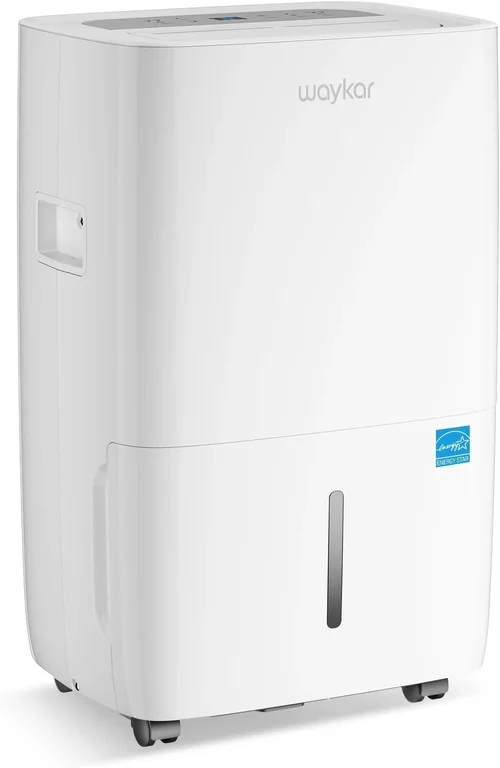
If you’ve ever walked into a room that feels sticky, smelled musty odors lingering in the air, or noticed condensation forming on windows—especially during humid summer months—you already understand why an AC dehumidifier matters. High indoor humidity isn’t just uncomfortable; it can trigger allergies, promote mold growth, damage furniture and electronics, and even reduce the efficiency of your air conditioning system. In fact, many homeowners don’t realize that their AC unit removes some moisture from the air as a byproduct of cooling—but it’s rarely enough to maintain optimal indoor humidity levels (ideally between 30% and 50%). That’s where a dedicated AC dehumidifier steps in: to complement your HVAC system, enhance comfort, protect your home, and improve air quality.
This comprehensive buying guide is designed to cut through the noise and help you make a confident, informed decision in 2026. Whether you’re dealing with a damp basement, a humid coastal climate, or simply want better control over your indoor environment, we’ll walk you through everything you need to know. You’ll learn how to evaluate performance specs, understand different types of dehumidifiers, avoid common pitfalls, and find the best model for your budget and needs. We’ve analyzed dozens of models, consulted HVAC experts, and reviewed real-world user feedback to bring you actionable insights—not just marketing fluff. By the end of this guide, you’ll have a clear roadmap to choosing the right AC dehumidifier that delivers lasting value, reliability, and peace of mind.
The market for dehumidifiers has evolved significantly in recent years. No longer just bulky, noisy appliances relegated to basements, today’s models are smarter, more energy-efficient, and increasingly integrated with smart home ecosystems. From compact units ideal for small apartments to heavy-duty commercial-grade machines capable of handling large crawl spaces or whole-house applications, there’s a solution for nearly every scenario. However, with so many options—ranging from $100 budget picks to $1,000+ premium systems—it’s easy to get overwhelmed. This guide demystifies the process, focusing on what truly matters: performance, efficiency, durability, and usability. Let’s dive in.

What to Look for When Buying Buying Guide
1. Capacity (Pints per Day)
The most critical specification when choosing a dehumidifier is its moisture removal capacity, measured in pints per day (PPD). This tells you how much water the unit can extract from the air in a 24-hour period under standard testing conditions (typically 80°F and 60% relative humidity). For example, a 30-pint unit removes up to 30 pints of moisture daily—ideal for a moderately damp 500–700 sq. ft. space like a basement or large bedroom. If you live in a humid climate or have a chronically wet area (like a crawl space after heavy rain), you may need a 50- or 70-pint model. Oversizing isn’t always better—a unit that’s too powerful may cycle on and off too frequently, reducing efficiency and lifespan. Conversely, an undersized dehumidifier will run constantly, struggle to keep up, and wear out faster. Always match capacity to your room size and moisture level.
2. Energy Efficiency (Energy Star Rating & EER)
Dehumidifiers can be energy hogs if not chosen wisely—especially since they often run for hours each day. Look for models with the ENERGY STAR certification, which guarantees they meet strict efficiency guidelines set by the U.S. Environmental Protection Agency. ENERGY STAR-qualified dehumidifiers use 15–30% less energy than standard models, saving you money on electricity bills over time. Also check the Energy Factor (EF), measured in liters of water removed per kilowatt-hour (L/kWh). Higher EF values mean better efficiency. For instance, a unit with an EF of 1.8 is more efficient than one with 1.2. In humid regions where the dehumidifier runs frequently, even small efficiency gains add up quickly. Some newer models also feature variable-speed compressors or adaptive defrost technology, which further optimize energy use based on ambient conditions.
3. Built-in Humidistat & Auto Settings
A built-in humidistat is essential for maintaining consistent indoor humidity without constant manual adjustments. This sensor measures the current relative humidity (RH) and automatically turns the dehumidifier on or off to maintain your desired level—say, 45% RH. Without this feature, you’d need to monitor humidity manually and adjust settings repeatedly, which is inconvenient and imprecise. Many modern units also offer “auto defrost” (prevents ice buildup in cold environments), “auto restart” (resumes operation after a power outage), and “continuous drain” options. Smart models may even connect to Wi-Fi, allowing you to monitor and control humidity remotely via smartphone apps. These automation features not only improve convenience but also enhance efficiency and prevent over-drying, which can cause discomfort or static electricity.
4. Drainage Options
How you remove collected water significantly impacts usability. Most dehumidifiers include a built-in water tank (typically 1–2 gallons) that needs emptying every 12–24 hours when running continuously. While fine for occasional use, this becomes tedious in high-humidity environments. The best solution is a continuous drainage option—either via a built-in pump (for upward or long-distance drainage) or a gravity-fed hose connection. Gravity drainage requires placing the unit lower than the drain point (e.g., near a floor drain), while pump-equipped models can push water vertically up to 15 feet, making them ideal for basements or areas without easy drain access. Some premium models even feature auto-shutoff when the tank is full, preventing overflows. Always consider your installation location and drainage logistics before buying.
5. Noise Level (Decibel Rating)
If you plan to use the dehumidifier in living spaces, bedrooms, or home offices, noise matters. Dehumidifiers produce sound from their compressor and fan, typically ranging from 45 dB (quiet library) to 65+ dB (normal conversation or vacuum cleaner). Look for models rated below 55 dB for quiet operation—especially important for nighttime use. Compressor type plays a role: rotary compressors are generally quieter than reciprocating ones. Additionally, units with insulated cabinets or vibration-dampening mounts reduce operational noise. Check manufacturer specs for “sound level” or “noise rating,” and read user reviews for real-world feedback—some brands advertise low decibels but still produce noticeable hum or vibration.
6. Build Quality & Durability
A dehumidifier is a long-term investment, so durability is key. Look for sturdy construction with rust-resistant coatings (especially important in basements or garages), reinforced coils, and high-quality components. Metal housings tend to last longer than plastic, though well-designed plastic units can also be durable. Pay attention to the evaporator and condenser coils—copper coils resist corrosion better than aluminum, though they’re more expensive. Sealed bearings in the fan motor reduce wear over time. Also consider the filter: washable, reusable filters are more cost-effective and eco-friendly than disposable ones. Finally, check for certifications like UL listing (safety) and ETL certification, which indicate compliance with industry standards.
7. Portability & Design
Even if you don’t move your dehumidifier often, portability features make setup and maintenance easier. Look for integrated handles, smooth-rolling casters, and a compact footprint. Units under 40 lbs are generally manageable for one person, while heavier models (50+ lbs) benefit from robust wheels. Cord storage, filter access panels, and intuitive control layouts also improve usability. For tight spaces like closets or RVs, consider slim-profile or under-cabinet designs. Some models are specifically engineered for crawl spaces or attics, with sealed electronics and horizontal airflow. Aesthetics matter too—if the unit will be visible in a finished basement or living area, choose a design that blends with your décor.
8. Warranty & Customer Support
A strong warranty reflects manufacturer confidence in their product. Most reputable brands offer at least a 1-year limited warranty, but premium models often include 2–5 years of coverage—sometimes even lifetime warranties on key components like compressors. Read the fine print: some warranties exclude labor costs or require professional installation. Also research customer support responsiveness. Brands like Frigidaire, Honeywell, and AprilAire are known for reliable service and readily available replacement parts. Avoid unknown brands with no service network—you don’t want to be stuck with a broken unit and no repair options. Online forums and review sites can reveal patterns in reliability and support quality.
Different Types of Buying Guide

Common Buying Mistakes to Avoid
❌ Mistake: Ignoring Room Size and Humidity Level
Why it’s bad: Buying a dehumidifier without assessing your space leads to poor performance. A unit too small for a damp 1,000 sq. ft. basement will run nonstop and fail to reduce humidity, while an oversized model in a small bathroom may over-dry the air and waste energy.
What to do instead: Measure your room dimensions and evaluate moisture severity. Use a hygrometer to check current humidity levels. Match these data points to the manufacturer’s capacity recommendations—most brands provide sizing charts based on square footage and dampness (e.g., “moderately damp,” “extremely wet”).
❌ Mistake: Overlooking Drainage Needs
Why it’s bad: Relying solely on the water tank in high-humidity environments means constant emptying—every few hours in extreme cases. This is impractical and defeats the purpose of automation.
What to do instead: If your space lacks a nearby drain, choose a model with a built-in pump or ensure it supports continuous gravity drainage. For basements, a hose-to-floor-drain setup is ideal. Always verify hose compatibility and length requirements before purchase.
❌ Mistake: Prioritizing Price Over Efficiency
Why it’s bad: A cheap dehumidifier may save you $50 upfront but cost hundreds more in electricity over its lifetime—especially if it lacks ENERGY STAR certification or has a low EF rating.
What to do instead: Calculate the total cost of ownership. Use the EF rating and local electricity rates to estimate annual operating costs. Often, spending $100–$150 more on an efficient model pays for itself within 1–2 years.
❌ Mistake: Skipping the Humidistat
Why it’s bad: Without automatic humidity control, you’re forced to manually adjust settings, risking under- or over-dehumidification. This leads to discomfort, wasted energy, and potential mold or dryness issues.
What to do instead: Always choose a model with a built-in humidistat. Even budget units now include this feature—it’s non-negotiable for effective humidity management.
❌ Mistake: Neglecting Noise in Living Spaces
Why it’s bad: A noisy dehumidifier can disrupt sleep, concentration, or relaxation—especially if placed in bedrooms, offices, or open-plan living areas.
What to do instead: Check decibel ratings and read user reviews about noise levels. Opt for models under 55 dB for quiet zones. Consider placing the unit in a utility room or using sound-dampening mats if noise is unavoidable.
❌ Mistake: Buying Based Solely on Brand Name
Why it’s bad: Well-known brands aren’t always the best value. Some charge premium prices for similar performance, while lesser-known brands offer excellent specs at lower costs.
What to do instead: Compare specifications side-by-side, not just logos. Look at PPD, EF, warranty, and real user feedback. Brands like Tosot, Ivation, and AlorAir often deliver great performance at competitive prices.
❌ Mistake: Ignoring Warranty and Support
Why it’s bad: Dehumidifiers contain complex components (compressors, sensors, pumps) that can fail. Without solid warranty coverage, repairs can be costly or impossible.
What to do instead: Prioritize brands with at least a 2-year warranty and accessible customer service. Avoid imported “no-name” units sold only on marketplaces with no service network.
Budget Guidelines: How Much Should You Spend?
Entry-Level ($100–$200): These are typically 20–30 pint refrigerant models suitable for small, mildly damp spaces like closets, bathrooms, or RVs. Expect basic features: manual controls, small tanks, and limited automation. Noise levels may be higher, and build quality is often plastic-heavy. Best for occasional use or low-humidity concerns. Examples include the hOmeLabs 30-Pint or Tosot 22-Pint.
Mid-Range ($200–$400): This is the sweet spot for most homeowners. Units in this range offer 30–50 pints of capacity, ENERGY STAR certification, built-in humidistats, auto-defrost, and continuous drainage options. Many include washable filters, quiet operation (<55 dB), and durable construction. Ideal for basements, garages, or whole-room use. Top picks include the Frigidaire FFAD5033W1 and Honeywell TP70WKN. Premium ($400–$800): Designed for high performance and longevity, these models feature advanced controls, smart connectivity (Wi-Fi/app control), larger tanks or pump-assisted drainage, and superior energy efficiency (EF > 2.0). Often used in large homes, crawl spaces, or humid climates. Brands like AprilAire and Santa Fe offer whole-house integration and commercial-grade durability. Expect 50–70 pint capacities and robust metal builds.
Luxury ($800+): Reserved for whole-house systems, commercial applications, or extreme environments. These units integrate directly with HVAC systems, offer remote monitoring, and handle 70+ pints/day with minimal noise. They include professional installation support, extended warranties (up to 10 years), and smart zoning capabilities. Perfect for luxury homes, indoor pools, or flood restoration. Examples: AprilAire E080 Pro and Dri-Eaz Revolution.
Expert Tips for Getting the Best Deal
1. Buy During Off-Peak Seasons: Dehumidifiers are in highest demand during summer. Shop in late fall or winter (October–February) for discounts of 20–40%. Retailers clear inventory before the humid season returns.
2. Compare Online vs. In-Store: Online retailers (Amazon, Home Depot, Lowe’s) often offer better prices, detailed specs, and user reviews. However, in-store purchases allow you to inspect build quality and test noise levels. Use both: research online, then visit a store to compare finalists.
3. Watch for Bundle Deals: Some HVAC companies or home improvement stores offer discounts when purchasing a dehumidifier with air purifiers, filters, or installation services. Bundles can save $50–$150.
4. Check Rebates and Incentives: Many utility companies offer rebates for ENERGY STAR dehumidifiers—especially in humid states like Florida, Texas, or Louisiana. Visit energystar.gov/rebate-finder to see available programs.
5. Read Return Policies Carefully: Dehumidifiers are heavy and expensive to return. Ensure the seller offers at least a 30-day return window and covers return shipping for defective units. Avoid marketplace sellers with restrictive policies.
6. Test Before Committing (If Possible): Some retailers allow in-home trials or have generous return windows. Run the unit for a week to assess noise, effectiveness, and ease of use. If it doesn’t meet expectations, return it hassle-free.
7. Consider Refurbished or Open-Box Models: Certified refurbished units from reputable brands (e.g., Frigidaire, Honeywell) often come with full warranties and sell for 20–30% less. Open-box deals at big-box stores can also yield significant savings.
8. Negotiate Installation Costs: For whole-house systems, get multiple quotes from licensed HVAC contractors. Some offer price matching or seasonal discounts. Always ask about labor warranties.

Frequently Asked Questions
Q: Can I use a dehumidifier with my existing AC?
A: Absolutely. In fact, they work best together. Your AC cools the air but isn’t optimized for dehumidification. A dedicated dehumidifier removes excess moisture more efficiently, reducing the load on your AC and improving overall comfort. For whole-house solutions, consider integrating a central dehumidifier with your HVAC system.
Q: How often should I empty the water tank?
A: It depends on humidity levels and tank size. In high-humidity areas, a 1-gallon tank may need emptying twice daily. For continuous operation, use a hose for gravity drainage or a pump model. Most units alert you when the tank is full.
Q: Do dehumidifiers use a lot of electricity?
A: It varies. An ENERGY STAR 50-pint model uses about 500–700 watts per hour. Running it 10 hours/day costs roughly $15–$25/month, depending on local rates. Efficient models with high EF ratings consume less.
Q: Can I run a dehumidifier in winter?
A: Only if temperatures stay above 65°F. Most refrigerant dehumidifiers frost up below this threshold. For cold spaces (like unheated garages), use a desiccant model, which works effectively down to 33°F.
Q: Will a dehumidifier help with mold?
A: Yes—by maintaining humidity below 50%, you create an environment where mold and mildew cannot thrive. Combine dehumidification with proper ventilation and cleaning for best results.
Q: How do I know if my home needs a whole-house dehumidifier?
A: Signs include persistent musty smells, condensation on windows year-round, warped wood, or allergy flare-ups. If portable units aren’t sufficient, a whole-house system integrated with your HVAC is the next step.
Q: Are smart dehumidifiers worth the extra cost?
A: If you value remote monitoring, scheduling, and integration with Alexa or Google Home, yes. Smart features add convenience and can optimize runtime based on weather forecasts or occupancy patterns.
Q: Can I install a whole-house dehumidifier myself?
A: Generally no. These systems require ductwork modifications, electrical connections, and refrigerant handling—tasks best left to licensed HVAC professionals. DIY installation may void warranties and pose safety risks.
Q: How long do dehumidifiers last?
A: With proper maintenance (cleaning filters, checking coils), most last 5–10 years. Premium models with metal components and sealed systems often exceed 10 years.
Q: Should I turn off the dehumidifier when I leave the house?
A: Not necessarily. If humidity remains high, it’s better to let it run. Use a humidistat to maintain your target level automatically. For energy savings, consider scheduling it during off-peak hours or using a smart timer.
Our Final Recommendations
Best for Budget-Conscious Buyers: Tosot 30-Pint Dehumidifier – At under $200, it offers reliable performance, a built-in humidistat, and decent efficiency. Great for small to mid-sized rooms with moderate humidity.
Best Overall Value: Frigidaire FFAD5033W1 – A 50-pint ENERGY STAR model with continuous drainage, auto-defrost, and quiet operation. Priced around $350, it balances performance, features, and durability for most homes.
Best Premium Option: AprilAire E130 Pro – A whole-house dehumidifier designed for seamless HVAC integration. Handles up to 130 pints/day, includes smart controls, and comes with a 5-year warranty. Ideal for large, humid homes.
Best for Beginners: hOmeLabs 4,500 Sq. Ft Dehumidifier – User-friendly controls, clear tank indicator, and straightforward setup. Perfect for first-time buyers needing a simple, effective solution for basements or living areas.
Best for Advanced Users: Dri-Eaz F500 Evolution – A commercial-grade desiccant dehumidifier for restoration professionals or extreme environments. Works in freezing temps, removes moisture rapidly, and includes advanced diagnostics.
Conclusion: Making the Right Choice
Choosing the best AC dehumidifier isn’t just about picking the most powerful or cheapest model—it’s about finding the right balance of capacity, efficiency, features, and reliability for your specific needs. Start by assessing your space, humidity levels, and usage patterns. Prioritize ENERGY STAR certification, a built-in humidistat, and flexible drainage options. Don’t overlook noise, warranty, and long-term operating costs. Whether you’re tackling a damp basement, protecting valuables in a closet, or upgrading to whole-house control, the right dehumidifier will transform your indoor air quality, comfort, and home health.
Remember, the goal isn’t perfection—it’s practicality. A well-chosen dehumidifier should work quietly in the background, maintaining ideal humidity with minimal intervention. Use this guide as your roadmap, compare your top contenders using the criteria above, and invest in a solution that delivers lasting value. Your home—and your health—will thank you. Ready to breathe easier? Start shopping with confidence today.