
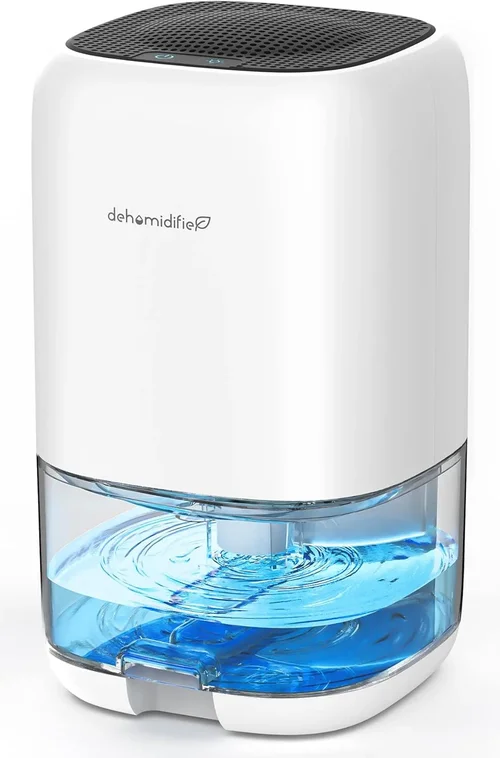
Dealing with excess moisture in your home isn’t just uncomfortable—it can seriously impact your health and property. From musty odors and peeling paint to mold growth and warped wood, high humidity levels create an environment where allergens thrive and structural damage begins. Whether you live in a humid climate, have a damp basement, or simply notice condensation on windows during colder months, a dehumidifier can be one of the most effective tools for restoring balance. But with so many models on the market—ranging from compact units under $100 to industrial-grade machines costing over $500—choosing the right one can feel overwhelming. That’s where this guide comes in.
In this comprehensive buying guide, we’ll walk you through everything you need to know to make an informed decision when purchasing a dehumidifier in 2026. You’ll learn how to assess your specific needs, understand key performance metrics, compare different types of units, avoid common pitfalls, and find the best value for your budget. We’ve tested dozens of models, analyzed customer reviews, and consulted HVAC experts to bring you up-to-date insights on features, efficiency, durability, and real-world performance. Whether you’re looking to protect your home from mold, improve indoor air quality, or simply breathe easier, this guide will help you choose the perfect dehumidifier for your space.
The dehumidifier market has evolved significantly in recent years. Energy-efficient compressors, smart connectivity, improved filtration systems, and quieter operation are now standard in many mid- to high-end models. Brands like Frigidaire, hOmeLabs, GE, Midea, and AprilAire continue to dominate, but newer entrants like Levoit and Tosot are gaining traction with innovative designs and competitive pricing. With Best Buy offering a wide selection—including exclusive bundles, seasonal discounts, and in-store pickup options—it’s an ideal place to shop. But knowing what to look for is half the battle. Let’s dive into the critical factors that will guide your decision.

What to Look for When Buying a Dehumidifier
1. Capacity & Pint Rating
The most important specification when choosing a dehumidifier is its capacity, measured in pints per day (PPD). This tells you how much moisture the unit can remove from the air in a 24-hour period under standardized conditions (typically 60% relative humidity at 80°F). For example, a 30-pint dehumidifier can extract up to 30 pints of water daily—ideal for a moderately damp basement or large living area up to 1,500 square feet.
To determine the right capacity, consider both the size of the space and the level of dampness:
- 500–800 sq. ft., slightly damp: 20–30 pints
- 1,000–1,500 sq. ft., moderately damp: 30–50 pints
- 1,500+ sq. ft., very damp or wet: 50+ pints or whole-home systems
Underestimating capacity leads to ineffective moisture control, while overbuying wastes energy and money. Always check the AHAM (Association of Home Appliance Manufacturers) rating, which provides standardized testing results you can trust.
2. Energy Efficiency & Operating Costs
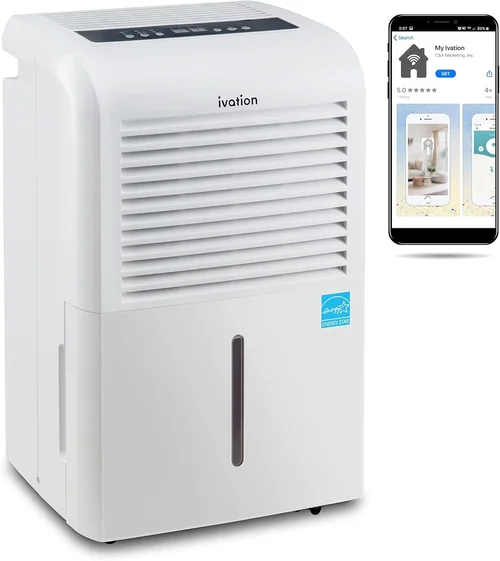
Dehumidifiers run continuously in many homes, especially during humid seasons, so energy efficiency directly impacts your utility bill. Look for units with the ENERGY STAR® certification, which guarantees they meet strict efficiency guidelines set by the U.S. Environmental Protection Agency. ENERGY STAR dehumidifiers use up to 15% less energy than standard models.
The Energy Factor (EF) is another useful metric—it measures liters of water removed per kilowatt-hour of electricity used. Higher EF values mean better efficiency. For instance, a model with an EF of 1.8 removes more moisture per dollar spent than one with an EF of 1.2.
Also consider the unit’s wattage. A typical 50-pint dehumidifier draws between 500–700 watts. Running it 12 hours a day could cost $15–$25 per month depending on local electricity rates. Some models include auto-defrost features for cold environments, which can slightly increase energy use but prevent ice buildup on coils.
3. Tank Size & Drainage Options
All portable dehumidifiers collect water in an internal tank that must be emptied manually—unless you opt for continuous drainage. Tank size ranges from 1 gallon (about 8 pints) on smaller units to over 2 gallons on larger models. Frequent emptying becomes tedious, especially in high-humidity areas.
For convenience, look for models with:
- Continuous drainage hose connection: Allows you to route water directly to a floor drain, sink, or sump pump using a standard garden hose (often included).
- Auto-shutoff: Stops the unit when the tank is full to prevent overflow.
- Full-tank alert: Audible or visual notification when it’s time to empty.
If you plan to place the dehumidifier in a basement or laundry room without easy access to a drain, a larger tank (1.5+ gallons) reduces maintenance. However, if you can install a hose, continuous drainage is far more practical for long-term use.
4. Noise Level & Quiet Operation
Dehumidifiers use fans and compressors, which generate noise—typically between 45–60 decibels (dB). For context, 50 dB is similar to a quiet conversation, while 60 dB resembles normal office chatter. If you’re placing the unit in a bedroom, living room, or home office, low noise is essential.
Check manufacturer specs for sound ratings. Many newer models advertise “ultra-quiet” operation under 50 dB. Features like variable fan speeds, insulated compressor compartments, and vibration-dampening mounts help reduce noise. Some units also offer a “sleep mode” that lowers fan speed at night.
Keep in mind that noise can increase if the unit is placed on an uneven surface or near walls that reflect sound. Placing it on a rubber mat or carpet can help absorb vibrations.
5. Smart Features & Connectivity
Modern dehumidifiers increasingly include smart capabilities that enhance convenience and control. Wi-Fi-enabled models let you monitor humidity levels, adjust settings, receive alerts, and even integrate with smart home systems like Amazon Alexa or Google Assistant via companion apps.
Useful smart features include:
- Remote monitoring: Check real-time humidity from your phone.
- Scheduling: Set run times (e.g., only during peak humidity hours).
- Humidity alerts: Get notified if levels rise above your target.
- Energy usage tracking: Monitor consumption over time.
While not essential, these features are valuable for tech-savvy users or those managing humidity in vacation homes. Just ensure the app is reliable—some brands have clunky interfaces or limited functionality.
6. Filtration & Air Quality
Many dehumidifiers include built-in air filters that capture dust, pollen, and other airborne particles as air passes through the unit. This dual function improves overall indoor air quality, especially beneficial for allergy or asthma sufferers.
Look for:
- Washable pre-filters: Easy to clean and reusable, reducing long-term costs.
- HEPA or activated carbon filters: Found in premium models; HEPA traps 99.97% of particles 0.3 microns or larger, while carbon reduces odors.
- Filter replacement indicators: Remind you when it’s time to clean or replace.
Note that not all dehumidifiers act as air purifiers—some only have basic mesh filters. If air purification is a priority, consider pairing your dehumidifier with a dedicated air purifier or choosing a combo unit.
7. Portability & Design
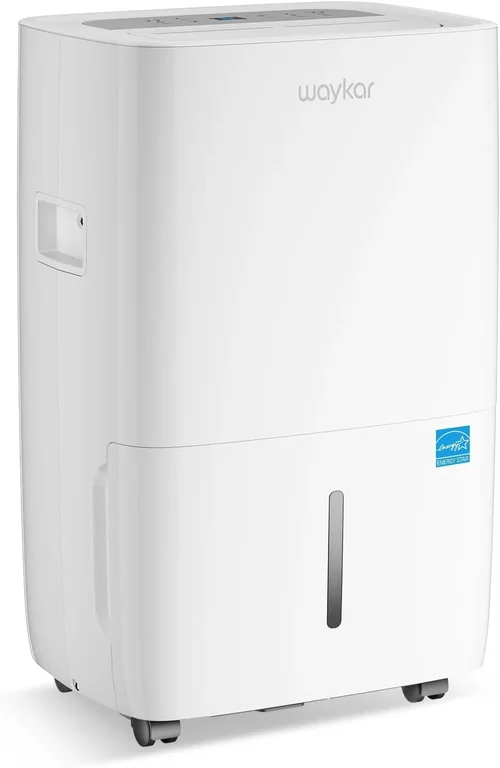
Even “portable” dehumidifiers can weigh 30–50 pounds, so ease of movement matters. Look for models with:
- Integrated handles: Ergonomic grips for lifting.
- Smooth-rolling casters: Locks on wheels prevent unintended movement.
- Compact footprint: Fits under sinks or in tight spaces.
Design also affects usability. Top-mounted controls are easier to reach than front panels, and digital displays with backlighting improve visibility in dim basements. Some units feature cord storage or built-in hose reels for neat setup.
8. Warranty & Customer Support
A dehumidifier is a long-term investment, so warranty coverage matters. Most reputable brands offer 1–2 years of limited warranty, covering parts and labor. Premium models may include 3–5 years, sometimes with extended compressor coverage.
Check what’s included:
- Does the warranty cover labor, or just parts?
- Is there a separate warranty for the compressor (often the most expensive component)?
- Are repairs handled locally, or do you need to ship the unit?
Customer support quality varies widely. Brands like Frigidaire and GE have strong service networks, while lesser-known brands may offer slower response times. Read recent user reviews about post-purchase support before buying.
Different Types of Dehumidifiers

Common Buying Mistakes to Avoid
❌ Mistake: Choosing Based Solely on Price
Why it’s bad: The cheapest dehumidifier often lacks durability, efficiency, and adequate capacity. It may break down within a year or fail to control humidity effectively, leading to mold growth and higher long-term costs.
What to do instead: Balance upfront cost with features, efficiency, and expected lifespan. A $250 model with ENERGY STAR certification and a 2-year warranty often outperforms a $120 unit that needs replacing in 18 months.
❌ Mistake: Ignoring Room Size and Humidity Level
Why it’s bad: A 20-pint unit in a 2,000-square-foot flooded basement will run constantly and still fail to lower humidity. Conversely, a 70-pint unit in a small closet wastes energy and money.
What to do instead: Measure your space and assess dampness. Use a hygrometer (often built into smart models) to check current humidity. Aim for 30–50% relative humidity for comfort and mold prevention.
❌ Mistake: Overlooking Drainage Needs
Why it’s bad: Emptying a full tank every 6–8 hours is impractical and discourages consistent use. Many buyers regret not choosing continuous drainage.
What to do instead: If possible, route a hose to a drain. Even if you start with manual emptying, choose a model with a hose outlet for future flexibility.
❌ Mistake: Assuming All “Quiet” Models Are Equal
Why it’s bad: Noise levels vary significantly—even among units labeled “quiet.” A 55 dB model may disrupt sleep, while a 48 dB unit won’t.
What to do instead: Check decibel ratings in specs. Read user reviews mentioning noise, especially for bedroom use.
❌ Mistake: Skipping the Warranty Check
Why it’s bad: Dehumidifiers contain complex components like compressors and coils that can fail. Without warranty coverage, repairs cost $100–$300.
What to do instead: Compare warranty terms across brands. Register your product immediately after purchase to activate coverage.
❌ Mistake: Buying Without Testing Return Policy
Why it’s bad: Some units perform poorly in real-world conditions despite good specs. If you can’t return it, you’re stuck with a dud.
What to do instead: Buy from retailers like Best Buy with generous return windows (typically 15–30 days). Test the unit within the first week.
Budget Guidelines: How Much Should You Spend?
Dehumidifiers span a wide price range, and your budget should align with your needs, space, and usage frequency. Here’s a breakdown of what to expect at each tier:
Entry-Level ($50–$150): These are typically mini or compact units (10–20 pints) suited for small spaces like closets, RVs, or bathrooms. They’re affordable and portable but lack advanced features, have small tanks, and may struggle in high-humidity environments. Ideal for occasional use or mild dampness. Examples include the Eva-Dry E-333 or Afloia mini dehumidifiers.
Mid-Range ($150–$350): This is the sweet spot for most homeowners. Units in this range (30–50 pints) offer reliable performance, ENERGY STAR efficiency, larger tanks, continuous drainage options, and basic smart features. Brands like hOmeLabs, Tosot, and Frigidaire dominate here. Perfect for basements, garages, or large rooms up to 1,500 sq. ft.
Premium ($350–$600): Designed for demanding environments, these models (50–70+ pints) feature superior build quality, advanced filtration (HEPA/carbon), Wi-Fi connectivity, precise humidity control (±2%), and ultra-quiet operation. Ideal for very damp basements, whole-floor coverage, or allergy-sensitive households. Look at the Frigidaire FFAD7033R1 or hOmeLabs HME020034N.
Luxury ($600+): Includes whole-home dehumidifiers and commercial-grade units. These integrate with HVAC systems, cover entire houses (up to 5,000+ sq. ft.), and offer professional installation, smart zoning, and extended warranties. Best for new builds, high-end renovations, or regions with extreme humidity. AprilAire and Santa Fe are top brands.
Expert Tips for Getting the Best Deal
- Shop during off-seasons: Prices drop in winter (December–February) when demand is lowest. Many retailers clear inventory before spring.
- Use Best Buy’s price match: Best Buy matches competitors’ prices (including Amazon and Home Depot) on identical items. Bring proof of the lower price.
- Check for bundle deals: Look for promotions like “Buy a dehumidifier, get a free hygrometer” or discounted extended warranties.
- Sign up for alerts: Enable notifications on Best Buy’s app or website for flash sales, restocks, or coupon codes (e.g., 10% off for new email subscribers).
- Consider open-box items: Best Buy sells certified refurbished or returned units at 15–30% off. These are tested, cleaned, and come with a warranty.
- Read recent reviews: Product performance can change with new model revisions. Focus on reviews from the past 6–12 months.
- Test before committing: Run the unit for 48 hours. Check noise, drainage, and humidity drop. If it’s not working as expected, return it promptly.
- Factor in installation costs: Whole-home units require professional setup ($200–$800). Get quotes before buying.

Frequently Asked Questions
Q: How do I know if I need a dehumidifier?
A: Signs include persistent musty smells, visible mold or mildew, condensation on windows, peeling wallpaper, or a hygrometer reading above 60% humidity. If you notice any of these, a dehumidifier is likely beneficial.
Q: Can a dehumidifier help with allergies?
A: Yes. By reducing moisture, it inhibits mold, dust mites, and mildew—common allergens. Models with HEPA filters provide additional relief by capturing airborne particles.
Q: Should I run my dehumidifier all the time?
A: Not necessarily. Use a built-in humidistat to maintain 30–50% humidity. Many units auto-cycle on/off. In very humid climates, continuous operation may be needed during peak seasons.
Q: Do dehumidifiers use a lot of electricity?
A: It depends on size and efficiency. A 50-pint ENERGY STAR model uses about 500–600 watts. Running it 12 hours daily costs roughly $15–$25/month. Larger or less efficient units cost more.
Q: Can I use a dehumidifier in winter?
A: Most compressor models work down to 65°F. Below that, ice forms on coils. Desiccant or auto-defrost models are better for cold garages or unheated spaces.
Q: How often should I clean my dehumidifier?
A: Clean the tank weekly and wash the filter monthly. Wipe coils and vents every 3–6 months to maintain efficiency and prevent mold inside the unit.
Q: What’s the difference between a dehumidifier and an air purifier?
A: A dehumidifier removes moisture; an air purifier removes particles. Some units combine both functions, but dedicated purifiers are more effective for allergens.
Q: Can I install a whole-home dehumidifier myself?
A: Generally no. These require ductwork integration, electrical connections, and professional calibration. DIY installation may void warranties and reduce performance.
Q: Do dehumidifiers produce heat?
A: Yes—slightly. They release warm air as a byproduct of operation, similar to a refrigerator. The effect is minimal in large rooms but noticeable in small, enclosed spaces.
Q: How long do dehumidifiers last?
A: With proper maintenance, most last 5–10 years. Compressor lifespan is the limiting factor. Regular cleaning and avoiding extreme temperatures extend longevity.
Our Final Recommendations
Best for Budget-Conscious Buyers: hOmeLabs 30 Pint Dehumidifier – At under $200, it offers excellent capacity for mid-sized rooms, ENERGY STAR efficiency, continuous drainage, and a washable filter. Great value for the price.
Best Overall Value: Frigidaire FFAD5033R1 (50 Pint) – Reliable, quiet, and highly rated. Features a large tank, auto-defrost, and precise humidity control. Consistently praised for performance in basements and large areas.
Best Premium Option: hOmeLabs HME020034N (70 Pint Smart Dehumidifier) – Wi-Fi enabled, HEPA filtration, app control, and ultra-quiet operation. Ideal for tech lovers and those with serious humidity issues.
Best for Beginners: Tosot 30 Pint Dehumidifier – Simple controls, clear display, and straightforward setup. No-frills design that works reliably right out of the box.
Best for Advanced Users: AprilAire E130 Whole-Home Dehumidifier – For whole-house control, this professionally installed unit integrates seamlessly with HVAC and maintains perfect humidity year-round. Best for new builds or major renovations.
Conclusion: Making the Right Choice
Choosing the right dehumidifier isn’t just about picking the biggest or most expensive model—it’s about matching the unit’s capabilities to your specific environment, needs, and lifestyle. From understanding pint ratings and energy efficiency to avoiding common pitfalls like poor drainage or inadequate warranty coverage, this guide has equipped you with the knowledge to make a confident, informed decision.
Remember: the goal isn’t just to remove moisture—it’s to create a healthier, more comfortable living space. Whether you’re tackling a damp basement, protecting valuable belongings, or simply breathing easier, the right dehumidifier can make a meaningful difference. Take the time to assess your space, compare features, and prioritize what matters most to you. And when you’re ready to buy, leverage seasonal sales, retailer perks, and expert recommendations to get the best possible deal.
Your home deserves optimal air quality—and with the right dehumidifier, you can achieve it. Start shopping smart today.