
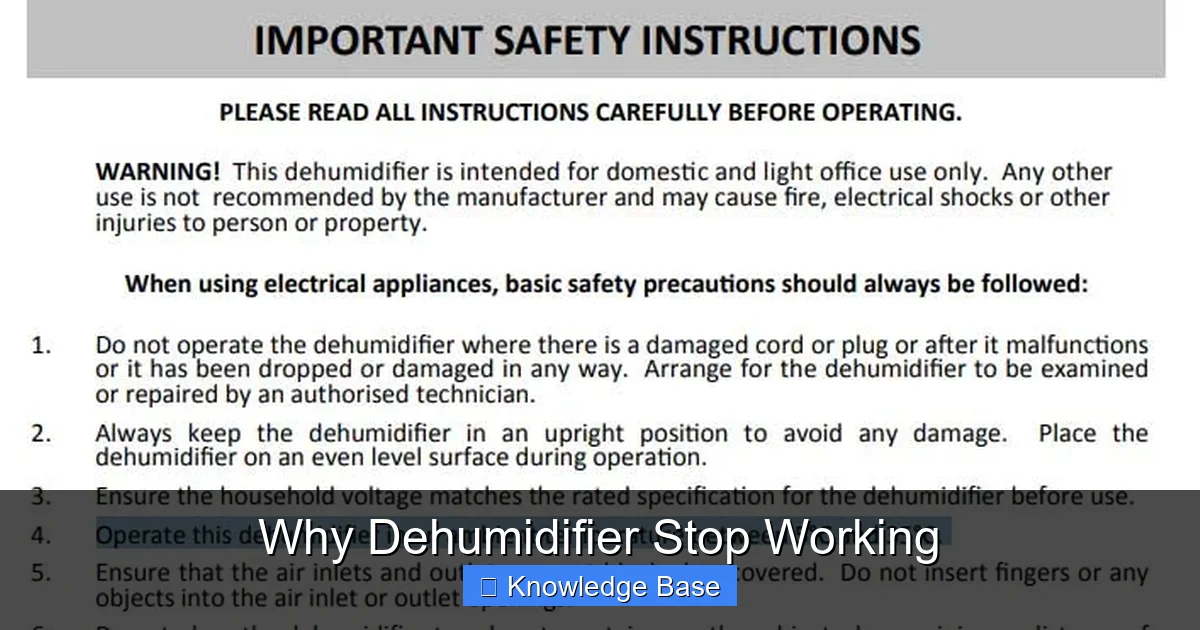
Dehumidifiers can stop working due to clogged filters, frozen coils, full tanks, or electrical issues. Regular maintenance and proper placement are key to preventing breakdowns and ensuring long-term efficiency.
Key Takeaways
- Dirty or clogged air filters restrict airflow, causing the unit to overheat or shut down.
- Frozen evaporator coils occur in cold environments, blocking moisture removal and triggering safety shutoffs.
- Full or improperly seated water tank activates auto-shutoff features, halting operation until emptied.
- Electrical problems like faulty power cords, tripped breakers, or damaged internal components can stop the dehumidifier from turning on.
- Incorrect room temperature or humidity settings may prevent the unit from activating if conditions don’t meet operational thresholds.
- Compressor or fan motor failure often results from wear, overheating, or lack of maintenance and requires professional repair.
- Improper placement or ventilation restricts airflow, reduces efficiency, and can cause premature shutdowns.
📑 Table of Contents
Why Dehumidifier Stop Working: A Complete Guide to Troubleshooting and Prevention
You walk into your basement, expecting that familiar hum of your dehumidifier quietly pulling moisture from the air. But instead, there’s silence. The machine is off—or worse, it turns on but doesn’t seem to be doing anything. Frustrating, right? You’re not alone. Many homeowners face the same issue: a dehumidifier that suddenly stops working.
Dehumidifiers are essential appliances, especially in humid climates or damp spaces like basements, laundry rooms, and crawl spaces. They help prevent mold, mildew, musty odors, and even structural damage caused by excess moisture. But like any appliance, they can fail—sometimes without warning. The good news? Most issues that cause a dehumidifier to stop working are fixable, often with simple troubleshooting steps you can do yourself.
In this guide, we’ll walk you through the most common reasons why dehumidifiers stop working, how to diagnose the problem, and what you can do to get your unit back up and running. We’ll also share practical tips to prevent future breakdowns and extend the life of your dehumidifier. Whether you’re dealing with a unit that won’t turn on, one that runs but doesn’t remove moisture, or one that shuts off unexpectedly, this article has you covered.
Common Causes Why Dehumidifiers Stop Working
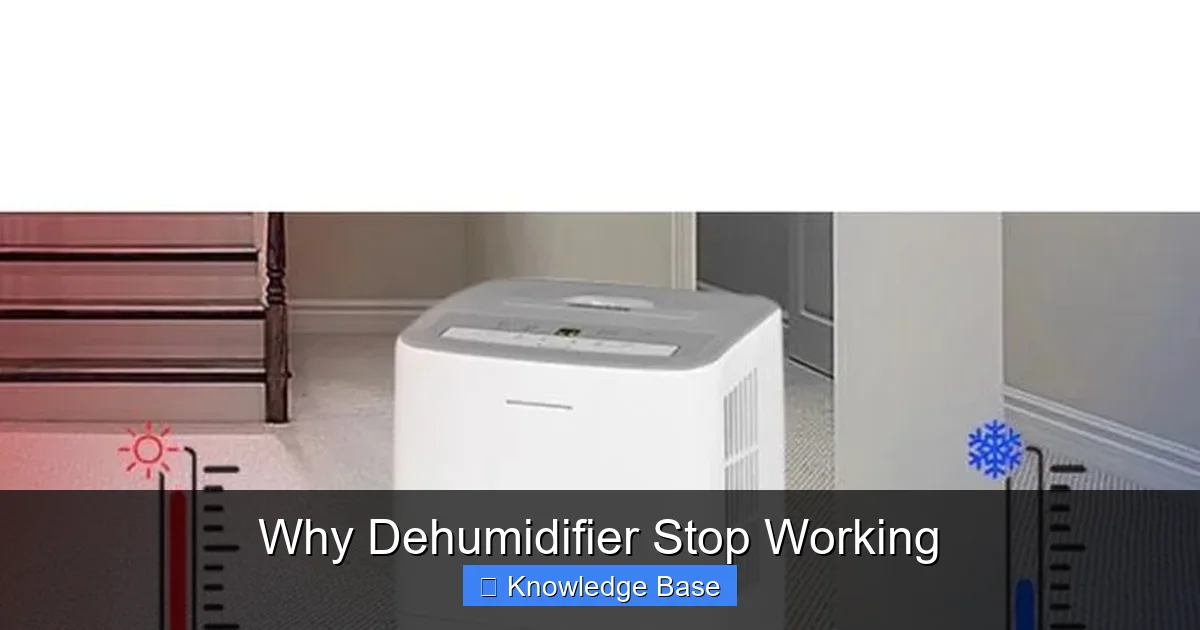
Visual guide about Why Dehumidifier Stop Working
Image source: i.pinimg.com
Understanding why your dehumidifier has stopped working starts with knowing how it operates. Most residential dehumidifiers use a refrigeration cycle: a fan pulls humid air over cold evaporator coils, where moisture condenses into water and drips into a collection tank. The dry air then passes over warm condenser coils and is released back into the room. This process relies on several key components working together—filters, coils, fans, compressors, and controls. When any of these fail or become obstructed, the entire system can shut down.
Let’s explore the most frequent culprits behind a dehumidifier that stops working.
1. Clogged or Dirty Air Filters
One of the simplest yet most overlooked reasons a dehumidifier stops working is a dirty air filter. The filter captures dust, pet dander, and other airborne particles to protect the internal components. Over time, it becomes clogged, restricting airflow. When airflow is reduced, the evaporator coils can’t cool properly, leading to inefficient moisture removal or even overheating. Many modern dehumidifiers have built-in safety sensors that detect reduced airflow and automatically shut the unit off to prevent damage.
For example, if your dehumidifier turns on but the fan runs weakly or the unit shuts off after a few minutes, a dirty filter is often the cause. You might also notice reduced moisture collection in the tank.
**What to do:**
– Turn off and unplug the unit.
– Locate the air filter (usually behind a front or side panel).
– Remove the filter and inspect it. If it’s gray or covered in dust, it needs cleaning.
– Wash it with warm, soapy water, rinse thoroughly, and let it dry completely before reinstalling.
– Replace disposable filters as recommended by the manufacturer (typically every 3–6 months).
Regular filter maintenance—every 4–6 weeks during heavy use—can prevent this issue and keep your dehumidifier running smoothly.
2. Frozen Evaporator Coils
If your dehumidifier is running but not collecting water, frozen coils might be the problem. This commonly happens when the unit is used in environments below 65°F (18°C), such as unheated basements or garages during winter. In cold air, the evaporator coils can drop below freezing, causing moisture in the air to freeze on the coils instead of dripping into the tank. Ice buildup blocks airflow and prevents the refrigerant from absorbing heat, effectively shutting down the dehumidification process.
You might notice frost or ice on the coils, reduced fan speed, or the unit cycling on and off frequently. Some models have automatic defrost features, but older or lower-end units may not.
**What to do:**
– Turn off the dehumidifier and let it sit for several hours to allow the ice to melt naturally.
– Move the unit to a warmer room (above 65°F) if possible.
– Ensure the room is well-ventilated and not excessively cold.
– If the problem persists, check the defrost sensor or thermostat—these may need replacement.
To prevent frozen coils, avoid using your dehumidifier in cold spaces unless it’s specifically rated for low-temperature operation (look for “cold climate” or “low-temp” models).
3. Full or Misaligned Water Collection Tank
Most dehumidifiers have a built-in float switch that detects when the water tank is full. When the tank reaches capacity, the switch triggers an automatic shutoff to prevent overflow. This is a safety feature, but it can be frustrating if you don’t realize the tank is full.
Sometimes, the tank may not be seated properly after emptying, causing the float switch to remain in the “full” position even when the tank is empty. This tricks the dehumidifier into thinking it’s full, so it won’t turn on or will shut off immediately.
**What to do:**
– Check the water tank. If it’s full, empty it completely.
– Remove the tank and inspect the float mechanism. Make sure it moves freely and isn’t stuck.
– Reinstall the tank, ensuring it clicks securely into place.
– Look for a “tank full” indicator light—if it’s on, the unit won’t run until the tank is emptied and reseated.
For convenience, consider upgrading to a model with a continuous drainage option. You can attach a hose to drain water directly into a floor drain or sump pump, eliminating the need to empty the tank manually.
4. Electrical Issues and Power Problems
If your dehumidifier won’t turn on at all, the issue might be electrical. Start by checking the basics:
– Is the power cord plugged in securely?
– Has the circuit breaker tripped?
– Is the outlet working (test with another device)?
Loose connections, frayed cords, or damaged plugs can interrupt power flow. Internal electrical components—like the control board, capacitor, or relay—can also fail over time, especially in units exposed to high humidity or power surges.
**What to do:**
– Test the outlet with another appliance.
– Check the circuit breaker or GFCI outlet (common in basements and laundry rooms).
– Inspect the power cord for damage. If it’s cracked or frayed, replace it or contact the manufacturer.
– If the unit still won’t turn on, the problem may be internal. Consult a qualified technician—attempting to repair electrical components yourself can be dangerous.
Using a surge protector can help protect your dehumidifier from voltage spikes, especially in areas with unstable power.
5. Incorrect Settings or Environmental Conditions
Sometimes, a dehumidifier stops working simply because it’s not needed—or it’s set incorrectly. Dehumidifiers are designed to operate within specific temperature and humidity ranges. If the room is too dry (below the set humidity level) or too cold, the unit may not activate.
For example, if your dehumidifier is set to 40% relative humidity but the room is already at 35%, the unit won’t run. Similarly, most standard dehumidifiers won’t function efficiently below 65°F.
**What to do:**
– Check the humidity setting on the control panel. Adjust it to a higher level (e.g., 50–60%) if the room feels dry.
– Use a hygrometer to measure the actual humidity in the room.
– Ensure the room temperature is within the unit’s operating range (usually 65–80°F).
– If you’re using the dehumidifier in a cold space, consider a low-temperature model.
Also, make sure the unit isn’t placed near a dehumidifying source (like a working air conditioner) that’s already lowering the humidity.
Mechanical Failures That Cause Dehumidifiers to Stop Working
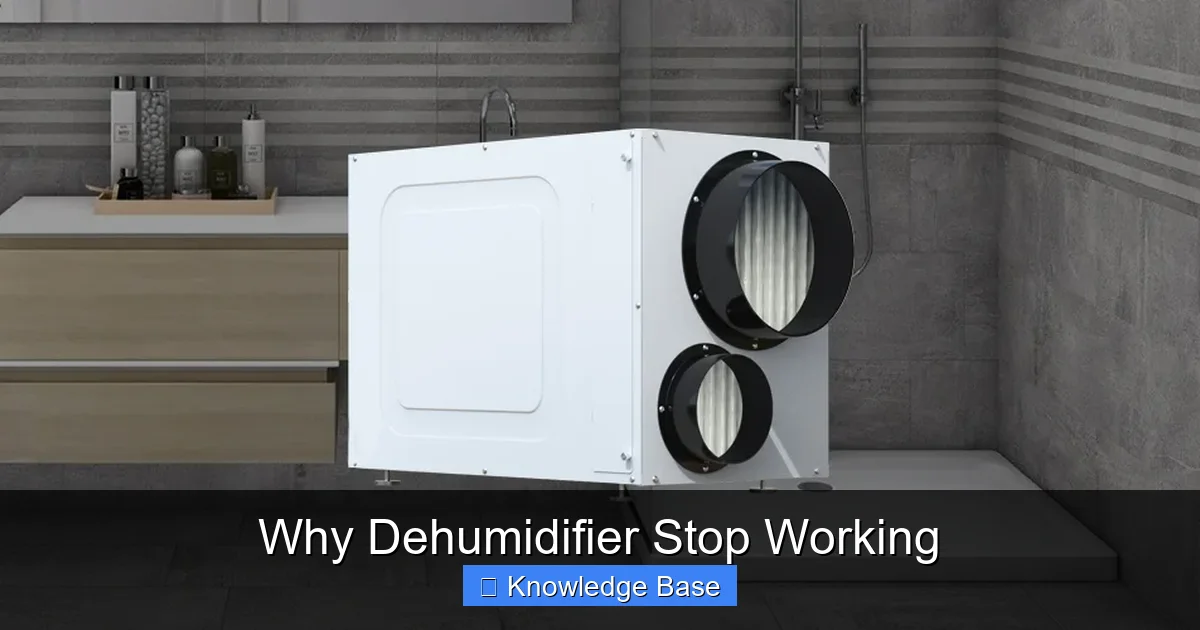
Visual guide about Why Dehumidifier Stop Working
Image source: preair.com
Beyond user-repairable issues, some problems stem from mechanical failures inside the dehumidifier. These often require professional diagnosis and repair, but understanding them can help you decide whether to fix or replace your unit.
Compressor Failure
The compressor is the heart of the dehumidifier’s refrigeration system. It pressurizes the refrigerant, enabling the heat exchange process that removes moisture from the air. If the compressor fails, the unit may hum or click but won’t cool the coils or remove humidity.
Compressor failure is often caused by overheating, lack of maintenance, or age. Signs include:
– The unit runs but doesn’t cool the coils.
– Loud knocking or buzzing noises.
– The compressor gets extremely hot.
**What to do:**
– Turn off the unit immediately to prevent further damage.
– Contact a certified HVAC technician. Compressor replacement is complex and often costly—sometimes more than the value of the unit.
– Consider replacing the dehumidifier if it’s over 5–7 years old.
Fan Motor Malfunction
The fan motor circulates air over the coils. If it fails, airflow stops, and the dehumidifier can’t remove moisture. You might hear a clicking sound, see the fan not spinning, or notice the unit overheating.
Fan motors can burn out due to dust buildup, worn bearings, or electrical issues.
**What to do:**
– Check if the fan spins freely by hand (with power off).
– Clean around the fan blades and motor housing.
– If the motor is seized or making grinding noises, it likely needs replacement.
– Consult a technician—motor replacement requires disassembly and electrical knowledge.
Refrigerant Leaks
Refrigerant is essential for the cooling process. If there’s a leak, the system can’t remove moisture, and the coils won’t get cold. Signs include reduced performance, hissing sounds, or oily residue near coils.
**What to do:**
– Refrigerant leaks require professional repair. DIY recharging is illegal in many areas and unsafe.
– A technician will locate the leak, repair it, and recharge the system.
– Due to cost and environmental regulations, replacement may be more practical for older units.
Preventative Maintenance to Keep Your Dehumidifier Running
The best way to avoid a dehumidifier that stops working is regular maintenance. A little effort goes a long way in extending the life of your unit and ensuring consistent performance.
Monthly Maintenance Checklist
– Clean the air filter every 4–6 weeks.
– Wipe down the exterior with a damp cloth.
– Check the water tank for mold or mildew and clean it with a mild bleach solution if needed.
– Inspect the power cord and plug for damage.
Seasonal Maintenance
– Before heavy use (spring/summer), inspect coils for dust or ice buildup.
– In winter, store the unit in a dry, climate-controlled area if not in use.
– Check drainage hoses for clogs if using continuous drainage.
Proper Placement Tips
– Keep the dehumidifier at least 6–12 inches away from walls and furniture for proper airflow.
– Avoid placing it near heat sources (furnaces, water heaters) or in direct sunlight.
– Use it in enclosed spaces for maximum efficiency.
When to Call a Professional
While many issues can be resolved at home, some problems require expert help. Call a technician if:
– The unit makes unusual noises (banging, grinding, hissing).
– You suspect a refrigerant leak or electrical fault.
– The compressor or fan motor fails.
– Repairs exceed the cost of a new unit.
Regular servicing every 1–2 years can also prevent major breakdowns and keep your dehumidifier in top condition.
Conclusion
A dehumidifier that stops working doesn’t have to be a disaster. In most cases, the cause is something simple—like a dirty filter, full tank, or frozen coils—that you can fix yourself with a little troubleshooting. By understanding how your dehumidifier works and staying on top of maintenance, you can avoid unexpected shutdowns and enjoy a healthier, more comfortable home.
Remember: clean the filter regularly, empty the tank, keep the unit in a suitable environment, and don’t ignore warning signs like strange noises or reduced performance. When in doubt, consult the user manual or contact a professional. With proper care, your dehumidifier can serve you reliably for many years.
Frequently Asked Questions
Why does my dehumidifier turn on but not remove moisture?
This is often due to dirty air filters, frozen coils, or a malfunctioning compressor. Check the filter first, ensure the room is above 65°F, and inspect the coils for ice buildup.
Can a dehumidifier overheat and shut off?
Yes. Restricted airflow from a clogged filter or blocked vents can cause overheating. Most units have thermal cutoffs that shut them off to prevent damage.
How often should I clean my dehumidifier’s filter?
Clean the filter every 4–6 weeks during heavy use, or monthly in humid seasons. Replace disposable filters as recommended by the manufacturer.
Is it normal for a dehumidifier to make noise?
A low hum or fan sound is normal. However, loud banging, grinding, or clicking noises may indicate a failing motor or compressor and should be checked by a technician.
Can I use my dehumidifier in a cold basement?
Only if it’s rated for low-temperature operation (below 65°F). Standard models may freeze up and stop working in cold environments.
Should I unplug my dehumidifier when not in use?
Yes, especially during winter or extended periods of non-use. This saves energy and protects the unit from power surges.