
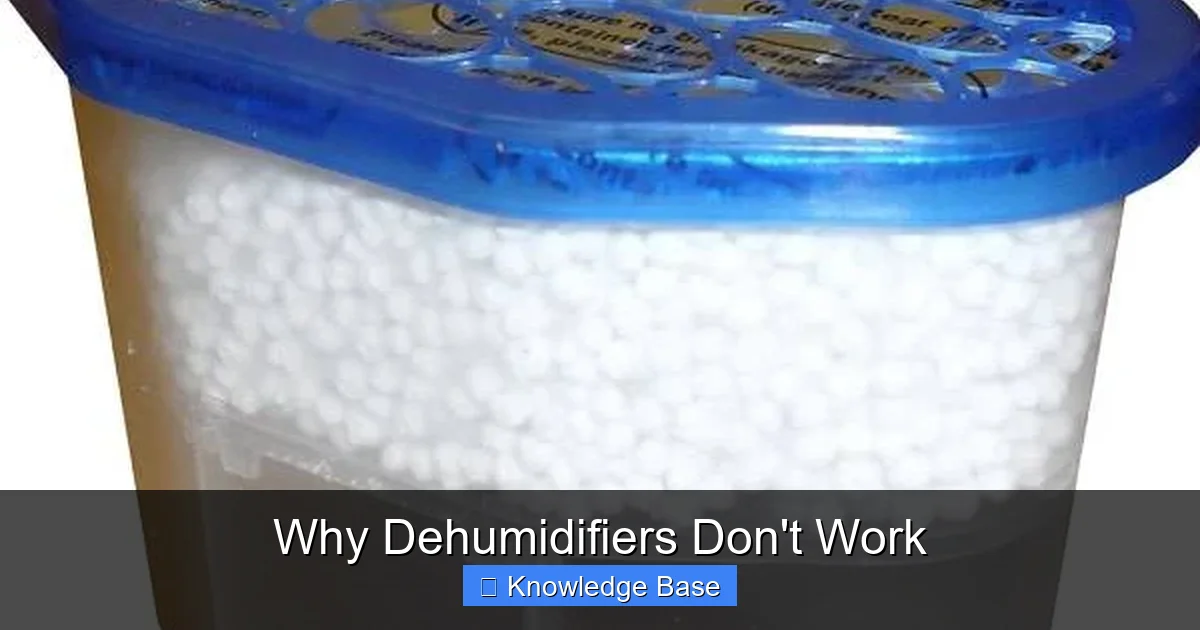
Many people buy dehumidifiers expecting instant relief from humidity, only to find they barely make a dent. The truth is, dehumidifiers don’t work well when used incorrectly, undersized, or placed in the wrong environment. This guide reveals the real reasons behind poor performance and how to fix them.
Key Takeaways
- Wrong size for the space: A dehumidifier too small for the room will struggle to reduce moisture effectively.
- Poor placement: Placing the unit in a corner or behind furniture blocks airflow and reduces efficiency.
- Ignoring ambient temperature: Most dehumidifiers work poorly in cold spaces below 65°F (18°C).
- Unsealed environment: Open windows, doors, or cracks let humid air in, counteracting the dehumidifier’s efforts.
- Infrequent maintenance: Dirty filters and full tanks stop the unit from working properly.
- Misunderstanding humidity sources: If the root cause of moisture isn’t addressed, the dehumidifier becomes a temporary fix.
- Using the wrong type: Desiccant vs. refrigerant models perform differently based on climate and needs.
📑 Table of Contents
Introduction: The Dehumidifier Disappointment
You’ve finally had enough. Your basement smells musty, your clothes feel damp, and you’re finding mold in the corners of your bathroom. You do your research, read glowing reviews, and invest in a dehumidifier. You plug it in, set it to 50% humidity, and wait. Days go by. The air still feels sticky. The unit runs constantly, but the humidity levels barely budge. Sound familiar?
You’re not alone. Thousands of people experience this same frustration every year. They buy dehumidifiers expecting a quick fix, only to discover that their new appliance isn’t working as advertised. The truth is, dehumidifiers don’t work—at least not well—when they’re misunderstood, misused, or mismatched to the environment.
This isn’t a flaw in the technology itself. Modern dehumidifiers are capable machines. The problem lies in how we use them. From incorrect sizing to poor placement, from ignoring maintenance to misunderstanding humidity sources, there are many reasons why your dehumidifier might seem useless. But here’s the good news: once you understand these pitfalls, you can turn a failing unit into a powerful ally against moisture.
In this guide, we’ll explore the most common reasons why dehumidifiers don’t work and what you can do to fix them. Whether you’re dealing with a damp basement, a humid crawl space, or a sticky living room, this article will help you get the most out of your investment.
Why Dehumidifiers Don’t Work: The Top Reasons
Visual guide about Why Dehumidifiers Don’t Work
Image source: learnmetrics.com
Let’s cut to the chase. Why do so many dehumidifiers fail to deliver on their promise? The answer isn’t that the machines are broken—it’s that they’re often used incorrectly. Below are the six most common reasons why dehumidifiers don’t work as expected.
1. Wrong Size for the Space
One of the biggest mistakes people make is buying a dehumidifier that’s too small for the area they want to treat. Dehumidifiers are rated by how many pints of moisture they can remove per day. A 30-pint unit might be perfect for a small bathroom, but it will struggle in a large, damp basement.
For example, a 500-square-foot basement with high humidity might need a 50-pint or even 70-pint dehumidifier. If you buy a 30-pint model, it will run nonstop and still fail to lower humidity levels. The unit simply can’t keep up with the moisture load.
To find the right size, consider both the square footage and the humidity level. Most manufacturers provide sizing charts based on room size and dampness (moderate, heavy, or severe). If your space is below ground level, has poor ventilation, or has visible mold, opt for a larger capacity.
2. Poor Placement and Airflow
Even the best dehumidifier won’t work if it’s stuck in a corner or blocked by furniture. These units need good airflow to pull in humid air, remove moisture, and release dry air back into the room.
Placing a dehumidifier against a wall or behind a couch restricts intake and exhaust. This reduces efficiency and can even cause the unit to overheat. Ideally, place the dehumidifier in the center of the room or at least 6–12 inches away from walls and obstacles.
Also, avoid placing it near sources of dry air, like heaters or air conditioners. These can interfere with humidity readings and cause the unit to cycle on and off unnecessarily.
3. Cold Environments Reduce Efficiency
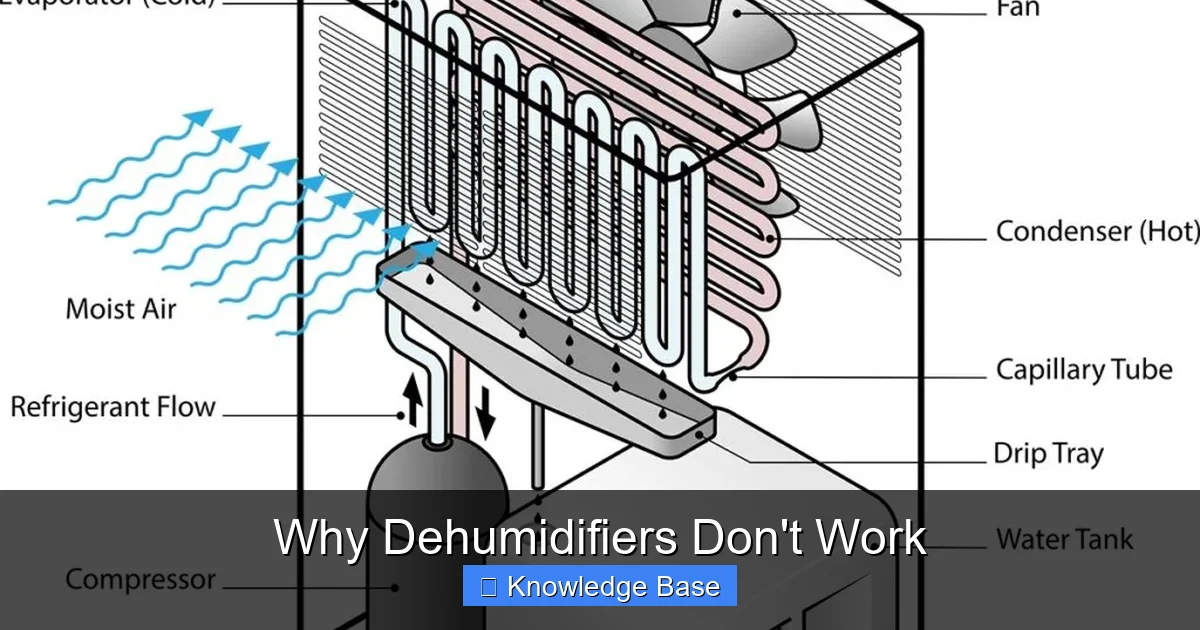
Most standard dehumidifiers use refrigerant technology, which relies on cold coils to condense moisture from the air. But here’s the catch: this process works best in warm, humid conditions. When the air temperature drops below 65°F (18°C), the coils can freeze, and the unit stops working.
This is a major issue in basements, garages, and crawl spaces, which are often cooler than the rest of the home. If your dehumidifier is running but not collecting water, cold temperatures might be the culprit.
For cold spaces, consider a desiccant dehumidifier. These models use moisture-absorbing materials instead of refrigerant coils, so they work well even in freezing conditions. They’re more expensive to run but are far more effective in low temperatures.
4. Unsealed or Leaky Environment
A dehumidifier can only do so much if humid air keeps pouring into the room. Open windows, cracked foundations, poorly sealed doors, and gaps around pipes can all let in moisture from the outside.
Imagine trying to dry a wet towel while someone keeps splashing water on it. That’s what happens when you run a dehumidifier in a leaky space. The unit removes moisture, but new humid air replaces it almost instantly.
To maximize efficiency, seal any gaps, close windows, and use weather stripping on doors. In basements, consider installing a vapor barrier on the floor and walls to block ground moisture. These steps reduce the workload on your dehumidifier and help it work more effectively.
5. Infrequent Maintenance and Cleaning
Like any appliance, dehumidifiers need regular maintenance to function properly. A dirty air filter can restrict airflow, reducing efficiency by up to 50%. A full water tank will shut off the unit, even if humidity levels are still high.
Many people forget to clean the filter or empty the tank, assuming the unit will handle it automatically. But most dehumidifiers only have basic auto-shutoff features, not self-cleaning systems.
Check your filter monthly and clean it with warm, soapy water. Rinse and dry it completely before reinstalling. Empty the water tank regularly, or better yet, connect a hose for continuous drainage. This keeps the unit running smoothly and prevents mold growth inside the machine.
6. Misunderstanding the Source of Humidity
Sometimes, the problem isn’t the dehumidifier—it’s the source of moisture. If your home has a leaky pipe, a cracked foundation, or poor drainage around the foundation, no dehumidifier can fix that.
For example, if water is seeping into your basement through the walls, running a dehumidifier will only treat the symptom, not the cause. You might reduce humidity temporarily, but the dampness will return as soon as the unit cycles off.
Before relying solely on a dehumidifier, inspect your home for water intrusion. Fix leaks, improve gutter drainage, and consider installing a sump pump if needed. Addressing the root cause of moisture makes your dehumidifier far more effective.
How to Choose the Right Dehumidifier

Visual guide about Why Dehumidifiers Don’t Work
Image source: mayer.sg
Now that we’ve covered why dehumidifiers don’t work, let’s talk about how to pick one that actually does. Choosing the right model is the first step toward success.
Understand the Two Main Types
There are two primary types of dehumidifiers: refrigerant (compressor-based) and desiccant.
Refrigerant dehumidifiers are the most common. They use a compressor and cold coils to condense moisture from the air. They’re energy-efficient and work best in warm, humid environments—like living rooms, basements in summer, or laundry rooms.
Desiccant dehumidifiers use a moisture-absorbing material (like silica gel) to pull water from the air. They don’t rely on cold coils, so they work well in cold spaces. They’re ideal for garages, crawl spaces, and winter basements. However, they tend to be louder and use more energy.
Choose a refrigerant model for general home use and a desiccant model for cold or low-temperature areas.
Match the Capacity to Your Needs
Dehumidifiers are rated by pint capacity—how many pints of water they can remove in 24 hours. But don’t just go for the biggest number. A 70-pint unit might be overkill for a small bathroom.
Use this general guide:
– 30-pint: Small rooms (under 500 sq ft), moderate humidity
– 50-pint: Medium rooms (500–1,500 sq ft), high humidity
– 70-pint: Large spaces (1,500+ sq ft), severe dampness or flooding
Also, consider the humidity level. If your space feels “wet” or has visible mold, go one size up. Manufacturers often provide sizing tools on their websites—use them.
Look for Smart Features
Modern dehumidifiers come with features that improve performance and convenience:
– Humidistat: Lets you set a target humidity level (ideally 30–50%).
– Auto-defrost: Prevents coil freezing in cold temperatures.
– Continuous drainage: Allows you to attach a hose so you don’t have to empty the tank.
– Timer and auto-restart: Saves energy and resumes operation after a power outage.
– Air filter indicator: Reminds you when to clean the filter.
These features may cost more upfront, but they save time and improve efficiency in the long run.
Tips to Maximize Dehumidifier Performance
Even with the right unit, you need to use it correctly. Here are practical tips to ensure your dehumidifier works as intended.
Place It Strategically
Position your dehumidifier in the most humid area of the room. In a basement, this is often near the stairs or where water tends to collect. Avoid placing it near heat sources or in direct sunlight.
Ensure there’s at least 6–12 inches of clearance on all sides. This allows air to flow freely through the intake and exhaust vents.
Use It Consistently
Dehumidifiers work best when run continuously, especially in high-humidity environments. Set your humidistat to 45–50% and let it run. Don’t turn it off during the day and on at night—this creates inconsistent humidity levels.
If energy use is a concern, choose an ENERGY STAR-certified model. These units use up to 30% less energy than standard models.
Combine with Other Moisture Control Methods
A dehumidifier is just one tool in your moisture-fighting toolkit. For best results, combine it with:
– Ventilation: Use exhaust fans in bathrooms and kitchens.
– Air circulation: Run ceiling fans to help distribute dry air.
– Insulation: Insulate cold walls and pipes to prevent condensation.
– Waterproofing: Seal basement walls and floors to block groundwater.
These steps reduce the moisture load and help your dehumidifier work more efficiently.
Monitor Humidity Levels
Don’t rely solely on the dehumidifier’s built-in humidistat. These can be inaccurate. Use a separate hygrometer (a device that measures humidity) to check levels in different areas of your home.
Ideal indoor humidity is between 30% and 50%. Anything above 60% encourages mold growth and dust mites.
When a Dehumidifier Isn’t the Answer
Sometimes, a dehumidifier isn’t the right solution—or at least not the only one. Here are situations where you might need additional help.
Severe Water Intrusion
If your basement floods after heavy rain or you see standing water, a dehumidifier won’t cut it. You need a sump pump, French drain, or professional waterproofing.
Dehumidifiers are designed for airborne moisture, not standing water. Using one in a flooded area is like using a sponge to dry a swimming pool.
High Outdoor Humidity
In tropical or coastal climates, outdoor humidity can be extremely high. Even with windows closed, moisture seeps in through walls and foundations.
In these cases, a whole-house dehumidifier integrated with your HVAC system may be more effective than a portable unit. These systems treat the entire home and maintain consistent humidity levels.
Chronic Mold or Mildew
If you have recurring mold problems, a dehumidifier alone won’t solve it. Mold grows when moisture and organic material (like drywall or wood) combine. You need to remove the mold, fix the moisture source, and prevent regrowth.
Use a HEPA vacuum and antimicrobial cleaner to remove mold. Then, address the underlying issue—whether it’s a leak, poor ventilation, or high humidity.
Conclusion: Making Your Dehumidifier Work for You
So, why do dehumidifiers don’t work? The answer is simple: they’re often misunderstood, misused, or mismatched to the environment. But that doesn’t mean they’re useless. With the right knowledge, the right model, and the right habits, a dehumidifier can dramatically improve your indoor air quality, reduce mold growth, and make your home more comfortable.
Start by choosing the correct size and type for your space. Place it properly, maintain it regularly, and seal any leaks. Combine it with other moisture control strategies, and monitor humidity levels with a hygrometer.
Remember, a dehumidifier is not a magic fix. It’s a tool—and like any tool, it works best when used correctly. Don’t let frustration drive you to return your unit. Instead, troubleshoot the issues, make adjustments, and give it a fair chance.
With patience and the right approach, your dehumidifier can go from a disappointing purchase to a quiet, efficient guardian of your home’s comfort. Don’t give up on it—just give it what it needs to succeed.
Frequently Asked Questions
Why is my dehumidifier running but not collecting water?
This usually happens when the air is too dry, the unit is too small, or the temperature is too low. Check the humidistat setting and ensure the room is above 65°F. If the air is already dry, the dehumidifier may not need to collect water.
Can a dehumidifier make a room too dry?
Yes, if set too low. Ideal indoor humidity is 30–50%. Below 30%, air can feel dry and cause skin irritation or static electricity. Use a hygrometer to monitor levels and adjust the humidistat accordingly.
How often should I clean my dehumidifier filter?
Clean the filter every 4–6 weeks during heavy use, or monthly in high-humidity areas. A dirty filter restricts airflow and reduces efficiency. Rinse it with warm, soapy water and let it dry completely.
Should I run my dehumidifier all the time?
Yes, especially in damp areas. Continuous operation helps maintain stable humidity levels. Use a timer or smart model to reduce energy use during low-humidity periods.
Can I use a dehumidifier in a cold basement?
Standard refrigerant models may freeze below 65°F. For cold spaces, choose a desiccant dehumidifier or a model with auto-defrost. These work better in low temperatures.
Do dehumidifiers use a lot of electricity?
They use moderate energy, similar to a refrigerator. ENERGY STAR models are more efficient. Running a 50-pint unit costs about $1–$2 per day, depending on local electricity rates.