
Dehumidifiers produce heat because they use a refrigeration cycle that releases thermal energy during moisture removal. This heat is a natural byproduct of the compressor and condenser working to extract water vapor from the air. While it may feel counterintuitive, understanding this process helps you use your dehumidifier more efficiently.
Key Takeaways
- Dehumidifiers generate heat due to the refrigeration cycle: The compressor and condenser release heat when removing moisture from the air.
- Heat output varies by model and size: Larger units or those in high-humidity areas may produce more noticeable warmth.
- The heat is a normal byproduct, not a malfunction: It’s part of how refrigerant-based dehumidifiers operate efficiently.
- Heat can affect room temperature: In small or poorly ventilated spaces, the added warmth may raise ambient temperature slightly.
- Proper placement minimizes heat impact: Keep the unit away from walls and in well-ventilated areas to allow heat dissipation.
- Desiccant dehumidifiers also produce heat: Though differently, they use heated air to regenerate the drying material.
- Understanding heat output helps optimize usage: Choose the right size and location to balance humidity control and comfort.
📑 Table of Contents
Why Do Dehumidifiers Produce Heat?
If you’ve ever stood near a running dehumidifier, you might have noticed something surprising: it gives off heat. You plug it in to pull moisture out of the air, hoping to make your basement or laundry room feel drier and more comfortable—but instead, it feels warmer. That might seem odd. After all, you’re trying to reduce humidity, not turn your space into a sauna.
But here’s the truth: dehumidifiers producing heat is completely normal. In fact, it’s a sign that the unit is working as intended. The heat isn’t a flaw or a malfunction—it’s a natural result of the physics behind how most dehumidifiers operate. Whether you’re dealing with a musty basement, a damp crawl space, or just trying to improve indoor air quality, understanding why your dehumidifier warms the air can help you use it more effectively and avoid confusion.
So, why exactly does this happen? The answer lies in the mechanics of the refrigeration cycle, which is used by the majority of household dehumidifiers. As the machine pulls in humid air, cools it to condense moisture, and then reheats it before releasing it back into the room, heat is generated at multiple stages. This process isn’t just about removing water—it’s about energy transfer. And where there’s energy transfer, there’s heat.
In this article, we’ll break down the science behind dehumidifier heat output, explore the different types of dehumidifiers and how they generate warmth, and offer practical tips for managing that heat in your home. Whether you’re a homeowner, renter, or just curious about indoor air quality, this guide will help you make sense of one of the most misunderstood aspects of dehumidifier operation.
The Science Behind Dehumidifier Heat Generation
Visual guide about Why Do Dehumidifiers Produce Heat
Image source: hvaclifehack.com
To understand why dehumidifiers produce heat, we need to look at the core technology that powers most of them: the refrigeration cycle. This is the same principle used in air conditioners and refrigerators. While the goal of a dehumidifier is to remove moisture, not cool the air, the process still involves compressing and expanding refrigerant gases—and that generates heat.
Let’s walk through the steps. First, a fan draws humid air from the room into the dehumidifier. This air passes over a cold evaporator coil, where the temperature drops below the dew point. When that happens, moisture in the air condenses into water droplets, which collect in a reservoir or drain hose. So far, so good—this is the moisture removal part.
But here’s where things get interesting. After the air is stripped of moisture, it’s still cold. If the dehumidifier just blew that cold air back into the room, it would lower the temperature, which isn’t ideal—especially in already cool spaces like basements. So, the machine reheats the air before releasing it. It does this by passing the dried air over a warm condenser coil, which is heated by the refrigerant as it completes its cycle.
This reheating step is crucial. It ensures the air returning to the room is at a comfortable temperature, not chilly. But it also means the dehumidifier is actively adding heat to the space. The energy used to compress the refrigerant and run the fan motors also turns into heat, which is released into the surrounding air.
Think of it like this: your dehumidifier is essentially a small heat pump. It moves thermal energy from one place to another. The cold evaporator coil absorbs heat from the incoming air (which helps condense moisture), and the hot condenser coil releases that heat—plus additional heat from the compressor—back into the room. The net result? The air leaving the unit is drier and warmer than the air that entered.
This process is highly efficient for moisture removal, but it does mean your dehumidifier will warm the area around it. The amount of heat produced depends on the unit’s size, efficiency, and how hard it’s working. A small 30-pint dehumidifier might add a subtle warmth, while a large 70-pint model in a humid basement could noticeably raise the temperature over time.
Energy Conversion and Heat as a Byproduct
At the heart of the heat generation is the law of conservation of energy. Energy can’t be created or destroyed—only transformed. In a dehumidifier, electrical energy powers the compressor and fan. As the compressor squeezes the refrigerant gas, it increases the gas’s pressure and temperature. This high-pressure, high-temperature gas then flows to the condenser coil, where it releases heat into the surrounding air as it condenses back into a liquid.
This heat release is unavoidable. It’s a direct result of the work the compressor is doing. Even the most efficient dehumidifiers can’t eliminate this thermal byproduct. In fact, some of the heat comes simply from the motor running—like how a laptop or phone warms up when in use.
Additionally, the process of condensing water vapor also releases latent heat. When water changes from gas (vapor) to liquid (droplets), it gives off energy. This is called the heat of vaporization in reverse. While this amount of heat is relatively small compared to the compressor’s output, it still contributes to the overall warmth.
So, when you feel warm air blowing from your dehumidifier, you’re experiencing the combined effects of:
– Heat from the compressor motor
– Heat released during refrigerant condensation
– Latent heat from water vapor condensing
– Heat from the fan motor
All of this adds up. And while it might seem counterproductive to add heat while trying to improve comfort, it’s actually part of what makes dehumidifiers effective. The reheated, dry air helps prevent mold, reduces musty odors, and makes the space feel more comfortable—even if it’s a few degrees warmer.
How Much Heat Does a Dehumidifier Produce?
The amount of heat a dehumidifier produces depends on its capacity and efficiency. Most residential dehumidifiers remove between 20 and 70 pints of water per day. A general rule of thumb is that for every pint of water removed, the unit releases about 1,000 BTUs (British Thermal Units) of heat into the room.
For example, a 50-pint dehumidifier running continuously could produce around 50,000 BTUs of heat per day. That’s equivalent to running a small space heater for several hours. While this might not drastically change the temperature in a large, well-ventilated basement, it can make a noticeable difference in a small, enclosed space like a crawl space or utility closet.
It’s also worth noting that dehumidifiers work harder in high-humidity environments. On a muggy summer day, your unit may run almost nonstop, generating more heat than it would during drier conditions. Conversely, in winter or in already dry climates, the unit may cycle on and off more frequently, producing less consistent heat.
Energy-efficient models with inverter compressors or advanced controls may produce slightly less heat because they adjust their output based on demand. But even the most efficient units still generate warmth—it’s just a smaller amount.
If you’re concerned about heat buildup, consider the size of the space and the dehumidifier’s placement. A unit in a 500-square-foot basement with good airflow will disperse heat more effectively than the same unit in a 100-square-foot closet with no ventilation.
Types of Dehumidifiers and Their Heat Output
Visual guide about Why Do Dehumidifiers Produce Heat
Image source: hvaclifehack.com
Not all dehumidifiers work the same way, and that affects how much heat they produce. The two main types—refrigerant (compressor-based) and desiccant—use different methods to remove moisture, and each generates heat in its own way.
Refrigerant dehumidifiers are the most common type found in homes. As we’ve discussed, they use a closed-loop system with a compressor, evaporator, and condenser. They’re highly effective in warm, humid conditions (typically above 60°F) and are the go-to choice for basements, laundry rooms, and crawl spaces.
Because they rely on the refrigeration cycle, these units produce significant heat. The compressor does the heavy lifting, and as it compresses the refrigerant, it generates a lot of thermal energy. This heat is then released through the condenser coil, warming the air that’s blown back into the room.
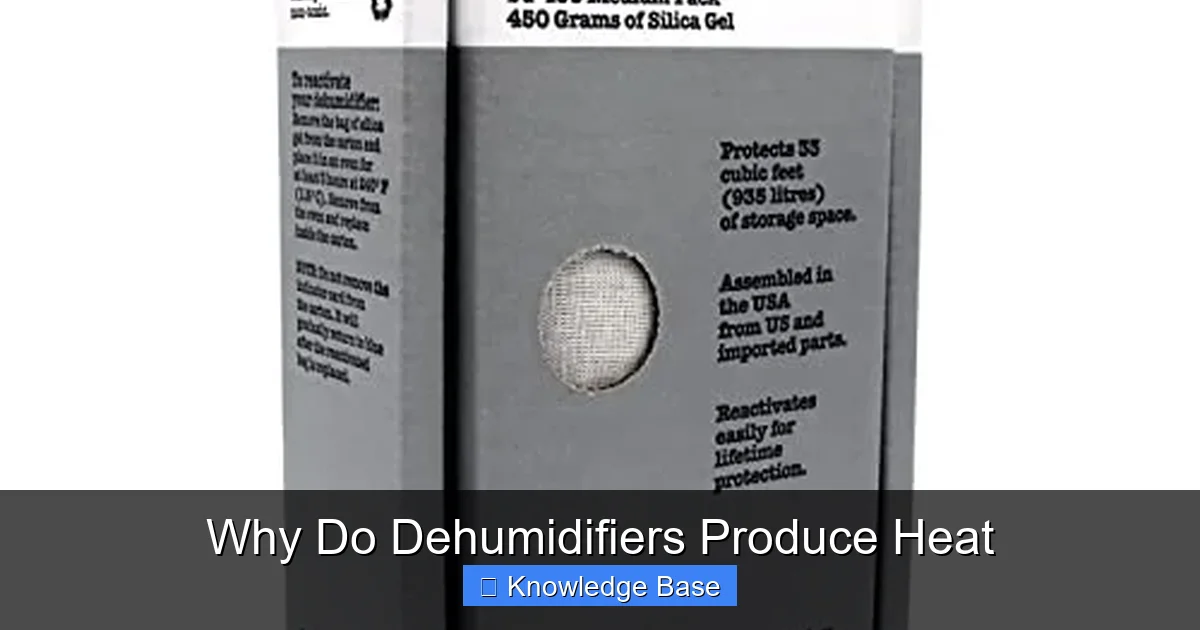
Desiccant dehumidifiers, on the other hand, use a moisture-absorbing material—like silica gel—to pull water vapor from the air. These units are often used in colder environments or for specialized applications like museum storage or flood restoration.
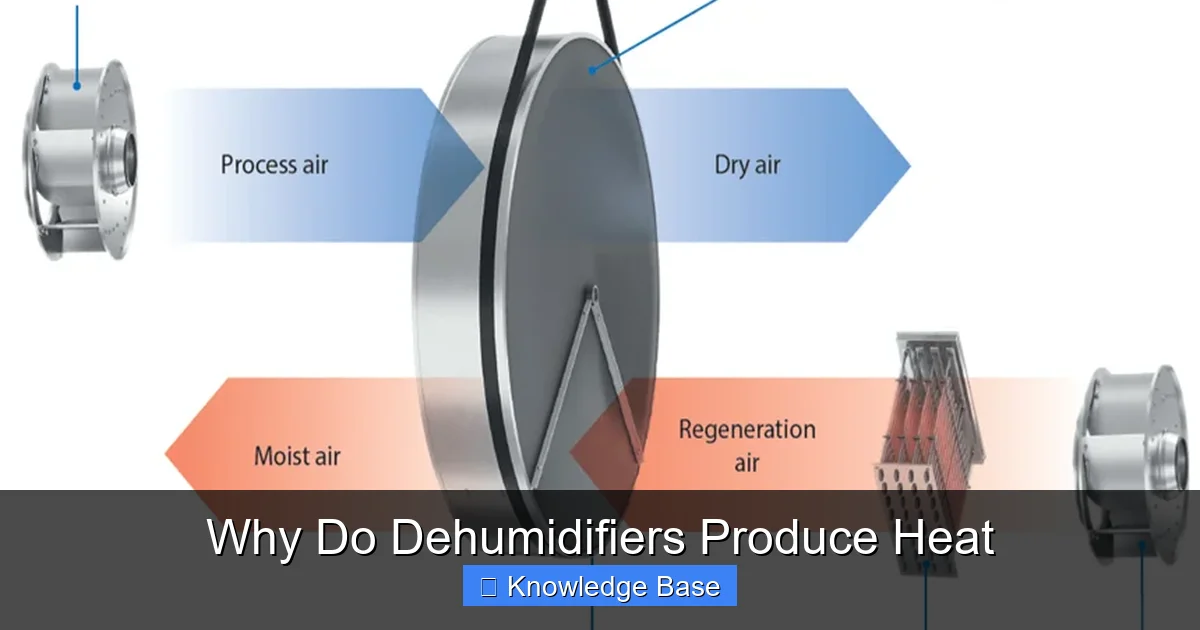
Here’s how they work: humid air passes over a rotating desiccant wheel, which absorbs moisture. Then, a separate stream of heated air (often from an electric heater or heat exchanger) passes through the wheel to “regenerate” it—releasing the trapped moisture so the wheel can dry again. This regeneration process requires heat, which is why desiccant dehumidifiers also produce warmth.
The key difference is that desiccant units don’t rely on cooling the air to condense moisture. Instead, they use adsorption (surface binding) and heat to drive off water. As a result, they tend to produce less heat than refrigerant models of similar capacity, but they still warm the air—especially during the regeneration phase.
Refrigerant vs. Desiccant: Heat Comparison
Let’s compare the two types side by side:
– **Refrigerant dehumidifiers**: High heat output due to compressor work. Best for warm, humid climates. Heat is a major byproduct of the cooling and reheating process.
– **Desiccant dehumidifiers**: Moderate heat output, mostly during regeneration. Better for cold or dry environments. Heat comes from the heater used to dry the desiccant material.
In practical terms, if you’re using a refrigerant dehumidifier in a basement during summer, you might notice the room getting warmer over time. But if you’re using a desiccant unit in a cold garage or winterized cabin, the heat it produces might actually be beneficial—helping to take the chill off while reducing moisture.
Some advanced models combine both technologies or use heat exchangers to recover some of the wasted thermal energy. These hybrid systems can reduce overall heat output and improve efficiency, but they’re less common in residential settings.
Heat Pumps and Emerging Technologies
Newer dehumidifiers are beginning to incorporate heat pump technology, which is more efficient than traditional compressor systems. Heat pumps move heat rather than generate it, making them better at managing thermal output.
In a heat pump dehumidifier, the system recovers some of the heat generated during compression and uses it to reheat the dried air. This reduces the net heat added to the room and improves energy efficiency. Some models even redirect excess heat to other parts of the home, like a water heater or radiant floor system.
While these technologies are still emerging and often more expensive, they represent a shift toward smarter, more sustainable dehumidification. For now, most homeowners will still use standard refrigerant or desiccant units—but it’s good to know that innovation is reducing the heat burden.
Does the Heat Affect Indoor Comfort?
Now that we know dehumidifiers produce heat, the next question is: does it matter? In most cases, the answer is: it depends.
In a large, well-ventilated basement, the heat from a dehumidifier is usually negligible. The warm air disperses quickly, and the overall temperature change is minimal. In fact, the improved air quality and reduced humidity often make the space feel more comfortable, even if it’s slightly warmer.
But in smaller or enclosed spaces—like a crawl space, utility closet, or tiny apartment—the heat can accumulate. If the room has poor airflow, the dehumidifier may create a localized warm spot. Over time, this could raise the ambient temperature by a few degrees, especially if the unit runs continuously.
For example, imagine a 10-by-10-foot laundry room with a 50-pint dehumidifier running 24/7. Without proper ventilation, the air could become noticeably warmer, potentially affecting stored items or making the space uncomfortable to enter.
In extreme cases, excessive heat buildup could even trigger the dehumidifier’s thermal cutoff switch, causing it to shut off prematurely. This interrupts moisture removal and defeats the purpose of having the unit in the first place.
So, while the heat isn’t inherently bad, it’s something to be aware of—especially in tight spaces or during hot weather.
When Heat Becomes a Problem
There are a few scenarios where dehumidifier heat can become an issue:
– **Small, enclosed spaces**: Crawl spaces, closets, or under-stair storage areas with limited airflow.
– **Hot climates**: In already warm environments, added heat can make rooms feel stuffy or uncomfortable.
– **Poor ventilation**: If the room doesn’t allow air to circulate, heat builds up around the unit.
– **Oversized units**: A dehumidifier that’s too powerful for the space may run constantly and generate more heat than needed.
If you notice your dehumidifier making the room uncomfortably warm, it’s a sign that you may need to adjust its placement, improve ventilation, or consider a smaller unit.
Managing Heat in Your Space
The good news is that there are simple ways to manage dehumidifier heat:
– **Improve airflow**: Use a fan to circulate air around the dehumidifier. This helps disperse heat and prevents hot spots.
– **Ventilate the room**: Open a window or use an exhaust fan, especially in small spaces. Even a crack in a window can make a difference.
– **Choose the right size**: Use a dehumidifier with a capacity matched to your space. An oversized unit runs longer and produces more heat.
– **Elevate the unit**: Place the dehumidifier on a stand or shelf to allow air to flow underneath and around it.
– **Avoid blocking vents**: Keep at least 6–12 inches of clearance around the intake and exhaust vents.
These small changes can help balance humidity control with thermal comfort.
Tips for Efficient and Comfortable Dehumidifier Use
Using a dehumidifier effectively means more than just plugging it in and forgetting it. To get the best results—and minimize unwanted heat—follow these practical tips.
Choose the Right Location
Placement is key. Avoid putting your dehumidifier in a corner or against a wall. Instead, position it in the center of the room or at least 6 inches away from obstacles. This allows air to flow freely in and out, improving efficiency and helping heat dissipate.
In basements, place the unit near the source of moisture—like a sump pump or washing machine—but ensure there’s still good airflow. In laundry rooms, keep it away from the dryer vent to avoid recirculating hot, moist air.
Set the Right Humidity Level
Most dehumidifiers have a built-in humidistat that lets you set your target humidity level. The ideal range is between 30% and 50%. Going lower than 30% isn’t necessary and can cause the unit to run longer, producing more heat and using more energy.
Use a standalone hygrometer to double-check the humidity level. Sometimes, the built-in sensor isn’t perfectly accurate.
Maintain Your Unit Regularly
A dirty filter or clogged coils can make your dehumidifier work harder, increasing heat output and reducing efficiency. Clean the air filter every few weeks, and check the coils for dust buildup. Empty the water tank regularly, or use a drain hose for continuous drainage.
Use a Timer or Smart Features
Many modern dehumidifiers come with timers or smart controls. Set the unit to run during off-peak hours or only when humidity is high. This reduces runtime, saves energy, and minimizes heat generation.
Some models connect to Wi-Fi and can be controlled via an app, allowing you to monitor conditions remotely and adjust settings as needed.
Consider Supplemental Cooling
If heat buildup is a concern, consider using a small fan or portable air conditioner in conjunction with your dehumidifier. The fan helps circulate air, while the AC can offset the warmth in particularly hot spaces.
Just remember: dehumidifiers and air conditioners serve different purposes. An AC cools the air and removes some moisture, but a dehumidifier is better at targeting high humidity without overcooling.
Conclusion
So, why do dehumidifiers produce heat? Because they’re doing their job. The heat is a natural, unavoidable byproduct of the refrigeration or desiccant process used to extract moisture from the air. It’s not a flaw—it’s physics in action.
Understanding this helps you use your dehumidifier more wisely. You can choose the right size, place it correctly, and manage airflow to balance humidity control with thermal comfort. In most homes, the benefits of reduced moisture—fewer allergens, less mold, better air quality—far outweigh the minor warming effect.
Whether you’re fighting dampness in a basement, protecting stored items in a garage, or simply improving your indoor air, your dehumidifier is a valuable tool. And now, you know exactly why it feels warm when it’s working hard. Embrace the heat—it’s a sign of a job well done.
Frequently Asked Questions
Is it normal for a dehumidifier to get hot?
Yes, it’s completely normal. The heat comes from the compressor and condenser as they work to remove moisture. Feeling warm air from the exhaust is a sign the unit is operating correctly.
Can a dehumidifier heat up a room?
Yes, especially in small or poorly ventilated spaces. The heat output can raise the temperature slightly, but it’s usually manageable with proper placement and airflow.
Does a dehumidifier use a lot of electricity?
It depends on the size and efficiency. Larger units or those running constantly use more power. Look for Energy Star-rated models to reduce energy consumption.
Should I turn off my dehumidifier if it’s making the room too warm?
Not necessarily. Try improving ventilation or relocating the unit first. If the room becomes uncomfortably hot, consider using a smaller dehumidifier or running it intermittently.
Do all dehumidifiers produce the same amount of heat?
No. Refrigerant models generally produce more heat than desiccant units. Heat output also varies by size, efficiency, and how hard the unit is working.
Can I use a dehumidifier in winter?
Yes, but refrigerant models work best above 60°F. In colder spaces, a desiccant dehumidifier may be more effective and still produce some heat, which can be beneficial.