
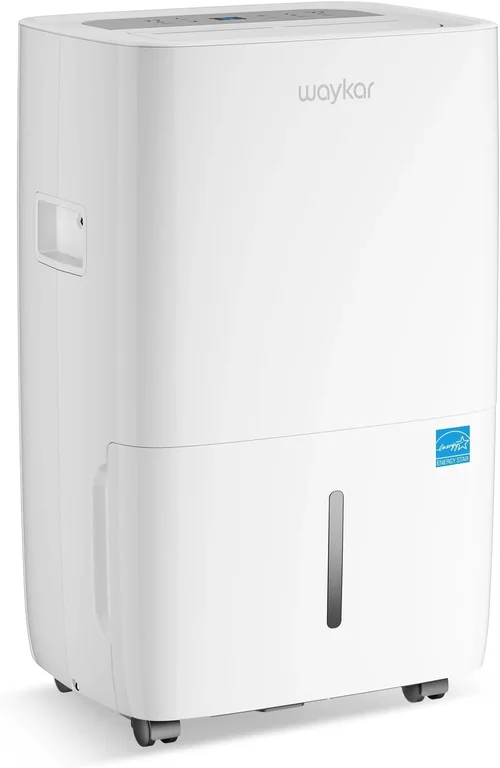
Choosing the right 70-pint dehumidifier for your basement isn’t just about picking the first model you see online. Basements are notoriously damp environments—prone to musty odors, mold growth, and structural damage from excess moisture. A high-capacity dehumidifier can make a world of difference, but with so many options on the market in 2026, it’s easy to feel overwhelmed. That’s why this comprehensive buying guide exists: to cut through the noise and help you make an informed decision that fits your space, budget, and long-term needs.
In this guide, you’ll learn exactly what to look for in a 70-pint dehumidifier—from performance specs and energy efficiency to smart features and durability. We’ll walk you through the key factors that separate a decent unit from a great one, highlight common pitfalls to avoid, and even break down pricing tiers so you know what you’re really paying for. Whether you’re dealing with a chronically wet crawlspace or just want to keep your finished basement comfortable year-round, we’ve got you covered. By the end, you’ll have the confidence to choose a dehumidifier that delivers consistent results without breaking the bank.
The market for 70-pint dehumidifiers has evolved significantly over the past few years. Once dominated by bulky, inefficient units, today’s models offer advanced compressor technology, Wi-Fi connectivity, auto-defrost capabilities, and sleek designs that don’t scream “industrial appliance.” Brands like Frigidaire, hOmeLabs, GE, and Midea now compete fiercely on features, reliability, and value. But not all 70-pint units are created equal—some are better suited for large, unfinished basements, while others excel in moderate-humidity environments or homes with central HVAC systems. This guide will help you navigate those nuances and find the perfect match for your specific situation.

What to Look for When Buying a 70 Pint Dehumidifier
1. Performance Specifications
At its core, a dehumidifier’s job is to remove moisture from the air—and for basements, that means handling high humidity levels efficiently. The “70-pint” rating refers to how much water (in pints) the unit can extract from the air in a 24-hour period under standard testing conditions (80°F and 60% relative humidity). However, real-world performance can vary based on temperature and actual humidity levels. In colder basements (below 65°F), many compressors struggle, which is why units with auto-defrost or low-temperature operation are essential.
Look beyond the pint rating. Check the unit’s coverage area (usually listed in square feet)—a true 70-pint model should handle spaces up to 2,500–4,000 sq ft, depending on humidity severity. Also pay attention to airflow (measured in CFM or cubic feet per minute); higher airflow means faster moisture removal. Finally, consider the tank size: a 70-pint dehumidifier typically has a 10–16 pint internal bucket. If you don’t plan to use a hose for continuous drainage, a larger tank reduces how often you need to empty it.
2. Energy Efficiency & Operating Costs
A dehumidifier that runs constantly can spike your electricity bill—especially in humid climates or during summer months. Look for the Energy Factor (EF), measured in liters of water removed per kilowatt-hour (L/kWh). The higher the EF, the more efficient the unit. ENERGY STAR-certified 70-pint models typically have an EF of 1.9 or higher, meaning they remove nearly two liters of water for every kilowatt-hour used.
For context, a non-certified unit might cost $30–$50 more per year to operate than an ENERGY STAR model. Over five years, that adds up to $150–$250 in extra energy costs. Some newer models also feature variable-speed compressors or adaptive defrost cycles that adjust power usage based on ambient conditions, further improving efficiency. Always check the estimated annual energy consumption (listed in kWh/year) on the product label or manufacturer’s website.
3. Build Quality & Durability
Basements are harsh environments—dusty, damp, and often poorly ventilated. A flimsy plastic casing or thin internal components won’t last long. Look for units with robust metal housings, corrosion-resistant coils (especially important if your basement has high salt content in the air, common in coastal areas), and sealed electrical components. Internal parts like the evaporator and condenser should be coated to resist rust.
Pay attention to the compressor type. Most residential dehumidifiers use rotary compressors, which are quieter and more durable than piston types. High-end models may include dual evaporators or enhanced heat exchangers for better moisture capture. Also check the fan motor—brushless DC motors last longer and run more quietly than traditional AC motors. A well-built unit should easily last 5–7 years with proper maintenance.
4. Features & Functionality
Modern 70-pint dehumidifiers come packed with features that go beyond basic moisture removal. Auto-restart is crucial—if your power goes out during a storm (common in basements prone to flooding), the unit should resume operation at its previous settings once power returns. Continuous drainage via a built-in pump or gravity hose eliminates the need to manually empty the tank, which is especially useful if your basement lacks easy access to a floor drain.
Smart features are increasingly common. Wi-Fi-enabled models let you monitor humidity levels, adjust settings, and receive alerts via smartphone apps. Some even integrate with home automation systems like Alexa or Google Home. Other useful features include digital humidity displays, programmable timers, filter change indicators, and multiple fan speeds. While these don’t directly impact performance, they greatly improve convenience and long-term usability.
5. Noise Level & Operation Comfort
Basements are often used as living spaces, home gyms, or workshops—so a loud dehumidifier can be disruptive. Noise is measured in decibels (dB); most 70-pint units range from 50–60 dB on low speed and 55–65 dB on high. For reference, 50 dB is similar to a quiet conversation, while 65 dB resembles normal office noise. If quiet operation is a priority, look for models with “whisper-quiet” modes or insulated compressor compartments.
Note that noise can increase if the unit is placed on an uneven surface or near reflective walls. Placing it on a rubber mat or anti-vibration pad can reduce operational hum. Also, units with horizontal airflow (vs. vertical) tend to distribute sound more evenly and feel less intrusive in open spaces.
6. Portability & Placement Flexibility
Even though 70-pint dehumidifiers are larger than their 30- or 50-pint counterparts, portability still matters. Look for models with recessed handles, smooth-rolling casters (preferably locking), and a compact footprint that fits under stairs or in corners. Weight typically ranges from 40–60 pounds—manageable for most adults but heavy enough to stay put during operation.
Consider placement options. Some units allow front or top exhaust, giving you flexibility depending on room layout. Others include wall-mounting kits (though rare for full-size models). If your basement has limited floor space, a slim-profile design or vertical orientation can save valuable real estate. Always ensure at least 6–12 inches of clearance around the unit for proper airflow.
7. Brand Reputation & Reliability
Not all brands are equal when it comes to dehumidifiers. Established names like Frigidaire, GE, and hOmeLabs have proven track records for reliability and customer service. Frigidaire, for example, offers consistent performance across its lineup and strong warranty support. hOmeLabs specializes in basement-friendly units with robust builds and user-friendly interfaces. Midea (which owns Toshiba’s appliance division) has gained traction with innovative designs and competitive pricing.
Avoid obscure brands with no customer reviews or limited service networks. A dehumidifier is a long-term investment—if something goes wrong, you’ll want easy access to replacement parts, repair centers, or responsive customer support. Check third-party review sites like Consumer Reports, Wirecutter, or HVAC forums for real-user feedback on longevity and failure rates.
8. Warranty & Support
A solid warranty is a strong indicator of a manufacturer’s confidence in their product. Most reputable brands offer at least a 1-year limited warranty, but premium models may include 2–5 years of coverage, sometimes with extended protection on the compressor (the most expensive component to replace). Some companies, like AprilAire, offer lifetime technical support even after the warranty expires.
Read the fine print: many warranties are voided if the unit is used in commercial settings, installed incorrectly, or lacks regular filter cleaning. Also, check whether the warranty is honored by third-party retailers or only through authorized dealers. For peace of mind, consider purchasing an extended warranty if available—especially if you live in a high-humidity region where the unit will run frequently.
Different Types of 70 Pint Dehumidifiers

Common Buying Mistakes to Avoid
❌ Mistake: Ignoring Real-World Conditions
Why it’s bad: The 70-pint rating is based on ideal lab conditions (80°F, 60% RH). In a cold, damp basement (say, 55°F and 85% RH), many units perform closer to 40–50 pints per day. Relying solely on the advertised capacity can lead to underperformance and persistent moisture issues.
What to do instead: Choose a model specifically rated for low-temperature operation or with auto-defrost. Look for real-user reviews mentioning performance in similar environments. When in doubt, size up slightly—some experts recommend a 70-pint unit for spaces that would otherwise need a 50-pint model in warmer climates.
❌ Mistake: Overlooking Drainage Options
Why it’s bad: If you forget to empty the bucket every day (or don’t have a nearby drain), your dehumidifier will shut off when full, leaving your basement vulnerable to mold and mildew. Manual emptying is tedious and easy to neglect.
What to do instead: Opt for a model with continuous drainage via gravity hose (requires a floor drain or sump pit) or a built-in pump. Pump models can send water up to 15 feet vertically, making them ideal for basements with high water tables or no direct drainage access.
❌ Mistake: Prioritizing Price Over Efficiency
Why it’s bad: A cheaper unit may save you $100 upfront but cost significantly more in electricity over time. Inefficient models also work harder, leading to faster wear and shorter lifespans.
What to do instead: Calculate the total cost of ownership—including energy use and expected lifespan. ENERGY STAR models often pay for themselves within 2–3 years through lower utility bills. Use the ENERGY STAR savings calculator to compare models side by side.
❌ Mistake: Neglecting Maintenance Requirements
Why it’s bad: A clogged filter or dirty coils reduce airflow and efficiency, causing the unit to run longer and use more energy. In extreme cases, it can lead to compressor failure.
What to do instead: Choose a model with an easy-access washable filter and a filter change indicator. Set calendar reminders to clean the filter monthly during peak season. Also, vacuum the exterior vents and coils every 3–6 months to maintain optimal performance.
❌ Mistake: Buying Based Solely on Brand Hype
Why it’s bad: Just because a brand is popular doesn’t mean every model is well-made. Some brands release budget lines with inferior components that fail prematurely.
What to do instead: Research individual models, not just brands. Read detailed user reviews on Amazon, Home Depot, or specialty HVAC forums. Look for consistent feedback on durability, noise, and customer service responsiveness.
❌ Mistake: Skipping the Warranty Check
Why it’s bad: A dehumidifier is a complex appliance with expensive internal parts. Without warranty coverage, a single compressor failure could cost $200–$400 to repair—often more than the unit’s residual value.
What to do instead: Always verify warranty length and terms before purchasing. Register your product immediately after setup to activate coverage. Keep receipts and documentation in case you need to file a claim.
Budget Guidelines: How Much Should You Spend?
Entry-Level ($250–$350): These models offer basic 70-pint performance with standard compressor technology. They’re suitable for moderately humid basements in temperate climates. Expect plastic construction, manual drainage, and limited smart features. Brands like Toshiba (Midea) and some GE models fall here. While affordable, they may lack low-temp operation or robust warranties.
Mid-Range ($350–$500): This is the sweet spot for most homeowners. Units in this tier include auto-defrost, larger tanks (12+ pints), continuous drainage options, and ENERGY STAR certification. Build quality improves with metal casings and better internal coatings. Frigidaire FAD704DWD and hOmeLabs HME020034N are excellent examples. You’ll get reliable performance, decent efficiency, and 1–2 years of warranty coverage.
Premium ($500–$700): Designed for demanding environments, these dehumidifiers feature advanced compressors, Wi-Fi connectivity, built-in pumps, and superior noise insulation. They often include multi-stage filtration, app-based controls, and 2–5 year warranties. Ideal for large, unfinished basements or homes in high-humidity regions. Look at models like the GE APER70LW or AprilAire E070.
Luxury ($700+): At this level, you’re paying for commercial-grade durability, extended runtime, and professional installation support. These units are built to run 24/7 in severe conditions and often come with lifetime technical support. They’re overkill for most residential basements but ideal for flood-prone areas or whole-home humidity control. Examples include the Santa Fe Compact 70 and Dri-Eaz F413.
Expert Tips for Getting the Best Deal
- Buy in Spring: Retailers often discount dehumidifiers in March–May as they prepare for air conditioner season. You can save 15–25% compared to summer prices when demand peaks.
- Shop Online for Better Selection: Websites like Amazon, Home Depot, and Lowe’s offer detailed filters, customer reviews, and frequent promotions. In-store selections are often limited to a few models.
- Check for Rebates: Some utility companies offer rebates for ENERGY STAR appliances. Visit the ENERGY STAR rebate finder to see if your provider participates.
- Compare Return Policies: A 30-day return window gives you time to test the unit in your basement. Avoid retailers with restocking fees or short trial periods.
- Bundle with Other Purchases: If you’re buying a sump pump, air purifier, or HVAC filter, ask about package discounts. Some retailers offer 10% off when purchasing multiple home improvement items.
- Test Before Committing: Run the dehumidifier for a week and monitor humidity levels with a standalone hygrometer. If it can’t maintain 50% RH or below, you may need a larger unit or additional ventilation.
- Negotiate Extended Warranties: At big-box stores, sales associates may waive the cost of an extended warranty if you’re buying multiple items or during a slow period.
- Watch for Refurbished Deals: Certified refurbished units from manufacturers (not third parties) often come with full warranties and sell for 20–30% less. Just ensure they include all original accessories.

Frequently Asked Questions
Q: Can a 70-pint dehumidifier be too powerful for my basement?
A: Generally, no—more capacity is better than not enough. A 70-pint unit will simply cycle on and off more efficiently in lower-humidity conditions, maintaining stable moisture levels without over-drying. However, if your basement is very small (<800 sq ft) and rarely humid, a 50-pint model might suffice and save on energy.
Q: Do I really need a pump, or is a gravity hose enough?
A: It depends on your basement layout. A gravity hose requires a floor drain or sump pit below the unit’s level. If your drain is above the dehumidifier or you lack a drain entirely, a built-in pump is essential. Pumps allow vertical lift (up to 15 feet), giving you placement flexibility.
Q: How often should I clean the filter?
A: During peak humidity months (summer), clean the washable filter every 2–4 weeks. In winter or low-use periods, every 6–8 weeks is sufficient. A clogged filter reduces airflow by up to 30%, forcing the unit to work harder.
Q: Will a dehumidifier help with mold?
A: Yes—but only if humidity is consistently kept below 60% (ideally 45–50%). A dehumidifier prevents new mold growth but won’t remove existing colonies. For active mold, clean affected areas with a EPA-registered fungicide and address the moisture source.
Q: Can I run a dehumidifier in winter?
A: Only if it’s rated for low-temperature operation (typically down to 41–45°F). Standard units will freeze and stop working in cold basements. Look for “auto-defrost” or “low-temp” in the product description.
Q: Does a dehumidifier cool the basement?
A: Not significantly. While it removes latent heat (moisture), the net effect is minimal cooling. In fact, the compressor generates some heat, which may slightly raise ambient temperature. For cooling, pair it with a basement air conditioner or fan.
Q: How do I know if my basement needs a 70-pint unit?
A: Measure humidity with a hygrometer. If levels regularly exceed 60% in a space over 1,500 sq ft, a 70-pint model is justified. Also consider water intrusion signs: condensation on walls, musty smells, or warped wood.
Q: Are smart dehumidifiers worth the extra cost?
A: If you travel frequently or want remote monitoring, yes. Smart features let you adjust settings from your phone, receive full-tank alerts, and track energy usage. For occasional use, basic models offer better value.
Q: Can I use a dehumidifier with a central HVAC system?
A: Absolutely. In fact, it complements your HVAC by reducing the latent load (moisture), allowing your AC to focus on temperature control. This improves overall efficiency and comfort.
Our Final Recommendations
Best for Budget-Conscious Buyers: Frigidaire FAD704DWD – At around $350, this ENERGY STAR-certified unit delivers reliable 70-pint performance, auto-defrost, and a 12-pint tank. It’s simple, durable, and widely praised for value.
Best Overall Value: hOmeLabs HME020034N – Priced under $450, it includes a built-in pump, Wi-Fi connectivity, and a sleek design. Ideal for tech-savvy homeowners who want smart features without premium pricing.
Best Premium Option: GE APER70LW – With a 5-year compressor warranty, ultra-quiet operation (48 dB), and advanced filtration, this $600 model is built for longevity and performance in tough conditions.
Best for Beginners: Midea MAD70C1YWS – User-friendly interface, easy setup, and clear instructions make this a great first dehumidifier. It lacks smart features but excels in simplicity and reliability.
Best for Advanced Users: AprilAire E070 – Designed for whole-home integration, this $750 unit offers professional-grade humidity control, wall-mounting options, and lifetime support. Perfect for those serious about indoor air quality.
Conclusion: Making the Right Choice
Choosing the right 70-pint dehumidifier for your basement boils down to understanding your environment, prioritizing key features, and balancing cost with long-term value. Don’t let flashy marketing distract you—focus on real performance, energy efficiency, and build quality. Remember, a dehumidifier isn’t just an appliance; it’s an investment in your home’s health, comfort, and structural integrity.
Take the time to assess your basement’s specific needs: Is it cold? Does it have a drain? How often will you be there to maintain it? Use the guidelines in this article to narrow your options, avoid common pitfalls, and select a model that will serve you well for years to come. And when you do find the right one, set it up properly, maintain it regularly, and enjoy the peace of mind that comes with a dry, mold-free basement.
Your home deserves the best protection against moisture—and now, you have the knowledge to provide it.