
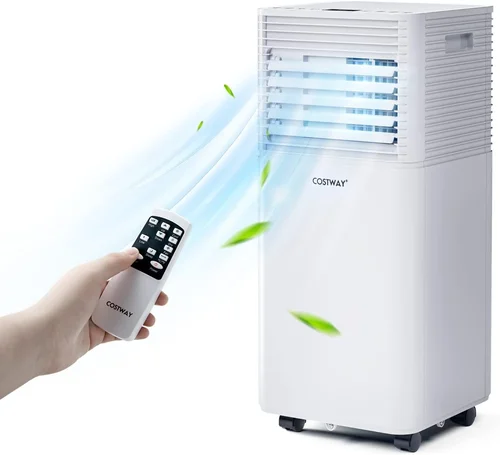
Choosing the right air conditioner isn’t just about cooling your space—it’s about creating a comfortable, healthy, and energy-efficient environment. In humid climates or during sticky summer months, excess moisture in the air can make even moderate temperatures feel oppressive. That’s where dehumidification becomes essential. Many people assume all AC units remove humidity equally, but that’s far from the truth. Some models excel at pulling moisture from the air, while others barely scratch the surface. With so many options on the market—ranging from window units to ductless mini-splits and portable systems—it’s easy to get overwhelmed. This guide cuts through the noise to help you find the best air conditioner for dehumidifying your home effectively, efficiently, and within your budget.
In this comprehensive buying guide, you’ll learn exactly what to look for when prioritizing dehumidification performance. We’ll break down key technical specs like latent capacity, moisture removal rates, and energy efficiency ratings, so you can compare models like a pro. You’ll also discover how different AC types—window, portable, split-system, and central units—stack up in real-world humidity control. Beyond performance, we’ll cover build quality, smart features, brand reliability, warranty coverage, and user feedback to give you a 360-degree view of each option. Whether you’re battling mold in a basement, trying to sleep better in a muggy bedroom, or protecting furniture from dampness, this guide will equip you with the knowledge to make a confident, informed decision.
The air conditioning market has evolved dramatically in recent years. Energy-efficient inverter technology, smart home integration, and advanced humidity sensors are now standard in many mid- to high-end models. At the same time, rising concerns about indoor air quality and climate change have pushed manufacturers to prioritize not just cooling power but also moisture control and environmental impact. As of 2026, consumers have more choices than ever—but also more complexity. This guide simplifies that complexity by focusing specifically on dehumidification performance, helping you avoid underperforming units and overpaying for features you don’t need. Let’s dive into the factors that truly matter.

What to Look for When Buying Buying Guide
1. Moisture Removal Rate (Pints per Hour)
The single most important metric for evaluating an air conditioner’s dehumidifying ability is its moisture removal rate, typically measured in pints per hour (pph). This tells you how much water vapor the unit can extract from the air in one hour under standard testing conditions. For example, a unit rated at 3.5 pints/hour will remove significantly more humidity than one rated at 1.8 pints/hour, especially in high-humidity environments like coastal regions or basements.
Look for models that clearly state this spec—many manufacturers bury it in technical documentation or omit it entirely if performance is weak. A good rule of thumb: aim for at least 2.5–3.0 pints/hour for small to medium rooms (up to 400 sq ft), and 4.0+ pints/hour for larger spaces or extremely humid climates. Keep in mind that actual performance may vary based on room size, insulation, outdoor humidity levels, and thermostat settings.
2. Latent Heat Ratio (LHR)
Latent Heat Ratio (LHR) is a technical term that describes how efficiently an AC unit removes moisture compared to how much total heat it removes. It’s expressed as a percentage: the lower the LHR, the better the dehumidification. For instance, an LHR of 0.70 means 70% of the unit’s cooling capacity goes toward removing sensible heat (lowering temperature), while 30% handles latent heat (removing moisture). An ideal dehumidifying AC has an LHR below 0.65.
Why does this matter? Units with high LHR values cool the air quickly but leave it feeling clammy because they don’t extract enough moisture. This is common in oversized ACs or those designed purely for rapid cooling. If you live in a humid climate, prioritize low LHR—even if it means slightly slower temperature drops. Many inverter-driven mini-splits and high-efficiency central systems offer excellent LHR performance.
3. Energy Efficiency & SEER2 Rating
Energy efficiency directly impacts both your utility bills and environmental footprint—and it plays a surprising role in dehumidification. Modern units with high SEER2 (Seasonal Energy Efficiency Ratio 2) ratings often incorporate variable-speed compressors and fans that run longer at lower speeds, which improves moisture removal. Why? Because dehumidification works best when air passes over the cold evaporator coil slowly and repeatedly, allowing more time for condensation to form.
Look for a SEER2 rating of 15 or higher for window/portable units, and 20+ for ductless mini-splits. ENERGY STAR-certified models meet strict federal guidelines for efficiency and typically outperform non-certified units in both cooling and dehumidifying tasks. Remember: a highly efficient unit that runs longer cycles will remove more moisture than a less efficient one that cycles on and off frequently.
4. Built-in Dehumidifier Mode vs. Cooling-Only Operation
Many modern air conditioners now include a dedicated “Dry” or “Dehumidifier” mode. This setting runs the compressor and fan at reduced speeds without aggressively lowering the temperature—perfect for humid but not overly hot days. In this mode, the unit focuses almost entirely on moisture extraction, often achieving higher pints-per-hour rates than during standard cooling.
Not all units offer this feature, and some implement it poorly (e.g., shutting off too quickly). When shopping, verify that the dehumidifier mode operates independently of the thermostat and can run even when the room is already cool. Portable and window units with this function are especially valuable for basements, garages, or seasonal use where full cooling isn’t needed.
5. Drainage System & Continuous Drain Option
Effective dehumidification produces water—lots of it. A poorly designed drainage system can lead to overflow, leaks, or frequent manual emptying. Top-performing units offer multiple drainage options: gravity drain, condensate pump, or auto-evaporation. Gravity drain is simplest—just attach a hose and let gravity do the work—but requires a floor drain or outdoor access.
Auto-evaporation systems reuse condensation to cool the condenser coil, reducing water output but increasing energy use. Condensate pumps are ideal for installations without floor drains (e.g., upstairs rooms or finished basements). Always check whether the unit supports continuous drainage—this is critical for unattended operation in humid climates. Avoid models that rely solely on a small internal bucket unless you’re willing to empty it daily.
6. Smart Features & Humidity Sensors
Smart technology has transformed how we manage indoor climate. Units with built-in humidity sensors automatically adjust fan speed and compressor output based on real-time moisture levels—preventing over-drying or under-dehumidifying. Pair this with Wi-Fi connectivity, and you can monitor and control humidity remotely via smartphone apps.
Brands like LG, Frigidaire, and Midea offer models with precise humidity displays (e.g., “Current Humidity: 58%”) and programmable humidity setpoints (e.g., maintain 50% RH). Some even integrate with smart home ecosystems like Alexa or Google Home. While not essential, these features enhance convenience and consistency, especially if you’re away from home often or have health concerns related to mold or dust mites.
7. Size & Proper Sizing for Your Space
One of the biggest mistakes buyers make is choosing an AC that’s too big or too small for their room. An oversized unit cools the space rapidly but doesn’t run long enough to remove significant moisture—resulting in a cold, clammy environment. Conversely, an undersized unit runs constantly but struggles to keep up, wasting energy and failing to control humidity.
Use BTU (British Thermal Unit) guidelines as a starting point: 5,000–6,000 BTU for up to 250 sq ft, 8,000–10,000 BTU for 300–400 sq ft, and so on. However, adjust for factors like ceiling height, sun exposure, insulation quality, and occupancy. Online calculators from ENERGY STAR or HVAC professionals can help. For dehumidification, slightly undersizing (within reason) is better than oversizing—it encourages longer run times and better moisture removal.
8. Noise Level & Compressor Technology
Dehumidification often requires longer operating cycles, which means noise becomes a bigger concern—especially in bedrooms or home offices. Look for units with sound ratings below 50 decibels (dB) on the low fan setting. Inverter compressors are quieter than traditional on/off models because they ramp up gradually and avoid loud startup surges.
Window units tend to be noisier than ductless mini-splits, which place the compressor outside. If quiet operation is a priority, consider a wall-mounted or ceiling cassette mini-split with a high-efficiency inverter. Many modern portables now feature brushless DC motors and sound-dampening materials, bringing noise levels down to library-quiet ranges.
Different Types of Buying Guide

Common Buying Mistakes to Avoid
❌ Mistake: Ignoring Moisture Removal Specs
Why it’s bad: Many buyers focus only on BTU or cooling power, assuming all ACs dehumidify equally. This leads to purchasing a unit that cools well but leaves the air sticky and uncomfortable—especially in humid regions.
What to do instead: Always check the pints-per-hour rating and LHR. Prioritize these over raw cooling capacity if humidity is your main concern.
❌ Mistake: Buying an Oversized Unit
Why it’s bad: An oversized AC cools the room too quickly, short-cycling before it can remove significant moisture. Result: cold floors, damp walls, and potential mold growth.
What to do instead: Use a sizing calculator and consider slightly smaller units for better dehumidification. Consult an HVAC pro if unsure.
❌ Mistake: Overlooking Drainage Needs
Why it’s bad: Units without proper drainage will overflow, damage floors, or require constant manual emptying—defeating the purpose of “set it and forget it” comfort.
What to do instead: Choose models with continuous drain options or auto-evaporation. Plan your installation location accordingly.
❌ Mistake: Skipping Smart or Dry Mode Features
Why it’s bad: Without a dedicated dehumidifier mode, your AC may not effectively manage humidity on mild but muggy days when full cooling isn’t needed.
What to do instead: Look for units with a “Dry” mode and verify it operates independently of temperature settings.
❌ Mistake: Choosing Based Solely on Price
Why it’s bad: Cheap units often cut corners on compressor quality, drainage, and humidity sensors—leading to poor performance and higher long-term costs.
What to do instead: Balance upfront cost with energy efficiency, warranty, and feature set. Mid-range models often offer the best value.
❌ Mistake: Ignoring Noise Levels
Why it’s bad: Loud units disrupt sleep, concentration, and relaxation—especially problematic since dehumidification requires longer run times.
What to do instead: Check decibel ratings and read user reviews about noise. Inverter models are typically quieter.
❌ Mistake: Not Reading Real User Reviews
Why it’s bad: Marketing specs don’t always reflect real-world performance. A unit may look great on paper but fail in high-humidity conditions.
What to do instead: Read verified purchaser reviews on retailer sites, focusing on comments about moisture control, leaks, and noise.
Budget Guidelines: How Much Should You Spend?
- Entry-Level ($150 – $350): Basic window or portable units with limited dehumidification (1.5–2.5 pints/hour). Often lack smart features, have noisy operation, and may require frequent bucket emptying. Best for occasional use in low-humidity areas or very small spaces.
- Mid-Range ($350 – $800): The sweet spot for most buyers. Includes energy-efficient window units, dual-hose portables, and basic mini-splits. Expect 2.5–4.0 pints/hour, decent drainage, and optional smart controls. Ideal for bedrooms, living rooms, or seasonal humidity issues.
- Premium ($800 – $2,500): High-performance ductless mini-splits and advanced window units with inverter tech, precise humidity sensors, and quiet operation. Moisture removal exceeds 4.0 pints/hour, with LHR below 0.65. Perfect for whole-room or whole-house humidity control in humid climates.
- Luxury ($2,500+): Top-tier central systems or multi-zone mini-splits with professional installation, whole-home integration, and advanced air filtration. These offer unparalleled consistency, automation, and humidity management—ideal for large homes, allergy sufferers, or luxury builds.
Expert Tips for Getting the Best Deal
- Buy Off-Season: Prices drop significantly in fall and winter (October–March). Retailers clear inventory before summer, offering discounts up to 30% on window and portable units.
- Check Rebates & Incentives: Many utilities and governments offer rebates for ENERGY STAR-certified ACs. Visit ENERGY STAR’s rebate finder to see what’s available in your area.
- Compare Online vs. In-Store: Online retailers often have lower prices and wider selections, but in-store purchases may include free delivery or installation support. Read return policies carefully.
- Test Before Committing: If buying locally, ask if you can test the unit for a few days. Some stores offer trial periods—especially for portable models.
- Negotiate Extended Warranties: Manufacturer warranties typically cover 1–5 years. Extended plans can protect against compressor failure, but weigh the cost against potential repair expenses.
- Look for Bundled Deals: Some brands offer discounts when you buy multiple units (e.g., for different rooms) or pair with air purifiers or smart thermostats.
- Verify Return Policies: Ensure you can return the unit if it doesn’t meet dehumidification expectations. Some retailers charge restocking fees, so read the fine print.
- Consider Refurbished Models: Certified refurbished units from reputable sellers (e.g., LG, Frigidaire) often come with full warranties and cost 20–40% less than new.

Frequently Asked Questions
Q: Can any air conditioner dehumidify, or do I need a special unit?
A: All air conditioners remove some moisture as a byproduct of cooling, but not all are optimized for it. For effective dehumidification—especially in high-humidity environments—you need a unit with strong latent capacity, low LHR, and preferably a dedicated Dry mode.
Q: Is a portable AC better than a window unit for dehumidifying?
A: It depends. Dual-hose portable units often outperform single-hose models and some basic window ACs in moisture removal. However, high-end window units with inverter technology can match or exceed portable performance while being quieter and more energy-efficient.
Q: How much water should my AC remove per day?
A: In a moderately humid room (60% RH), expect 15–30 pints per day. In very humid conditions (80%+ RH), top units can remove 40–60+ pints daily. Check your unit’s pints/hour rating and multiply by estimated run time.
Q: Will a dehumidifier work better than an AC for humidity control?
A: Standalone dehumidifiers excel at moisture removal but don’t cool the air. Use one if you only need dehumidification (e.g., in a basement during cool months). For combined cooling and dehumidifying, a well-spec’d AC is more efficient.
Q: Do mini-splits really dehumidify better than window units?
A: Yes—especially inverter-driven models. Their longer, slower run cycles and precise temperature/humidity control make them superior for consistent moisture removal. They’re also quieter and more energy-efficient.
Q: Can I use my AC to dehumidify in winter?
A: Most ACs won’t operate below 60°F (15°C) outdoor temperature. For winter dehumidification, use a standalone dehumidifier or a heat pump mini-split with defrost capability.
Q: Why does my AC leave puddles or leak water?
A: Common causes include clogged drain lines, improper installation (not level), or excessive condensation due to high humidity. Ensure proper drainage setup and clean filters regularly.
Q: Are smart ACs worth the extra cost for dehumidification?
A: If you value automation and precision, yes. Smart units maintain consistent humidity levels without manual adjustments, which improves comfort and prevents mold. For occasional use, basic models may suffice.
Q: How often should I clean my AC to maintain dehumidification performance?
A: Clean or replace filters monthly during peak use. Wash evaporator and condenser coils annually. Dirty components reduce airflow and moisture removal efficiency.
Q: What’s the ideal indoor humidity level?
A: Aim for 30–50% relative humidity. Below 30% can cause dry skin and respiratory issues; above 50% promotes mold, dust mites, and musty odors.
Our Final Recommendations
- Best for Budget-Conscious Buyers: Frigidaire FFRA051WAE – A 5,000 BTU window unit with 2.8 pints/hour removal, ENERGY STAR certification, and a reliable drainage system. Priced under $250, it’s ideal for small rooms in humid climates.
- Best Overall Value: LG LW8016ER – An 8,000 BTU window AC with 3.5 pints/hour dehumidification, inverter compressor, and Wi-Fi connectivity. Quiet, efficient, and packed with smart features for under $500.
- Best Premium Option: Mitsubishi MSZ-FH12NA – A 12,000 BTU ductless mini-split with ultra-low LHR (0.58), 4.2 pints/hour removal, and whisper-quiet operation. Perfect for whole-room humidity control in luxury homes.
- Best for Beginners: Honeywell MN10CESWW – A 10,000 BTU portable AC with dual-hose design, 3.0 pints/hour removal, and simple controls. No installation needed—great for renters or first-time buyers.
- Best for Advanced Users: Daikin Aurora Series – A multi-zone mini-split system with AI-driven humidity adaptation, app control, and integration with smart thermostats. Ideal for tech enthusiasts and whole-home climate management.
Conclusion: Making the Right Choice
Finding the best air conditioner for dehumidifying isn’t just about picking the coldest or most powerful unit—it’s about matching the right technology to your specific humidity challenges, space requirements, and lifestyle. By focusing on moisture removal rate, latent heat ratio, drainage options, and smart features, you can avoid common pitfalls and invest in a system that delivers lasting comfort and air quality. Remember, the goal isn’t just cooler air—it’s healthier, drier, more breathable air that feels refreshing, not oppressive.
As you weigh your options, prioritize your must-haves: Is quiet operation essential? Do you need whole-home coverage? Are you willing to pay more upfront for long-term energy savings? Use this guide as your compass, and don’t hesitate to consult HVAC professionals for complex installations. With the right AC, you’ll transform humid, sticky spaces into cool, dry sanctuaries—where every breath feels lighter and every day more comfortable. Now’s the time to act: compare models, check seasonal deals, and take control of your indoor climate today.