
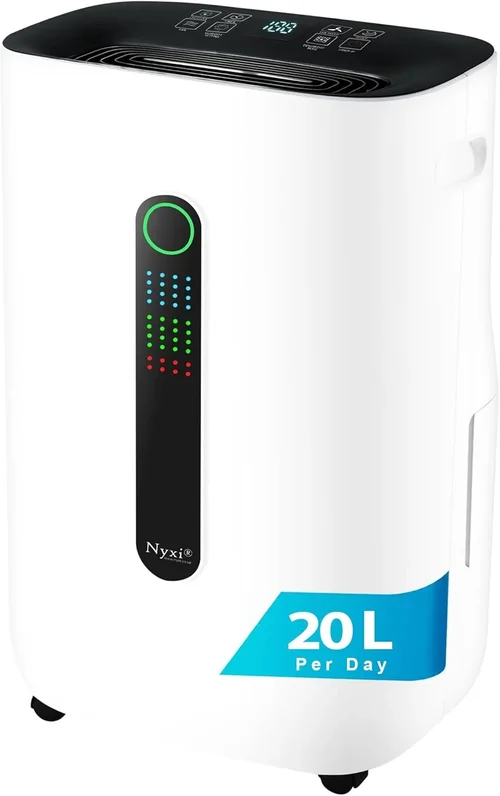
Choosing the right 50-pint dehumidifier can feel overwhelming—especially when you’re trying to balance performance, price, noise levels, and long-term reliability. Whether you’re dealing with a damp basement, a musty crawl space, or high humidity in a large living area, a 50-pint unit is often the sweet spot for effective moisture control in spaces up to 1,500–2,000 square feet. These units are powerful enough to tackle serious humidity issues without being overly bulky or energy-hungry like commercial-grade models. But not all 50-pint dehumidifiers are created equal. Some excel in quiet operation, others in smart connectivity or durability. This guide is designed to cut through the noise and help you make an informed decision based on your specific needs, budget, and environment.
In this comprehensive buying guide, you’ll learn exactly what to look for when shopping for a 50-pint dehumidifier in 2026. We’ll break down the key performance metrics, explain how to interpret manufacturer claims, compare different types of units, and highlight common pitfalls to avoid. You’ll also find expert tips on timing your purchase, understanding warranty coverage, and maximizing energy efficiency. Whether you’re a first-time buyer or upgrading from an older model, this guide will equip you with the knowledge to choose a dehumidifier that delivers consistent results, lasts for years, and fits seamlessly into your home or workspace.
The market for residential dehumidifiers has evolved significantly over the past few years. Brands like Frigidaire, hOmeLabs, GE, Midea, and Keystone now offer feature-rich 50-pint models with advanced sensors, Wi-Fi connectivity, auto-defrost, and even integration with smart home systems. At the same time, energy efficiency standards have tightened, and consumers are more aware of long-term operating costs. With so many options available—from budget-friendly picks under $200 to premium models exceeding $400—it’s more important than ever to understand what truly matters in a dehumidifier. Let’s dive into the essential factors that will guide your decision.

What to Look for When Buying Buying Guide
1. Performance Specifications
When evaluating a 50-pint dehumidifier, start with its core performance specs. The “50-pint” label refers to the unit’s capacity to remove 50 pints of moisture per day under standard test conditions (80°F and 60% relative humidity, as defined by AHAM). However, real-world performance can vary significantly based on temperature and ambient humidity. In cooler environments—like basements in winter—many compressors struggle to operate efficiently, and output may drop to 20–30 pints per day. Look for models with low-temperature operation (down to 41°F or lower) and auto-defrost functionality, which prevents ice buildup on the coils.
Also pay attention to the unit’s coverage area. Most 50-pint dehumidifiers are rated for 1,000–2,000 square feet, but this depends heavily on how damp the space is. A finished basement with minor moisture issues might only need a 30-pint unit, while a flooded crawl space or humid garage could require the full 50-pint capacity. Check the manufacturer’s recommended room size and cross-reference it with your actual conditions. Additionally, consider the water tank size—typically between 1–2 gallons for 50-pint models. Larger tanks mean less frequent emptying, but if you plan to use continuous drainage (via a hose), tank size becomes less critical.
2. Energy Efficiency & Operating Costs
Energy efficiency is a major factor in long-term value. A dehumidifier that uses less electricity saves you money every month and reduces environmental impact. Look for the Energy Factor (EF), measured in liters of water removed per kilowatt-hour (L/kWh). Higher EF values mean better efficiency. ENERGY STAR-certified 50-pint dehumidifiers typically have an EF of 1.8 or higher, compared to non-certified models that may fall below 1.5.
To estimate annual operating costs, multiply the unit’s wattage by your local electricity rate and average runtime. For example, a 500-watt dehumidifier running 10 hours a day at $0.13/kWh costs about $235 per year. Some newer models include built-in energy-saving modes, like auto-humidistat control or “eco” settings that cycle the compressor intelligently. These features can reduce runtime by 20–30% without sacrificing performance. Also, consider units with inverter compressors—they adjust speed based on demand, leading to quieter operation and lower energy use.
3. Noise Level & Sound Output
Noise is often overlooked but can be a dealbreaker, especially if the dehumidifier runs in a bedroom, home office, or living area. Most 50-pint models operate between 45–55 decibels (dB) on low fan speed—comparable to a quiet conversation or library. On high speed, noise can reach 58–62 dB, similar to a normal conversation. Check manufacturer specs for sound ratings, but note that these are often measured under ideal lab conditions. Real-world noise may be higher due to vibrations, ducting, or placement on hard surfaces.
Look for features like insulated compressor compartments, vibration-dampening feet, and multi-speed fans that allow you to run the unit quietly during the night. Some premium models even include a “sleep mode” that reduces fan speed and dims indicator lights. If noise is a top concern, consider placing the unit on a rubber mat or in a closet with proper ventilation to minimize sound transmission.
4. Build Quality & Durability
A dehumidifier is a long-term investment, so build quality matters. Look for sturdy cabinets made from high-impact plastic or coated metal, reinforced handles, and well-sealed seams to prevent moisture ingress. Internal components should include corrosion-resistant coils (often copper or aluminum with protective coatings), sealed bearings in the fan motor, and a robust compressor. Units with powder-coated finishes or rust-resistant screws are better suited for humid environments like basements or garages.
Check user reviews for reports of leaks, compressor failures, or control panel malfunctions. Brands with a reputation for reliability—such as Frigidaire, GE, and Midea—often use higher-grade components and rigorous testing. Avoid ultra-cheap models with flimsy construction; they may save you $50 upfront but cost more in repairs or replacements within a year or two.
5. Features & Functionality
Modern 50-pint dehumidifiers come packed with smart features that enhance convenience and performance. Key functionalities to consider include:
– Built-in humidistat: Automatically maintains your desired humidity level (usually adjustable from 30% to 80%) and turns the unit on/off as needed.
– Continuous drainage: Allows you to connect a standard garden hose for hands-free operation—ideal for basements or unattended spaces.
– Auto-restart: Resumes operation after a power outage, ensuring consistent humidity control.
– Filter indicator: Alerts you when the air filter needs cleaning (typically every 250 hours).
– Wi-Fi & app control: Lets you monitor and adjust settings remotely via smartphone (available on select models from brands like hOmeLabs and GE).
– Timer function: Schedule start/stop times to match your routine or save energy.
While these features add convenience, they can also increase cost and complexity. Decide which ones are essential for your use case. For example, if you’re away from home often, Wi-Fi control is valuable. If you’re using the unit in a remote basement, continuous drainage and auto-restart are must-haves.
6. Brand Reputation & Reliability
Not all dehumidifier brands are equal in terms of customer service, part availability, and long-term support. Established brands like Frigidaire, GE, and Midea have decades of experience and wide service networks. They also tend to offer better warranties and more transparent product documentation. Newer or lesser-known brands may offer aggressive pricing but can be hit-or-miss in terms of reliability and post-purchase support.
Research brand reputation by reading verified customer reviews on retail sites, checking complaint histories on the Better Business Bureau (BBB), and looking for mentions in trusted review outlets like Consumer Reports or Wirecutter. Pay attention to how quickly companies respond to issues and whether they honor warranties without hassle. A strong brand reputation often correlates with better build quality and longer product lifespan.
7. Warranty & Support
A solid warranty is a strong indicator of a manufacturer’s confidence in their product. Most reputable 50-pint dehumidifiers come with a 1- to 2-year limited warranty covering parts and labor. Some premium models offer extended coverage—up to 5 years on the compressor—which is a major advantage since compressors are the most expensive component to replace.
Read the fine print: some warranties require registration within 30 days of purchase, exclude damage from improper installation, or limit coverage to residential use only. Also check if the brand offers in-home service or requires you to ship the unit for repairs. Brands with local service centers (like Frigidaire and GE) typically provide faster support. Avoid models with no warranty or “as-is” sales, especially from third-party sellers on online marketplaces.
8. Size, Weight & Portability
Even though 50-pint dehumidifiers are generally larger than smaller units, portability still matters—especially if you plan to move the unit between rooms or store it seasonally. Most weigh between 35–50 pounds and measure roughly 15” x 11” x 24”. Look for models with recessed handles, smooth-rolling casters, and a compact footprint that fits under sinks or in corners.
Consider where you’ll place the unit: will it sit on a concrete floor, carpet, or elevated surface? Units with wide, stable bases and non-marking wheels are less likely to tip or damage flooring. If you’re short on space, some models offer vertical or horizontal discharge options, allowing flexible placement near walls or in tight spaces.
Different Types of Buying Guide

Common Buying Mistakes to Avoid
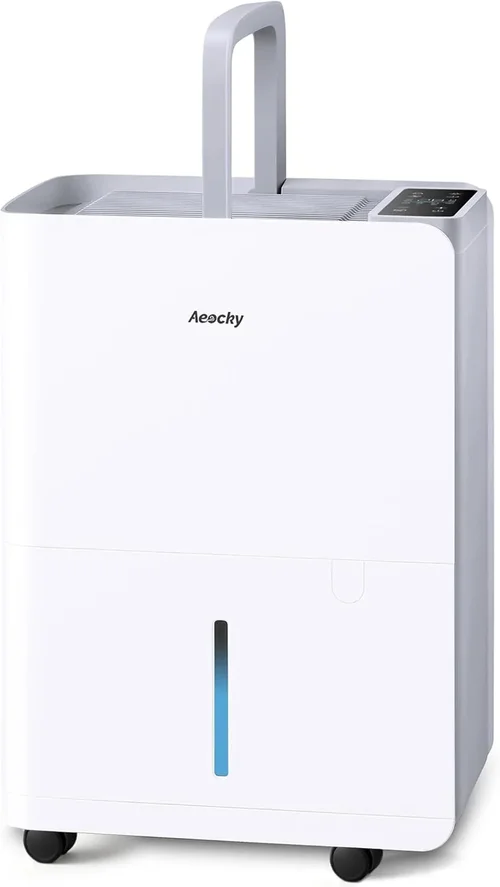
❌ Mistake: Ignoring Real-World Performance vs. Lab Ratings
Why it’s bad: The 50-pint rating is based on ideal lab conditions (80°F, 60% RH). In colder or less humid environments, actual output can drop by 30–50%. Relying solely on the pint rating can lead to underperformance and frustration.
What to do instead: Check the manufacturer’s performance data at lower temperatures (e.g., 50°F or 60°F). Look for units with auto-defrost and low-temp operation. If your space is consistently below 60°F, consider a desiccant dehumidifier instead.
❌ Mistake: Overlooking Drainage Options
Why it’s bad: Emptying a 1–2 gallon tank every 8–12 hours is tedious and impractical for continuous use. Without continuous drainage, the unit shuts off when the tank is full, leaving your space unprotected.
What to do instead: Choose a model with a built-in pump or gravity drain hose outlet. Ensure the unit has an auto-shutoff float switch and consider purchasing a condensate pump if your drain location is below floor level.
❌ Mistake: Buying Based Solely on Price
Why it’s bad: The cheapest model may lack essential features like a humidistat, auto-restart, or durable build. It could also consume more energy or fail prematurely, costing more in the long run.
What to do instead: Focus on total cost of ownership—including energy use, maintenance, and expected lifespan. A $50 savings upfront isn’t worth it if the unit lasts only 2 years instead of 5.
❌ Mistake: Neglecting Noise Levels
Why it’s bad: A noisy dehumidifier can disrupt sleep, work, or relaxation—especially if placed in or near living areas. High-decibel units may also indicate poor build quality or unbalanced components.
What to do instead: Prioritize models with noise ratings below 55 dB on low speed. Read user reviews for real-world sound feedback and consider placement strategies (e.g., rubber mats, enclosed spaces) to reduce noise.
❌ Mistake: Skipping Warranty and Support Research
Why it’s bad: Dehumidifiers contain complex mechanical parts that can fail. Without a solid warranty, repair costs can exceed the unit’s value. Poor customer service can leave you stranded during critical times.
What to do instead: Choose brands with at least a 1-year warranty and positive support reviews. Register your product promptly and keep all documentation. Avoid third-party sellers with no return policy.
❌ Mistake: Assuming All 50-Pint Units Are Equal
Why it’s bad: Two 50-pint dehumidifiers can differ significantly in efficiency, features, and durability. One may use 20% more energy or lack smart controls that improve usability.
What to do instead: Compare side-by-side specs, not just capacity. Look at EF ratings, tank size, filter type, and included features. Use comparison tools on retailer sites or consult expert reviews.
❌ Mistake: Not Considering Placement and Ventilation
Why it’s bad: Placing a dehumidifier in a corner or against a wall restricts airflow, reducing efficiency and increasing strain on the compressor. Poor ventilation can also cause overheating.
What to do instead: Allow at least 6–12 inches of clearance on all sides. Use the unit in an open area or near a central location for even moisture removal. Avoid enclosed spaces unless specifically designed for it.
Budget Guidelines: How Much Should You Spend?
– Entry-Level ($120–$180): These models offer basic 50-pint capacity with minimal features. Expect manual controls, smaller tanks, and limited low-temperature performance. Best for occasional use in mild climates or small spaces. Brands like Keystone and Danby offer budget options, but build quality and longevity may be compromised.
– Mid-Range ($180–$280): This is the sweet spot for most homeowners. Units in this range typically include a digital humidistat, continuous drainage, auto-restart, and ENERGY STAR certification. Brands like hOmeLabs, Frigidaire, and Midea dominate this category with reliable performance and good warranties. Ideal for basements, garages, and large living areas.
– Premium ($280–$400): These models feature inverter compressors, Wi-Fi connectivity, advanced filtration, and superior noise control. They’re built for daily use in challenging environments and often include extended warranties. Perfect for tech-savvy users or those prioritizing quiet, efficient operation.
– Luxury ($400+): Top-tier units offer commercial-grade components, ultra-quiet operation, and smart home integration. They may include built-in pumps, HEPA filtration, or modular designs. These are best for professionals, flood restoration, or users with high expectations for performance and durability.
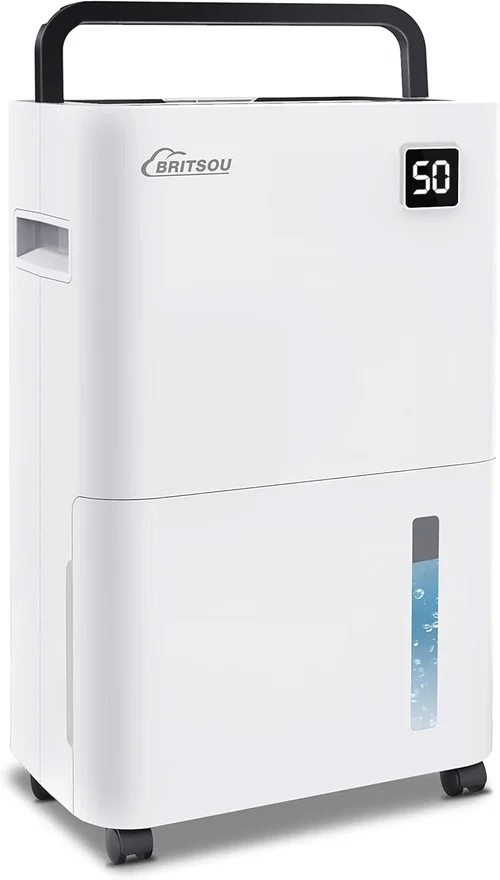
Expert Tips for Getting the Best Deal
– Buy during off-peak seasons: Prices drop significantly in late fall and winter (November–February) when demand is low. Retailers often clear inventory before new models arrive in spring.
– Shop major sales events: Look for deals during Black Friday, Cyber Monday, Amazon Prime Day, and Memorial Day. Many brands offer $50–$100 off popular models.
– Compare retailers: Check Best Buy, Home Depot, Lowe’s, Amazon, and manufacturer websites. Some offer price matching, free shipping, or bundled accessories (e.g., hoses, filters).
– Read return policies: Ensure the retailer allows returns within 30–90 days, especially for large appliances. Test the unit immediately upon delivery.
– Check for rebates: Some utility companies offer rebates for ENERGY STAR dehumidifiers—up to $50 in certain regions. Visit energystar.gov/rebate-finder to see if you qualify.
– Consider certified refurbished models: These are often 20–30% cheaper and come with full warranties. Ideal for budget-conscious buyers who want premium features.
– Test before committing: Run the dehumidifier for 24–48 hours and monitor humidity levels, noise, and drainage. If it doesn’t meet expectations, return it promptly.

Frequently Asked Questions
Q: Can a 50-pint dehumidifier handle a flooded basement?
A: A 50-pint unit can help manage moisture after flooding, but it’s not a replacement for professional water extraction. For severe flooding, use a wet/dry vacuum first, then run the dehumidifier continuously with fans to speed drying. Consider a heavy-duty model with a built-in pump for best results.
Q: How often should I clean the filter?
A: Most manufacturers recommend cleaning the filter every 250 hours of use—roughly once a month with daily operation. A dirty filter restricts airflow, reduces efficiency, and can cause the unit to overheat.
Q: Should I run my dehumidifier year-round?
A: In humid climates, yes—especially in basements. In drier regions, you may only need it during summer or rainy seasons. Use a hygrometer to monitor indoor humidity and aim for 30–50% for comfort and mold prevention.
Q: Can I use a dehumidifier in an unheated garage?
A: Only if the model is rated for low-temperature operation (down to 41°F or lower). Standard compressors may ice up and fail in cold environments. Desiccant dehumidifiers are better suited for unheated spaces.
Q: Does a larger tank mean better performance?
A: Not necessarily. Tank size affects convenience, not moisture removal capacity. A larger tank reduces emptying frequency but doesn’t improve efficiency. If using continuous drainage, tank size is irrelevant.
Q: Are smart dehumidifiers worth the extra cost?
A: If you value remote monitoring, alerts, and automation, yes. Wi-Fi models let you check humidity levels from your phone and receive notifications when the tank is full. For occasional use, basic models are sufficient.
Q: How do I know if my dehumidifier is working properly?
A: Use a hygrometer to measure humidity before and after use. You should see a drop of 10–20% within 24 hours. Also listen for consistent compressor cycles and check for water in the tank or drain hose.
Q: Can I place my dehumidifier on carpet?
A: Yes, but use a plastic tray or rubber mat underneath to prevent moisture damage and improve airflow. Avoid placing it directly on thick carpet, which can block the intake vent.
Q: What’s the difference between a 50-pint and 70-pint dehumidifier?
A: A 70-pint model removes more moisture per day and is better for very large or extremely damp spaces. For most homes, a 50-pint unit is sufficient and more energy-efficient.
Q: How long do 50-pint dehumidifiers typically last?
A: With proper maintenance, most last 5–7 years. Inverter compressor models may last 8–10 years. Regular filter cleaning, avoiding overuse, and storing properly in off-seasons extend lifespan.
Our Final Recommendations
– Best for Budget-Conscious Buyers: hOmeLabs 50 Pint Dehumidifier – Offers excellent value under $200 with a digital humidistat, continuous drainage, and ENERGY STAR certification. Reliable performance for basements and large rooms.
– Best Overall Value: Frigidaire FFAD5033W1 – A top performer in the mid-range category with low noise (47 dB), auto-defrost, and a 2-year warranty. Ideal for daily use in humid climates.
– Best Premium Option: GE APER50LZ – Features Wi-Fi connectivity, inverter compressor, and app control. Quiet, efficient, and built to last—perfect for smart homes and energy-conscious users.
– Best for Beginners: Midea MAD50C1ZWS – Simple controls, easy setup, and reliable operation. Great for first-time buyers who want hassle-free humidity control.
– Best for Advanced Users: Keystone KSTAD504D – Includes a built-in pump, HEPA filter, and advanced diagnostics. Designed for demanding environments and users who want maximum control.
Conclusion: Making the Right Choice
Selecting the right 50-pint dehumidifier isn’t just about picking the biggest number or the lowest price. It’s about matching the unit’s capabilities to your specific environment, usage patterns, and long-term goals. By focusing on performance specs, energy efficiency, noise levels, and build quality—and avoiding common pitfalls like ignoring real-world conditions or skipping warranty research—you’ll find a model that delivers consistent results year after year.
Remember, the best dehumidifier is the one you’ll actually use. Whether you’re protecting your home from mold, improving indoor air quality, or simply making your space more comfortable, investing in a quality 50-pint unit is a smart decision. Take your time, compare options, and prioritize features that matter most to you. With the insights from this guide, you’re now equipped to make a confident, informed purchase that keeps your home dry, healthy, and comfortable for years to come.