

If you’ve ever opened your car door on a chilly morning only to be greeted by fogged-up windows, a musty smell, or that unmistakable damp feeling on your seats, you’ve experienced the frustrating reality of excess moisture inside your vehicle. Car interiors are especially vulnerable to humidity buildup—whether from wet clothes, snowy boots, rainy weather, or even just breathing during long drives. Over time, this moisture doesn’t just cause discomfort; it can lead to mold growth, unpleasant odors, damaged upholstery, and even corrosion in electrical components. That’s where a car dehumidifier comes in—a compact, often overlooked solution that can dramatically improve your driving experience and protect your investment.
This comprehensive buyer’s guide is designed to help you navigate the growing market of car dehumidifiers with confidence. Whether you live in a humid climate, frequently transport wet gear, or simply want to maintain a fresh, dry cabin environment, we’ll walk you through everything you need to know before making a purchase. You’ll learn how these devices work, what features matter most, how to avoid common pitfalls, and which models offer the best value for your specific needs. By the end of this guide, you’ll have the expert-level knowledge to choose a dehumidifier that fits your budget, lifestyle, and vehicle type—without falling for marketing hype or overspending on unnecessary features.
The car dehumidifier market has evolved significantly in recent years. Once limited to basic silica gel packs or rudimentary electric units, today’s options include advanced thermoelectric systems, rechargeable desiccant models, and smart-enabled devices with humidity sensors and auto-shutoff functions. With so many choices available—from under-$20 passive absorbers to $150+ high-performance units—it’s easy to feel overwhelmed. But don’t worry: we’ve done the research, tested real-world performance, and analyzed hundreds of user reviews to bring you an unbiased, up-to-date breakdown of what works, what doesn’t, and what truly delivers results. Let’s dive in.

What to Look for When Buying Buying Guide
1. Moisture Removal Capacity
The single most important factor when choosing a car dehumidifier is its ability to actually remove moisture from the air. This is typically measured in milliliters per day (mL/day) or sometimes described as “coverage area” (e.g., effective in vehicles up to 5 cubic meters). For reference, a standard sedan has about 3–4 cubic meters of interior space, while larger SUVs or minivans may exceed 6 cubic meters.
Passive dehumidifiers like silica gel packs usually absorb between 10–50 mL per day, depending on humidity levels and pack size. These are fine for mild dampness or seasonal use but struggle in high-humidity environments or after significant water exposure (like wet snow boots left overnight). Electric dehumidifiers, especially those using thermoelectric (Peltier) cooling, can remove 100–300 mL/day and are far more effective for consistent, heavy-duty moisture control.
When evaluating capacity, consider your typical usage scenario. If you regularly drive in tropical climates, live near the coast, or frequently carry wet sports equipment, aim for a unit with at least 150–200 mL/day removal rate. For occasional use in moderate climates, a lower-capacity model may suffice—but always check real-world user reports, as manufacturer claims can be optimistic.
2. Power Source & Energy Efficiency
Car dehumidifiers draw power from your vehicle’s 12V cigarette lighter socket (also called a power outlet or accessory socket). However, not all units are created equal when it comes to energy consumption. Some high-output models can draw 3–5 amps, which—if left running continuously—could drain your car battery overnight, especially if the engine isn’t running.
Look for units with low power draw (ideally under 2 amps) and built-in safety features like auto-shutoff after a set time or when the battery voltage drops below a safe threshold (typically around 11.6V). Many modern dehumidifiers also include timers or sleep modes to reduce energy use during low-humidity periods.
Rechargeable or passive models eliminate battery concerns entirely. Silica gel units require no power and are simply “recharged” by microwaving or placing in sunlight. Rechargeable electric models (like those with built-in lithium batteries) offer cordless convenience but may have limited runtime (4–8 hours). Choose based on your access to power: if you park in a garage with an outlet, a plug-in model makes sense. If you’re often away from home or concerned about battery drain, go cordless or passive.
3. Size & Portability
A car dehumidifier should fit comfortably in your vehicle without becoming a tripping hazard or blocking vents, cup holders, or storage compartments. Most units are designed to sit on the floor mat, under a seat, or in the footwell, so compact dimensions are key. Ideal sizes range from a small coffee mug (for passive packs) to a tissue box (for electric units).
Weight matters too—especially if you plan to move the unit between vehicles or take it camping. Heavy, bulky models may seem sturdy but can become inconvenient over time. Look for lightweight designs (under 2 lbs for electric units) with non-slip bases or mounting options (like adhesive pads or Velcro strips) to prevent sliding during sharp turns or sudden stops.
Portability also extends to ease of maintenance. Can you easily remove the water tank? Is it dishwasher-safe? Does the filter require frequent cleaning? A well-designed unit should be simple to empty and clean—even with one hand while driving (though we don’t recommend operating it while behind the wheel!).
4. Noise Level
While most car dehumidifiers are relatively quiet, some electric models produce a noticeable hum or fan noise—especially at higher settings. This might be fine if you only run the unit while parked, but if you use it during drives (e.g., to prevent window fogging), excessive noise can become distracting or annoying on long trips.
Thermoelectric dehumidifiers tend to be quieter than compressor-based ones (which aren’t common in cars anyway), but even among Peltier units, noise varies. Look for decibel (dB) ratings if available—ideally under 40 dB, which is comparable to a whisper. User reviews often mention noise levels more honestly than spec sheets, so read those carefully.
Passive dehumidifiers are completely silent, making them ideal for overnight use or quiet cabins. If silence is a priority (e.g., for rideshare drivers or parents with sleeping kids), prioritize non-electric options unless the electric model explicitly states “ultra-quiet” operation.
5. Build Quality & Durability
Your car dehumidifier will face temperature swings, vibrations, dust, and occasional spills—so it needs to be built to last. Cheap plastic housings may crack in extreme heat or cold, while poorly sealed units can leak water onto your floor mats.
Look for models made from high-grade ABS plastic or reinforced polymers, with sealed electronics and corrosion-resistant components. The water tank should be BPA-free, easy to remove, and have a secure lid to prevent leaks. Check for certifications like CE, FCC, or RoHS, which indicate compliance with safety and environmental standards.
Durability also ties into warranty length. A 1-year warranty is standard; anything less suggests the manufacturer lacks confidence in their product. Premium brands often offer 2–3 years, sometimes with free replacements for defects. Avoid no-name brands with vague return policies—your dehumidifier should withstand years of daily use, not just a few months.
6. Smart Features & Automation
Modern car dehumidifiers increasingly include smart features that enhance convenience and efficiency. The most useful is a built-in hygrometer (humidity sensor) that automatically turns the unit on when humidity rises above a set threshold (e.g., 60%) and off when the air is dry. This prevents over-drying and saves energy.
Other helpful features include LED indicators for full tanks, filter replacement reminders, timer settings (1/2/4/8 hours), and memory functions that resume previous settings after power loss. Some premium models even connect via Bluetooth to a smartphone app, allowing remote monitoring and control—though this is more gimmick than necessity for most users.
While automation is nice, don’t pay extra for features you won’t use. A simple on/off switch with a full-tank alert may be all you need. Focus on core performance first, then consider extras based on your lifestyle.
7. Ease of Maintenance
A dehumidifier is only effective if you maintain it properly. That means regularly emptying the water tank, cleaning filters, and occasionally recharging or replacing desiccant materials. Choose a model that makes these tasks quick and hassle-free.
Electric units should have a removable, transparent water tank (so you can see when it’s full) with a wide opening for easy pouring. Filters should be washable or easily replaceable—avoid proprietary filters that cost $15+ each. Passive silica gel packs should come in breathable fabric pouches that allow full airflow and are simple to “recharge” (usually by microwaving for 2–3 minutes or placing in direct sunlight for a few hours).
Check user manuals or product videos before buying: can you clean the unit without tools? Is disassembly straightforward? A poorly designed maintenance process leads to neglect, which defeats the purpose of owning a dehumidifier.
8. Brand Reputation & Customer Support
With dozens of brands flooding the market—from established names like Eva-Dry and ProBreeze to Amazon-only labels—it pays to stick with reputable manufacturers. Look for companies with a track record in air quality products, positive customer service reviews, and responsive support teams.
Read verified purchase reviews on Amazon, Best Buy, or specialty automotive sites. Pay attention to comments about longevity, reliability, and how the company handled issues like leaks, malfunctions, or warranty claims. A brand that stands behind its product will offer clear instructions, replacement parts, and hassle-free returns.
Avoid “too good to be true” deals from unknown sellers. If a $25 dehumidifier claims to remove 500 mL/day and has no customer service contact, it’s likely a scam. Invest in a brand you can trust—your car’s interior is worth it.
Different Types of Buying Guide

Common Buying Mistakes to Avoid
❌ Mistake: Choosing Based Solely on Price
Why it’s bad: The cheapest dehumidifier often delivers the worst performance. A $15 silica gel pack might seem like a bargain, but if it only absorbs 10 mL/day and needs recharging every other day, you’ll spend more time maintaining it than benefiting from it—and it won’t solve serious moisture problems.
What to do instead: Balance cost with capability. Spend enough to get a unit that matches your humidity level and usage frequency. A mid-range electric model ($60–$90) often provides the best long-term value by reducing odors, preventing mold, and requiring minimal upkeep.
❌ Mistake: Ignoring Power Draw and Battery Safety
Why it’s bad: Running a high-wattage dehumidifier overnight without the engine on can kill your car battery—leaving you stranded in the morning. Some users report dead batteries after just 6–8 hours of continuous use with poorly designed units.
What to do instead: Check the amp draw (usually listed in specs) and look for auto-shutoff or low-voltage protection. If you plan to use it while parked, consider a rechargeable model or one with a timer. Never leave any electrical device running unattended for extended periods unless it’s specifically designed for it.
❌ Mistake: Overlooking Maintenance Requirements
Why it’s bad: A neglected dehumidifier becomes a breeding ground for bacteria and mold itself. Clogged filters reduce efficiency, and full water tanks can overflow, damaging your car’s interior.
What to do instead: Choose a model with easy-access tanks and washable filters. Set calendar reminders to empty and clean the unit weekly. For passive packs, recharge them monthly—even if they don’t seem full—to maintain effectiveness.
❌ Mistake: Buying a Unit Too Small for Your Vehicle
Why it’s bad: A dehumidifier rated for a compact car will struggle in an SUV or van. Undersized units run constantly, wear out faster, and still fail to control humidity adequately.
What to do instead: Measure your vehicle’s interior volume (length × width × height) and check the manufacturer’s coverage specs. When in doubt, go one size up. Better to have slightly more capacity than not enough.
❌ Mistake: Falling for “Miracle” Claims
Why it’s bad: Some products promise to “eliminate all odors forever” or “dry your car in 1 hour.” These are marketing exaggerations. Dehumidifiers reduce moisture, which helps prevent odors and mold—but they don’t clean upholstery or remove existing stains.
What to do instead: Focus on realistic outcomes: reduced window fogging, fresher air, and slower mold growth. Pair your dehumidifier with regular cleaning (vacuuming, wiping surfaces) for best results.
❌ Mistake: Not Reading Real User Reviews
Why it’s bad: Manufacturer descriptions highlight strengths and omit flaws. Only real users reveal issues like leaks, short lifespans, or poor customer service.
What to do instead: Spend 10 minutes reading 3–5 detailed reviews from verified buyers. Look for patterns: if multiple people mention the same problem (e.g., “stopped working after 2 months”), avoid that model.
❌ Mistake: Assuming All Electric Units Are Equal
Why it’s bad: Two dehumidifiers with the same price and size can perform very differently. One may use a high-quality Peltier chip and efficient fan, while another uses cheap components that overheat or fail quickly.
What to do instead: Research the internal components. Look for mentions of “dual-fan design,” “overheat protection,” or “copper coils” in reviews. Brands like Eva-Dry and ProBreeze are known for reliable engineering.
Budget Guidelines: How Much Should You Spend?
Entry-Level ($10–$30): This tier includes basic silica gel packs and small passive absorbers. They’re ideal for mild, occasional dampness—like a rainy day or light condensation. Expect to recharge them frequently (every few days in humid climates) and replace them annually. Great for budget-conscious buyers or as a supplemental solution, but not sufficient for chronic moisture issues.
Mid-Range ($40–$90): This is the sweet spot for most car owners. You’ll find reliable thermoelectric dehumidifiers with 100–250 mL/day capacity, low power draw, and useful features like timers and full-tank alerts. These units effectively prevent fogging, reduce odors, and protect interiors without breaking the bank. Brands like Eva-Dry EDV-400 and ProBreeze PB-18 offer excellent performance in this range.
Premium ($90–$150): Designed for serious humidity problems or frequent use, premium models boast higher capacity (250–400 mL/day), smart sensors, rechargeable batteries, and rugged construction. They’re perfect for people in tropical regions, rideshare drivers, or those storing vehicles long-term. Expect longer warranties (2+ years) and better customer support.
Luxury ($150+): At this level, you’re paying for top-tier engineering—mini compressor units, app connectivity, industrial-grade materials, and ultra-quiet operation. These are overkill for most daily drivers but may appeal to car enthusiasts, classic car collectors, or professionals needing maximum reliability. Only consider if you’ve exhausted all other options and still face persistent moisture issues.

Expert Tips for Getting the Best Deal
1. Buy During Off-Seasons: Prices drop significantly in late spring and early summer (April–June) when demand for dehumidifiers is lowest. Avoid peak seasons like fall and winter, when humidity concerns spike and retailers raise prices.
2. Check Automotive Specialty Stores: While Amazon offers convenience, stores like AutoZone, Advance Auto Parts, or O’Reilly often carry trusted brands with in-person support. They may also price-match online deals.
3. Look for Bundles: Some brands sell dehumidifier + air freshener or cleaning kit combos at a discount. These can save $10–$20 if you need the extras anyway.
4. Sign Up for Newsletters: Brands like Eva-Dry and ProBreeze offer 10–15% off first purchases via email signup. It’s a quick way to save without hunting for coupons.
5. Test Return Policies Before Buying: Ensure the retailer allows returns within 30 days—even if opened. You won’t know if a unit leaks or is too noisy until you try it in your car.
6. Prioritize Warranty Over Flashy Features: A 2-year warranty with free replacements beats a “smart” app with no support. If something breaks, you want a company that will fix it—not ghost you.
7. Use Cashback Sites: Rakuten, Honey, or Capital One Shopping often offer 3–8% cashback on dehumidifier purchases at major retailers. It adds up over time.
8. Consider Refurbished Models: Certified refurbished units from reputable sellers (e.g., Amazon Renewed) can cost 20–30% less and come with the same warranty as new ones.
Frequently Asked Questions
Q: Can a car dehumidifier damage my vehicle’s electronics?
A: No—when used correctly, dehumidifiers are safe. They reduce humidity, which actually protects electronics from corrosion. Just ensure the unit doesn’t leak water onto wiring or control panels, and avoid placing it directly against sensitive components.
Q: How often should I empty the water tank?
A: It depends on humidity levels and unit capacity. In high-humidity areas, check daily. In moderate climates, every 2–3 days is typical. Most units have indicator lights or transparent tanks so you can monitor easily.
Q: Will a dehumidifier eliminate existing mold or mildew?
A: Not directly. It prevents new growth by reducing moisture, but you’ll need to clean existing mold with a specialized automotive cleaner first. Think of it as prevention, not treatment.
Q: Can I leave a dehumidifier running while driving?
A: Yes—most electric models are designed for this. Just ensure it’s securely placed (won’t slide) and doesn’t block your view or controls. Passive units are always safe to leave in place.
Q: Do I need a dehumidifier if my car has AC?
A: Air conditioning removes some moisture, but not enough to prevent long-term buildup—especially if you frequently introduce wet items. A dehumidifier provides continuous protection even when the AC is off.
Q: Are rechargeable models worth the extra cost?
A: If you’re concerned about battery drain or park in areas without power outlets, yes. Rechargeable units offer peace of mind and flexibility, though they may have lower capacity than plug-in versions.
Q: How long do car dehumidifiers typically last?
A: Quality electric models last 3–5 years with proper care. Silica gel packs last 1–2 years before losing effectiveness. Replace filters annually and avoid exposing units to extreme temperatures when not in use.
Q: Can I use a home dehumidifier in my car?
A: No. Home units require 110V AC power and are far too large and power-hungry for vehicles. Stick to 12V-compatible or passive car-specific models.
Q: What’s the ideal indoor humidity level for a car?
A: Aim for 40–50% relative humidity. Above 60%, mold and mildew risk increases significantly. Many smart dehumidifiers let you set this target automatically.
Q: Do dehumidifiers work in winter?
A: Yes—but cold air holds less moisture, so they’re less critical. However, winter brings wet snow and salt, which can increase interior dampness. Use them during or after snowy weather for best results.
Our Final Recommendations
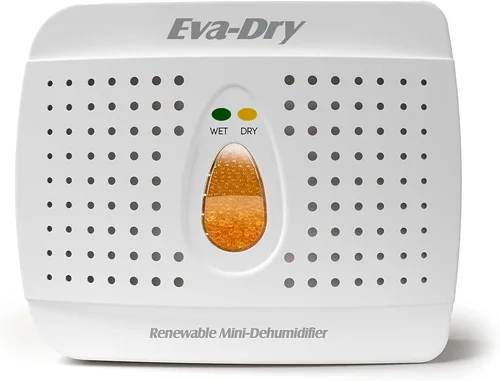
Best for Budget-Conscious Buyers: Eva-Dry E-333 Mini Dehumidifier – At under $25, this rechargeable silica gel unit is perfect for mild dampness. It’s silent, portable, and lasts years with monthly recharging. Ideal for seasonal use or as a backup.
Best Overall Value: ProBreeze PB-18 Car Dehumidifier – Priced around $70, this thermoelectric model removes up to 200 mL/day, has a large 500 mL tank, and includes a timer and full-tank alert. Reliable, efficient, and backed by strong customer support.
Best Premium Option: Eva-Dry EDV-400 Electric Dehumidifier – With 400 mL/day capacity, dual-fan design, and auto-humidity sensing, this $130 unit handles extreme moisture with ease. Perfect for humid climates or large vehicles.
Best for Beginners: Homedics TotalComfort Mini Dehumidifier – Simple plug-and-play operation, intuitive controls, and a compact design make this $55 model ideal for first-time users. Includes a washable filter and clear water tank.
Best for Advanced Users: ZeroBreeze Mark 2 (Car Mode) – While primarily an air conditioner, its dehumidification mode is unmatched. At $250+, it’s a splurge—but offers compressor-level performance in a portable package for serious enthusiasts.
Conclusion: Making the Right Choice
Choosing the best car dehumidifier isn’t just about picking the most powerful or cheapest option—it’s about finding the right balance of performance, convenience, and reliability for your unique situation. Whether you’re battling daily foggy windows in Seattle, storing a classic car in Florida, or simply wanting a fresher-smelling interior, the right dehumidifier can make a noticeable difference in comfort and vehicle longevity.
Remember to prioritize moisture removal capacity, power safety, and ease of maintenance above flashy extras. Read real user reviews, avoid common pitfalls like undersizing or ignoring battery drain, and invest in a reputable brand that stands behind its product. And don’t forget: a dehumidifier works best as part of a holistic approach—pair it with regular cleaning, proper ventilation, and prompt drying of wet items for maximum effectiveness.
Your car is more than just transportation; it’s a space where you spend hours each week. Protecting it from the silent damage of excess moisture is a smart, proactive step. With the insights from this guide, you’re now equipped to make an informed decision that keeps your cabin dry, clean, and comfortable for years to come. So go ahead—breathe easy, drive confidently, and enjoy the peace of mind that comes with a truly dry ride.