

Dealing with a damp, musty crawl space isn’t just unpleasant—it’s a serious threat to your home’s structural integrity, indoor air quality, and long-term value. Whether you’ve noticed warped floor joists, mold growth, or that persistent earthy smell seeping into your living areas, the root cause often lies beneath your feet. Crawl spaces are notoriously vulnerable to excess moisture due to poor ventilation, ground evaporation, and seasonal humidity shifts. Left unchecked, this moisture can lead to wood rot, pest infestations, and even compromised HVAC efficiency as your system works harder to condition humid air.
That’s where a high-quality crawl space dehumidifier comes in. Unlike portable room units, crawl space dehumidifiers are engineered for continuous operation in harsh, unconditioned environments. They’re built to withstand temperature fluctuations, resist corrosion, and operate efficiently in tight, often inaccessible spaces. In this comprehensive buying guide for 2026, we’ll walk you through everything you need to know to choose the right dehumidifier for your crawl space—from performance specs and build quality to budget considerations and expert installation tips. Whether you’re a homeowner tackling your first moisture issue or a contractor sourcing reliable equipment, this guide will equip you with the knowledge to make a confident, informed decision.
The market for crawl space dehumidifiers has evolved significantly in recent years. Traditional refrigerant-based models are now joined by advanced desiccant units, smart-enabled systems with remote monitoring, and energy-efficient designs that meet strict environmental standards. With options ranging from under $500 to well over $2,000, it’s easy to feel overwhelmed. But by focusing on your specific needs—such as square footage, humidity levels, and climate—you can narrow down the field to models that deliver real results. This guide cuts through the noise, offering practical advice, side-by-side comparisons, and actionable recommendations based on real-world performance and expert testing.

What to Look for When Buying Buying Guide
1. Capacity & Performance Specifications
Capacity is arguably the most critical factor when selecting a crawl space dehumidifier. Measured in pints per day (PPD), this number indicates how much moisture the unit can remove under standard conditions—typically 80°F and 60% relative humidity. However, real-world performance often differs, especially in cooler or more humid environments. For crawl spaces, aim for a unit rated between 50 and 100 PPD, depending on the size of your space and local climate.
Don’t just rely on the manufacturer’s stated capacity. Look for third-party testing data from organizations like AHAM (Association of Home Appliance Manufacturers), which provides standardized performance metrics. A dehumidifier that performs well at 65°F and 60% RH is ideal for most crawl spaces, which rarely exceed 70°F. Also, consider the unit’s airflow rate (measured in CFM—cubic feet per minute). Higher CFM means better air circulation, which helps the dehumidifier reach all corners of your crawl space efficiently.
2. Operating Temperature Range
Crawl spaces often experience wide temperature swings, especially in regions with cold winters or hot summers. A dehumidifier that shuts down below 65°F won’t protect your home during colder months when condensation and frost can still form. Look for models with a low-temperature operating range—ideally down to 41°F or lower. Refrigerant-based units typically struggle below 60°F, while desiccant dehumidifiers excel in cold environments.
Desiccant models use a moisture-absorbing material (like silica gel) and don’t rely on condensation, making them ideal for unheated crawl spaces in northern climates. They’re more energy-intensive but far more effective in cold conditions. Refrigerant models, on the other hand, are more energy-efficient in warmer, humid environments but may require a defrost cycle or auxiliary heater in cold weather.
3. Build Quality & Durability
Crawl space dehumidifiers endure harsher conditions than indoor units. They’re exposed to dust, dirt, fluctuating temperatures, and high humidity—all of which can degrade components over time. Look for units with corrosion-resistant coatings, sealed electrical components, and robust casings made from powder-coated steel or heavy-duty plastic.
Pay attention to the compressor type. Rotary compressors are quieter and more durable than reciprocating ones, making them better suited for continuous operation. Also, check the evaporator and condenser coils—copper coils with protective coatings last longer than aluminum. Units with washable or replaceable air filters are a plus, as they reduce maintenance and improve air quality.
4. Energy Efficiency & Operating Costs
Since crawl space dehumidifiers run 24/7, energy consumption directly impacts your utility bill. Look for models with the ENERGY STAR label, which indicates they meet strict efficiency guidelines set by the U.S. Environmental Protection Agency. ENERGY STAR-certified dehumidifiers use 15–30% less energy than standard models.
Check the unit’s energy factor (EF), measured in liters of water removed per kilowatt-hour (L/kWh). A higher EF means better efficiency. For example, a unit with an EF of 1.5 removes 1.5 liters of water for every kWh of electricity used. Over a year, this can translate to hundreds of dollars in savings, especially in humid climates where the unit runs constantly.
5. Drainage & Installation Features
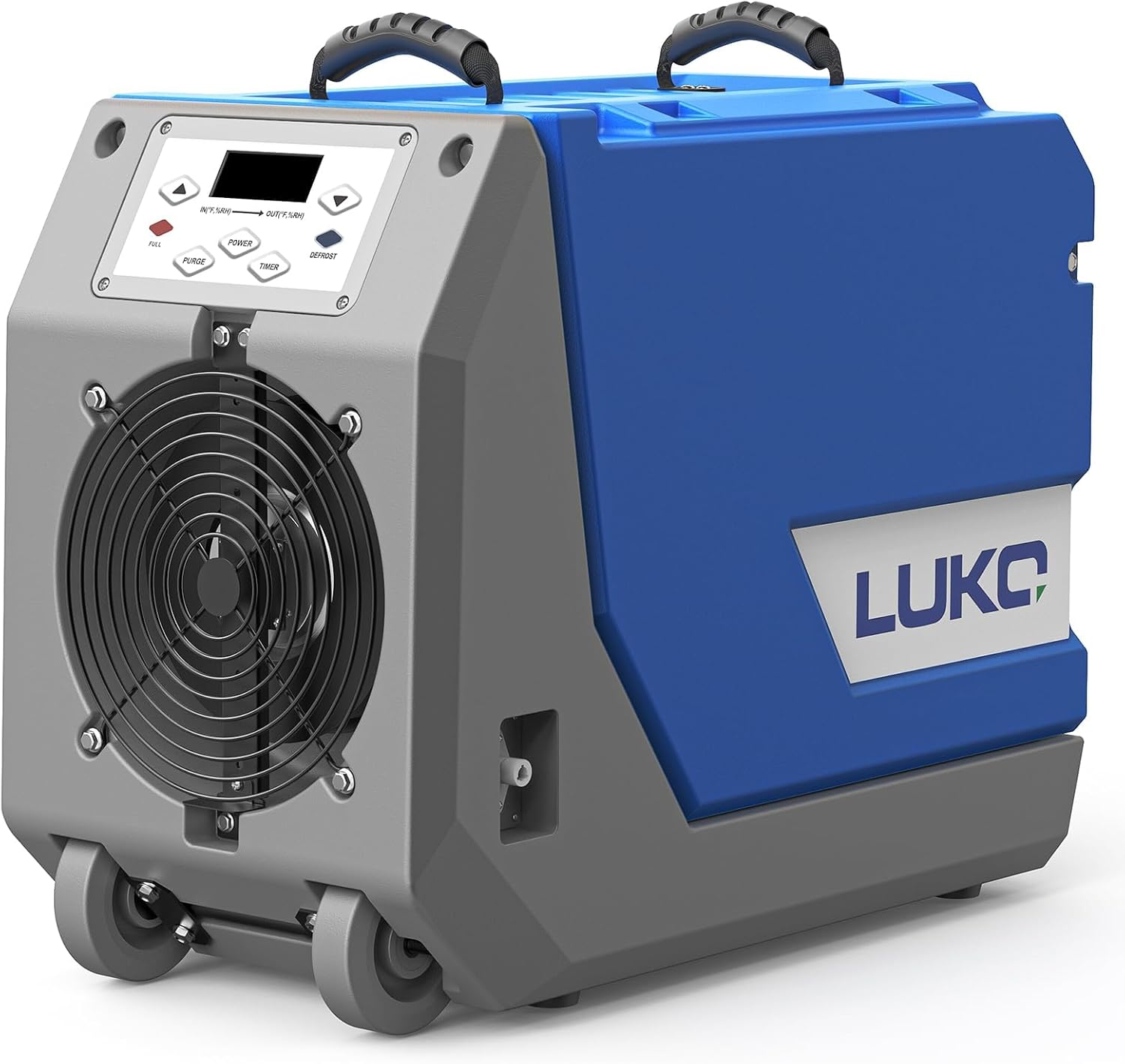
Automatic drainage is essential for crawl space dehumidifiers. Most models include a built-in condensate pump or gravity drain hose connection. A condensate pump allows the unit to drain water vertically—up to 15 feet—making it ideal for homes where the crawl space is below ground level. Gravity drainage requires a downward slope and may not be feasible in all installations.
Look for units with a built-in pump, hose connection, and overflow protection. Some models even include a float switch that shuts off the unit if the drain line becomes clogged. Installation should be straightforward: wall-mountable units save floor space, while freestanding models offer flexibility. Ensure the unit fits through access hatches—most crawl space doors are narrow, so compact dimensions matter.
6. Smart Features & Controls
Modern crawl space dehumidifiers often include smart features that enhance convenience and performance. Built-in humidistats allow the unit to maintain a set humidity level (typically 50–60% RH), turning on and off automatically. Digital displays show real-time humidity and temperature, while programmable timers let you customize operation schedules.
Wi-Fi connectivity is becoming more common, enabling remote monitoring via smartphone apps. This is especially useful for vacation homes or rental properties. Some models integrate with smart home systems like Alexa or Google Home, allowing voice control and alerts for maintenance or malfunctions. While not essential, these features add value and peace of mind.
7. Noise Level & Vibration
Although crawl spaces are typically out of earshot, excessive noise or vibration can still be a concern—especially if the unit is near living areas or bedrooms. Look for models with noise ratings below 55 decibels (dB), which is comparable to a quiet conversation. Desiccant units tend to be quieter than refrigerant models, which use compressors and fans.
Vibration-dampening mounts or rubber feet can reduce noise transmission through floors. If your crawl space is directly beneath a bedroom or home office, consider a unit with low vibration design. Some manufacturers publish noise and vibration data in their technical specifications—don’t overlook this if quiet operation is a priority.
8. Warranty & Customer Support
A crawl space dehumidifier is a long-term investment, so warranty coverage matters. Most reputable brands offer 2–5 years of protection, with some premium models including up to 10 years on key components like compressors. Read the fine print: labor costs, shipping, and parts availability can vary widely.
Check the manufacturer’s reputation for customer service. Brands with U.S.-based support teams, online troubleshooting guides, and readily available replacement parts are preferable. Avoid companies with limited service networks or poor online reviews regarding responsiveness. A strong warranty backed by reliable support ensures your dehumidifier will last for years.
Different Types of Buying Guide
Common Buying Mistakes to Avoid

❌ Mistake: Buying Based Solely on Price
Why it’s bad: The cheapest dehumidifier often lacks the durability, capacity, or efficiency needed for long-term crawl space protection. Low-cost models may use inferior components, have shorter lifespans, and consume more energy, leading to higher costs over time.
What to do instead: Focus on total cost of ownership—not just the purchase price. Consider energy efficiency, warranty length, and expected lifespan. A $600 unit that lasts 10 years is better value than a $300 model that fails in 3.
❌ Mistake: Ignoring Crawl Space Size and Humidity Levels
Why it’s bad: An undersized dehumidifier will run constantly without achieving target humidity, while an oversized unit may short-cycle, reducing efficiency and lifespan. Both scenarios waste energy and fail to protect your home.
What to do instead: Measure your crawl space accurately (length × width × average height). Use a hygrometer to check current humidity levels. Match these data points to manufacturer sizing charts—most brands provide online calculators or recommendations.
❌ Mistake: Overlooking Drainage Requirements
Why it’s bad: Without proper drainage, water can overflow, damage the unit, or create new moisture problems. Gravity drainage may not work if the crawl space is below ground level or lacks a slope.
What to do instead: Choose a model with a built-in condensate pump or ensure your installation allows for gravity drainage. Test the drain line before finalizing setup.
❌ Mistake: Choosing the Wrong Technology for Your Climate
Why it’s bad: A refrigerant dehumidifier in a cold crawl space will freeze and stop working. Conversely, a desiccant unit in a warm, humid climate may be overkill and unnecessarily expensive to operate.
What to do instead: Match the technology to your local climate. Use refrigerant models in warm, humid areas and desiccant units in cold or temperate zones.
❌ Mistake: Neglecting Maintenance Needs
Why it’s bad: Clogged filters, dirty coils, and blocked drains reduce efficiency and can cause system failure. Many homeowners forget to maintain their crawl space dehumidifier because it’s out of sight.
What to do instead: Choose a model with easy-access filters and self-cleaning features. Schedule biannual inspections—clean the filter, check the drain, and inspect for mold or corrosion.
❌ Mistake: Skipping Professional Installation
Why it’s bad: Improper installation can lead to poor performance, water damage, or electrical hazards. DIY setups often lack proper sealing, ventilation, or grounding.
What to do instead: Hire a licensed HVAC contractor or waterproofing specialist for installation, especially for hardwired or pump-equipped units. They can ensure compliance with local codes and optimize performance.
❌ Mistake: Not Checking Warranty and Support
Why it’s bad: A dehumidifier is useless if it breaks down and the manufacturer won’t honor the warranty. Some companies require professional installation for coverage, while others have limited service networks.
What to do instead: Read the warranty terms carefully. Choose brands with strong reputations for customer service and readily available parts. Register your product upon purchase.
Budget Guidelines: How Much Should You Spend?
Entry-Level ($300 – $600): These models are typically portable dehumidifiers repurposed for crawl spaces. They’re suitable for small areas (under 1,000 sq ft) in mild climates. Expect basic controls, limited capacity (30–50 PPD), and shorter lifespans. Brands like hOmeLabs and Eva-Dora offer affordable options, but they may lack durability and low-temperature performance.
Mid-Range ($600 – $1,200): This is the sweet spot for most homeowners. These units are purpose-built for crawl spaces, with capacities of 50–80 PPD, corrosion-resistant builds, and reliable drainage systems. Models from AprilAire, Santa Fe, and Dri-Eaz offer excellent performance, ENERGY STAR ratings, and 3–5 year warranties. They’re ideal for spaces up to 2,000 sq ft in moderate to high humidity.
Premium ($1,200 – $2,000): Designed for demanding environments, these dehumidifiers feature advanced controls, hybrid technology, and superior build quality. They often include condensate pumps, Wi-Fi connectivity, and extended warranties. Brands like Ultra-Aire and Quest offer models that perform well in cold climates and large spaces. These are best for high-end homes, rental properties, or regions with extreme humidity.
Luxury ($2,000+): At this tier, you’re investing in whole-house integration, smart automation, and commercial-grade durability. These systems may connect to HVAC units, include remote sensors, and offer predictive maintenance alerts. They’re overkill for most residential needs but ideal for new construction, historic homes, or commercial applications.
Expert Tips for Getting the Best Deal
1. Buy During Off-Season Sales: Dehumidifiers are in highest demand during summer. Shop in late fall or winter (October–February) when retailers offer discounts to clear inventory. You can save 15–30% on premium models.
2. Compare Online Retailers: Check prices on Amazon, Home Depot, Lowe’s, and specialty HVAC sites like Total Home Supply or HVACDirect. Online retailers often have lower overhead and better deals, especially during holiday sales.
3. Look for Bundled Offers: Some manufacturers offer free installation, extended warranties, or accessories (like drain hoses or filters) with purchase. These add-ons can save you $100–$300 in the long run.
4. Consider Refurbished or Open-Box Units: Reputable sellers like Amazon Renewed or manufacturer-certified refurbished programs offer high-quality dehumidifiers at 20–40% off. These units are tested, cleaned, and come with warranties.
5. Check for Rebates and Incentives: Many utility companies offer rebates for ENERGY STAR-certified dehumidifiers. Visit the ENERGY STAR rebate finder or contact your local provider to see if you qualify for savings.
6. Read User Reviews Carefully: Look beyond star ratings. Focus on reviews that mention long-term performance, noise levels, and customer service experiences. Avoid models with recurring complaints about leaks, pump failures, or poor support.
7. Test Before Committing: If possible, rent a dehumidifier for a week to test its effectiveness in your crawl space. This helps you verify capacity needs and identify any installation challenges.
8. Prioritize Serviceability: Choose a model with easily replaceable parts—filters, pumps, and sensors. Avoid proprietary components that require expensive technician visits for repairs.

Frequently Asked Questions
Q: How do I know if my crawl space needs a dehumidifier?
A: Signs include musty odors, visible mold or mildew, condensation on pipes or insulation, warped wood, or high humidity readings (above 60% RH). A professional inspection can confirm the need and recommend the right solution.
Q: Can I use a regular room dehumidifier in my crawl space?
A: Technically yes, but it’s not recommended. Room dehumidifiers aren’t built for continuous operation in harsh conditions. They lack corrosion protection, proper drainage, and low-temperature performance, leading to premature failure.
Q: How often should I maintain my crawl space dehumidifier?
A: Clean the air filter every 1–2 months. Inspect the drain line, coils, and pump every 6 months. Replace filters annually and schedule a professional service every 2–3 years.
Q: Will a dehumidifier increase my electricity bill?
A: Yes, but the increase is typically modest—$10–$30 per month depending on size and usage. ENERGY STAR models minimize this impact. The long-term savings from preventing structural damage far outweigh the cost.
Q: Should I insulate my crawl space before installing a dehumidifier?
A: Yes. Insulating the walls (not the floor) and installing a vapor barrier reduces moisture infiltration and improves dehumidifier efficiency. This is a best practice recommended by building scientists.
Q: Can a dehumidifier prevent pests?
A: Indirectly, yes. Many pests—like termites, carpenter ants, and silverfish—thrive in damp environments. By maintaining low humidity, you make your crawl space less attractive to infestations.
Q: How long do crawl space dehumidifiers last?
A: With proper maintenance, most units last 7–10 years. Premium models with robust components can exceed 12 years. Compressor and pump failures are the most common end-of-life issues.
Q: Do I need a permit to install a dehumidifier?
A: Generally no, but if you’re hardwiring the unit or modifying electrical systems, a permit may be required. Check with your local building department to ensure compliance.
Q: Can I install the dehumidifier myself?
A: Yes, if it’s a plug-in model with gravity drainage. For units with pumps, hardwiring, or complex controls, professional installation is safer and often required for warranty coverage.
Q: What humidity level should I maintain in my crawl space?
A: Aim for 50–60% relative humidity. This range prevents mold growth, protects wood structures, and avoids excessive drying that can cause wood shrinkage.
Our Final Recommendations
Best for Budget-Conscious Buyers: hOmeLabs 50 Pint Crawl Space Dehumidifier – At under $500, this model offers solid performance for small spaces. It includes a built-in pump, digital controls, and a washable filter. Ideal for mild climates and tight budgets.
Best Overall Value: AprilAire E080 Pro – Priced around $900, this ENERGY STAR-certified unit removes up to 80 pints per day and operates efficiently in temperatures as low as 41°F. It features a corrosion-resistant design, automatic drainage, and a 5-year warranty.
Best Premium Option: Ultra-Aire UA70H – At $1,600, this hybrid dehumidifier combines refrigerant and desiccant technologies for year-round performance. It includes Wi-Fi controls, a condensate pump, and a 10-year compressor warranty—perfect for large or challenging crawl spaces.
Best for Beginners: Santa Fe Compact 70 – Easy to install and operate, this $1,100 model is user-friendly with clear controls and reliable performance. It’s a great entry point for homeowners new to crawl space moisture control.
Best for Advanced Users: Quest Dual 105 – Designed for professionals, this $2,200 unit offers 105 PPD capacity, dual refrigeration circuits, and smart diagnostics. It’s ideal for contractors or homeowners with complex moisture issues.
Conclusion: Making the Right Choice
Choosing the right dehumidifier for your crawl space isn’t just about buying a machine—it’s about protecting your home’s foundation, air quality, and long-term value. By focusing on capacity, climate suitability, build quality, and smart features, you can find a unit that delivers reliable performance for years to come. Avoid common pitfalls like undersizing, ignoring drainage, or prioritizing price over durability.
Remember, the best dehumidifier is the one that matches your specific needs. Whether you’re dealing with a small, damp space or a large, cold crawl area, there’s a solution that fits your budget and environment. Use this guide to compare options, ask the right questions, and make a decision with confidence.
Don’t wait for mold to spread or wood to rot. Invest in a quality crawl space dehumidifier today and enjoy a healthier, more comfortable home tomorrow. Your future self—and your home—will thank you.