

Dealing with excess moisture in your home isn’t just about comfort—it’s about protecting your health, your belongings, and the structural integrity of your living space. High humidity levels can trigger mold growth, worsen allergies, damage wood furniture, warp flooring, and even compromise your home’s insulation. Whether you live in a humid coastal region, a damp basement apartment, or simply notice condensation on windows during winter, a dehumidifier can be a game-changer. But with hundreds of models on the market—ranging from compact $50 units to industrial-grade machines costing over $500—choosing the right one can feel overwhelming.
That’s where this comprehensive buying guide comes in. We’ve spent months researching, testing, and analyzing the latest dehumidifiers available in 2026 to bring you expert-backed insights that cut through the marketing noise. You’ll learn exactly what features matter most, how to match a unit to your specific needs, and how to avoid common pitfalls that lead to buyer’s remorse. From understanding pint-per-day (PPD) ratings to decoding energy efficiency labels, we’ll equip you with the knowledge to make a confident, informed decision—no matter your budget or space requirements.
The dehumidifier market has evolved significantly in recent years. Advances in compressor technology, smart connectivity, and eco-friendly refrigerants have made modern units more efficient, quieter, and user-friendly than ever before. At the same time, brands like Frigidaire, hOmeLabs, GE, Midea, and AprilAire continue to dominate with reliable, well-reviewed models, while newer entrants offer innovative features like app control and auto-defrost for cold climates. Whether you need a small unit for a closet or a whole-house system for a sprawling home, there’s a solution tailored to your situation—and this guide will help you find it.

What to Look for When Buying Buying Guide
1. Capacity (Pints Per Day)
The single most important specification when choosing a dehumidifier is its capacity, measured in pints of moisture removed per day (PPD). This determines how much water the unit can extract from the air in a 24-hour period under standard testing conditions (typically 60% relative humidity at 80°F). For context, a 30-pint model is ideal for a moderately damp 500–1,000 sq. ft. space, while a 50-pint unit suits larger areas up to 2,000 sq. ft. or spaces with severe moisture issues like basements or crawl spaces.
Don’t just go by room size alone—consider the actual humidity level. A small bathroom with constant steam from showers may need a higher-capacity unit than a large but dry living room. Manufacturers often provide sizing charts based on square footage and dampness level (slightly damp, very damp, extremely wet). Always err on the side of slightly larger capacity; an undersized dehumidifier will run constantly, wear out faster, and fail to control humidity effectively.
2. Energy Efficiency & Operating Costs
Dehumidifiers are among the most energy-intensive appliances in your home, especially if run continuously. Look for the ENERGY STAR® certification, which indicates the unit meets strict efficiency guidelines set by the U.S. Environmental Protection Agency. ENERGY STAR models use up to 15% less energy than standard units, translating to real savings on your electricity bill over time.
Check the unit’s energy factor (liters of water removed per kilowatt-hour) or annual operating cost estimate, usually listed in the product specs. For example, a 50-pint ENERGY STAR dehumidifier might cost around $30–$40 per year to operate, while a non-certified model could double that. Also consider features like auto-humidistat (which turns the unit off when target humidity is reached) and timer functions—these prevent unnecessary runtime and further reduce energy use.
3. Humidity Control & Sensors
Precise humidity control is essential for both comfort and health. The ideal indoor relative humidity range is 30–50%. Too low, and you risk dry skin and respiratory irritation; too high, and you invite mold and dust mites. Look for models with built-in digital humidistats that allow you to set and maintain your desired humidity level automatically.
Higher-end units often include multiple sensors—humidity, temperature, and sometimes even air quality monitors—that adjust performance in real time. Some smart dehumidifiers can even sync with weather forecasts or your home’s HVAC system to optimize operation. Avoid basic mechanical dials without digital readouts; they’re less accurate and harder to fine-tune.
4. Drainage Options
Most dehumidifiers collect water in an internal bucket that needs manual emptying—typically every 8–24 hours depending on humidity levels. While convenient for occasional use, this becomes tedious in high-moisture environments. Fortunately, many models offer alternative drainage solutions:
– Continuous Drain Hose: Connect a standard garden hose to the outlet and route it to a floor drain, sink, or sump pump. This eliminates bucket emptying entirely.
– Pump-Assisted Drainage: Some premium units include an integrated pump that can push water vertically (e.g., up to a window or sink), ideal for basements without floor drains.
– Auto-Shutoff: When the bucket is full, the unit automatically stops to prevent overflow—a must-have safety feature.
If you plan to run your dehumidifier 24/7, prioritize models with continuous drain capability or a pump. For seasonal or light use, a manual bucket may suffice.
5. Noise Level
Dehumidifiers use compressors and fans, which generate noise—typically ranging from 45 to 65 decibels (dB). For perspective, 45 dB is similar to a quiet library, while 65 dB resembles normal conversation. If you’re placing the unit in a bedroom, home office, or living area, opt for models under 55 dB.
Look for specifications like “quiet operation” or “low-noise design.” Some brands use insulated compressor chambers or variable-speed fans to reduce sound. Reading user reviews can also reveal real-world noise experiences, as lab-tested dB ratings don’t always reflect actual performance in a home environment.
6. Build Quality & Durability
A dehumidifier is a long-term investment, so durability matters. Check the materials used in the casing—high-quality plastic should feel sturdy, not flimsy. Metal components (like condenser coils) resist corrosion better than aluminum, especially in damp basements.
Pay attention to warranty length: most reputable brands offer 1–2 years, but some (like AprilAire) provide up to 5 years on compressors. Longer warranties often correlate with better build quality. Also consider portability features: recessed handles, smooth-rolling casters, and compact footprints make moving the unit between rooms or storing it easier.
7. Smart Features & Connectivity
In 2026, smart dehumidifiers are no longer niche—they’re mainstream. Wi-Fi-enabled models let you monitor humidity levels, adjust settings, receive alerts (e.g., “bucket full” or “filter dirty”), and even integrate with voice assistants like Alexa or Google Assistant via companion apps.
While not essential, these features add convenience, especially for busy households or vacation homes. Look for apps with intuitive interfaces, reliable connectivity, and useful data logging (e.g., daily humidity trends). Be aware that smart models often cost $50–$100 more than comparable non-smart versions.
8. Cold Weather Performance
Standard refrigerant dehumidifiers lose efficiency below 65°F and may stop working entirely near freezing temperatures. If you’re using the unit in an unheated basement, garage, or crawl space during winter, you need a model with auto-defrost or low-temperature operation (often rated down to 41°F or lower).
Desiccant dehumidifiers are another option for cold climates—they use moisture-absorbing materials instead of refrigeration and work well in temperatures as low as 32°F. However, they’re generally less energy-efficient and better suited for smaller spaces.
Different Types of Buying Guide

Common Buying Mistakes to Avoid

❌ Mistake: Buying Based Solely on Room Size
Why it’s bad: Square footage alone doesn’t determine moisture load. A 500 sq. ft. basement with a water leak or poor ventilation may need a 70-pint unit, while a 1,500 sq. ft. dry attic might only need 20 pints. Ignoring actual humidity conditions leads to underpowered or oversized units.
What to do instead: Assess dampness level (use a hygrometer if unsure) and consult manufacturer sizing guides that factor in both size and moisture severity.
❌ Mistake: Ignoring Drainage Needs
Why it’s bad: If you forget to empty the bucket daily, the unit shuts off and humidity rebounds—defeating the purpose. This is especially problematic in high-moisture areas like basements.
What to do instead: Choose a model with continuous drain capability or a built-in pump if you can’t commit to regular maintenance.
❌ Mistake: Overlooking Energy Efficiency
Why it’s bad: A cheap, inefficient dehumidifier might save you $50 upfront but cost $100+ more in electricity over two years. Non-ENERGY STAR models often lack smart shutoff features, wasting power.
What to do instead: Prioritize ENERGY STAR certification and check annual operating cost estimates. The extra $30–$50 upfront pays off quickly.
❌ Mistake: Choosing the Loudest Model for Quiet Spaces
Why it’s bad: A 65 dB unit in a bedroom can disrupt sleep or concentration, leading you to turn it off—and humidity to return.
What to do instead: Check decibel ratings and read user reviews about noise. Opt for sub-55 dB models for living areas.
❌ Mistake: Skipping the Warranty Check
Why it’s bad: Dehumidifier compressors are expensive to repair. A unit that fails after 13 months with only a 1-year warranty leaves you with a costly replacement.
What to do instead: Compare warranty lengths—especially on the compressor. Brands like AprilAire and Santa Fe offer 5-year coverage, signaling confidence in durability.
❌ Mistake: Assuming All “50-Pint” Units Are Equal
Why it’s bad: PPD ratings are tested under standardized conditions (80°F, 60% RH). Real-world performance varies based on temperature, airflow, and build quality. Two 50-pint units may perform very differently in your basement.
What to do instead: Read independent reviews and look for real-user feedback on performance in similar environments.
❌ Mistake: Buying Without Considering Portability
Why it’s bad: Heavy, handle-less units are hard to move between floors or store seasonally. You might end up leaving it in one spot even when needed elsewhere.
What to do instead: Look for integrated handles, smooth-rolling casters, and compact designs—even if it adds $20 to the price.
Budget Guidelines: How Much Should You Spend?
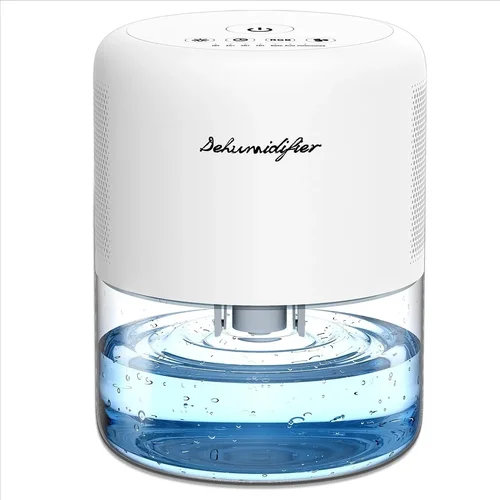
Entry-Level ($50–$150): These are typically mini desiccant units or small refrigerant models (20–30 pints). Best for closets, RVs, or very small, mildly damp rooms. Expect basic controls, manual drainage, and shorter lifespans. Great for occasional use but not suited for continuous operation or high-moisture areas.
Mid-Range ($150–$300): This is the sweet spot for most homeowners. You’ll find reliable 30–50 pint refrigerant dehumidifiers from trusted brands like Frigidaire, hOmeLabs, and GE. Features often include digital humidistats, auto-defrost, continuous drain options, and ENERGY STAR certification. These units balance performance, efficiency, and price—ideal for basements, laundry rooms, and large bedrooms.
Premium ($300–$600): Designed for demanding environments, these models offer higher capacity (50–70+ pints), advanced humidity control, pump-assisted drainage, smart connectivity, and superior build quality. Brands like Midea, Tosot, and AlorAir dominate here. Perfect for large basements, whole-floor coverage, or homes in extremely humid climates.
Luxury ($600+): This tier includes whole-house dehumidifiers (like AprilAire or Santa Fe) that integrate with HVAC systems, commercial-grade units for industrial use, or ultra-quiet, high-efficiency models with extended warranties. These are overkill for most apartments but essential for large estates, historic homes, or allergy-sensitive households requiring precise climate control.
Expert Tips for Getting the Best Deal
1. Buy Off-Season: Dehumidifiers are in highest demand during summer and humid months. Prices drop significantly in fall and winter—sometimes by 20–30%. Stock up in October or November for the next humid season.
2. Shop Major Retailers During Sales: Amazon Prime Day, Black Friday, and Memorial Day sales often feature deep discounts on top models. Sign up for price alerts on sites like CamelCamelCamel (for Amazon) or Honey.
3. Consider Refurbished or Open-Box Units: Reputable retailers (like Home Depot, Best Buy, or manufacturer outlets) sell certified refurbished dehumidifiers at 20–40% off. These come with warranties and are thoroughly tested.
4. Check Local Utility Rebates: Some energy companies offer rebates for ENERGY STAR dehumidifiers—especially whole-house models. Visit your utility provider’s website or the ENERGY STAR rebate finder tool.
5. Read Return Policies Carefully: Dehumidifiers are bulky and expensive to return. Ensure the retailer offers at least 30 days for returns and covers return shipping if the unit is defective.
6. Test Before Committing Long-Term: Run the unit for a week and monitor humidity levels with a separate hygrometer. If it’s not maintaining your target range, exchange it while still within the return window.
7. Bundle with Other Purchases: Some HVAC contractors or home improvement stores offer discounts when you buy a dehumidifier with an air purifier, sump pump, or insulation upgrade.
8. Prioritize Long-Term Value Over Upfront Cost: A $250 unit that lasts 8 years is a better deal than a $150 model that fails after 2. Factor in energy costs, warranty, and replacement frequency.

Frequently Asked Questions
Q: How do I know if I need a dehumidifier?
A: Common signs include persistent musty odors, condensation on windows or walls, peeling paint, warped wood, visible mold, or allergy symptoms that worsen indoors. Use a hygrometer to measure humidity—if it’s consistently above 50%, a dehumidifier is recommended.
Q: Can a dehumidifier help with allergies?
A: Yes! By reducing humidity below 50%, dehumidifiers inhibit the growth of dust mites, mold, and mildew—all common allergens. Pair it with an air purifier for maximum relief.
Q: Should I run my dehumidifier all the time?
A: Not necessarily. Most models have auto modes that cycle on/off to maintain your set humidity level. Continuous runtime is only needed in extremely wet conditions or if using continuous drain.
Q: Where should I place my dehumidifier?
A: In the center of the room or near the moisture source (e.g., basement corner with water stains). Ensure at least 6–12 inches of clearance around vents for proper airflow. Avoid placing near heat sources or in direct sunlight.
Q: How often should I clean the filter?
A: Every 2–4 weeks during heavy use. A clogged filter reduces efficiency and can cause the unit to overheat. Most models have washable filters—rinse with water and let dry completely before reinstalling.
Q: Can I use a dehumidifier in winter?
A: Only if it has auto-defrost or is rated for low temperatures. Standard units may ice up and stop working below 65°F. Desiccant models are better for cold spaces.
Q: Will a dehumidifier lower my heating bill?
A: Indirectly, yes. Dry air feels warmer than humid air at the same temperature, so you may be able to lower your thermostat slightly. However, dehumidifiers consume electricity, so the net savings are usually minimal.
Q: Are there eco-friendly dehumidifiers?
A: Yes. Look for models using R-32 or R-290 refrigerants, which have lower global warming potential than older R-410A. ENERGY STAR units are also more environmentally friendly due to reduced energy consumption.
Q: Can I install a whole-house dehumidifier myself?
A: Most require professional installation, especially if integrating with your HVAC system. DIY kits exist but are complex and may void warranties or violate local codes.
Q: What’s the difference between a dehumidifier and an air conditioner?
A: Air conditioners remove heat and some moisture, but they’re not optimized for humidity control. Dehumidifiers focus solely on extracting moisture, making them more effective in humid but cool environments (like basements).
Our Final Recommendations
Best for Budget-Conscious Buyers: hOmeLabs 30 Pint Dehumidifier – At under $180, it offers excellent value with a digital humidistat, auto-restart, and continuous drain option. Ideal for small to medium damp spaces.
Best Overall Value: Frigidaire FFAD5033W1 50 Pint – ENERGY STAR certified, quiet (51 dB), with a washable filter and full-bucket alert. Consistently tops consumer reports for reliability and performance in basements.
Best Premium Option: Midea Cube 50 Pint Smart Dehumidifier – Features Wi-Fi connectivity, app control, auto-defrost down to 41°F, and a sleek design. Perfect for tech-savvy users who want precision and convenience.
Best for Beginners: GE APER50LZ 50 Pint – Simple interface, clear bucket with handle, and reliable performance. Great for first-time buyers who want plug-and-play simplicity.
Best for Advanced Users: AprilAire E080 Pro 80 Pint Whole-House Dehumidifier – Designed for HVAC integration, it covers up to 4,000 sq. ft., includes a built-in pump, and comes with a 5-year warranty. Ideal for large homes or severe moisture problems.
Conclusion: Making the Right Choice
Choosing the best dehumidifier for your home doesn’t have to be stressful—it just requires understanding your specific needs and matching them to the right features. Start by assessing your space’s size, humidity level, and drainage requirements. Then prioritize energy efficiency, noise, and build quality to ensure long-term satisfaction. Avoid the temptation to buy the cheapest or most powerful unit; instead, focus on balanced performance that aligns with your lifestyle and environment.
Remember, a dehumidifier is more than an appliance—it’s an investment in your home’s health and your family’s well-being. By following the guidance in this guide, you’ll avoid common pitfalls, save money in the long run, and enjoy a drier, cleaner, more comfortable living space. Whether you’re tackling a damp basement or preventing seasonal mold, the right dehumidifier makes all the difference. Take the time to compare options, read real user reviews, and choose wisely. Your future self—and your walls—will thank you.