
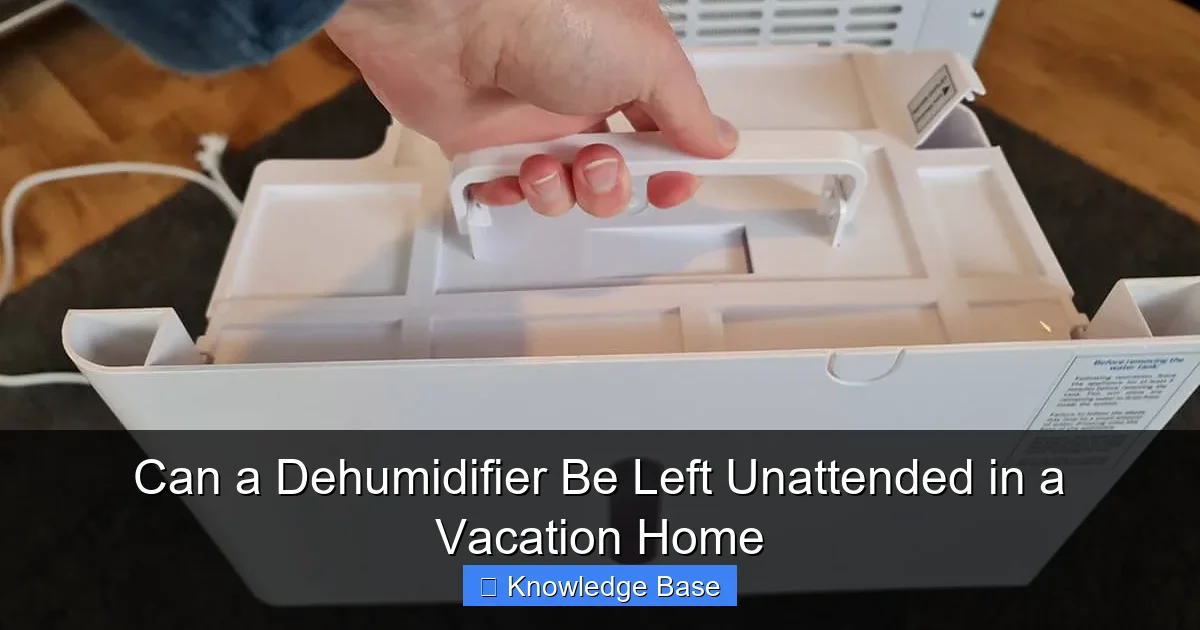
Leaving a dehumidifier running in an unattended vacation home is safe and smart—when done correctly. Modern units with auto-shutoff, overflow protection, and smart controls reduce risks significantly. With proper setup and maintenance, a dehumidifier helps prevent mold, musty smells, and structural damage while you’re away.
Key Takeaways
- Modern dehumidifiers are designed for unattended use: Most newer models include safety features like auto-shutoff and tilt sensors to prevent accidents.
- Choose a unit with a built-in pump or continuous drainage: This eliminates the need to empty the water tank, reducing overflow risks.
- Smart dehumidifiers offer remote monitoring: Wi-Fi-enabled models let you check humidity levels and receive alerts from your phone.
- Regular maintenance is still essential: Clean filters and inspect hoses before leaving to ensure long-term performance.
- Set the right humidity level: Aim for 30–50% relative humidity to prevent mold without overworking the unit.
- Install in a safe, well-ventilated area: Avoid enclosed spaces or areas prone to flooding or extreme temperatures.
- Consider a backup power source: A battery backup or generator ensures operation during power outages.
Quick Answers to Common Questions
Can I leave a dehumidifier running for months?
Yes, as long as it has continuous drainage, auto-shutoff, and regular maintenance. Most modern units are designed for long-term use.
Will a dehumidifier increase my electricity bill?
It will use electricity, but energy-efficient models minimize costs. The long-term savings from preventing damage often outweigh the expense.
What if the power goes out while I’m away?
Choose a model with auto-restart or use a battery backup. This ensures the unit resumes operation when power returns.
Do I need a special outlet for a dehumidifier?
Use a GFCI outlet for safety, especially in damp areas like basements or garages.
How often should I clean the filter?
Clean the filter every 2–4 weeks during heavy use, or before leaving for an extended period.
📑 Table of Contents
- Can a Dehumidifier Be Left Unattended in a Vacation Home?
- Why Use a Dehumidifier in a Vacation Home?
- Safety Features That Make Unattended Use Possible
- Choosing the Right Dehumidifier for Unattended Use
- Setting Up Your Dehumidifier for Safe, Long-Term Use
- What to Do During Power Outages
- Real-Life Example: A Family’s Experience
- Conclusion
Can a Dehumidifier Be Left Unattended in a Vacation Home?
If you own a vacation home, you know how quickly dampness can take over when the property sits empty for weeks or months. Musty odors, warped wood, peeling paint, and mold growth are common issues in unoccupied spaces—especially in humid climates or during rainy seasons. One of the most effective ways to combat these problems is by using a dehumidifier. But here’s the big question many homeowners ask: *Can a dehumidifier be left unattended in a vacation home?*
The short answer is yes—**but only if you take the right precautions**. While modern dehumidifiers are far safer and more reliable than older models, leaving any electrical appliance running unsupervised still carries some risk. The key is choosing the right type of dehumidifier, setting it up properly, and ensuring it has the necessary safety features to operate safely over long periods.
In this guide, we’ll walk you through everything you need to know about running a dehumidifier in your vacation home while you’re away. From safety features and drainage options to smart technology and maintenance tips, we’ll help you make an informed decision that protects your investment and gives you peace of mind.
Why Use a Dehumidifier in a Vacation Home?
Visual guide about Can a Dehumidifier Be Left Unattended in a Vacation Home
Image source: getfogmachine.com
Before diving into safety concerns, it’s important to understand *why* a dehumidifier is such a valuable tool for vacation homes. These properties are often closed up for extended periods, with little to no airflow. Without regular ventilation, moisture from the ground, air, or even minor leaks can accumulate indoors. This creates the perfect breeding ground for mold, mildew, and dust mites—all of which can damage your home and affect indoor air quality.
Preventing Mold and Mildew
Mold thrives in damp, dark environments. Even a small amount of moisture—like condensation on windows or a slow leak under the sink—can lead to mold growth within days. Once mold takes hold, it can spread quickly, damaging walls, furniture, and personal belongings. Remediation can be expensive and time-consuming, especially if you’re not around to catch it early.
A dehumidifier helps by maintaining a consistent indoor humidity level, typically between 30% and 50%. This range is low enough to inhibit mold growth but high enough to keep wood and other materials from drying out and cracking.
Protecting Furniture and Belongings
Wooden furniture, flooring, and cabinetry are especially vulnerable to humidity swings. High moisture levels can cause wood to swell, warp, or rot. Upholstered furniture may develop musty odors, and electronics can suffer from corrosion. By keeping humidity stable, a dehumidifier helps preserve the condition of your belongings, so they’re ready to use when you return.
Improving Air Quality
Even if you don’t see visible mold, high humidity can lead to poor indoor air quality. Dust mites, which trigger allergies and asthma, thrive in humid environments. A dehumidifier reduces their numbers by making the air less hospitable. This means fresher, cleaner air when you arrive—no more stepping into a stuffy, stale-smelling cabin or beach house.
Reducing Energy Costs Over Time
While a dehumidifier uses electricity, it can actually help lower your overall energy bills. Dry air feels cooler than humid air at the same temperature, so you may be able to set your thermostat higher in the summer. Additionally, dry air puts less strain on HVAC systems, which don’t have to work as hard to remove moisture. Over time, this can lead to energy savings and extended equipment life.
Safety Features That Make Unattended Use Possible
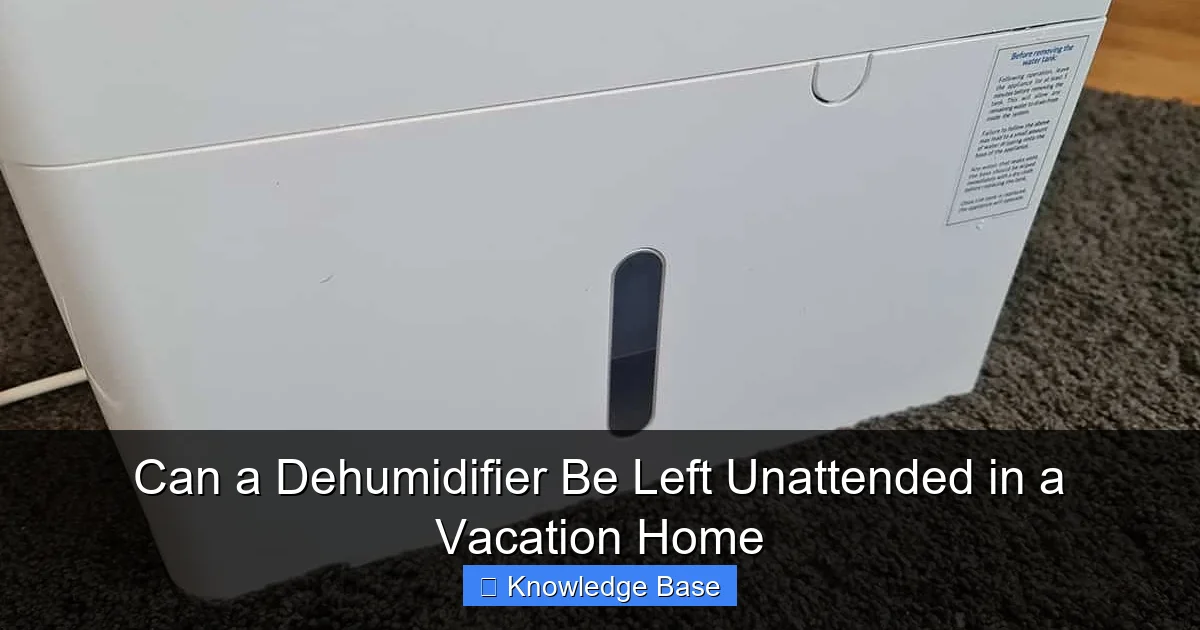
Visual guide about Can a Dehumidifier Be Left Unattended in a Vacation Home
Image source: thehumidistat.com
One of the biggest concerns about leaving a dehumidifier running is safety. After all, it’s an electrical device that collects water—two things that don’t usually mix well. However, manufacturers have made significant improvements in recent years to make dehumidifiers safer for long-term, unattended operation.
Auto-Shutoff and Overflow Protection
Most modern dehumidifiers come with an **auto-shutoff feature** that turns the unit off when the water tank is full. This prevents overflow and potential water damage. Some models also include a **float switch**—a small mechanism that rises with the water level and triggers the shutoff.
For example, if your dehumidifier collects 10 pints of water per day and has a 2-pint tank, it would need to be emptied five times a day. Without auto-shutoff, the tank would overflow after just a few hours. But with this feature, the unit stops running until the tank is emptied—keeping your floors dry and your home safe.
Tilt and Tip-Over Sensors
Another important safety feature is the **tilt sensor**. If the dehumidifier is knocked over—perhaps by a pet, cleaning crew, or accidental bump—the sensor detects the change in position and shuts off the unit immediately. This reduces the risk of electrical shorts or water spills.
Thermal Overload Protection
Dehumidifiers generate heat as they run. If the internal temperature gets too high—due to blocked airflow, dirty filters, or prolonged use—the unit could overheat. **Thermal overload protection** monitors the temperature and shuts down the compressor if it exceeds safe limits. Once the unit cools down, it can restart automatically.
Ground Fault Circuit Interrupter (GFCI) Compatibility
While not built into the dehumidifier itself, using a **GFCI outlet** adds an extra layer of safety. These outlets detect electrical imbalances and cut power instantly if a fault is detected—such as water contacting an electrical component. Always plug your dehumidifier into a GFCI outlet, especially in basements, garages, or outdoor areas.
Choosing the Right Dehumidifier for Unattended Use
Not all dehumidifiers are created equal—especially when it comes to long-term, unsupervised operation. Here’s what to look for when selecting a model for your vacation home.
Tank Size vs. Continuous Drainage
Dehumidifiers come with either a built-in water tank or a continuous drainage option. For unattended use, **continuous drainage is strongly recommended**.
– **Tank-based models** require manual emptying. If the tank fills up and the auto-shutoff fails, water can spill onto the floor. This is risky if no one is around to check it.
– **Continuous drainage models** use a hose to direct water directly into a floor drain, sump pump, or outside. This eliminates the need to empty the tank entirely.
Look for models with a **built-in pump** (also called a condensate pump) if your drain is located above the dehumidifier or far away. These pumps can push water vertically or over long distances, giving you more flexibility in placement.
Energy Efficiency and Capacity
Choose a dehumidifier with the right **capacity** (measured in pints per day) for your space. A small 30-pint unit may struggle in a large, humid basement, while a 70-pint model could be overkill for a cozy cabin.
Also, look for the **Energy Star label**. Energy-efficient models use less electricity, which is important if the unit will run for weeks or months. Over time, the savings on your utility bill can offset the initial cost.
Smart Features and Remote Monitoring
One of the best advancements in dehumidifier technology is **smart connectivity**. Wi-Fi-enabled models allow you to monitor and control the unit from your smartphone, no matter where you are.
For example, you can:
– Check current humidity levels
– Turn the unit on or off remotely
– Receive alerts if the tank is full or if there’s a malfunction
– Set schedules or adjust settings based on weather forecasts
Brands like **Frigidaire, GE, and hOmeLabs** offer smart dehumidifiers with these features. Some even integrate with smart home systems like Alexa or Google Home.
Durability and Build Quality
Since the dehumidifier will be running for long periods, choose a model with a sturdy build and reliable components. Look for:
– Rust-resistant coatings (especially important in humid environments)
– Sealed compressors to prevent leaks
– Washable, reusable filters (instead of disposable ones)
Reading customer reviews and checking warranty length (ideally 2–3 years) can also help you assess durability.
Setting Up Your Dehumidifier for Safe, Long-Term Use
Even the best dehumidifier can cause problems if it’s not set up correctly. Follow these steps to ensure safe and effective operation while you’re away.
Choose the Right Location
Place the dehumidifier in a central, well-ventilated area—ideally where moisture tends to accumulate. Common spots include:
– Basements
– Crawl spaces
– Laundry rooms
– Near water heaters or HVAC systems
Avoid placing it in:
– Enclosed cabinets or closets (restricts airflow)
– Areas prone to flooding
– Direct sunlight or near heat sources (can cause overheating)
Make sure there’s at least 6–12 inches of clearance around the unit for proper air circulation.
Install Continuous Drainage
If your model supports it, set up a **continuous drainage system** before leaving. Use a standard garden hose or vinyl tubing to connect the drain port to a floor drain, sump pit, or outdoor area.
Tip: Use a **check valve** in the hose to prevent water from flowing back into the unit during power outages.
Set the Ideal Humidity Level
Most experts recommend maintaining indoor humidity between **30% and 50%**. Use the built-in humidistat to set your target level. Some smart models can even adjust automatically based on outdoor conditions.
Avoid setting it too low (below 30%), as this can dry out wood and increase static electricity. Too high (above 60%), and you risk mold growth.
Clean and Maintain Before You Leave
A well-maintained dehumidifier runs more efficiently and lasts longer. Before heading out:
– Clean or replace the air filter (a clogged filter reduces airflow and increases energy use)
– Wipe down the exterior and empty the tank (even if using drainage)
– Inspect the drain hose for kinks or blockages
– Check for dust buildup on coils (use a soft brush or vacuum)
Schedule a professional inspection once a year if the unit runs frequently.
Use a Timer or Smart Schedule
If your dehumidifier doesn’t have smart features, consider using a **programmable timer**. Set it to run during the most humid times of day (usually early morning and evening) to save energy.
Alternatively, some models have built-in timers that let you set run times in advance.
What to Do During Power Outages
Power outages are common in vacation areas, especially during storms or extreme weather. If the power goes out and comes back on, your dehumidifier should restart automatically—but only if it has **auto-restart functionality**.
Check your user manual to confirm. If it doesn’t restart on its own, you may return to a damp, musty home.
To prevent this:
– Use a **battery backup (UPS)** for short outages (under 2 hours)
– Install a **whole-house generator** for longer outages
– Choose a dehumidifier with **memory settings** that save your preferences after a power loss
Also, ensure your drainage system can handle water during outages. A sump pump with a battery backup is ideal for basements.
Real-Life Example: A Family’s Experience
The Thompson family owns a lakeside cabin in northern Michigan. They visit only a few times a year, but each time they arrive, they’re greeted by a musty smell and damp towels left from the previous trip.
After dealing with mold on the basement walls and warped floorboards, they decided to install a dehumidifier. They chose a 50-pint Frigidaire model with continuous drainage and a built-in pump. They connected the hose to a nearby floor drain and set the humidity to 45%.
Before their last trip, they cleaned the filter, tested the pump, and downloaded the companion app. While away, they received a notification that the unit had shut off due to a clogged hose. They called a local handyman to clear it, preventing potential water damage.
Now, the Thompsons arrive to a dry, fresh-smelling cabin every time—no more surprises.
Conclusion
So, can a dehumidifier be left unattended in a vacation home? **Absolutely—if you choose the right model and follow best practices.** Modern dehumidifiers are equipped with safety features that make long-term use safe and reliable. Continuous drainage, auto-shutoff, smart controls, and proper maintenance all contribute to a worry-free experience.
By investing in a quality dehumidifier and setting it up correctly, you protect your vacation home from mold, moisture damage, and poor air quality. You’ll return to a clean, comfortable space—ready for relaxation, not repairs.
Don’t let humidity ruin your getaway. Take control of your vacation home’s environment today, and enjoy peace of mind no matter how long you’re away.
Frequently Asked Questions
Is it safe to leave a dehumidifier on when no one is home?
Yes, it’s generally safe if the unit has safety features like auto-shutoff, overflow protection, and continuous drainage. Always follow the manufacturer’s guidelines.
Can a dehumidifier cause a fire?
While rare, electrical faults can occur. Using a GFCI outlet, avoiding overloaded circuits, and regular maintenance significantly reduce fire risks.
Should I unplug the dehumidifier when I leave?
No—unplugging it defeats the purpose. Instead, ensure it’s set up safely with drainage and monitoring features.
Can I use a dehumidifier in a cold vacation home?
Most standard dehumidifiers work best above 65°F. For colder spaces, consider a **low-temperature dehumidifier** designed for basements or garages.
How do I know if my dehumidifier is working while I’m away?
Use a smart dehumidifier with app notifications, or install a remote humidity sensor that sends alerts to your phone.
What’s the best humidity level for a vacation home?
Aim for 30–50% relative humidity. This range prevents mold growth while protecting wood and furniture from drying out.