
Yes, a dehumidifier can be plugged into a surge protector—but not just any kind. You must use a heavy-duty surge protector rated for high-wattage appliances to avoid overheating, tripped breakers, or fire hazards. Always check your dehumidifier’s power requirements and the surge protector’s specifications before connecting.
Key Takeaways
- Use only heavy-duty surge protectors: Standard power strips aren’t designed for high-draw appliances like dehumidifiers and can overheat.
- Check wattage and amperage ratings: Match the surge protector’s capacity to your dehumidifier’s power needs (usually 500–750 watts or more).
- Avoid daisy-chaining devices: Never plug a surge protector into another surge protector or extension cord when running a dehumidifier.
- Prioritize safety certifications: Look for UL-listed or ETL-certified surge protectors with overload protection and automatic shutoff.
- Consider direct outlet use for older units: Some manufacturers recommend plugging dehumidifiers directly into wall outlets to ensure stable power delivery.
- Monitor for overheating signs: If the surge protector feels warm or trips frequently, unplug immediately and reassess your setup.
- Invest in smart surge protectors: Models with built-in monitoring can alert you to power issues before they become dangerous.
Quick Answers to Common Questions
Can I plug my 700-watt dehumidifier into a regular power strip?
No—most regular power strips aren’t designed for high-wattage appliances and can overheat. Use a heavy-duty surge protector rated for at least 15 amps and 1,800 watts.
Will a surge protector save my dehumidifier from lightning damage?
A high-quality surge protector can help, but for full protection against direct lightning strikes, consider a whole-house surge protector installed at your electrical panel.
Can I use an extension cord with my dehumidifier?
Generally no—extension cords add resistance and can overheat. If absolutely necessary, use a heavy-duty, grounded cord rated for outdoor use and no longer than 25 feet.
Why does my surge protector keep tripping when I run the dehumidifier?
This usually means the surge protector is undersized or defective. Check its wattage rating and replace it with a heavy-duty model designed for appliances.
Is it safe to leave a dehumidifier plugged into a surge protector overnight?
Yes, as long as the surge protector is heavy-duty, properly rated, and not overloaded. Always ensure it’s in good condition and well-ventilated.
📑 Table of Contents
- Can a Dehumidifier Be Plugged into a Surge Protector? The Short Answer
- Why People Want to Use Surge Protectors with Dehumidifiers
- Understanding Dehumidifier Power Requirements
- Types of Surge Protectors: Which Ones Are Safe for Dehumidifiers?
- Safety Risks of Using the Wrong Surge Protector
- Best Practices for Plugging in Your Dehumidifier
- When to Avoid Surge Protectors Altogether
- Conclusion: Smart Choices for Safe Operation
Can a Dehumidifier Be Plugged into a Surge Protector? The Short Answer
Yes—but with important caveats. While it’s technically possible to plug a dehumidifier into a surge protector, doing so safely requires careful attention to the type of surge protector you’re using and the electrical demands of your specific unit. Many people assume that any power strip or surge protector will do, but dehumidifiers are high-wattage appliances that draw significant current, especially during startup. Using an underpowered or low-quality surge protector can lead to overheating, tripped circuit breakers, or even fire hazards.
The key is understanding your dehumidifier’s power requirements and matching them with a surge protector designed to handle that load. Most residential dehumidifiers operate between 500 and 750 watts, though larger commercial models can exceed 1,000 watts. That’s comparable to running a microwave or space heater. Standard surge protectors—those cheap plastic strips you might use for your TV or computer—are typically rated for only 15 amps and 1,800 watts total across all outlets. If your dehumidifier alone draws 600 watts, and you’ve also got a lamp, phone charger, and fan plugged in, you’re pushing the limits. Worse, if the surge protector isn’t built with heavy-gauge wiring and thermal protection, it could fail catastrophically.
Why People Want to Use Surge Protectors with Dehumidifiers
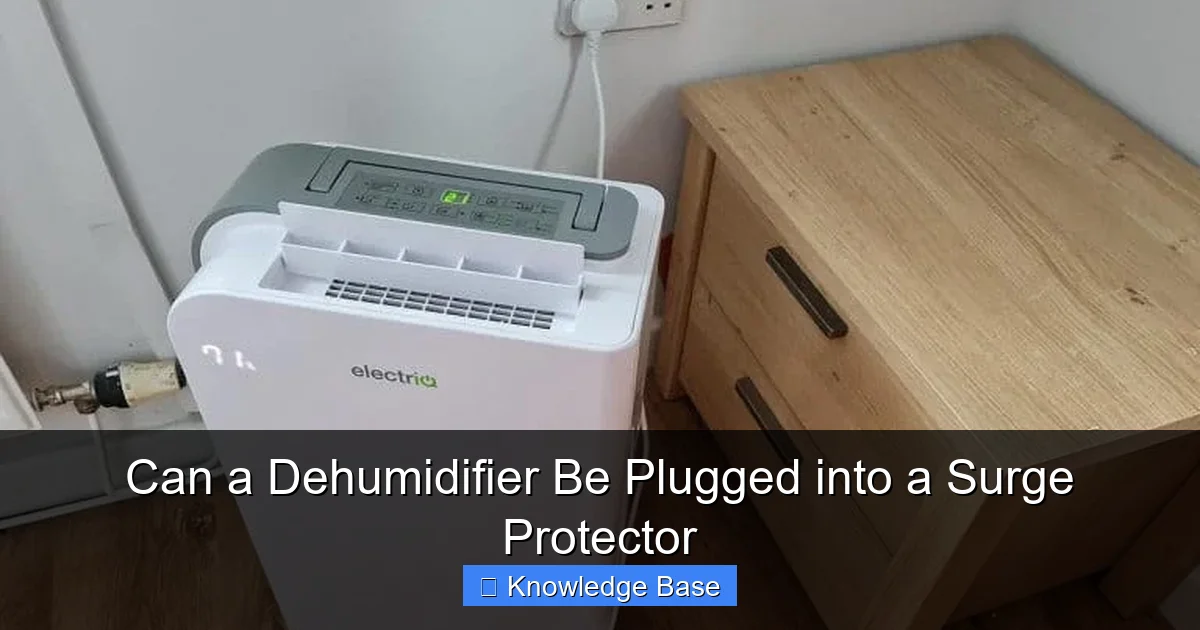
There are several practical reasons why homeowners consider using surge protectors with their dehumidifiers. First and foremost is protection against power surges. Lightning strikes, grid fluctuations, or sudden voltage spikes can damage sensitive electronics—and while dehumidifiers aren’t as delicate as computers, their internal compressors, fans, and control boards can still be vulnerable. A quality surge protector can absorb excess voltage and prevent it from reaching your appliance.
Visual guide about Can a Dehumidifier Be Plugged into a Surge Protector
Image source: thehumidistat.com
Another common reason is convenience and outlet management. Basements, laundry rooms, and crawl spaces—where dehumidifiers are often used—may have limited electrical outlets. A surge protector allows you to plug in additional devices like a sump pump monitor, air purifier, or smart plug without overloading a single outlet. Additionally, some users appreciate the ability to easily turn off multiple devices with one switch, reducing phantom power drain when the dehumidifier isn’t in use.
Finally, there’s the peace of mind factor. Knowing that your expensive appliance is shielded from unexpected electrical events can make a big difference, especially in areas prone to storms or unstable power grids. However, this benefit only applies if you’re using the right kind of surge protector. A flimsy, uncertified power strip offers no real protection—and could actually increase risk.
Understanding Dehumidifier Power Requirements
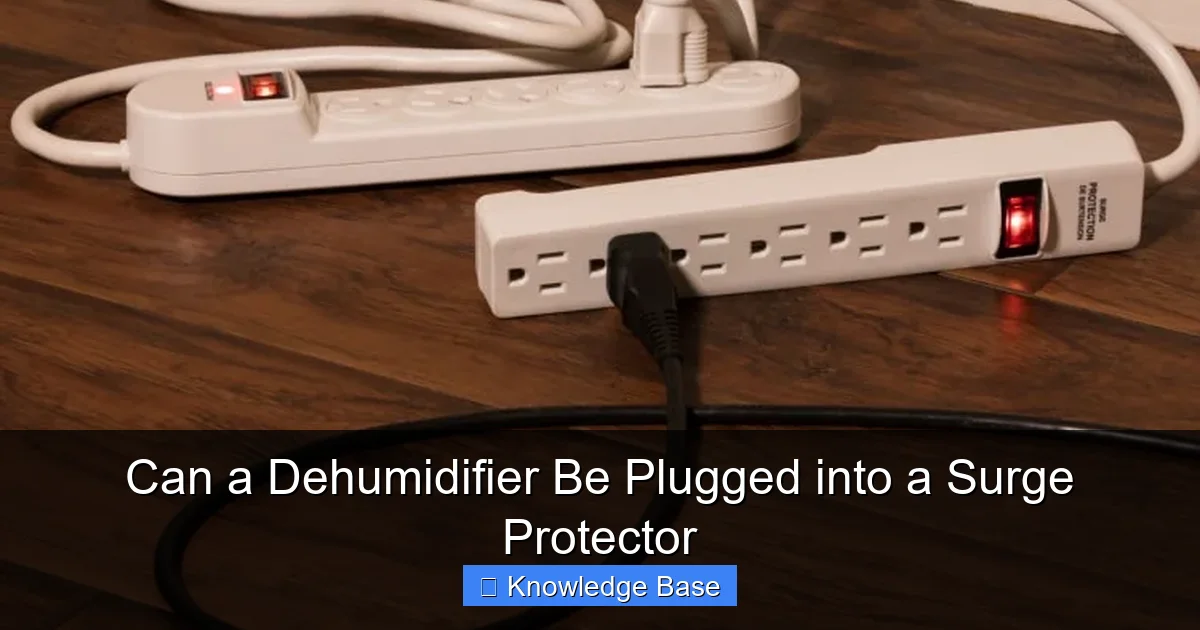
Before deciding whether to use a surge protector, it’s essential to understand how much power your dehumidifier actually uses. This information is usually found on a label attached to the unit or in the owner’s manual. Look for specifications like watts (W), amps (A), and volts (V). Most household dehumidifiers run on standard 120-volt circuits and draw between 5 and 7 amps, which translates to roughly 600–840 watts.
Visual guide about Can a Dehumidifier Be Plugged into a Surge Protector
Image source: handymanhowto.com
For example, a typical 30-pint dehumidifier might list “6.5 A” or “780 W” on its label. That means it uses about 780 watts when running at full capacity. During startup, however, the compressor may draw even more power momentarily—a phenomenon known as “inrush current.” This surge can be 2–3 times the normal operating current and lasts just a fraction of a second, but it’s enough to trip a weak circuit or overheat an undersized surge protector.
To calculate your dehumidifier’s exact power draw, you can use a watt meter (also called a plug-in power monitor). These inexpensive devices plug into the wall, and you plug your dehumidifier into them. They display real-time usage in watts, volts, and amps. This is especially helpful if your unit doesn’t have clear labeling or if you’re unsure whether your current setup is safe.
How to Find Your Dehumidifier’s Electrical Specs
Start by checking the back or bottom of the unit for a metal or plastic label. It should include:
- Model and serial number
- Voltage (usually 120V in North America)
- Amperage (e.g., 6.0 A)
- Wattage (e.g., 720 W)
- Frequency (60 Hz)
If you can’t find the label, consult the user manual—either the physical copy or a PDF downloaded from the manufacturer’s website. Some popular brands like Frigidaire, Honeywell, or GE provide detailed specs online. You can also search for your model number plus “power consumption” to find third-party test results.
Why Wattage Matters More Than You Think
Many people focus only on amperage when evaluating electrical safety, but wattage gives a clearer picture of actual energy use. Since power (watts) = voltage × current (amps), a 120V circuit carrying 6 amps uses 720 watts. Most standard household circuits are rated for 15 amps, meaning they can safely handle up to 1,800 watts (120V × 15A). However, electricians recommend staying below 80% of that capacity—or 1,440 watts—for continuous loads (devices running more than 3 hours at a time). Dehumidifiers often fall into this category, so you’re already using a significant portion of your circuit’s capacity.
Types of Surge Protectors: Which Ones Are Safe for Dehumidifiers?
Not all surge protectors are created equal. When it comes to high-draw appliances like dehumidifiers, you need a heavy-duty surge protector specifically designed for large electronics or HVAC equipment. Here’s how to tell the difference:
Standard Power Strips vs. True Surge Protectors
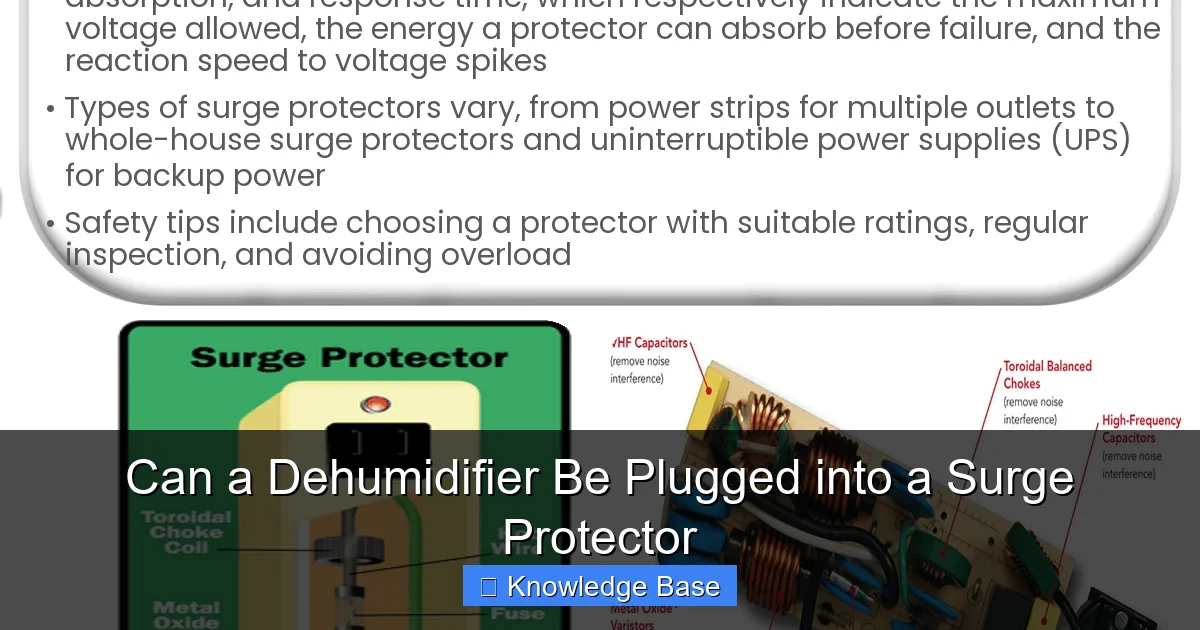
Many “surge protectors” sold in stores are actually just power strips with basic circuit breakers—no actual surge suppression. These are fine for lamps or phone chargers but dangerous for dehumidifiers. A true surge protector contains metal oxide varistors (MOVs) that divert excess voltage away from connected devices. Look for joule ratings (e.g., 1,000+ joules) and clamping voltage (ideally below 400V) as indicators of real protection.
Heavy-Duty vs. Light-Duty Models
Heavy-duty surge protectors feature thicker internal wiring (14-gauge or lower), robust housing, and higher amperage ratings (often 15A continuous). They’re built to handle motors, compressors, and other inductive loads. Light-duty models use thinner wires and cheaper components that can overheat under sustained load. For dehumidifiers, always choose a heavy-duty model labeled for “appliances,” “HVAC,” or “high-wattage devices.”
Smart and Monitored Surge Protectors
Some modern surge protectors come with LED indicators, overload alerts, or even Wi-Fi connectivity. These can notify you via smartphone if the device is overheating or if a surge has occurred. While not essential, they add an extra layer of safety—especially useful if your dehumidifier runs unattended in a basement or garage.
Certifications to Look For
Always choose surge protectors that are UL-listed (Underwriters Laboratories) or ETL-certified (Intertek). These labels mean the product has been tested for safety and performance. Avoid unbranded or suspiciously cheap options from unknown sellers—they may lack proper insulation or fail under stress.
Safety Risks of Using the Wrong Surge Protector
Plugging a dehumidifier into an incompatible surge protector isn’t just ineffective—it’s potentially dangerous. The most common risks include:
Overheating and Fire Hazard
When a surge protector is overloaded, its internal components—especially the MOVs and wiring—can overheat. This may cause melting, smoking, or even fire. Dehumidifiers run for hours at a time, creating sustained heat buildup in poorly designed units. In extreme cases, this has led to house fires, particularly when surge protectors are daisy-chained or covered by rugs or furniture.
Circuit Breaker Tripping
If your surge protector doesn’t have its own overload protection, the excess current may trip your home’s circuit breaker. While this prevents fire, it also shuts off your dehumidifier unexpectedly—defeating its purpose and possibly leading to moisture damage or mold growth.
Reduced Appliance Lifespan
Even if no immediate failure occurs, running a dehumidifier through an undersized surge protector can cause voltage drops or inconsistent power delivery. This stresses the compressor and fan motor, potentially shortening the unit’s lifespan and increasing repair costs.
Voided Warranties
Some manufacturers explicitly state in their warranty terms that damage caused by improper power sources—including low-quality surge protectors—is not covered. If your dehumidifier fails and you were using a non-compliant power strip, you could be stuck with the repair bill.
Best Practices for Plugging in Your Dehumidifier
To stay safe and get the most out of your dehumidifier, follow these best practices:
1. Use a Dedicated Outlet When Possible
The safest option is to plug your dehumidifier directly into a wall outlet—especially if it’s on its own circuit. This ensures maximum power delivery and eliminates any risk from intermediary devices. If you must use a surge protector, make it the only device plugged into that outlet.
2. Choose a High-Capacity Surge Protector
Select a surge protector rated for at least 15 amps and 1,800 watts, with a joule rating of 1,000 or higher. Brands like Tripp Lite, APC, and Belkin offer heavy-duty models designed for appliances. Example: The Tripp Lite Isobar 8 Ultra supports up to 2,880 joules and includes thermal shutdown protection.
3. Avoid Daisy-Chaining
Never plug a surge protector into another surge protector, extension cord, or power strip. This creates a “daisy chain” that increases resistance and heat buildup. Each additional connection is a potential failure point.
4. Inspect Regularly
Check your surge protector monthly for signs of wear: discoloration, melting, loose plugs, or a burning smell. Replace it immediately if you notice any issues. Surge protectors degrade over time—even without visible damage—so consider replacing them every 3–5 years.
5. Keep It Ventilated
Don’t cover your surge protector with blankets, boxes, or furniture. Allow plenty of airflow to prevent overheating. Mount it on a wall or place it on a non-flammable surface if possible.
6. Consider a Whole-House Surge Protector
For ultimate protection, install a whole-house surge protector at your electrical panel. These devices shield all circuits in your home from external surges (like lightning) and are especially valuable in storm-prone areas. While more expensive ($200–$500 installed), they eliminate the need to worry about individual appliance protection.
When to Avoid Surge Protectors Altogether
In some cases, it’s better to skip the surge protector entirely. Older dehumidifiers or models with mechanical controls may not benefit much from surge protection, and the added complexity could introduce new risks. Additionally, if your dehumidifier is plugged into a GFCI (ground fault circuit interrupter) outlet—common in basements and garages—adding a surge protector might cause nuisance tripping.
Always consult your dehumidifier’s manual. Some manufacturers, like LG or Midea, explicitly recommend plugging directly into a wall outlet for optimal performance and safety. If the manual says “do not use with extension cords or power strips,” respect that advice—it’s based on rigorous testing.
Conclusion: Smart Choices for Safe Operation
So, can a dehumidifier be plugged into a surge protector? Absolutely—but only if you choose the right one and follow safety guidelines. A heavy-duty, certified surge protector with adequate wattage and amperage ratings can provide valuable protection without compromising performance. However, if you’re unsure, err on the side of caution and plug directly into a wall outlet.
Remember: your dehumidifier is an investment in your home’s health and comfort. Protecting it properly ensures it runs efficiently for years to come. By understanding your unit’s power needs, selecting quality equipment, and avoiding common mistakes, you can enjoy dry, mold-free air without risking electrical hazards. When in doubt, consult a licensed electrician—they can assess your home’s wiring and recommend the safest setup for your specific situation.
Frequently Asked Questions
What kind of surge protector should I use for a dehumidifier?
Use a heavy-duty surge protector rated for at least 15 amps and 1,800 watts, with UL or ETL certification. Look for models labeled for appliances or HVAC use.
Can a dehumidifier cause a fire if plugged into a surge protector?
Only if the surge protector is undersized, low-quality, or daisy-chained. A properly rated, certified surge protector used correctly poses minimal fire risk.
Do I really need a surge protector for my dehumidifier?
It’s not mandatory, but recommended if you live in an area with frequent power surges or lightning. The internal electronics can be damaged by voltage spikes.
Can I plug other devices into the same surge protector as my dehumidifier?
It’s best not to. Dehumidifiers draw significant power, and adding other devices increases the risk of overload. Use a dedicated outlet if possible.
How often should I replace my surge protector?
Replace surge protectors every 3–5 years, or immediately if you notice damage, overheating, or frequent tripping. MOVs degrade over time even without visible signs.
What should I do if my surge protector feels hot?
Unplug it immediately and stop using it. A warm surge protector under load is normal, but hot to the touch indicates a serious problem—replace it right away.