
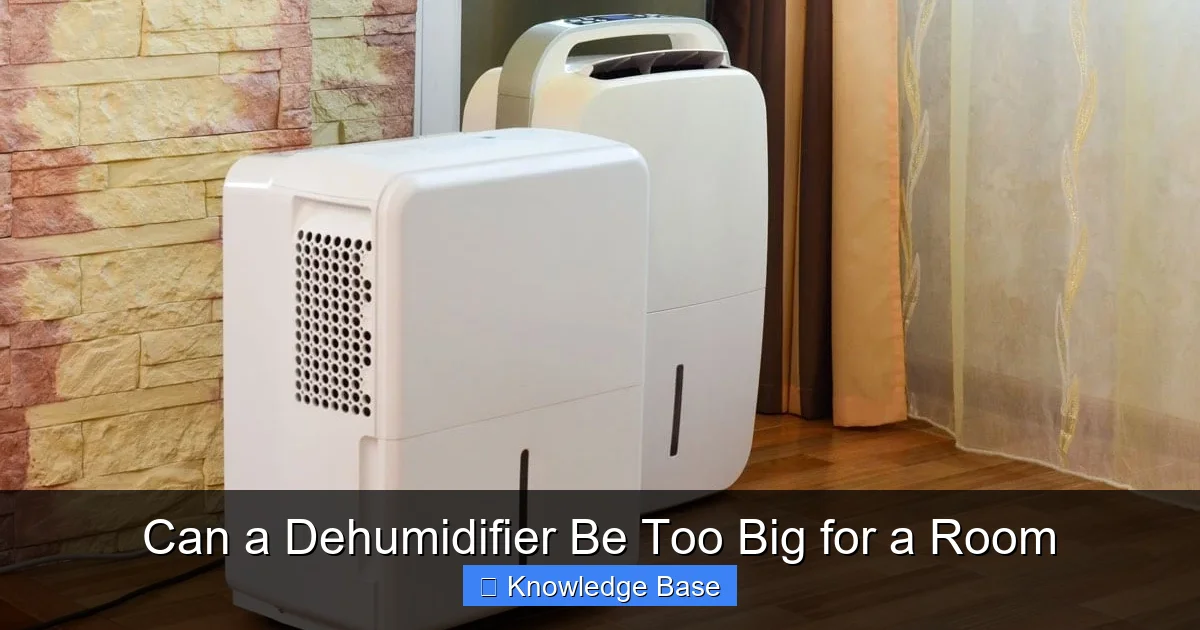
Yes, a dehumidifier can be too big for a room. While it may seem logical that bigger is better, an oversized unit can cycle too quickly, waste energy, and fail to remove moisture effectively. Choosing the right size ensures efficiency, comfort, and long-term savings.
Key Takeaways
- Oversized dehumidifiers can short-cycle: They remove moisture too quickly, turning on and off frequently, which reduces efficiency and increases wear.
- Energy waste is a real concern: Larger units consume more power, even if they run for shorter bursts, leading to higher electricity bills.
- Humidity control suffers: Rapid cycling prevents proper air circulation, leaving pockets of dampness and reducing overall effectiveness.
- Noise levels may increase: Bigger units often have louder fans and compressors, which can be disruptive in small spaces like bedrooms or offices.
- Proper sizing depends on room size and humidity: Match the pint-per-day (PPD) rating to your room’s square footage and moisture level for optimal performance.
- Smart features help compensate: Auto-humidistats and timers allow even larger units to operate efficiently if properly configured.
- Consult a sizing guide or professional: Use manufacturer charts or expert advice to avoid guessing and ensure the best fit for your space.
Quick Answers to Common Questions
Can a dehumidifier be too big for a small room?
Yes, a dehumidifier can be too big for a small room. An oversized unit may short-cycle, waste energy, and fail to circulate air properly, reducing overall effectiveness.
What happens if my dehumidifier is too powerful?
If your dehumidifier is too powerful, it may turn on and off frequently (short cycling), increasing wear on the compressor and leading to higher energy bills without improving moisture removal.
How do I know if my dehumidifier is the right size?
Check the room’s square footage and humidity level, then match it to the manufacturer’s PPD (pints per day) recommendations. Use a hygrometer to monitor performance.
Can an oversized dehumidifier cause over-drying?
Yes, if not properly controlled, an oversized dehumidifier can lower humidity too much, leading to dry air, static electricity, and discomfort. Use a humidistat to maintain 30–50% RH.
Is it better to have a slightly larger dehumidifier?
Not always. A slightly larger unit can be useful in high-moisture areas, but it should have smart features like auto-humidistats to prevent inefficiency in smaller spaces.
📑 Table of Contents
- Can a Dehumidifier Be Too Big for a Room?
- Understanding Dehumidifier Sizing: What Does “Size” Really Mean?
- The Risks of Using an Oversized Dehumidifier
- When a Larger Dehumidifier Might Be Appropriate
- How to Choose the Right Size Dehumidifier for Your Room
- Tips for Maximizing Efficiency and Comfort
- Conclusion: Size Matters—But So Does Balance
Can a Dehumidifier Be Too Big for a Room?
When it comes to controlling indoor humidity, a dehumidifier is one of the most effective tools you can have. Whether you’re battling musty basements, damp laundry rooms, or sticky summer air, these appliances help maintain a comfortable and healthy environment. But here’s a question that often gets overlooked: can a dehumidifier be too big for a room?
At first glance, it might seem like a larger, more powerful dehumidifier is always the better choice. After all, if a small unit can remove some moisture, wouldn’t a bigger one remove even more—faster and more efficiently? While that logic makes sense on the surface, the reality is more nuanced. In fact, using a dehumidifier that’s too large for your space can lead to a host of unintended consequences, from wasted energy to poor humidity control.
In this article, we’ll explore why size matters when choosing a dehumidifier, what happens when you go too big, and how to find the perfect balance for your home. We’ll break down the science behind dehumidification, explain how room conditions affect performance, and offer practical tips to help you make an informed decision. Whether you’re dealing with a tiny closet or a sprawling basement, understanding the right size for your needs will save you money, improve air quality, and extend the life of your appliance.
Understanding Dehumidifier Sizing: What Does “Size” Really Mean?
Visual guide about Can a Dehumidifier Be Too Big for a Room
Image source: hvacseer.com
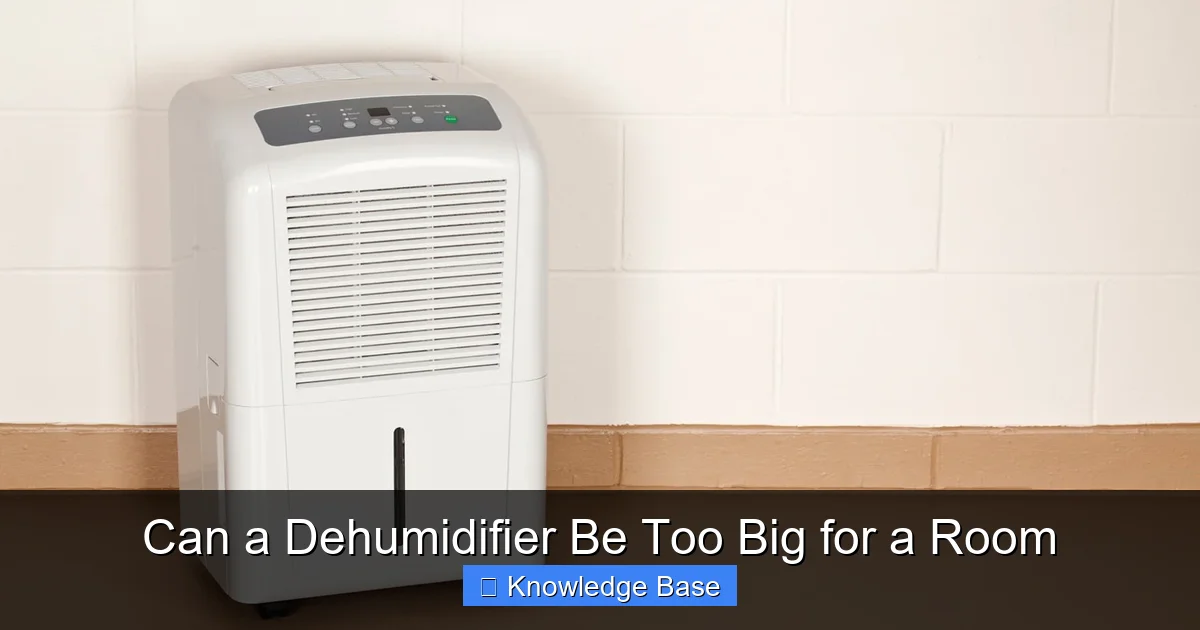
When we talk about the “size” of a dehumidifier, we’re not just referring to its physical dimensions—though those do matter for placement and storage. More importantly, we’re talking about its capacity, typically measured in pints per day (PPD). This number tells you how much moisture the unit can remove from the air in a 24-hour period under standard conditions (usually 60% relative humidity at 80°F).
For example, a 30-pint dehumidifier can remove up to 30 pints of water per day, while a 70-pint model can handle nearly double that. But here’s the catch: these ratings are based on ideal lab conditions. In real-world use, factors like temperature, airflow, and actual humidity levels can significantly impact performance.
So, how do you know what size you need? It starts with assessing your room. A small bathroom (under 500 square feet) with moderate humidity might only need a 20–30 pint unit. A large, damp basement (1,500+ square feet) with standing water or frequent flooding could require a 50–70 pint model. But again, bigger isn’t always better—especially if your space doesn’t generate that much moisture.
Why Pint-Per-Day Ratings Matter
The PPD rating is your best guide for matching a dehumidifier to your space. But it’s not the only factor. You also need to consider:
– Room size: Larger rooms need more capacity to circulate air and remove moisture evenly.
– Humidity level: Is the air just slightly damp, or is there visible mold, condensation, or a musty smell?
– Climate: Homes in humid regions (like the Southeast U.S.) may need more powerful units than those in drier areas.
– Ventilation: Poor airflow can trap moisture, requiring a stronger dehumidifier to compensate.
Using a sizing chart from a reputable manufacturer can help you narrow down your options. Many brands provide recommendations based on square footage and humidity severity (mild, moderate, or severe). For instance, a 1,000-square-foot room with moderate humidity might need a 30–40 pint unit, while the same space with severe dampness could require 50 pints or more.
The Risks of Using an Oversized Dehumidifier
Visual guide about Can a Dehumidifier Be Too Big for a Room
Image source: thehumidistat.com
Now that we understand how sizing works, let’s address the core question: can a dehumidifier be too big for a room? The short answer is yes—and here’s why.
An oversized dehumidifier may seem like a powerhouse, but in a smaller or moderately humid space, it can actually work against you. Instead of running efficiently, it may complete its moisture removal task too quickly, leading to a phenomenon known as “short cycling.”
Short Cycling: The Hidden Problem
Short cycling occurs when a dehumidifier turns on, removes moisture rapidly, and then shuts off—only to restart a few minutes later. This happens because the unit is so powerful that it reaches the target humidity level in a fraction of the time it should.
While this might sound efficient, it’s actually problematic for several reasons:
– Increased wear and tear: Frequent on/off cycles stress the compressor and other components, shortening the appliance’s lifespan.
– Reduced air circulation: Dehumidifiers work best when air passes through them consistently. Short cycles mean less air is processed, leaving pockets of dampness.
– Inefficient moisture removal: Without proper runtime, the unit may not pull moisture from deeper layers of air or materials like carpets and walls.
Imagine trying to dry a soaked towel by blasting it with a hairdryer for 10 seconds every minute. It won’t dry evenly—and that’s exactly what happens in a room with an oversized dehumidifier.
Energy Waste and Higher Bills
Another major downside of oversized units is energy consumption. Even if they run for shorter periods, larger dehumidifiers typically have higher wattage and draw more power per cycle. Over time, this can lead to noticeably higher electricity bills.
For example, a 70-pint dehumidifier might use 700–800 watts, while a 30-pint model uses around 300–400 watts. If both are used in a 500-square-foot room with mild humidity, the larger unit will cycle on and off frequently, but each cycle still consumes more energy. The smaller unit, running longer but more efficiently, may actually use less total power over 24 hours.
Additionally, many oversized units lack the smart features needed to adapt to lower moisture loads. Without an auto-humidistat or timer, they can’t adjust their operation, leading to unnecessary energy use.
Noise and Comfort Issues
Let’s not forget about noise. Larger dehumidifiers often come with bigger fans and more powerful compressors, which can be significantly louder than their smaller counterparts. In a bedroom, home office, or living area, this constant hum—even in short bursts—can be disruptive.
Imagine trying to sleep while a industrial-grade dehumidifier kicks on every 10 minutes with a loud whir. It’s not exactly conducive to relaxation. Smaller units, especially those designed for residential use, are typically quieter and better suited for continuous, unobtrusive operation.
When a Larger Dehumidifier Might Be Appropriate
So, does that mean you should always go small? Not necessarily. There are situations where a larger dehumidifier makes perfect sense—even in a relatively small space.
High Moisture Environments
If your room has severe moisture issues—such as frequent flooding, poor drainage, or chronic mold growth—a high-capacity unit may be necessary. For example, a basement with a history of water intrusion might need a 70-pint dehumidifier, even if it’s only 800 square feet. In these cases, the extra power ensures that moisture is removed quickly and thoroughly, preventing further damage.
Multi-Purpose Use
Some homeowners use a single dehumidifier to serve multiple areas, such as an open-concept living space or a finished basement with adjacent rooms. In these scenarios, a larger unit can handle the combined square footage and varying humidity levels more effectively than a smaller one.
Smart Features and Auto-Adjustments
Modern dehumidifiers often come with advanced features like built-in humidistats, timers, and auto-defrost. These allow the unit to monitor humidity levels and adjust its operation accordingly. If your oversized dehumidifier has these features, it may still perform efficiently—even in a smaller room.
For instance, a 50-pint unit with a humidistat set to 50% RH will turn off once that level is reached, preventing over-dehumidification. Some models even have “laundry mode” or “continuous drain” options, which can be useful in high-moisture situations.
Future-Proofing Your Investment
Another reason to consider a slightly larger unit is future needs. If you plan to finish your basement, add a bathroom, or live in a region with seasonal humidity spikes, a bigger dehumidifier might be a wise long-term investment. Just be sure it has the controls to operate efficiently under lighter loads.
How to Choose the Right Size Dehumidifier for Your Room
Now that we’ve covered the risks and benefits, let’s talk about how to pick the perfect dehumidifier for your space. The goal is to find a unit that’s powerful enough to handle your moisture levels without being excessive.
Step 1: Measure Your Room
Start by calculating the square footage of the area you want to dehumidify. Multiply the length by the width (in feet). For example, a room that’s 20 feet by 15 feet is 300 square feet.
Don’t forget to consider ceiling height. While most sizing guides assume an 8-foot ceiling, rooms with vaulted or high ceilings may need a slightly larger unit.
Step 2: Assess Humidity Levels
Next, determine how damp your space is. You can use a hygrometer (a small, inexpensive device that measures humidity) to get an accurate reading. Here’s a quick guide:
– Mild (45–55% RH): Slight dampness, occasional musty smell.
– Moderate (55–65% RH): Noticeable moisture, possible condensation on windows.
– Severe (65%+ RH): Visible mold, standing water, strong odor.
Your humidity level will directly impact the PPD rating you need.
Step 3: Use a Sizing Chart
Most manufacturers provide sizing recommendations based on room size and humidity. Here’s a general guideline:
| Room Size | Mild Humidity | Moderate Humidity | Severe Humidity |
|———-|—————|——————-|—————–|
| Up to 500 sq ft | 20–30 pints | 30–40 pints | 40–50 pints |
| 500–1,000 sq ft | 30–40 pints | 40–50 pints | 50–60 pints |
| 1,000–1,500 sq ft | 40–50 pints | 50–60 pints | 60–70 pints |
| 1,500+ sq ft | 50+ pints | 60+ pints | 70+ pints |
These are estimates—always check the manufacturer’s recommendations for your specific model.
Step 4: Consider Additional Factors
– Insulation and ventilation: Poorly insulated or poorly ventilated rooms may need a more powerful unit.
– Seasonal changes: Humidity levels fluctuate throughout the year. A unit that works in summer might be overkill in winter.
– Drainage options: If you can’t empty the bucket frequently, look for a model with a continuous drain hose.
Step 5: Test and Adjust
Once you’ve installed your dehumidifier, monitor its performance. Check the humidity level weekly and observe how often it runs. If it’s cycling on and off every few minutes, it might be too big. If it runs constantly and still can’t keep up, it might be too small.
Many units allow you to adjust the target humidity level. Start at 50% and tweak as needed for comfort and efficiency.
Tips for Maximizing Efficiency and Comfort
Choosing the right size is just the first step. To get the most out of your dehumidifier, follow these best practices:
Place It Strategically
Position your dehumidifier in the center of the room or near the source of moisture (like a basement corner or laundry area). Avoid placing it against walls or furniture, as this can block airflow.
Seal the Space
Close doors and windows to prevent humid outdoor air from entering. Use weather stripping or caulk to seal leaks around doors and windows.
Use a Hygrometer
Monitor humidity levels regularly. Ideal indoor humidity is between 30% and 50%. Going below 30% can cause dry skin and respiratory issues, while above 50% promotes mold growth.
Maintain Your Unit
Clean the air filter monthly to ensure proper airflow. Empty the water bucket regularly, or use a drain hose for continuous operation. Check for frost buildup in cold environments—some units have auto-defrost to prevent this.
Combine with Other Solutions
For severe moisture problems, a dehumidifier alone may not be enough. Consider using exhaust fans, improving ventilation, or installing a sump pump. In some cases, consulting a moisture control professional is the best option.
Conclusion: Size Matters—But So Does Balance
So, can a dehumidifier be too big for a room? Absolutely. While it’s tempting to go for the most powerful model available, an oversized unit can lead to short cycling, energy waste, noise, and poor humidity control. The key is finding the right balance between capacity and need.
By measuring your space, assessing humidity levels, and using manufacturer guidelines, you can select a dehumidifier that works efficiently and effectively. And if you do choose a larger unit, make sure it has smart features like a humidistat and timer to prevent overuse.
Remember, the goal isn’t just to remove moisture—it’s to create a comfortable, healthy, and energy-efficient environment. With the right size dehumidifier, you’ll breathe easier, save money, and protect your home from the damaging effects of excess humidity.
Frequently Asked Questions
Can a dehumidifier be too big for a room?
Yes, a dehumidifier can be too big for a room. An oversized unit may short-cycle, waste energy, and fail to remove moisture evenly, leading to poor performance and higher costs.
What are the signs of an oversized dehumidifier?
Signs include frequent on/off cycling, high energy bills, loud operation, and inconsistent humidity levels. The unit may also shut off too quickly without proper air circulation.
How do I calculate the right dehumidifier size?
Measure your room’s square footage, assess humidity levels with a hygrometer, and use a manufacturer sizing chart to match the PPD rating to your needs.
Can I use a large dehumidifier in a small space if it has a humidistat?
Yes, if the unit has a built-in humidistat and auto-shutoff, it can adjust to lower moisture loads and operate more efficiently, even in a smaller room.
Will an oversized dehumidifier damage my home?
Not directly, but it can contribute to over-drying, which may cause wood to crack or paint to peel. It can also increase energy use and reduce appliance lifespan.
Should I buy a dehumidifier one size up for safety?
Only if you have high moisture levels or plan to use it in multiple areas. Otherwise, choose the size that matches your room and humidity needs to avoid inefficiency.