
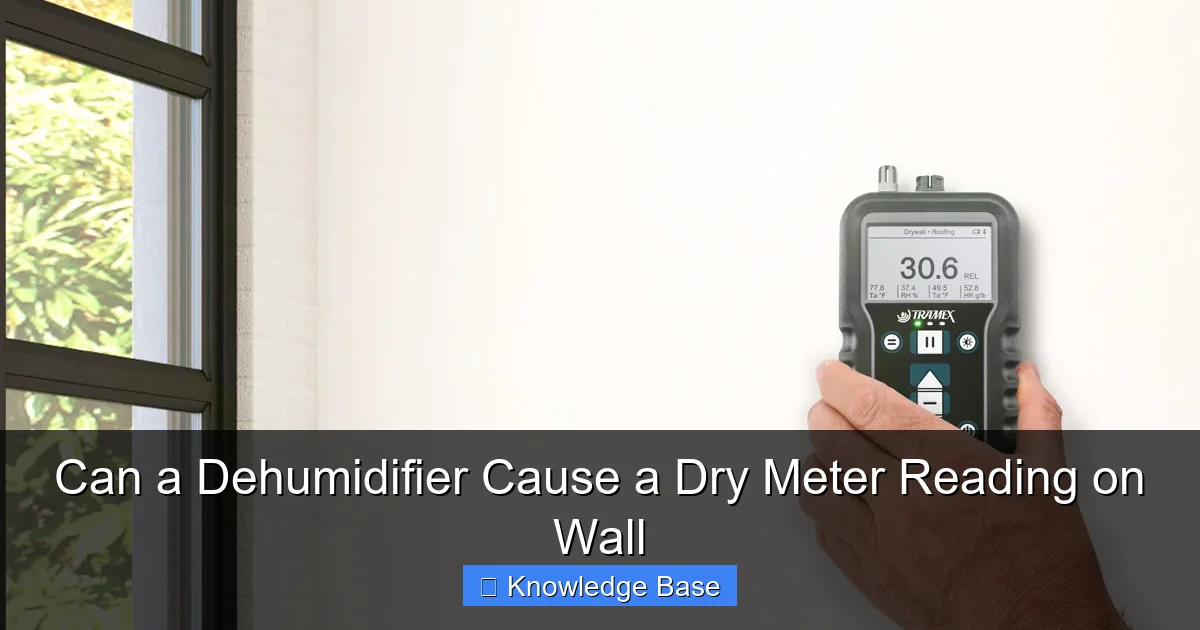
Yes, a dehumidifier can cause a dry meter reading on wall surfaces by lowering ambient humidity. This doesn’t always mean the wall is truly dry—moisture may still be trapped inside. Understanding how dehumidifiers and moisture meters interact helps prevent misdiagnosis and costly repairs.
Key Takeaways
- Dehumidifiers reduce air moisture: They pull moisture from the air, which can lower surface humidity on walls and affect meter readings.
- Moisture meters measure surface and subsurface moisture: Pin-type and pinless meters react differently to environmental changes caused by dehumidifiers.
- False dry readings are possible: A dehumidifier may make a wall appear dry even if internal moisture remains, leading to incorrect assessments.
- Timing matters: Readings taken immediately after dehumidifier use may not reflect true wall moisture levels.
- Proper testing requires stabilization: Allow the environment to stabilize for 24–48 hours before taking moisture meter readings for accuracy.
- Dehumidifiers aid drying but don’t replace repairs: They help manage humidity but won’t fix leaks or structural water damage.
- Use multiple detection methods: Combine meter readings with visual inspection and thermal imaging for reliable results.
Quick Answers to Common Questions
Can a dehumidifier make a wall appear dry when it’s still wet inside?
Yes, a dehumidifier can dry the surface of a wall quickly, making it appear dry even if moisture is still trapped inside the material.
How long should I wait after using a dehumidifier before testing wall moisture?
Wait at least 24–48 hours to allow the wall and air to reach equilibrium before taking moisture meter readings.
Do all moisture meters give false readings when a dehumidifier is running?
Not all, but both pin-type and pinless meters can be affected by surface dryness caused by dehumidifiers, especially if used too soon.
Can I rely solely on a moisture meter to determine if a wall is dry?
No, always combine meter readings with visual inspection, thermal imaging, and humidity monitoring for accurate assessment.
Will a dehumidifier fix water damage in walls?
A dehumidifier helps dry the air and surface moisture but won’t repair structural damage or remove deeply trapped water—professional assessment may be needed.
📑 Table of Contents
- Can a Dehumidifier Cause a Dry Meter Reading on Wall?
- How Dehumidifiers Work and Their Impact on Indoor Air
- Understanding Moisture Meters and How They Detect Water
- Why a Dehumidifier Can Lead to Misleading Dry Readings
- Best Practices for Accurate Moisture Readings After Using a Dehumidifier
- When a Dry Reading Is Genuinely Safe
- Conclusion: Balancing Drying and Detection
Can a Dehumidifier Cause a Dry Meter Reading on Wall?
If you’ve ever used a dehumidifier in a damp basement or after a water leak, you might have noticed that your moisture meter suddenly shows “dry” on the wall—even if the wall still feels cool or looks discolored. This raises a common question: Can a dehumidifier cause a dry meter reading on wall surfaces? The short answer is yes, and understanding why is crucial for anyone dealing with moisture issues in homes, offices, or restoration projects.
Moisture meters are essential tools for detecting water intrusion, assessing flood damage, or monitoring drying progress. But they’re not infallible. Their readings can be influenced by environmental factors—especially humidity levels in the air. When a dehumidifier runs continuously, it pulls moisture from the surrounding air, lowering the relative humidity (RH). This change can affect how moisture meters interpret the condition of a wall, sometimes leading to misleading “dry” results.
This doesn’t mean the dehumidifier is broken or the meter is faulty. Instead, it highlights the importance of understanding how these devices interact. A dry meter reading doesn’t always mean the wall is safe or fully dry. In fact, moisture could still be trapped deep within the wall cavity, behind drywall, or in insulation. Relying solely on a meter reading without considering the broader context can lead to premature conclusions and potential mold growth or structural damage down the line.
In this article, we’ll explore how dehumidifiers work, how moisture meters function, and why their interaction can produce confusing results. We’ll also share practical tips to ensure accurate readings and effective moisture management. Whether you’re a homeowner, contractor, or restoration professional, this knowledge will help you make smarter decisions when dealing with damp walls.
How Dehumidifiers Work and Their Impact on Indoor Air
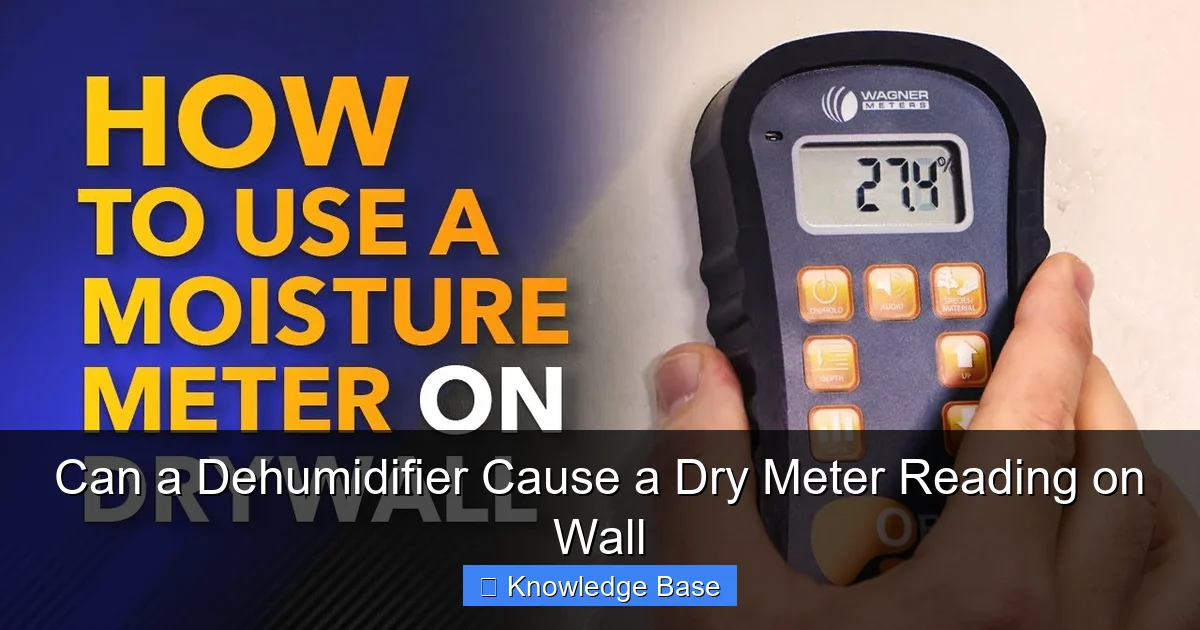
Visual guide about Can a Dehumidifier Cause a Dry Meter Reading on Wall
Image source: i.ytimg.com
To understand why a dehumidifier might cause a dry meter reading on wall surfaces, it’s important to first grasp how these appliances function. A dehumidifier is essentially an air conditioner with a twist. It draws in humid air, cools it to condense the moisture, collects the water in a tank or drains it away, and then reheats the air before releasing it back into the room. This process significantly reduces the amount of water vapor in the air, lowering the relative humidity.
Most residential dehumidifiers aim to maintain humidity levels between 30% and 50%, which is considered ideal for comfort and health. In basements, crawl spaces, or areas affected by flooding, humidity can easily exceed 60% or even 80%. Running a dehumidifier in such environments can bring those levels down quickly—sometimes within hours.
But here’s the catch: while the air becomes drier, the walls, floors, and other building materials may still contain moisture. Walls are porous and can absorb water like a sponge, especially after leaks, flooding, or prolonged exposure to high humidity. The moisture doesn’t just sit on the surface—it penetrates into drywall, plaster, wood studs, and insulation.
When a dehumidifier lowers the humidity in the air, it creates a moisture gradient. Moisture from wet materials naturally migrates toward the drier air in an attempt to reach equilibrium. This process, called diffusion, can cause surface moisture on walls to evaporate faster. As a result, the outer layer of the wall may dry out quickly, even if the inner layers remain saturated.
This is where the confusion begins. If you test the wall with a moisture meter shortly after running a dehumidifier, the surface may read as “dry” because the top layer has lost moisture to the air. But beneath that dry surface, hidden moisture could still be present—posing a risk for mold, rot, or structural weakening.
Types of Dehumidifiers and Their Drying Effects
Not all dehumidifiers are created equal, and their drying power can vary based on type and capacity. The three main types are:
– Refrigerant dehumidifiers: These are the most common and work by cooling air to condense moisture. They’re effective in warm, humid environments but less efficient in cold spaces.
– Desiccant dehumidifiers: These use a moisture-absorbing material (like silica gel) to pull water from the air. They work well in colder temperatures and are often used in restoration work.
– Whole-house dehumidifiers: Integrated into HVAC systems, these provide consistent humidity control throughout a home.
Each type affects the indoor environment differently. Refrigerant models can cool the air slightly as they dehumidify, which may cause condensation on cooler surfaces like walls if not properly managed. Desiccant models don’t cool the air, so they’re less likely to cause surface condensation but may take longer to reduce overall humidity.
The key point is that regardless of the type, all dehumidifiers reduce airborne moisture. This reduction can accelerate surface drying on walls, potentially leading to premature “dry” readings on moisture meters—even when internal moisture remains.
Understanding Moisture Meters and How They Detect Water
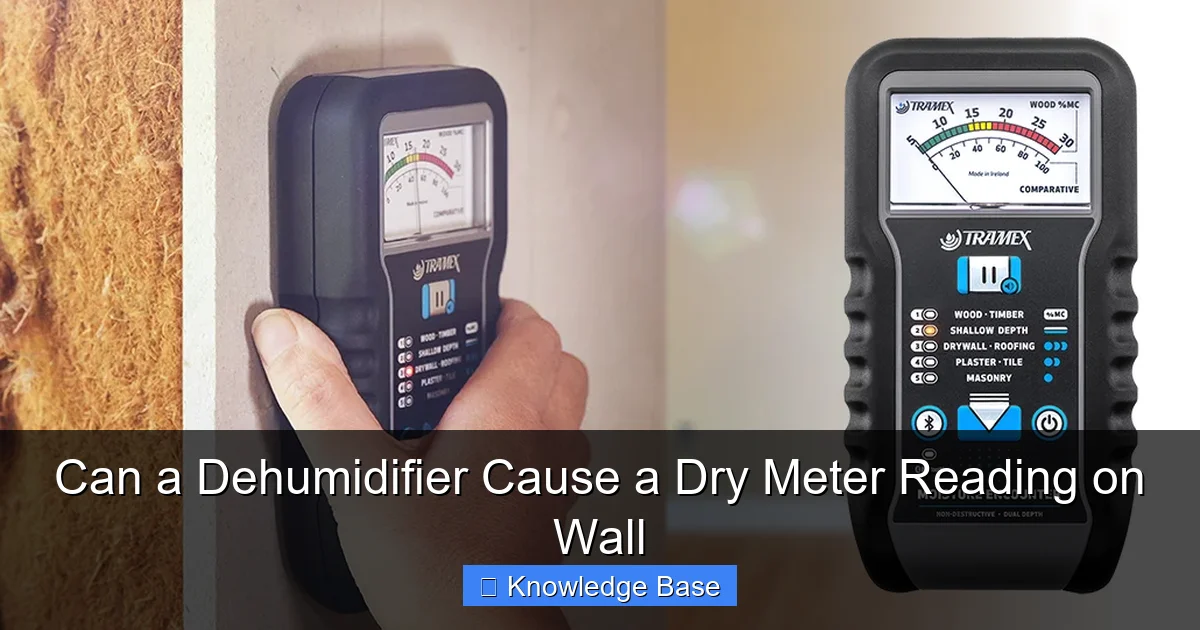
Visual guide about Can a Dehumidifier Cause a Dry Meter Reading on Wall
Image source: tramexmeters.com
Moisture meters are handheld devices used to detect the presence of water in building materials. They’re commonly used by contractors, mold inspectors, and homeowners to assess water damage, monitor drying progress, or identify hidden leaks. But not all moisture meters work the same way, and their accuracy can be influenced by environmental conditions—including the use of dehumidifiers.
There are two primary types of moisture meters: pin-type and pinless (also called non-invasive or electromagnetic).
Pin-Type Moisture Meters
Pin-type meters have two metal probes that you insert into the material being tested. They measure electrical resistance between the pins. Since water conducts electricity better than dry materials, higher moisture levels result in lower resistance and a higher reading on the meter.
These meters are highly accurate for pinpointing moisture at specific depths, especially in wood. However, they require physical penetration of the material, which can leave small holes. They’re also sensitive to surface conditions. If the surface has dried due to a dehumidifier, the meter may show a low reading—even if moisture exists deeper in the material.
For example, imagine a water-damaged drywall wall. After running a dehumidifier for 12 hours, the surface dries out. You insert the pins and get a reading of 8%, which is considered dry for drywall. But if you insert the pins deeper or test a different spot, you might find readings of 18% or higher—indicating significant internal moisture.
Pinless Moisture Meters
Pinless meters use electromagnetic waves to detect moisture beneath the surface without damaging the material. They’re ideal for scanning large areas quickly and are commonly used in flooring and wall inspections.
These meters measure moisture in a shallow depth (usually up to ¾ inch) and are influenced by the density and composition of the material. They’re less affected by surface dryness than pin-type meters, but they can still be thrown off by environmental changes.
When a dehumidifier lowers the humidity in the air, it can reduce the moisture content in the top layer of a wall. Since pinless meters read near the surface, they may register lower moisture levels—even if deeper layers are still wet. This can create a false sense of security.
Factors That Affect Moisture Meter Accuracy
Several factors can influence moisture meter readings, including:
– Surface temperature: Cold surfaces may condense moisture from the air, affecting readings.
– Material type: Different materials (wood, drywall, concrete) have different baseline moisture levels.
– Salts and minerals: High salt content (common in concrete or plaster) can increase conductivity and skew readings.
– Air humidity: As discussed, low humidity from dehumidifiers can dry surfaces and alter readings.
Because of these variables, it’s essential to interpret moisture meter results in context—not in isolation.
Why a Dehumidifier Can Lead to Misleading Dry Readings
Now that we understand how dehumidifiers and moisture meters work, let’s connect the dots. The core issue is timing and depth of measurement.
When a dehumidifier runs, it rapidly reduces the moisture in the air. This creates a strong drying effect on surfaces exposed to that air—like walls. The outer layer of the wall loses moisture quickly through evaporation. If you test the wall immediately after dehumidifier use, the surface may appear dry, and the moisture meter may reflect that.
But walls are not solid blocks—they’re layered structures. A typical interior wall includes drywall, insulation, wood or metal studs, and sometimes vapor barriers. Moisture can penetrate deep into these layers, especially after a leak or flood. The dehumidifier dries the surface, but the internal moisture takes much longer to evaporate and escape.
This creates a scenario where the meter says “dry,” but the wall is still wet inside. This is known as a false negative reading. It’s dangerous because it can lead to stopping the drying process too soon, sealing in moisture, and creating ideal conditions for mold growth.
Real-World Example: Basement Flood Recovery
Imagine a homeowner experiences a basement flood due to a burst pipe. Water soaks the drywall and insulation. They call a restoration company, which sets up industrial dehumidifiers and air movers. Within 24 hours, the surface of the drywall feels dry to the touch. The technician uses a pinless moisture meter and gets readings below 10%—well within the “dry” range for drywall.
Based on this, the homeowner assumes the wall is safe and begins painting. But two weeks later, mold appears behind the paint. Why? Because the dehumidifier dried the surface quickly, but the moisture trapped in the insulation and studs had nowhere to go. The meter reading was misleading.
This is a common mistake. The solution? Wait longer, test at multiple depths, and use additional detection methods like thermal imaging or core sampling.
The Role of Equilibrium Moisture Content (EMC)
Another important concept is equilibrium moisture content (EMC). This is the point at which a material neither gains nor loses moisture because the surrounding air humidity is balanced with the material’s internal moisture.
When a dehumidifier lowers the air humidity, it lowers the EMC of nearby materials. Walls will begin to release moisture to match the new, drier environment. But this process takes time—sometimes days or weeks, depending on the material thickness and moisture level.
If you test the wall before it reaches EMC, the meter may show a dry reading simply because the surface has adjusted to the new humidity level. But the core of the wall may still be far from equilibrium.
This is why experts recommend waiting 24–48 hours after dehumidifier use before taking final moisture readings. It allows the wall to stabilize and gives a more accurate picture of its true moisture state.
Best Practices for Accurate Moisture Readings After Using a Dehumidifier
To avoid being misled by a dry meter reading caused by a dehumidifier, follow these best practices:
1. Allow Time for Stabilization
Don’t test immediately after turning off the dehumidifier. Wait at least 24 hours—preferably 48 hours—to let the wall and surrounding air reach equilibrium. This gives the moisture meter a chance to reflect the true moisture content, not just surface dryness.
2. Test at Multiple Depths and Locations
Use a pin-type meter to test at different depths. Start shallow, then go deeper. Compare readings from multiple spots on the wall. If readings vary significantly, it’s a sign that moisture is still present internally.
3. Use Multiple Detection Methods
Don’t rely solely on a moisture meter. Combine it with:
– Visual inspection: Look for discoloration, bubbling paint, or warping.
– Thermal imaging: Infrared cameras can detect temperature differences caused by evaporating moisture.
– Hygrometers: Measure the relative humidity of the air and wall cavities.
– Core sampling: In severe cases, remove a small section of material to inspect internally.
4. Monitor Over Time
Take readings daily during the drying process. A consistent downward trend in moisture levels is a good sign. If readings plateau or increase, it may indicate ongoing moisture intrusion.
5. Adjust Dehumidifier Settings
Set the dehumidifier to maintain 40–50% relative humidity. Going too low (below 30%) can over-dry the air and cause materials to crack or warp. Going too high (above 60%) won’t effectively remove moisture.
6. Ensure Proper Airflow
Use fans to circulate air around the wall. Stagnant air slows evaporation. Position fans to blow across the surface, not directly at it, to avoid creating hot spots.
When a Dry Reading Is Genuinely Safe
Not all dry meter readings are misleading. In some cases, a dehumidifier has successfully dried the wall, and the reading is accurate. Here’s how to tell the difference:
– Consistent low readings: Multiple tests over several days show stable, low moisture levels.
– No visual signs of damage: The wall looks and feels normal—no stains, peeling, or soft spots.
– Air humidity is stable: The room’s relative humidity remains between 40% and 50%.
– No musty odors: Mold and mildew often produce a distinct smell. If it’s gone, that’s a good sign.
If all these conditions are met, the wall is likely dry and safe. But if any red flags remain, continue monitoring or consult a professional.
Conclusion: Balancing Drying and Detection
So, can a dehumidifier cause a dry meter reading on wall surfaces? Absolutely. While dehumidifiers are powerful tools for managing indoor humidity and aiding in moisture removal, they can create conditions that lead to misleading moisture meter results. Surface drying happens quickly, but internal moisture lingers—often undetected.
The key takeaway is to never rely on a single moisture meter reading, especially immediately after dehumidifier use. Instead, adopt a comprehensive approach that includes timing, multiple testing methods, and ongoing monitoring. By understanding the interaction between dehumidifiers and moisture meters, you can make informed decisions that protect your home from hidden water damage and mold.
Whether you’re recovering from a flood, dealing with a damp basement, or simply trying to maintain a healthy indoor environment, remember: a dry meter reading doesn’t always mean a dry wall. Take the time to dig deeper—literally and figuratively—to ensure true dryness and long-term safety.
Frequently Asked Questions
How does a dehumidifier affect moisture meter readings?
A dehumidifier lowers air humidity, which can dry the surface of walls and lead to lower moisture meter readings—even if internal moisture remains.
Can a moisture meter detect moisture behind drywall?
Yes, especially pinless meters, which can detect moisture up to ¾ inch deep. However, accuracy depends on material type and surface conditions.
Is it safe to paint a wall that reads dry on a moisture meter?
Only if multiple tests confirm consistent dryness and there are no signs of hidden moisture. Painting over wet walls can trap moisture and cause mold.
What’s the ideal humidity level for drying walls after water damage?
Maintain 40–50% relative humidity. This balances effective drying with preventing over-drying or material damage.
Can a dehumidifier cause condensation on walls?
Yes, especially refrigerant models in cold environments. If the wall is cooler than the dehumidified air, moisture can condense on the surface.
Should I use a dehumidifier and moisture meter together?
Yes, but use them wisely. The dehumidifier aids drying, while the meter monitors progress—just allow time for accurate readings.