
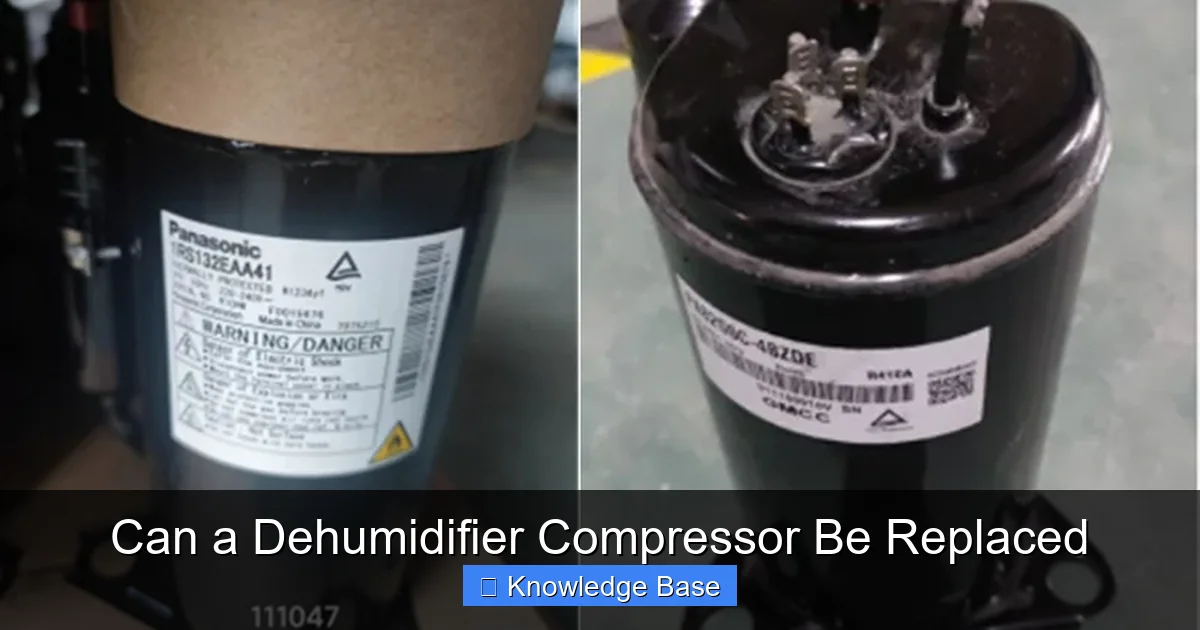
Replacing a dehumidifier compressor is technically possible, but it’s often complex and costly. While skilled DIYers or technicians can do it, the expense may outweigh the benefits, especially for older units. Weigh repair costs against buying a new dehumidifier before deciding.
Key Takeaways
- Compressor replacement is possible: With the right tools and knowledge, a faulty compressor can be swapped out, but it’s not a beginner-friendly task.
- Cost often exceeds value: Parts, refrigerant handling, and labor can cost $150–$400, which may be more than a new mid-range dehumidifier.
- Warranty matters: If your unit is under warranty, contact the manufacturer—DIY repairs may void coverage.
- Refrigerant handling requires certification: Only EPA-certified technicians should handle refrigerants like R-410A or R-32 due to environmental and safety regulations.
- Age of the unit is a factor: Units over 7–10 years old are better replaced than repaired due to declining efficiency and part availability.
- DIY risks include leaks and damage: Improper installation can cause refrigerant leaks, electrical issues, or compressor burnout.
- Professional assessment is wise: Have a technician diagnose the issue—sometimes the problem isn’t the compressor at all.
Quick Answers to Common Questions
Can I replace a dehumidifier compressor myself?
Only if you have advanced HVAC skills and EPA certification. Most homeowners should avoid DIY due to refrigerant handling laws and technical complexity.
How much does it cost to replace a dehumidifier compressor?
Typically $150–$400+ for parts, refrigerant, and labor—often close to the price of a new unit.
Is it worth fixing a 10-year-old dehumidifier?
Generally no. Older units are less efficient, and repair costs often exceed the value of the appliance.
What are signs of a bad dehumidifier compressor?
No cooling, loud noises, overheating, tripped breakers, or refrigerant leaks.
Can a bad capacitor mimic compressor failure?
Yes. A faulty capacitor can prevent the compressor from starting, so always test it first.
📑 Table of Contents
- Can a Dehumidifier Compressor Be Replaced? A Complete Guide
- How a Dehumidifier Compressor Works
- Signs Your Dehumidifier Compressor Is Failing
- Can You Replace the Compressor Yourself?
- Cost of Replacing a Dehumidifier Compressor
- Professional Repair vs. Replacement: What to Choose?
- Alternatives to Compressor Replacement
- Environmental and Safety Considerations
- Conclusion: Should You Replace the Compressor?
Can a Dehumidifier Compressor Be Replaced? A Complete Guide
So your dehumidifier has stopped working, and you’re hearing strange noises—or worse, it’s not pulling moisture from the air like it used to. You check the filters, clean the coils, and even reset the unit, but nothing helps. At this point, you might be wondering: Can a dehumidifier compressor be replaced? The short answer is yes—but the long answer involves cost, complexity, and a few important considerations.
Dehumidifiers work much like air conditioners: they use a refrigeration cycle to cool coils, condense moisture from the air, and then reheat the air before releasing it back into the room. At the heart of this system is the compressor—a crucial component that pressurizes the refrigerant and keeps the cycle running. When the compressor fails, the entire dehumidification process grinds to a halt. But before you start shopping for a new unit, it’s worth understanding whether replacing the compressor is a smart move.
In this guide, we’ll walk you through everything you need to know about dehumidifier compressor replacement—from how it works and why it fails, to the costs, risks, and alternatives. Whether you’re a hands-on DIYer or just trying to make an informed decision, this article will help you determine if repair is worth your time and money.
How a Dehumidifier Compressor Works
To understand whether a compressor can be replaced, it helps to know what it does. The compressor is often called the “heart” of the dehumidifier because it drives the refrigeration cycle. Without it, the system can’t remove moisture from the air.
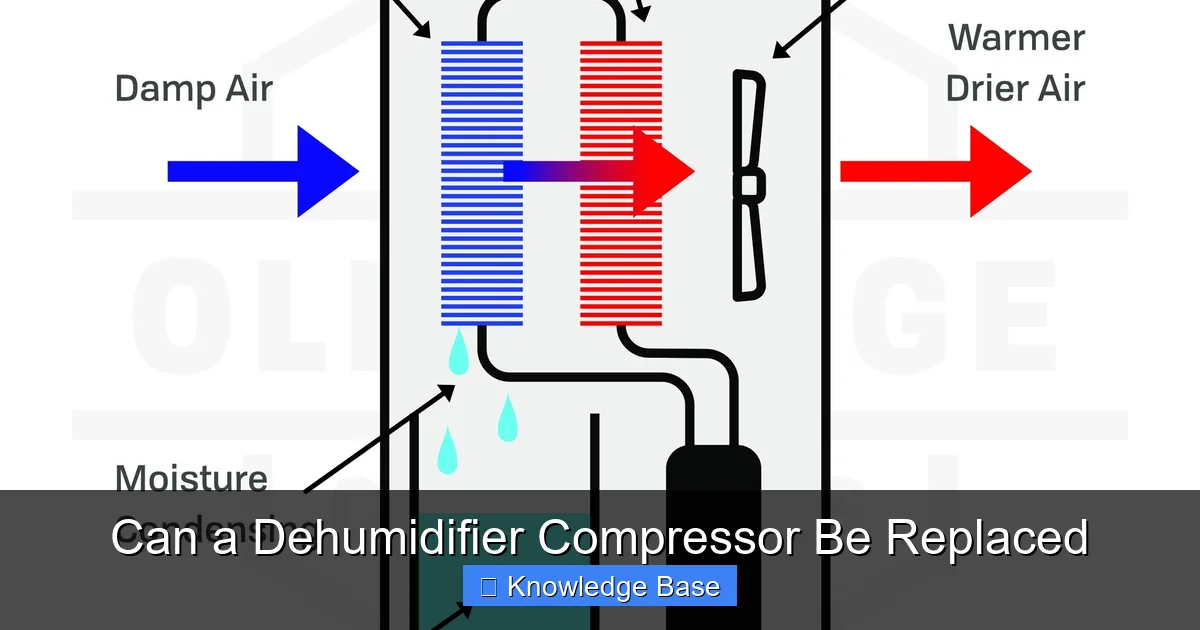
Visual guide about Can a Dehumidifier Compressor Be Replaced
Image source: images.squarespace-cdn.com
The Refrigeration Cycle Explained
Here’s a simplified breakdown of how the compressor fits into the process:
- Suction: Low-pressure, cool refrigerant gas enters the compressor from the evaporator coil.
- Compression: The compressor squeezes the gas, increasing its pressure and temperature dramatically.
- Discharge: The hot, high-pressure gas flows to the condenser coil, where it releases heat and turns into a liquid.
- Expansion: The liquid refrigerant passes through an expansion valve, dropping in pressure and temperature.
- Evaporation: The cold refrigerant absorbs heat from incoming air in the evaporator coil, causing moisture to condense and drip into the water tank.
This cycle repeats continuously as long as the compressor is functioning. If the compressor fails, the refrigerant can’t be pressurized, and the cooling process stops—meaning no dehumidification.
Types of Compressors in Dehumidifiers
Most residential dehumidifiers use one of two compressor types:
- Reciprocating (Piston) Compressors: Common in older or budget models. They use a piston-and-cylinder mechanism and are generally louder and less efficient.
- Rotary Compressors: Found in newer, energy-efficient models. They’re quieter, more compact, and have fewer moving parts, which can mean longer lifespan.
Rotary compressors are generally more reliable, but both types can fail due to age, overheating, electrical issues, or refrigerant leaks. Knowing your compressor type can help when sourcing a replacement part.
Signs Your Dehumidifier Compressor Is Failing
Not every dehumidifier problem is compressor-related. Before assuming the worst, look for these telltale signs that point specifically to compressor failure.
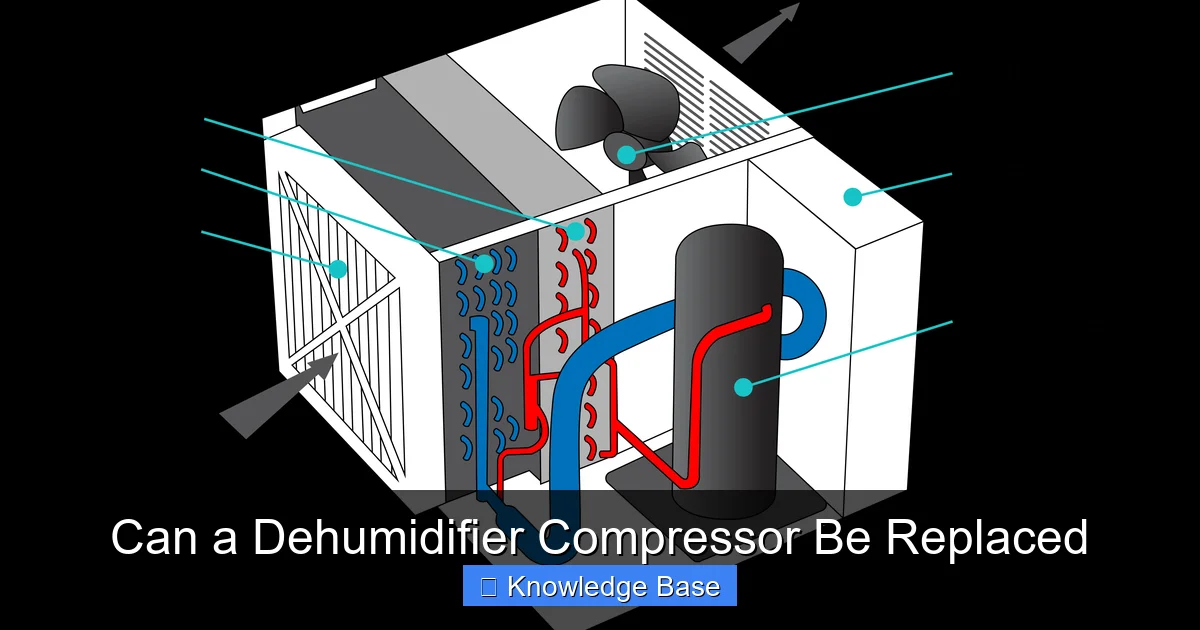
Visual guide about Can a Dehumidifier Compressor Be Replaced
Image source: surna.com
Common Symptoms of Compressor Failure
- No cooling or dehumidification: The unit runs, but the coils aren’t cold, and no water collects in the tank.
- Loud or unusual noises: Grinding, clicking, or humming sounds when the compressor tries to start but can’t.
- Unit trips the circuit breaker: A failing compressor may draw excessive current, causing electrical overloads.
- Compressor gets extremely hot: If the compressor housing is too hot to touch, it may be overworking or seized.
- Refrigerant smell or oil leaks: A sweet or chemical odor, or oily residue near the compressor, suggests a refrigerant leak.
Keep in mind that some of these symptoms could also indicate other issues—like a faulty capacitor, blocked coils, or a malfunctioning control board. That’s why proper diagnosis is essential.
How to Test the Compressor
If you’re comfortable with basic electrical testing, you can perform a few checks:
- Check the capacitor: A bad start or run capacitor is a common cause of compressor failure. Use a multimeter to test capacitance.
- Measure resistance: Use an ohmmeter to check the compressor’s windings. Infinite resistance (open circuit) or near-zero resistance (short circuit) indicates failure.
- Listen for a hum: If the compressor hums but doesn’t start, it may be seized or lack proper voltage.
⚠️ Warning: Never attempt to open the sealed refrigerant system without proper training and certification. Tampering with refrigerant lines can be dangerous and illegal.
Can You Replace the Compressor Yourself?
Now for the big question: can you replace a dehumidifier compressor on your own? The answer depends on your skill level, tools, and local regulations.
DIY Replacement: Is It Feasible?
Technically, yes—replacing a compressor is possible for someone with advanced mechanical and electrical skills. However, it’s not recommended for most homeowners. Here’s why:
- Refrigerant handling is regulated: In the U.S., only EPA Section 608 certified technicians can legally recover, handle, or recharge refrigerants. Attempting this without certification can result in fines.
- Specialized tools are required: You’ll need a vacuum pump, manifold gauge set, torch for brazing, and refrigerant recovery equipment.
- Risk of system contamination: Opening the system exposes it to moisture and air, which can damage the new compressor and reduce efficiency.
- Precision is critical: Improper brazing, incorrect refrigerant charge, or poor vacuuming can lead to leaks, poor performance, or compressor burnout.
Even if you manage to replace the compressor, there’s no guarantee it will work properly without professional-level reassembly and charging.
When DIY Might Make Sense
There are rare cases where DIY replacement could be justified:
- You’re an HVAC technician or have formal training in refrigeration systems.
- The dehumidifier is a high-end model (e.g., $500+) and still under warranty (check terms first).
- You have access to a certified technician who can handle the refrigerant side while you assist with mechanical work.
For most people, however, the risks and costs outweigh the benefits. A better approach is to consult a professional or consider replacement.
Cost of Replacing a Dehumidifier Compressor
Let’s talk money—because that’s often the deciding factor.
Parts and Labor Breakdown
Here’s a realistic cost estimate for compressor replacement:
- Compressor unit: $80–$250, depending on size and type (rotary vs. reciprocating).
- Refrigerant (R-410A or R-32): $20–$50 per pound (most dehumidifiers use 0.5–1.5 lbs).
- Labor (if hiring a technician): $100–$200 per hour, typically 2–4 hours of work.
- Additional parts: Capacitors, filters, or seals may also need replacement ($20–$60).
Total estimated cost: $150–$400+.
Compare to Buying a New Dehumidifier
Now consider the price of a new unit:
- Basic 30-pint dehumidifier: $150–$250
- Mid-range 50-pint model: $250–$400
- High-efficiency or smart models: $400–$700+
In many cases, the cost of replacing the compressor is nearly equal to—or exceeds—the price of a new dehumidifier. And a new unit comes with a warranty, better energy efficiency, and modern features like auto-humidistats and drain hoses.
When Repair Makes Financial Sense
Repair might be worth it if:
- Your current dehumidifier is a premium model (e.g., Santa Fe, AprilAire) with a long lifespan.
- The unit is less than 5 years old and still under warranty.
- You’ve already invested in other repairs and the compressor is the last major issue.
Otherwise, replacement is usually the smarter financial choice.
Professional Repair vs. Replacement: What to Choose?
So you’ve confirmed the compressor is bad. Now what? Should you repair or replace?
Pros and Cons of Repair
Pros:
- Extends the life of a high-quality unit.
- May be covered under warranty.
- Environmentally friendly—reduces e-waste.
Cons:
- High cost relative to a new unit.
- No guarantee the repair will last long.
- Older units may have other failing components soon.
Pros and Cons of Replacement
Pros:
- Newer models are more energy-efficient (look for ENERGY STAR ratings).
- Come with 1–3 year warranties.
- Often include smart features like Wi-Fi controls, auto-defrost, and continuous drainage.
Cons:
- Upfront cost, though often comparable to repair.
- Disposal of the old unit (check local e-waste programs).
Decision-Making Tips
Ask yourself these questions:
- How old is my dehumidifier? (If over 7–10 years, replace.)
- Has it needed multiple repairs recently? (Frequent issues suggest declining reliability.)
- Is it still under warranty? (Contact the manufacturer first.)
- Do I need better performance or features? (Newer models dehumidify faster and use less energy.)
When in doubt, get a professional assessment. Many HVAC or appliance repair services offer free or low-cost diagnostics.
Alternatives to Compressor Replacement
Before committing to a costly repair, consider these alternatives.
Is the Problem Really the Compressor?
Sometimes, the issue appears to be compressor failure when it’s actually something else:
- Faulty capacitor: A $10 part that can prevent the compressor from starting.
- Clogged coils or dirty filters: Restrict airflow, causing the compressor to overheat.
- Frozen evaporator coil: Often due to low refrigerant or poor airflow—defrosting and cleaning may fix it.
- Control board failure: The compressor won’t receive power if the board is damaged.
A technician can run diagnostics to rule out these issues before recommending compressor replacement.
Temporary Fixes and Workarounds
If you need dehumidification while deciding on a long-term solution:
- Use moisture absorbers like silica gel or DampRid in small spaces.
- Run a portable air conditioner with dehumidify mode (if available).
- Rent a commercial-grade dehumidifier for short-term use (e.g., after water damage).
These aren’t permanent fixes, but they can help manage humidity while you weigh your options.
Environmental and Safety Considerations
Replacing a compressor isn’t just a technical challenge—it’s also an environmental and safety issue.
Refrigerant Regulations
Modern dehumidifiers use refrigerants like R-410A or R-32, which are potent greenhouse gases if released into the atmosphere. The EPA requires:
- Proper recovery of refrigerant before opening the system.
- Certification for anyone handling refrigerants.
- Documentation of recovery and disposal.
Improper handling can result in fines and contribute to climate change. Always use a certified technician for refrigerant work.
Safe Disposal of Old Units
When replacing your dehumidifier, don’t just toss it in the trash. Many components—including the compressor, refrigerant, and metals—can be recycled.
- Check with local waste management or appliance retailers for take-back programs.
- Some manufacturers offer recycling incentives or mail-in programs.
- Never puncture or cut refrigerant lines yourself.
Proper disposal protects the environment and complies with local laws.
Conclusion: Should You Replace the Compressor?
So, can a dehumidifier compressor be replaced? Yes—but it’s rarely the best option for the average homeowner. While technically feasible, the process is complex, costly, and often not worth the effort compared to buying a new unit.
Compressor replacement makes the most sense for high-end, newer models still under warranty, or if you have the skills and certification to do it safely. For most people, especially with units over 5–7 years old, replacement is the smarter, more cost-effective choice.
Before making a decision, get a professional diagnosis to confirm the compressor is the issue. And if you do choose to repair, always work with an EPA-certified technician to handle refrigerants legally and safely. Your home’s air quality—and your wallet—will thank you.
Frequently Asked Questions
How long do dehumidifier compressors last?
Most compressors last 7–10 years, depending on usage, maintenance, and environmental conditions. Regular cleaning and proper ventilation can extend lifespan.
Can I use a car AC compressor in a dehumidifier?
No. Car AC compressors are designed for different pressures, refrigerants, and operating conditions. They are not compatible with dehumidifier systems.
What happens if I run a dehumidifier with a bad compressor?
The unit won’t remove moisture, may overheat, and could trip the circuit breaker. Continued use can damage other components.
Do all dehumidifiers have compressors?
Most do, but some use desiccant technology instead. Desiccant dehumidifiers don’t have compressors and work differently, using a moisture-absorbing material.
Can I recharge the refrigerant in my dehumidifier?
Only if you’re EPA-certified. Recharging requires proper recovery of old refrigerant, vacuuming the system, and precise charging—best left to professionals.
Will replacing the compressor void my warranty?
Yes, if done by an unauthorized person. Always check your warranty terms and contact the manufacturer before attempting any repairs.