
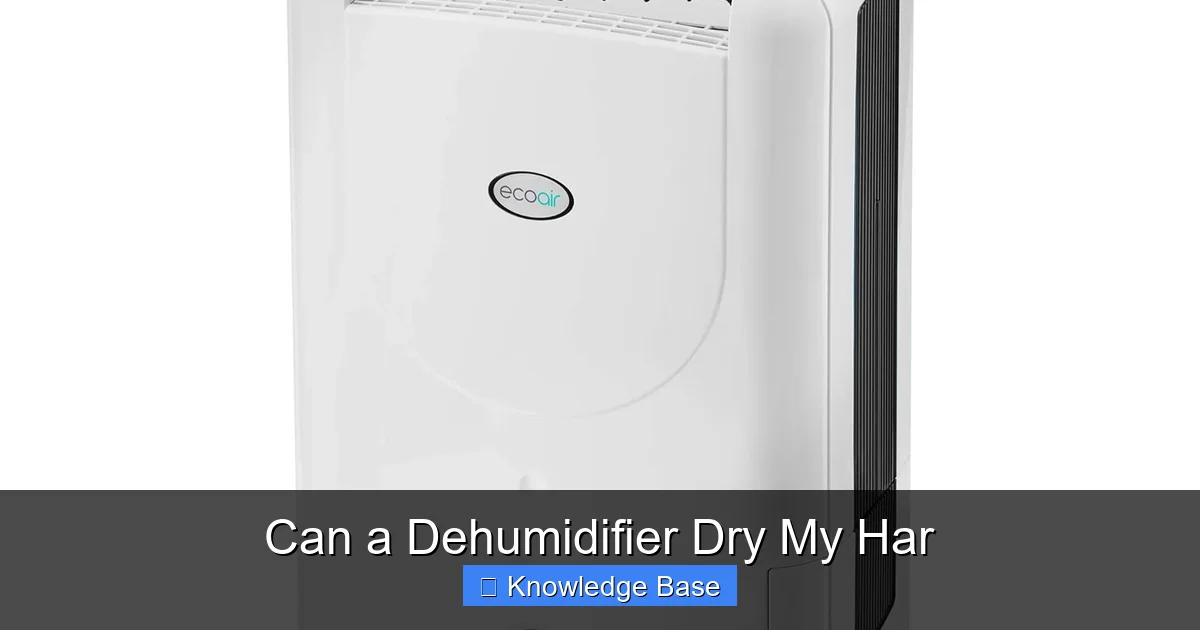
Yes, a dehumidifier can indirectly help dry your hair faster by reducing ambient humidity, but it’s not a direct replacement for a hair dryer. While it won’t blow air or apply heat, it creates a drier environment that speeds up natural evaporation. Understanding the science behind humidity and hair can help you use a dehumidifier effectively for healthier, frizz-free results.
Key Takeaways
- Dehumidifiers reduce moisture in the air, which can help hair dry faster naturally. They don’t blow air like hair dryers but create a low-humidity environment ideal for evaporation.
- High humidity causes frizz and slows drying time. When the air is full of moisture, your hair absorbs it, leading to puffiness and longer drying periods.
- Using a dehumidifier in your bathroom or bedroom can improve hair health over time. Consistent low humidity prevents excess moisture absorption, reducing damage and breakage.
- Dehumidifiers are best used alongside other drying methods. Pairing them with air-drying or a blow dryer enhances results without overexposure to heat.
- Not all dehumidifiers are equally effective for hair drying. Choose models with adjustable humidity settings and good airflow for optimal performance.
- Overuse can lead to overly dry hair and scalp. Maintain indoor humidity between 30% and 50% to avoid stripping natural oils.
- Dehumidifiers benefit more than just your hair—they improve overall indoor air quality. They reduce mold, dust mites, and allergens, creating a healthier living space.
Can a Dehumidifier Dry My Hair? The Science Explained
So, you’ve just stepped out of the shower, your hair is dripping wet, and you’re wondering: Can a dehumidifier dry my hair? It’s a clever question—one that blends home comfort with personal care. The short answer? Yes, but not in the way you might think. A dehumidifier won’t blast your locks with warm air like a hair dryer, but it can significantly speed up the natural drying process by changing the environment around you.
To understand how this works, let’s break it down. Your hair is made up of keratin proteins and is highly porous, especially when wet. When the air around you is humid—meaning it’s packed with moisture—your hair struggles to release its own water content. Instead, it starts absorbing moisture from the air, which leads to frizz, puffiness, and longer drying times. This is why your hair takes forever to dry on a rainy day or in a steamy bathroom. But when the air is dry, evaporation happens faster. That’s where a dehumidifier comes in.
A dehumidifier works by pulling moisture from the air and collecting it in a reservoir or draining it out. As it lowers the humidity level in a room, it creates ideal conditions for water to evaporate from your hair more efficiently. Think of it like hanging wet clothes outside on a breezy, dry day versus a damp, still one. The clothes dry faster in the dry air—not because the wind is blowing harder, but because the environment supports evaporation. The same principle applies to your hair.
Now, this doesn’t mean you should ditch your hair dryer entirely. A dehumidifier is a supportive tool, not a replacement. It’s most effective when used in combination with air-drying or low-heat blow-drying. For example, after washing your hair, you can wrap it in a microfiber towel to remove excess water, then sit in a room with a running dehumidifier. Over time, you’ll notice your hair dries faster and feels smoother, with less frizz.
It’s also worth noting that this effect isn’t just about convenience—it’s about hair health. Constant exposure to high humidity can weaken hair strands, increase breakage, and promote fungal growth on the scalp. By maintaining a balanced indoor climate, a dehumidifier helps protect your hair’s natural moisture barrier and keeps it looking healthier in the long run.
How Humidity Affects Hair Drying and Health
Humidity plays a bigger role in your hair’s appearance and drying time than most people realize. Whether you have straight, wavy, curly, or coily hair, moisture in the air can make or break your styling routine. Understanding this relationship is key to answering the question: Can a dehumidifier dry my hair?
The Role of Humidity in Hair Structure
Your hair is like a sponge—it absorbs moisture from its surroundings. Each strand has a outer layer called the cuticle, which opens when wet and closes when dry. In high-humidity environments, the cuticle stays open longer because the air is saturated with water. This allows excess moisture to penetrate the hair shaft, causing it to swell. The result? Frizz, puffiness, and a loss of definition—especially in curly or textured hair types.
On the flip side, low-humidity environments help the cuticle close faster, sealing in moisture and reducing frizz. This is why people often notice their hair looks sleeker and more manageable on dry, sunny days. But even in low humidity, if your hair is wet, it still needs time to evaporate that moisture. That’s where a dehumidifier becomes useful—it accelerates this process by removing ambient moisture.
Why High Humidity Slows Drying Time
When the air is humid, evaporation slows down dramatically. Imagine trying to dry a wet towel in a steam room—it would take forever because the air is already full of water vapor. The same thing happens to your hair. The moisture in your strands can’t escape easily because the surrounding air is saturated. This not only extends drying time but also increases the risk of mildew or bacterial growth on damp hair, especially if you tie it up while wet.
For people with thick or long hair, this can be especially frustrating. What might take 30 minutes to air-dry on a dry day could take over an hour in humid conditions. Using a dehumidifier in your bathroom or bedroom can cut that time significantly. Even a 10–15% drop in humidity can make a noticeable difference in how quickly your hair dries.
Long-Term Hair Health Benefits
Beyond drying speed, controlling indoor humidity has lasting benefits for hair health. Chronic exposure to high humidity can weaken hair over time. The constant swelling and shrinking of hair fibers due to moisture absorption can lead to cuticle damage, split ends, and increased breakage. Additionally, damp environments promote the growth of mold and mildew, which can irritate the scalp and lead to dandruff or fungal infections.
By using a dehumidifier, you create a more stable environment for your hair. This helps maintain the integrity of the hair shaft, reduces frizz, and supports overall scalp health. It’s a small change that can lead to big improvements in how your hair looks and feels—especially if you live in a humid climate or have naturally moisture-sensitive hair.
Using a Dehumidifier to Speed Up Hair Drying
Now that we know how a dehumidifier helps, let’s talk about how to use it effectively. You don’t need to sit directly in front of the machine like it’s a fan. Instead, think of it as setting up the perfect drying environment. Here’s a step-by-step guide to getting the most out of your dehumidifier for hair drying.
Step 1: Choose the Right Room
The best place to use a dehumidifier for hair drying is a small, enclosed space like a bathroom or bedroom. These rooms typically have higher humidity levels due to showers, baths, or breathing, making them ideal candidates for dehumidification. Avoid large, open areas where moisture can easily seep in from other parts of the house.
For example, after your shower, leave the bathroom door closed and run the dehumidifier for 20–30 minutes. This will quickly pull moisture from the air, creating a dry environment where your hair can dry faster. If you’re air-drying your hair at night, place the dehumidifier in your bedroom and run it while you sleep.
Step 2: Prep Your Hair First
A dehumidifier works best when your hair isn’t dripping wet. Start by gently squeezing out excess water with a microfiber towel or an old cotton T-shirt. Avoid rough towel-drying, which can cause frizz and breakage. Once your hair is damp—not soaking—you’re ready to let the dehumidifier do its work.
You can also apply a lightweight leave-in conditioner or anti-frizz serum before drying. These products help seal the cuticle and protect your hair from environmental stressors, including rapid changes in humidity.
Step 3: Set the Right Humidity Level
Most modern dehumidifiers come with a built-in humidistat that lets you set your desired humidity level. For hair drying and overall comfort, aim for a range between 30% and 50%. Levels below 30% can dry out your skin, scalp, and hair, while levels above 50% won’t provide enough benefit.
If your dehumidifier doesn’t have a humidistat, run it for 20–30 minutes at a time and check the room’s humidity with a hygrometer (a small, inexpensive device that measures moisture in the air). This ensures you’re not over-drying the space.
Step 4: Combine with Other Drying Methods
For best results, use the dehumidifier alongside other drying techniques. For instance, after towel-drying, you can let your hair air-dry for 10–15 minutes in the dehumidified room, then finish with a blow dryer on a cool or low-heat setting. This reduces heat exposure while still speeding up the process.
If you’re curly-haired and practice the “plopping” method (wrapping hair in a T-shirt to enhance curl definition), do it in a room with a running dehumidifier. The dry air will help set your curls faster and reduce frizz.
Step 5: Maintain Your Dehumidifier
To keep your dehumidifier working efficiently, clean the filter regularly and empty the water tank as needed. A clogged filter or full tank can reduce performance and even cause the unit to shut off. Most manufacturers recommend cleaning the filter every 2–4 weeks, depending on usage.
Also, consider the size of the dehumidifier. A unit that’s too small for the room won’t be effective, while one that’s too large may cycle on and off too frequently. Check the manufacturer’s guidelines for room size recommendations.
Choosing the Right Dehumidifier for Hair and Home
Not all dehumidifiers are created equal—especially when it comes to personal care applications like hair drying. While any dehumidifier will reduce moisture in the air, some models are better suited for this purpose than others. Here’s what to look for when selecting a dehumidifier to help dry your hair.
Capacity and Room Size
Dehumidifiers are rated by how many pints of moisture they can remove per day. For a small bathroom (under 500 square feet), a 20–30 pint model is usually sufficient. For larger bedrooms or open-concept spaces, you may need a 50-pint or higher unit.
Choosing the right size ensures the dehumidifier can effectively lower humidity without overworking. An undersized unit will struggle to make a difference, while an oversized one may consume more energy than necessary.
Adjustable Humidity Settings
Look for a dehumidifier with a built-in humidistat and adjustable settings. This allows you to set your ideal humidity level (30–50%) and let the machine maintain it automatically. Some advanced models even have smart features that connect to apps or voice assistants, so you can control them remotely.
Models without a humidistat will run continuously until the tank is full, which can lead to over-drying. Over time, this can dry out your hair and scalp, causing brittleness and irritation.
Noise Level
If you plan to use the dehumidifier while sleeping or relaxing, noise level matters. Most dehumidifiers produce between 40 and 60 decibels—similar to a quiet conversation or a refrigerator hum. Look for models labeled “quiet” or “low noise” if you’re sensitive to sound.
Some brands, like Frigidaire and hOmeLabs, offer ultra-quiet models designed for bedrooms. These are ideal for nighttime hair drying routines.
Energy Efficiency
Since dehumidifiers run for extended periods, energy efficiency is important. Look for units with an Energy Star rating, which indicates they meet strict efficiency guidelines set by the EPA. These models use less electricity and can save you money on utility bills over time.
Also, consider models with auto-defrost features if you live in a cooler climate. These prevent the coils from freezing, ensuring consistent performance year-round.
Portability and Design
A compact, lightweight dehumidifier with wheels or a handle is easier to move between rooms. This is especially useful if you want to use it in the bathroom after a shower and then move it to the bedroom at night.
Some models come with built-in air purifiers or ionizers, which can further improve indoor air quality. While not essential for hair drying, these features add extra value.
Potential Risks and How to Avoid Them
While dehumidifiers offer many benefits, they’re not without risks—especially when it comes to hair and scalp health. Using them incorrectly can lead to dryness, irritation, and even damage. Here’s how to enjoy the benefits while avoiding the pitfalls.
Over-Drying Your Hair and Scalp
The biggest risk of using a dehumidifier for hair drying is removing too much moisture—not just from the air, but from your hair and scalp. When humidity drops below 30%, your skin and hair can become dry, itchy, and brittle. This is especially true for people with naturally dry or curly hair, which tends to be more moisture-sensitive.
To prevent this, always keep indoor humidity between 30% and 50%. Use a hygrometer to monitor levels, and avoid running the dehumidifier continuously for hours on end. Instead, use it in short bursts—20 to 30 minutes at a time—especially if you’re air-drying your hair.
Scalp Irritation and Flaking
A dry scalp can lead to dandruff, itching, and flaking. If you notice your scalp feeling tight or irritated after using a dehumidifier, it may be a sign the air is too dry. Combat this by using a moisturizing shampoo and conditioner, and applying a scalp oil or serum regularly.
You can also place a small bowl of water near the dehumidifier to add a bit of moisture back into the air. This creates a balanced environment that supports hair drying without overdrying.
Static Electricity
Low humidity increases static electricity, which can make your hair fly away, cling to your clothes, or become difficult to manage. This is especially common in winter or in air-conditioned rooms.
To reduce static, use a leave-in conditioner or anti-static spray. You can also lightly mist your hair with water before styling. Avoid rubbing your hair with a towel, as this generates friction and worsens static.
Equipment Overuse and Maintenance
Running a dehumidifier nonstop can wear out the motor and reduce its lifespan. It can also lead to higher energy bills. To avoid this, use the unit only when needed—such as after showers or during humid weather.
Regular maintenance is also crucial. Clean the filter monthly, empty the water tank daily, and check for mold or mildew buildup inside the unit. A well-maintained dehumidifier runs more efficiently and lasts longer.
Conclusion: Is a Dehumidifier Right for Your Hair Routine?
So, can a dehumidifier dry my hair? The answer is a resounding yes—but with caveats. A dehumidifier won’t replace your hair dryer, but it can be a powerful ally in your hair care routine. By reducing ambient humidity, it creates an environment where your hair dries faster, looks smoother, and stays healthier.
Whether you’re battling frizz on a humid summer day or trying to air-dry your hair without heat damage, a dehumidifier offers a simple, effective solution. It’s especially beneficial for people with curly, coily, or moisture-sensitive hair types, as well as those living in humid climates.
Just remember: balance is key. Use your dehumidifier wisely, maintain proper humidity levels, and combine it with good hair care practices. With the right approach, you’ll enjoy faster drying times, reduced frizz, and healthier hair—all while improving the air quality in your home.
Quick Q&A
Can a dehumidifier dry my hair completely on its own?
No, a dehumidifier doesn’t blow air or apply heat, so it can’t dry your hair completely on its own. It speeds up natural evaporation by reducing humidity, but you’ll still need to towel-dry or air-dry your hair first.
How long should I run a dehumidifier to help dry my hair?
Run the dehumidifier for 20–30 minutes in a closed room after showering. This is usually enough to lower humidity and speed up drying without over-drying the air.
Will a dehumidifier make my hair frizzy?
No—in fact, it can reduce frizz by preventing your hair from absorbing excess moisture. Just avoid over-drying the air, which can cause static and dryness.
Can I use a dehumidifier while sleeping to dry my hair?
Yes, but only if the room is well-ventilated and the humidity stays above 30%. Use a quiet model and monitor humidity levels to avoid drying out your scalp.
Do I need a special dehumidifier for hair drying?
No, any standard dehumidifier will work. Look for one with adjustable settings, a humidistat, and quiet operation for the best results.
FAQs
Can a dehumidifier replace a hair dryer?
No, a dehumidifier cannot replace a hair dryer. It doesn’t blow air or generate heat, so it can’t actively dry wet hair. However, it creates a drier environment that helps hair dry faster when used alongside air-drying or low-heat styling.
Is it safe to use a dehumidifier every day?
Yes, it’s safe to use a dehumidifier daily as long as you maintain indoor humidity between 30% and 50%. Avoid overuse, which can dry out your skin, hair, and respiratory system.
Can a dehumidifier help with curly hair frizz?
Absolutely. Curly hair is especially prone to frizz in humid conditions. A dehumidifier reduces ambient moisture, helping curls stay defined and smooth without the need for heavy products.
Should I use a dehumidifier in the bathroom?
Yes, the bathroom is an ideal place for a dehumidifier. It helps remove moisture from showers and baths, preventing mold and creating a better environment for hair drying.
Can a dehumidifier damage my hair?
Only if used excessively. Over-drying the air can strip natural oils from your hair and scalp, leading to dryness and breakage. Keep humidity balanced and use moisturizing products to protect your hair.
Do dehumidifiers use a lot of electricity?
It depends on the model and usage. Energy-efficient dehumidifiers with an Energy Star rating consume less power. Running them for short periods (20–30 minutes) minimizes energy use.
This is a comprehensive guide about can a dehumidifier dry my har.
Key Takeaways
- Understanding can a dehumidifier dry my har: Provides essential knowledge
Quick Answers to Common Questions
What is can a dehumidifier dry my har?
can a dehumidifier dry my har refers to essential knowledge and techniques.
Frequently Asked Questions
What is can a dehumidifier dry my har?
can a dehumidifier dry my har is an important topic with many practical applications.