
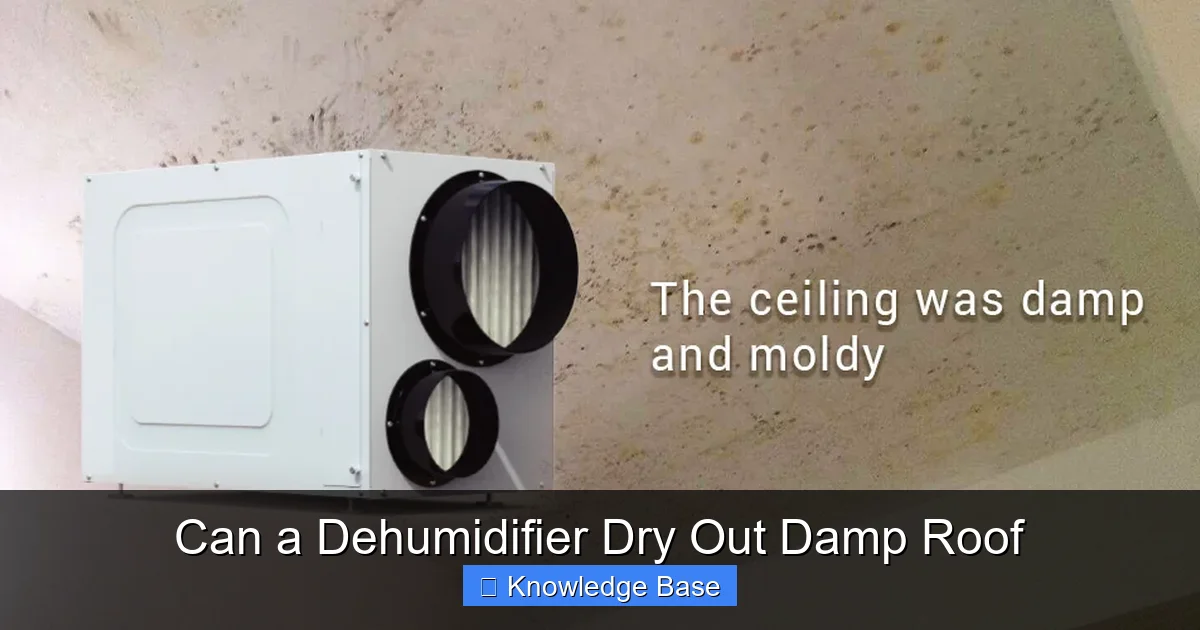
A dehumidifier can help reduce moisture levels in your home and slow dampness in roofs, but it won’t fix the root cause of roof leaks or structural damage. While useful for managing humidity and preventing mold, a dehumidifier is not a standalone solution for drying out a damp roof—proper ventilation, insulation, and repairs are essential.
Key Takeaways
- Dehumidifiers reduce indoor humidity: They help lower moisture levels in the air, which can slow the progression of dampness in roofs caused by condensation.
- They don’t fix leaks or structural damage: If your roof is damp due to a leak or poor waterproofing, a dehumidifier won’t repair the issue—only temporary relief is possible.
- Best for condensation-related damp: Dehumidifiers are most effective when dampness is due to high indoor humidity and poor airflow, not external water intrusion.
- Proper placement matters: Running a dehumidifier in the attic or near the affected area improves effectiveness, but it must be paired with ventilation.
- Prevention beats cure: Use a dehumidifier alongside insulation, roof inspections, and moisture barriers to prevent long-term damp problems.
- Energy efficiency varies: Choose an energy-efficient model with a built-in humidistat to avoid high electricity bills while maintaining optimal humidity.
- Professional assessment is key: If damp persists, consult a roofing expert to identify hidden leaks or ventilation issues a dehumidifier can’t solve.
Quick Answers to Common Questions
Can a dehumidifier stop roof leaks?
No, a dehumidifier cannot stop roof leaks. It only removes moisture from the air and cannot repair physical damage like broken shingles or cracked flashing.
Should I run a dehumidifier in my attic?
Yes, if your attic has high humidity or condensation issues. A desiccant dehumidifier is often better for cold attic spaces than a standard refrigerant model.
How long should I run a dehumidifier to dry a damp roof?
Run it continuously until humidity levels stabilize and surfaces are dry—usually 3 to 7 days, depending on the severity. Use a moisture meter to check progress.
Can a dehumidifier prevent mold in the roof?
Yes, by reducing humidity, it lowers the risk of mold growth. But it won’t eliminate mold if water is still entering the roof structure.
Is a whole-house dehumidifier better for roof dampness?
It can be, especially in humid climates or large homes. Whole-house systems maintain consistent humidity levels throughout the entire home, including the attic.
📑 Table of Contents
- Can a Dehumidifier Dry Out Damp Roof? The Real Answer
- How Dehumidifiers Work and Their Role in Moisture Control
- Common Causes of Damp Roofs and Why a Dehumidifier Isn’t Enough
- When a Dehumidifier Can Help: Practical Scenarios
- Limitations and Risks of Relying Solely on a Dehumidifier
- Best Practices for Managing Roof Dampness
- Conclusion
Can a Dehumidifier Dry Out Damp Roof? The Real Answer
You’ve noticed dark patches on your ceiling, a musty smell in the attic, or peeling paint near the roofline. Your first thought might be: “Can a dehumidifier dry out damp roof areas?” It’s a smart question—especially if you’ve already tried wiping down surfaces or opening windows with little success. The short answer? A dehumidifier can help manage moisture, but it’s not a magic fix for a damp roof.
Many homeowners turn to dehumidifiers as a quick solution when they spot signs of dampness. And while these devices are excellent at pulling excess moisture from the air, they don’t address the root cause of roof dampness—especially if it’s due to leaks, poor insulation, or structural issues. Think of a dehumidifier like a sponge: it can soak up water in the air, but if the tap is still running (i.e., water keeps entering the roof), the sponge will quickly become overwhelmed. Understanding how dehumidifiers work—and when they’re appropriate—can save you time, money, and frustration.
How Dehumidifiers Work and Their Role in Moisture Control
Understanding the Science Behind Dehumidifiers
Dehumidifiers operate by drawing warm, moist air into the unit using a fan. The air passes over cold coils, causing moisture to condense into water droplets, which collect in a tank or drain away. The drier air is then reheated and released back into the room. This process lowers the relative humidity (RH) in your home, ideally keeping it between 30% and 50%—the range recommended by health and building experts.
Visual guide about Can a Dehumidifier Dry Out Damp Roof
Image source: cdn.mos.cms.futurecdn.net
High humidity creates the perfect environment for mold, mildew, and wood rot—all common culprits in damp roof problems. By reducing moisture in the air, dehumidifiers help slow the growth of these issues. However, they only manage airborne moisture. If water is actively seeping through your roof due to a broken tile, cracked flashing, or blocked gutters, a dehumidifier can’t stop that flow.
Types of Dehumidifiers and Their Suitability
There are two main types of dehumidifiers: refrigerant (compressor-based) and desiccant. Refrigerant models are common in homes and work best in warm, humid climates. They’re effective at pulling moisture from the air but lose efficiency in cold temperatures—like those found in unheated attics during winter. Desiccant dehumidifiers, on the other hand, use moisture-absorbing materials and perform better in cooler environments, making them a better choice for attic spaces.
For roof-related dampness, especially in attics, a desiccant dehumidifier may be more effective. However, both types require proper sizing. A unit too small for the space will struggle to make a difference, while an oversized one may cycle on and off too frequently, wasting energy. Look for a model with a built-in humidistat so it automatically maintains your desired humidity level.
Where to Place a Dehumidifier for Maximum Impact
Placement is crucial. Running a dehumidifier in a living room won’t do much for a damp attic. For roof-related moisture, place the unit as close to the affected area as possible—ideally in the attic or directly beneath the damp spot. Ensure there’s adequate airflow around the unit and that the water collection tank is easy to access for regular emptying. If using a drain hose, make sure it’s positioned to allow continuous drainage without leaks.
Also, keep doors and vents open between the dehumidifier and the damp area to allow air circulation. If your attic is sealed off, consider installing a vented access panel or using a ducted dehumidifier designed for enclosed spaces. Remember: the goal is to pull moist air from the problem zone, not just recirculate dry air in one room.
Common Causes of Damp Roofs and Why a Dehumidifier Isn’t Enough
Leaks and Structural Damage
The most obvious cause of a damp roof is a leak. Missing shingles, damaged flashing, cracked tiles, or clogged gutters can allow rainwater to seep into your roof structure. In these cases, moisture isn’t just in the air—it’s actively entering your home. A dehumidifier might reduce surface dampness temporarily, but it won’t stop the water source. Without repairs, the problem will worsen over time, potentially leading to rot, mold, or even structural failure.
Visual guide about Can a Dehumidifier Dry Out Damp Roof
Image source: multihire.blob.core.windows.net
For example, imagine a small hole in your roof that drips water onto the insulation during a storm. The dehumidifier might dry the air around it, but the insulation stays wet. Over time, that wet insulation loses its effectiveness, and mold begins to grow. The dehumidifier can’t reach inside the insulation or repair the hole—only a roofer can.
Poor Ventilation and Trapped Moisture
Even without leaks, poor attic ventilation can cause dampness. Warm, moist air from your home rises into the attic. If there’s inadequate airflow—due to blocked soffit vents, missing ridge vents, or sealed attic hatches—this moisture gets trapped. It condenses on cold surfaces like roof decking or insulation, leading to damp patches and mold growth.
This is where a dehumidifier can be helpful. By reducing the overall humidity in the attic, it lowers the chance of condensation forming. However, it’s a band-aid solution. Proper ventilation—such as installing soffit and ridge vents or adding an attic fan—is the real fix. A dehumidifier should complement ventilation, not replace it.
Insulation Issues and Thermal Bridging
Inadequate or improperly installed insulation can also contribute to roof dampness. When warm indoor air meets cold roof surfaces, condensation forms—similar to how a cold drink sweats on a hot day. This is especially common in winter when temperature differences are greatest. If your insulation is thin, compressed, or missing in spots, moisture can accumulate in those areas.
A dehumidifier can help manage the resulting humidity, but upgrading your insulation is the long-term solution. Consider adding spray foam or rigid foam board insulation to create a thermal barrier. This not only reduces condensation but also improves energy efficiency. Pair this with a dehumidifier, and you’ll have a much more effective moisture control system.
When a Dehumidifier Can Help: Practical Scenarios
Condensation in Cold Weather
During winter, condensation is a common cause of attic dampness. Bathrooms, kitchens, and laundry rooms produce steam, which rises into the attic. If the attic is cold and poorly ventilated, this moisture condenses on surfaces. You might see frost forming on nails or damp insulation in the morning.
In this scenario, a dehumidifier can be very effective—especially if placed in the attic or near the access point. It pulls moisture from the air before it has a chance to condense. Combine this with better ventilation (like adding an attic fan) and you’ll see a significant reduction in dampness. Some homeowners even use smart dehumidifiers that connect to humidity sensors, automatically adjusting output based on real-time conditions.
High Indoor Humidity from Daily Activities
Even without extreme weather, daily activities can raise indoor humidity. Cooking, showering, drying clothes indoors, and even breathing add moisture to the air. In tightly sealed modern homes, this moisture has nowhere to go—so it migrates upward, into the attic and roof space.
A whole-house dehumidifier, integrated with your HVAC system, can help maintain consistent humidity levels throughout your home. These systems are more powerful than portable units and can handle larger volumes of air. They’re ideal for humid climates or homes with chronic moisture issues. While expensive upfront, they offer long-term benefits for both comfort and roof health.
Post-Leak Drying and Mold Prevention
After a roof leak has been repaired, a dehumidifier can play a key role in the drying process. Water may have soaked into insulation, wood beams, or drywall. Simply fixing the leak isn’t enough—these materials need to dry completely to prevent mold growth.
Running a dehumidifier in the affected area accelerates evaporation and reduces the risk of secondary damage. Use it alongside fans to circulate air and promote drying. Monitor humidity levels with a hygrometer, and continue running the dehumidifier until readings stabilize. This proactive approach can save you from costly mold remediation down the line.
Limitations and Risks of Relying Solely on a Dehumidifier
Energy Costs and Maintenance
Dehumidifiers consume electricity, especially if run continuously. A large unit in a humid attic can add significantly to your energy bill. To minimize costs, choose an Energy Star-certified model with a high efficiency rating. Look for features like auto-shutoff, timer settings, and low-watt operation modes.
Maintenance is also important. Clean the air filter monthly to ensure proper airflow. Empty the water tank regularly, or use a continuous drain hose to avoid overflow. Neglecting maintenance can reduce efficiency and even cause the unit to shut down unexpectedly.
False Sense of Security
One of the biggest risks of using a dehumidifier for roof dampness is developing a false sense of security. You might see the damp patches shrink and assume the problem is solved—only to discover later that the underlying issue (like a hidden leak) is still present. This can lead to delayed repairs and more extensive damage.
Always investigate the source of dampness. Use a moisture meter to check wood and insulation. Look for water stains, mold, or musty odors. If you’re unsure, hire a professional inspector. A dehumidifier is a tool, not a cure-all.
Ineffectiveness in Severe Cases
In cases of major water intrusion—such as after a storm or roof collapse—a dehumidifier is no match for the volume of water involved. You’ll need industrial-grade drying equipment, professional remediation, and structural repairs. Attempting to use a household dehumidifier in such situations is like trying to bail out a sinking boat with a teaspoon.
Similarly, if your roof is sagging, has widespread rot, or shows signs of structural weakness, a dehumidifier won’t help. These are emergency situations requiring immediate professional attention. Safety should always come first.
Best Practices for Managing Roof Dampness
Combine Dehumidifiers with Other Solutions
The most effective approach is a multi-layered strategy. Use a dehumidifier to control airborne moisture, but also:
- Inspect your roof regularly for damage
- Clean gutters and downspouts to prevent overflow
- Ensure proper attic ventilation with soffit and ridge vents
- Upgrade insulation to reduce thermal bridging
- Seal air leaks between your living space and attic
Together, these measures create a dry, healthy environment that protects your roof and home.
Monitor Humidity Levels
Use a hygrometer to track indoor and attic humidity. Aim for 30–50% RH in living areas and slightly lower in attics during winter. If levels stay high despite using a dehumidifier, it’s a sign of an ongoing moisture source that needs attention.
Schedule Regular Roof Inspections
Even if your dehumidifier is working well, don’t skip annual roof inspections. A professional can spot early signs of damage—like cracked flashing or worn shingles—before they lead to leaks. Prevention is always cheaper than repair.
Conclusion
So, can a dehumidifier dry out damp roof areas? Yes—but only under the right conditions. It’s excellent for managing humidity, reducing condensation, and aiding in post-leak drying. However, it cannot repair leaks, fix poor ventilation, or reverse structural damage. Think of it as one tool in your moisture control toolkit, not the entire solution.
For long-term roof health, combine a dehumidifier with proper insulation, ventilation, and regular maintenance. Address the root cause of dampness, not just the symptoms. And when in doubt, consult a roofing professional. Your roof protects your home—and your dehumidifier works best when it’s part of a comprehensive plan, not a standalone fix.
Frequently Asked Questions
Can a dehumidifier fix a damp roof permanently?
No, a dehumidifier cannot fix a damp roof permanently. It only manages airborne moisture and does not address leaks, poor ventilation, or structural damage. Permanent fixes require repairs and proper building maintenance.
What type of dehumidifier is best for an attic?
A desiccant dehumidifier is often best for attics because it works well in cold temperatures. Refrigerant models may lose efficiency in unheated spaces during winter.
How do I know if my roof dampness is from condensation or a leak?
Condensation usually causes uniform dampness or frost in winter, often near vents. Leaks create localized water stains, drips, or mold. Use a moisture meter and inspect for external damage to determine the cause.
Can I use a dehumidifier instead of fixing my roof?
No, using a dehumidifier instead of fixing your roof is not recommended. It may mask symptoms temporarily, but ongoing leaks can lead to mold, rot, and structural damage over time.
How much does it cost to run a dehumidifier in an attic?
Running a dehumidifier in an attic can cost $10 to $30 per month, depending on the unit’s size, efficiency, and local electricity rates. Energy Star models are more cost-effective.
Should I use fans with a dehumidifier for roof drying?
Yes, using fans with a dehumidifier improves air circulation and speeds up the drying process. Place fans to direct airflow across damp surfaces for best results.