
While a dehumidifier can’t directly kill adult fleas, it can help prevent and reduce flea infestations by creating an environment that’s hostile to their survival. Fleas thrive in warm, humid conditions—so lowering indoor humidity makes it harder for their eggs and larvae to develop. Used alongside other flea control methods, a dehumidifier is a smart, non-toxic tool in your battle against fleas.
If you’ve ever dealt with a flea infestation, you know how frustrating—and itchy—it can be. These tiny, jumping pests don’t just bother your pets; they can take over your carpets, furniture, and even your bed. You’ve probably tried flea sprays, powders, and medicated shampoos, but have you ever considered using a dehumidifier? It might sound unusual, but the connection between humidity and flea survival is stronger than you think.
Fleas are more than just annoying—they’re resilient. A single female flea can lay up to 50 eggs per day, and those eggs can hatch in as little as two days under the right conditions. But here’s the catch: those “right conditions” include warm temperatures and high humidity. In fact, flea eggs and larvae are highly sensitive to moisture levels. If the air is too dry, they simply can’t survive. That’s where a dehumidifier comes in. While it won’t suck up fleas like a vacuum or poison them like an insecticide, it can make your home a much less inviting place for these pests to thrive.
Key Takeaways
- Dehumidifiers don’t kill adult fleas directly: They don’t zap or trap fleas like a vacuum or insecticide, but they alter the environment to make it less hospitable.
- Fleas need high humidity to survive: Eggs and larvae require 50–75% relative humidity to develop—drop below 50%, and their survival drops dramatically.
- Lower humidity disrupts the flea life cycle: By drying out the environment, dehumidifiers can prevent eggs from hatching and larvae from maturing.
- Best used as part of a multi-step approach: Combine dehumidifiers with vacuuming, washing pet bedding, and flea treatments for pets for maximum effectiveness.
- Ideal for basements, crawl spaces, and humid climates: These areas are prime flea breeding grounds—using a dehumidifier there can significantly reduce risk.
- Safe and chemical-free prevention: Unlike sprays or foggers, dehumidifiers offer a non-toxic way to deter fleas without exposing pets or people to harsh chemicals.
- Maintain humidity below 50% for best results: Use a hygrometer to monitor levels and keep your home consistently dry to discourage flea development.
Quick Answers to Common Questions
Can a dehumidifier kill fleas?
No, a dehumidifier doesn’t kill adult fleas directly. However, it can prevent flea eggs and larvae from surviving by drying out the environment.
What humidity level kills flea larvae?
Flea larvae die when relative humidity drops below 45–50%. Keeping indoor humidity below 50% is key to disrupting their development.
How long does it take for a dehumidifier to reduce fleas?
It may take 2–4 weeks of consistent use to see a noticeable reduction in flea activity, depending on the severity of the infestation.
Should I run a dehumidifier in my basement to prevent fleas?
Yes, basements are common flea breeding grounds due to high humidity. Running a dehumidifier there can significantly reduce the risk.
Can I use a dehumidifier instead of flea spray?
No, a dehumidifier should be used alongside other methods like flea treatments, vacuuming, and washing. It’s a preventive tool, not a replacement.
📑 Table of Contents
- How Fleas Thrive: The Role of Humidity
- How a Dehumidifier Works Against Fleas
- Where and When to Use a Dehumidifier for Flea Control
- Dehumidifiers vs. Other Flea Control Methods
- Choosing the Right Dehumidifier for Flea Prevention
- Real-Life Example: A Flea-Free Home in Florida
- Limitations and What a Dehumidifier Can’t Do
- Tips for Maximizing Dehumidifier Effectiveness
- Conclusion
How Fleas Thrive: The Role of Humidity
To understand why a dehumidifier might help with fleas, it’s important to first understand how fleas live and reproduce. Fleas go through four life stages: egg, larva, pupa, and adult. The first three stages—egg, larva, and pupa—are the most vulnerable to environmental conditions, especially humidity.
Flea eggs are laid on a host (like your dog or cat), but they quickly fall off into the environment—your carpet, pet bed, or backyard. Once on the ground, these eggs need moisture to survive. According to entomologists, flea eggs require a relative humidity of at least 50% to hatch. If the humidity drops below this threshold, the eggs dry out and die before they can develop.
Larvae, the next stage, are even more sensitive. These tiny, worm-like creatures feed on organic debris like pet dander and dried blood. But they also need moisture to breathe and move. In environments with less than 45–50% humidity, flea larvae desiccate (dry out) and die within hours. This makes humidity a critical factor in whether a flea infestation takes hold or fizzles out.
Interestingly, adult fleas are more resilient. Once they emerge from their pupal cocoon, they can survive in lower humidity for short periods, especially if they have a host to feed on. But without a steady supply of eggs and larvae developing into new adults, the population can’t sustain itself. That’s why controlling humidity—especially in the early stages of the flea life cycle—can be a game-changer.
How a Dehumidifier Works Against Fleas
Visual guide about Can a Dehumidifier Get Rid of Fleas
Image source: cdn.onecrazyhouse.com
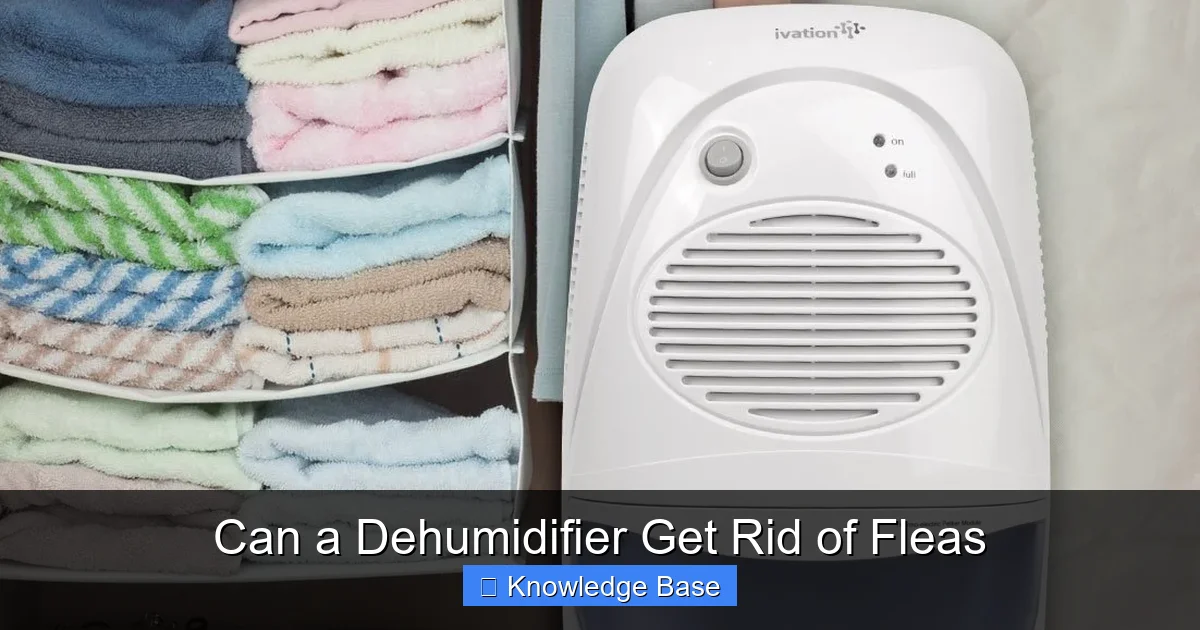
A dehumidifier removes excess moisture from the air, lowering the relative humidity in your home. Most models are designed to maintain humidity levels between 30% and 50%, which is ideal for human comfort and also hostile to flea development.
When you run a dehumidifier in areas where fleas are likely to breed—like basements, laundry rooms, or carpeted living spaces—you create an environment that’s too dry for flea eggs and larvae to survive. Think of it like turning off the water supply to a plant: without moisture, growth stops.
For example, imagine your basement is damp and humid, with a relative humidity of 70%. This is a perfect breeding ground for fleas. If you run a dehumidifier and bring that level down to 40%, you’ve essentially shut down the flea nursery. Eggs won’t hatch, larvae will dry out, and the population can’t grow.
It’s important to note that a dehumidifier won’t eliminate fleas overnight. It’s not a quick fix. Instead, it’s a long-term preventive strategy. By maintaining low humidity consistently, you reduce the chances of a new infestation taking root—even if a few adult fleas are still present.
Where and When to Use a Dehumidifier for Flea Control

Visual guide about Can a Dehumidifier Get Rid of Fleas
Image source: budgetpetcare.com
Not every room in your house needs a dehumidifier, but certain areas are more prone to flea problems—and more responsive to humidity control.
Basements and Crawl Spaces
These areas are naturally cooler and more humid, making them ideal hiding spots for fleas. Carpets, stored items, and poor ventilation create the perfect storm for flea development. Running a dehumidifier in your basement can significantly reduce the risk of infestation, especially if you have pets that spend time downstairs.
Laundry Rooms and Utility Areas
These spaces often have water heaters, washing machines, and damp clothes, which increase humidity. If your pet sleeps near the laundry room or you store pet bedding there, fleas could take advantage. A small dehumidifier can keep the air dry and discourage flea growth.
Humid Climates and Seasonal Use
If you live in a region with high humidity—like the southeastern United States or tropical areas—your home may naturally have higher moisture levels. During rainy seasons or summer months, indoor humidity can spike, creating ideal conditions for fleas. Using a dehumidifier year-round or seasonally can help maintain a flea-resistant environment.
After a Flea Infestation
Even after treating your pets and home with flea control products, eggs and larvae may still be hiding in carpets or cracks. Running a dehumidifier during the recovery phase can prevent a resurgence by ensuring any remaining eggs don’t hatch.
Dehumidifiers vs. Other Flea Control Methods
It’s easy to wonder: is a dehumidifier really worth it when there are so many other flea treatments available? The answer is yes—but not as a standalone solution.
Compared to Chemical Treatments
Flea sprays, foggers, and spot-on treatments are effective at killing adult fleas and some eggs. But they often contain chemicals that can be harmful to pets, children, or people with sensitivities. A dehumidifier, on the other hand, is completely non-toxic. It doesn’t release any fumes or residues, making it a safer option for households with allergies or respiratory issues.
Compared to Vacuuming
Vacuuming is one of the best ways to remove fleas, eggs, and larvae from carpets and upholstery. But even the most powerful vacuum can’t reach deep into carpet fibers or under furniture. A dehumidifier works in the background, drying out the environment so that any fleas you miss won’t survive long enough to reproduce.
Compared to Flea Traps
Flea traps use light and sticky pads to catch adult fleas. They’re useful for monitoring infestations but don’t address the root cause—eggs and larvae in the environment. A dehumidifier tackles the problem at the source by making the environment unsuitable for development.
A Combined Approach Works Best
The most effective flea control strategy uses multiple methods. Here’s a practical example:
1. Treat your pets with vet-recommended flea medication.
2. Wash all pet bedding, blankets, and soft toys in hot water weekly.
3. Vacuum carpets, rugs, and furniture daily for at least two weeks.
4. Use a dehumidifier to keep indoor humidity below 50%.
5. Consider using diatomaceous earth (food-grade) in cracks and crevices as a natural desiccant.
By combining these steps, you attack fleas at every stage of their life cycle—and prevent new ones from emerging.
Choosing the Right Dehumidifier for Flea Prevention
Not all dehumidifiers are created equal. To get the best results for flea control, you’ll want a model that’s effective, energy-efficient, and suited to your space.
Size and Capacity
Dehumidifiers are rated by how many pints of moisture they can remove per day. For a small basement or bedroom, a 30-pint model may be sufficient. For larger areas or very damp spaces, consider a 50-pint or higher capacity unit. Check the square footage rating to ensure it matches your room size.
Humidity Control Features
Look for a dehumidifier with a built-in humidistat, which allows you to set and maintain a specific humidity level. Aim for 40–45% relative humidity—low enough to deter fleas but comfortable for humans.
Auto-Shutoff and Continuous Drain
Models with auto-shutoff prevent overflow when the water tank is full. For basements or areas without easy access to a drain, a continuous drain option (with a hose) is ideal—it lets the unit run unattended for days.
Energy Efficiency
Check the Energy Star rating. Efficient models use less electricity and cost less to run over time. This is important if you plan to use the dehumidifier daily.
Noise Level
Some dehumidifiers can be noisy, which may be a concern in living areas or bedrooms. Look for models with quiet operation (under 50 decibels) if noise is a factor.
Portability and Design
Wheels and handles make it easy to move the unit between rooms. A compact design fits well in tight spaces like crawl spaces or under stairs.
Real-Life Example: A Flea-Free Home in Florida
Let’s look at a real-world scenario. Maria lives in Miami, where humidity levels often exceed 70%. Her dog, Buddy, started scratching constantly, and she found fleas in his fur. She treated him with a topical flea medication and washed all his bedding, but the problem kept coming back.
After researching, Maria learned about the link between humidity and fleas. She bought a 50-pint dehumidifier for her living room and basement, where Buddy spends most of his time. Within two weeks, she noticed fewer fleas. After a month, the scratching stopped.
Maria also vacuumed daily and used a flea comb on Buddy weekly. But she credits the dehumidifier with breaking the cycle. “I didn’t realize how much the humidity was helping the fleas,” she says. “Now I keep the dehumidifier running year-round, and we’ve been flea-free for over a year.”
Maria’s story shows that while a dehumidifier isn’t a magic bullet, it can be a powerful ally in flea prevention—especially in humid climates.
Limitations and What a Dehumidifier Can’t Do
While dehumidifiers are helpful, it’s important to understand their limits.
They Don’t Kill Adult Fleas
A dehumidifier won’t kill fleas that are already on your pet or hopping around your carpet. Adult fleas can survive for weeks without a host, and they’re not directly affected by dry air. You still need to treat your pets and clean your home.
They Work Slowly
Lowering humidity doesn’t produce instant results. It may take several weeks of consistent use to see a noticeable reduction in flea activity. Patience and persistence are key.
They Don’t Replace Cleaning
Even with low humidity, flea eggs and larvae can survive in protected areas like deep carpet piles or under furniture. Regular vacuuming and washing are still essential.
They’re Less Effective in Open or Outdoor Areas
Dehumidifiers work best in enclosed spaces. They can’t control humidity in your yard, garage, or open patio—areas where fleas may also breed. For outdoor control, focus on yard treatments and keeping grass trimmed.
Tips for Maximizing Dehumidifier Effectiveness
To get the most out of your dehumidifier in the fight against fleas, follow these practical tips:
- Run it consistently: Keep the dehumidifier on daily, especially during humid months or after cleaning.
- Monitor humidity levels: Use a hygrometer to check indoor humidity. Aim to keep it between 40% and 50%.
- Place it strategically: Put the unit in the room where your pet spends the most time or where fleas are most active.
- Clean the filter regularly: A dirty filter reduces efficiency. Most models have washable filters—clean them monthly.
- Empty the tank often: If your model doesn’t have a continuous drain, check and empty the water tank daily to prevent overflow.
- Combine with other methods: Use the dehumidifier alongside vacuuming, washing, and pet treatments for the best results.
Conclusion
So, can a dehumidifier get rid of fleas? Not directly—but it can play a crucial role in preventing and reducing infestations. By lowering indoor humidity, you create an environment where flea eggs and larvae can’t survive. This disrupts the flea life cycle and makes it much harder for populations to grow.
While a dehumidifier won’t replace flea treatments for your pets or thorough cleaning of your home, it’s a safe, chemical-free tool that supports long-term flea control. It’s especially valuable in humid climates, basements, and areas where fleas love to hide.
Think of it as part of a holistic approach: treat the pets, clean the home, and dry the air. Together, these steps create a flea-resistant environment that keeps your family and pets comfortable and itch-free.
If you’re dealing with persistent fleas or want to prevent future problems, consider adding a dehumidifier to your flea-fighting toolkit. It’s a smart, simple, and effective way to take control of your home’s humidity—and your flea problem.
Frequently Asked Questions
Do dehumidifiers work on all types of fleas?
Yes, dehumidifiers affect all common flea species, including cat fleas and dog fleas, because they all require high humidity for egg and larval development.
Can I use a dehumidifier in a carpeted room to stop fleas?
Absolutely. Carpets trap moisture and organic debris, making them ideal for fleas. A dehumidifier helps dry out the environment and reduces flea survival.
Will a dehumidifier help if my pet already has fleas?
It can help prevent reinfestation by making the environment less suitable for new fleas to develop, but you’ll still need to treat your pet directly.
How often should I run my dehumidifier for flea control?
Run it daily, especially in humid weather or after cleaning. Consistent use is key to maintaining low humidity and preventing flea growth.
Can a dehumidifier replace chemical flea treatments?
No, it’s not a replacement. Chemical or medicated treatments are needed to kill adult fleas on pets. The dehumidifier supports prevention.
Is a dehumidifier safe to use around pets and children?
Yes, dehumidifiers are safe and non-toxic. They don’t release chemicals, making them a great option for homes with pets and kids.