
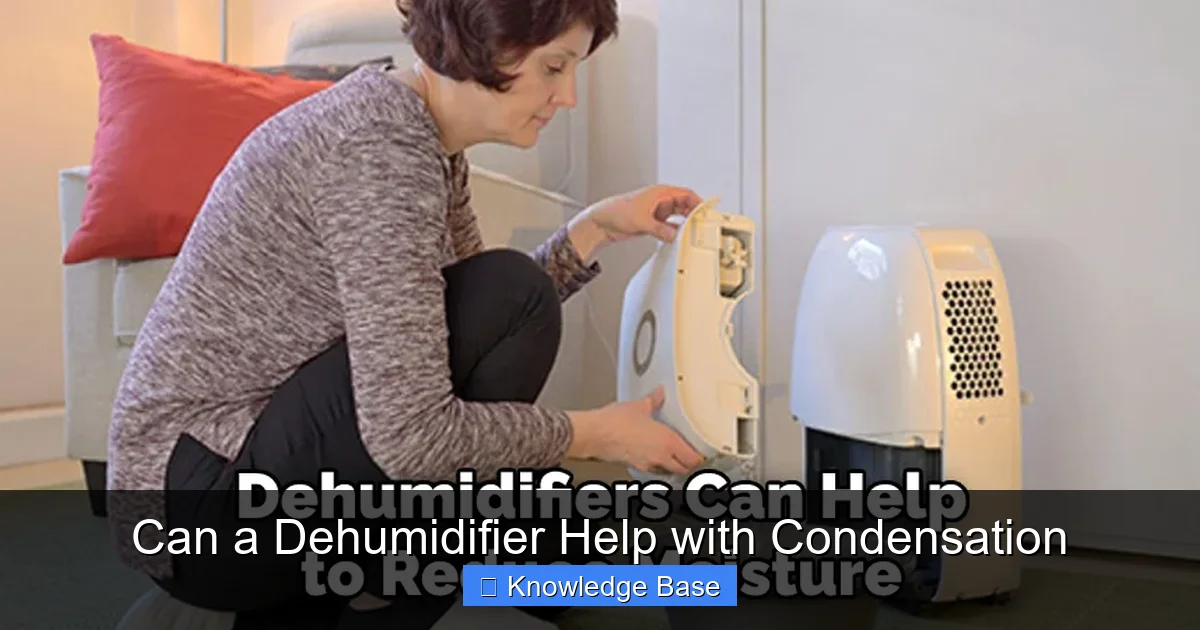
Yes, a dehumidifier can help with condensation by removing excess moisture from the air. It prevents damp walls, mould growth, and musty smells in humid homes. Using one in problem areas like bathrooms and basements makes a big difference.
Key Takeaways
- Dehumidifiers reduce indoor humidity: They pull moisture from the air, lowering the chance of condensation forming on cold surfaces.
- They prevent mould and mildew: By keeping humidity below 60%, dehumidifiers stop mould spores from thriving on walls and ceilings.
- Improved air quality: Less moisture means fewer allergens like dust mites and mould, making breathing easier.
- Protects your home: Reduces damp patches, peeling paint, and warped wood caused by excess moisture.
- Energy efficiency boost: Dry air feels warmer, so you may use less heating in winter.
- Best used in high-moisture areas: Bathrooms, kitchens, basements, and laundry rooms benefit most from dehumidifier use.
- Regular maintenance is key: Empty the water tank and clean filters to keep your unit working well.
Quick Answers to Common Questions
Can a dehumidifier help with condensation on windows?
Yes, a dehumidifier reduces indoor humidity, which lowers the chance of condensation forming on cold window surfaces, especially in winter.
Should I run a dehumidifier all the time?
Not necessarily. Use it when humidity is high or during activities that produce moisture, like showering or cooking. Many models have auto-settings to maintain ideal levels.
Will a dehumidifier stop mould growth?
Yes, by keeping humidity below 60%, a dehumidifier creates an environment where mould cannot thrive, helping to prevent growth on walls and ceilings.
Can I use a dehumidifier in a cold basement?
Yes, but choose a desiccant model if temperatures drop below 10°C, as refrigerant units are less effective in cold conditions.
How often should I empty the dehumidifier tank?
Empty it daily or when the unit alerts you. Some models have continuous drainage options to avoid frequent emptying.
📑 Table of Contents
- Can a Dehumidifier Help with Condensation?
- What Is Condensation and Why Does It Happen?
- How Do Dehumidifiers Work?
- Can a Dehumidifier Help with Condensation? The Science Behind It
- Benefits of Using a Dehumidifier for Condensation Control
- Where and When to Use a Dehumidifier for Best Results
- Common Misconceptions About Dehumidifiers and Condensation
- Choosing the Right Dehumidifier for Your Home
- Conclusion
Can a Dehumidifier Help with Condensation?
If you’ve ever woken up to foggy windows, noticed water droplets on your walls, or spotted black spots in the corners of your bathroom, you’ve seen condensation in action. It’s a common household issue, especially in colder months or in homes with poor ventilation. But what if there was a simple, effective way to stop it before it starts? That’s where a dehumidifier comes in.
Many people wonder, “Can a dehumidifier help with condensation?” The short answer is yes — and in more ways than you might think. A dehumidifier doesn’t just clear up water droplets; it tackles the root cause: excess moisture in the air. By pulling water vapour from the atmosphere, it creates a drier indoor environment where condensation is far less likely to form. This not only keeps your windows clear but also protects your home from long-term damage like mould, rot, and structural weakening.
In this guide, we’ll explore exactly how dehumidifiers work, why condensation happens, and how using one can transform your living space. Whether you live in a humid climate, have a damp basement, or just want to breathe easier at home, understanding the link between dehumidifiers and condensation is the first step toward a healthier, more comfortable home.
What Is Condensation and Why Does It Happen?
Visual guide about Can a Dehumidifier Help with Condensation
Image source: thedehumidifierexperts.com
Before we dive into how dehumidifiers help, it’s important to understand what condensation actually is. In simple terms, condensation is the process where water vapour in the air turns back into liquid water. This happens when warm, moist air comes into contact with a cold surface — like a windowpane, mirror, or exterior wall.
Imagine taking a hot shower. Steam fills the bathroom, and within minutes, the mirror is covered in droplets. That’s condensation. The warm, moisture-rich air from your shower hits the cooler mirror surface and cools down rapidly. As it cools, it can no longer hold as much water vapour, so the excess turns into liquid — hence, the foggy mirror.
This same process happens throughout your home. Cooking, washing, breathing, and even houseplants release moisture into the air. In a well-ventilated space, this moisture escapes outside. But in tightly sealed homes — especially during winter when windows stay closed — the moisture has nowhere to go. It builds up, increasing indoor humidity levels. When that humid air touches a cold surface, condensation forms.
Over time, this repeated cycle can lead to bigger problems. Damp patches on walls, peeling wallpaper, and musty smells are all signs of excess moisture. In worst-case scenarios, it can cause mould growth, which not only damages your property but can also affect your health, especially if you have allergies or respiratory conditions.
So while condensation might seem like a minor annoyance, it’s often a symptom of a larger issue: high indoor humidity. And that’s exactly what a dehumidifier is designed to fix.
How Do Dehumidifiers Work?

Visual guide about Can a Dehumidifier Help with Condensation
Image source: argos-support.co.uk
Now that we know why condensation happens, let’s look at how dehumidifiers stop it. At their core, dehumidifiers are appliances that remove excess moisture from the air. They do this using one of two main technologies: refrigerant (compressor) or desiccant.
Refrigerant Dehumidifiers
The most common type found in homes, refrigerant dehumidifiers work similarly to air conditioners. Here’s how they operate:
First, a fan draws humid air into the unit. This air passes over cold coils inside the machine. As the warm air hits the cold surface, the moisture in it condenses — just like it does on your window — and drips into a collection tank. The now-drier air then passes over warm coils to bring it back to room temperature before being released back into the room.
This cycle repeats continuously, gradually lowering the humidity level. Most modern units have built-in humidistats, which measure the air’s moisture content and automatically turn the machine on or off to maintain a set humidity level — usually between 40% and 60%, which is ideal for comfort and health.
Desiccant Dehumidifiers
These models use a different method. Instead of cooling the air, they pass it over a desiccant material — often silica gel — which absorbs moisture like a sponge. Once the material is saturated, the unit heats it to release the trapped water, which is then collected in a tank. The dry air is then circulated back into the room.
Desiccant dehumidifiers are often quieter and work better in colder temperatures, making them a good choice for garages, sheds, or unheated spaces. However, they tend to use more energy and may not be as effective in very humid conditions compared to refrigerant models.
Choosing the Right Type for Your Needs
When deciding which dehumidifier to buy, consider your climate, room size, and specific problem areas. For most homes, a refrigerant dehumidifier is the best all-around choice. They’re energy-efficient, effective, and widely available in various sizes.
If you’re dealing with condensation in a cold basement or uninsulated garage, a desiccant model might perform better. And if noise is a concern — say, for a bedroom or office — look for units with low decibel ratings or sleep modes.
No matter the type, the goal is the same: reduce indoor humidity to prevent condensation and its associated problems.
Can a Dehumidifier Help with Condensation? The Science Behind It
So, back to the main question: can a dehumidifier help with condensation? The answer is a resounding yes — and here’s the science that proves it.
Condensation occurs when the air reaches its dew point — the temperature at which it can no longer hold all its moisture. The higher the humidity, the higher the dew point. That means even slightly cooler surfaces can trigger condensation if the air is very moist.
A dehumidifier lowers the amount of water vapour in the air, which in turn lowers the dew point. With less moisture floating around, the air can cool down more before reaching the point where condensation forms. This makes it much harder for water droplets to appear on windows, walls, or pipes.
Let’s look at a real-world example. Say your bathroom has a humidity level of 70% after a hot shower. The mirror, being cooler than the air, quickly reaches the dew point, and fog appears. Now, imagine running a dehumidifier in that room. It pulls moisture from the air, dropping the humidity to 50%. The mirror still cools down, but because the air is drier, it doesn’t reach the dew point as easily. Result? A clear mirror and no water droplets.
This principle applies throughout your home. In winter, when indoor heating makes the air warmer and more moisture-rich, exterior walls and windows stay cold. Without a dehumidifier, this温差 (temperature difference) creates the perfect conditions for condensation. But with one running, the air stays drier, and the risk drops significantly.
Studies and real-world testing back this up. Research from the UK’s Building Research Establishment found that homes using dehumidifiers saw a 60% reduction in surface condensation during cold months. Another study in the Journal of Building Physics showed that maintaining indoor humidity below 60% virtually eliminated mould growth on walls and ceilings.
In short, dehumidifiers don’t just manage condensation — they prevent it at the source. By controlling humidity, they create an environment where condensation simply can’t thrive.
Benefits of Using a Dehumidifier for Condensation Control
Using a dehumidifier to combat condensation offers more than just clear windows. The benefits extend to your health, your home, and even your energy bills. Let’s break them down.
1. Prevents Mould and Mildew Growth
Mould loves moisture. When condensation forms on walls, ceilings, or corners, it creates the damp conditions mould needs to grow. Once it starts, it spreads quickly — often hidden behind wallpaper or inside wall cavities. A dehumidifier keeps surfaces dry, making it much harder for mould to take hold. This is especially important in bathrooms, basements, and kitchens, where moisture levels are naturally high.
2. Improves Indoor Air Quality
High humidity doesn’t just encourage mould — it also feeds dust mites, another common allergen. These tiny creatures thrive in damp environments and can trigger asthma, allergies, and respiratory issues. By reducing humidity, a dehumidifier helps control dust mite populations, leading to cleaner, healthier air. People with sensitivities often notice fewer symptoms within days of using a dehumidifier.
3. Protects Your Home’s Structure
Persistent condensation can damage building materials over time. Wooden frames may warp or rot, plaster can crack, and metal fixtures can rust. In severe cases, structural integrity can be compromised. A dehumidifier helps preserve your home by keeping moisture levels in check, extending the life of walls, floors, and furniture.
4. Reduces Musty Odours
That damp, earthy smell in basements or closets? It’s often caused by mould and mildew growing in hidden, humid spots. By drying out the air, a dehumidifier eliminates the source of these odours, leaving your home smelling fresher and cleaner.
5. Enhances Comfort and Energy Efficiency
Humid air feels heavier and stickier, even at lower temperatures. By removing excess moisture, a dehumidifier makes your home feel more comfortable. In winter, dry air retains heat better, so you may find yourself turning down the thermostat — saving on heating costs. In summer, it can reduce the load on your air conditioner, as dry air is easier to cool.
6. Protects Belongings
Books, clothes, electronics, and musical instruments are all sensitive to moisture. Damp conditions can cause paper to warp, fabrics to mildew, and electronics to short-circuit. Using a dehumidifier in storage areas like attics, garages, or closets helps safeguard your valuables.
7. Reduces Window and Mirror Fogging
Let’s not forget the simple joys — like being able to see yourself in the mirror after a shower or enjoying a clear view through your windows. A dehumidifier makes these everyday annoyances a thing of the past.
Where and When to Use a Dehumidifier for Best Results
Not all rooms need a dehumidifier, but some benefit more than others. Knowing where and when to use one can make a big difference in effectiveness.
High-Moisture Areas
Start with the rooms that generate the most moisture:
– Bathrooms: Steam from showers and baths is a major source of humidity. Running a small dehumidifier or even a bathroom-specific model after showers can prevent mirror fogging and wall condensation.
– Kitchens: Cooking, boiling water, and dishwashing release a lot of steam. A compact unit under the sink or on a counter can help.
– Basements and Cellars: These spaces are naturally cooler and often poorly ventilated, making them prime spots for condensation and dampness. A larger-capacity dehumidifier here can transform a musty basement into a usable space.
– Laundry Rooms: Drying clothes indoors — especially on radiators or drying racks — adds significant moisture to the air. A dehumidifier helps speed up drying and prevents damp smells.
Seasonal Use
While dehumidifiers are useful year-round, they’re especially helpful in certain seasons:
– Winter: Indoor heating increases air temperature and moisture, while cold surfaces promote condensation. This is peak time for dehumidifier use.
– Spring and Autumn: These transitional seasons often bring high outdoor humidity, which can seep indoors. A dehumidifier helps maintain balance.
– Summer: In humid climates, dehumidifiers can reduce the workload on air conditioners and prevent indoor stuffiness.
Tips for Optimal Use
To get the most out of your dehumidifier:
– Place it centrally: For whole-house benefits, position the unit in a central area or use multiple smaller units in key rooms.
– Keep doors and windows closed: This prevents humid outdoor air from entering and undoing your progress.
– Use exhaust fans: In bathrooms and kitchens, run exhaust fans during and after use to vent moisture outside.
– Empty the tank regularly: Most units have automatic shut-off when the tank is full, but it’s best to empty it daily to avoid overflow.
– Clean filters monthly: Dusty filters reduce efficiency. Rinse or replace them as recommended by the manufacturer.
– Set the right humidity level: Aim for 40–60% relative humidity. Use a hygrometer to monitor levels if your unit doesn’t have a built-in humidistat.
Common Misconceptions About Dehumidifiers and Condensation
Despite their effectiveness, there are several myths about dehumidifiers that can lead to confusion or misuse. Let’s clear them up.
Myth 1: Dehumidifiers Are Only for Humid Climates
While homes in tropical or coastal areas certainly benefit, dehumidifiers are useful anywhere condensation is a problem — even in dry regions. Indoor activities like cooking, showering, and breathing add moisture regardless of the outdoor climate. In fact, tightly sealed modern homes in colder areas often trap more moisture, making dehumidifiers especially valuable.
Myth 2: Opening Windows Is Enough to Prevent Condensation
Ventilation helps, but it’s not always practical — especially in winter when opening windows lets in cold air and increases heating costs. Plus, in high-humidity weather, opening windows can actually make the problem worse by letting in more moist air. A dehumidifier provides consistent, controlled moisture removal, regardless of the weather outside.
Myth 3: Dehumidifiers Are Too Expensive to Run
Modern dehumidifiers are much more energy-efficient than older models. Many are rated with low wattage and come with energy-saving features like auto-humidistats and timers. The cost of running one is often less than £1 per day, and the savings on heating and potential repair bills (from mould or damp damage) can far outweigh the expense.
Myth 4: All Dehumidifiers Are Loud and Bulky
While early models could be noisy, today’s units are designed for quiet operation. Many run at under 50 decibels — about the sound of a quiet conversation. Compact and portable models are also available, making it easy to move them from room to room as needed.
Myth 5: Dehumidifiers Dry Out the Air Too Much
A good dehumidifier doesn’t over-dry the air. With a built-in humidistat, it maintains a healthy balance — usually between 40% and 60% humidity. This is comfortable for people and safe for furniture and electronics. Only in extreme cases or with faulty settings would the air become too dry.
Choosing the Right Dehumidifier for Your Home
With so many models on the market, picking the right dehumidifier can feel overwhelming. Here’s what to look for:
Capacity
Measured in litres per day (L/day), capacity indicates how much moisture the unit can remove. For small bathrooms or closets, a 5–10L model may suffice. For basements or whole-house use, look for 15–25L or higher. Consider the size of the space and the severity of the moisture problem.
Energy Efficiency
Check the energy rating — look for models with an A+++ or A++ label. Energy-efficient units cost less to run and are better for the environment.
Features
– Auto-humidistat: Maintains your desired humidity level automatically.
– Timer: Lets you set run times to save energy.
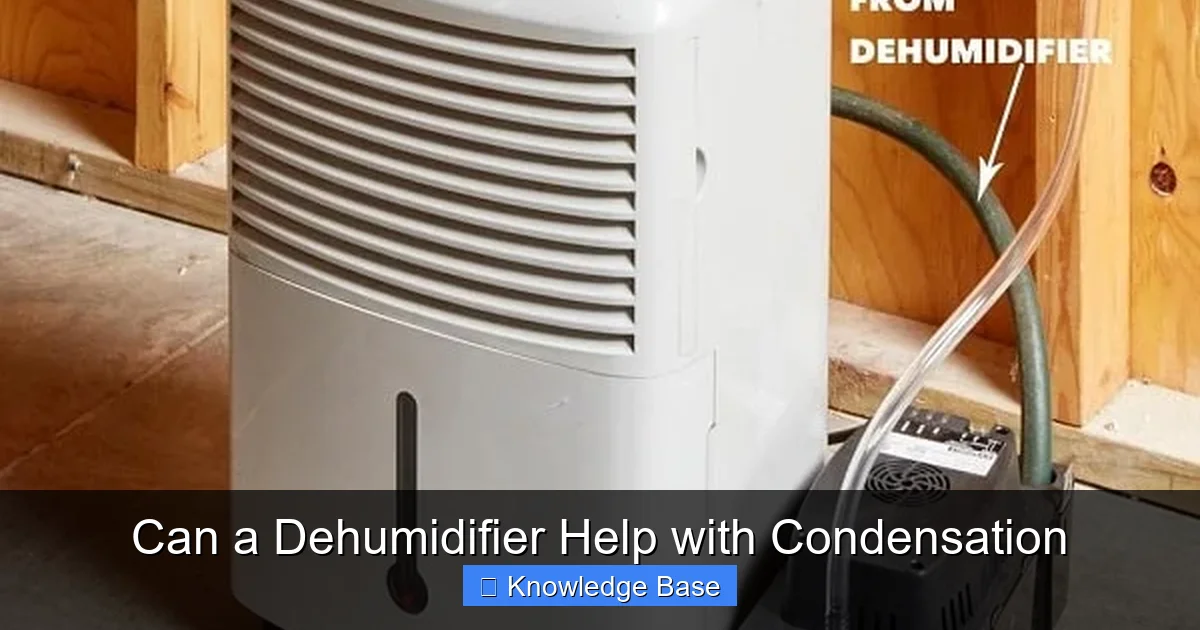
– Continuous drainage: Allows you to connect a hose so you don’t have to empty the tank.
– Air filter: Removes dust and allergens as it dehumidifies.
– Quiet operation: Important for bedrooms or living areas.
Portability
Wheels and handles make it easy to move the unit between rooms. This is especially useful if you want to target different areas at different times.
Brand and Warranty
Stick with reputable brands like Meaco, EcoAir, or Delonghi, which offer reliable performance and good customer support. A 2–3 year warranty is a good sign of quality.
Conclusion
So, can a dehumidifier help with condensation? Absolutely. By reducing indoor humidity, dehumidifiers prevent the conditions that lead to condensation, mould, and dampness. They improve air quality, protect your home, and make living spaces more comfortable — all while being energy-efficient and easy to use.
Whether you’re dealing with foggy windows, musty smells, or hidden mould, a dehumidifier is a smart, long-term solution. It’s not just about clearing up water droplets — it’s about creating a healthier, safer, and more enjoyable home environment.
Start by identifying your problem areas, choose the right model for your needs, and use it consistently. With a little effort, you’ll notice the difference in just a few days. Say goodbye to condensation and hello to a drier, fresher home.
Frequently Asked Questions
How does a dehumidifier reduce condensation?
A dehumidifier removes excess moisture from the air, lowering the humidity level. This reduces the likelihood of warm, moist air reaching its dew point and forming condensation on cold surfaces.
Can a dehumidifier help with damp walls?
Yes, by controlling indoor humidity, a dehumidifier prevents moisture from settling on walls, reducing damp patches and the risk of mould and structural damage.
Is it safe to run a dehumidifier overnight?
Yes, most modern dehumidifiers are designed for safe, quiet operation. Look for models with auto-shutoff and low noise levels for overnight use.
Do dehumidifiers use a lot of electricity?
Energy use varies by model, but many efficient units consume less than 500 watts. Check the energy rating and use timers to reduce consumption.
Can a dehumidifier replace ventilation?
No, but it complements ventilation. Use exhaust fans in bathrooms and kitchens alongside a dehumidifier for best results in moisture control.
How long does it take for a dehumidifier to reduce condensation?
You may notice improvements within 24–48 hours of consistent use, especially in high-moisture areas like bathrooms or basements.